Cork Sandals Feel Different After One Good Soaking
A suede-lined cork footbed was excellent dry, then stiff, slow to dry and less pleasant after a soaking. Here is when sealed cork, EVA or a washable sandal makes more sense.
October 16, 2026 · 8 min read
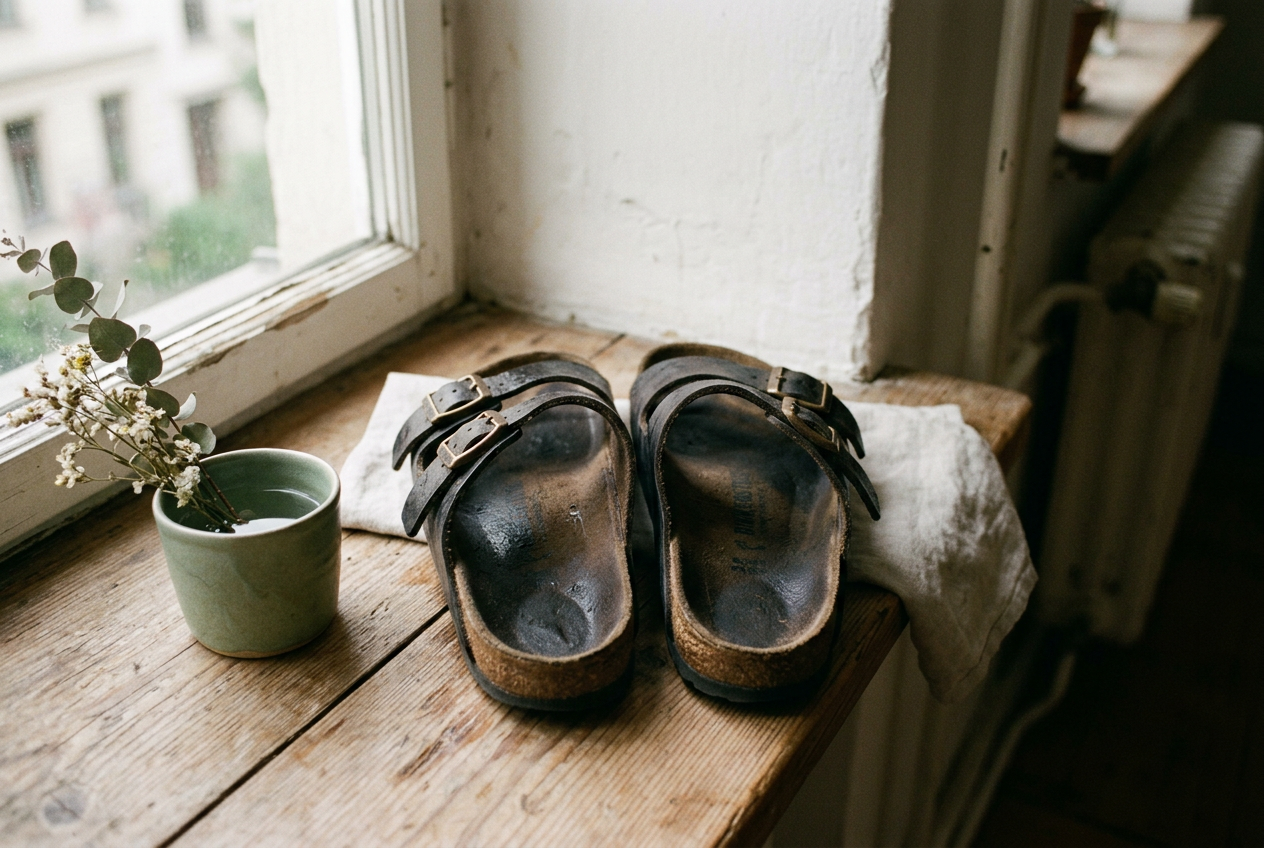
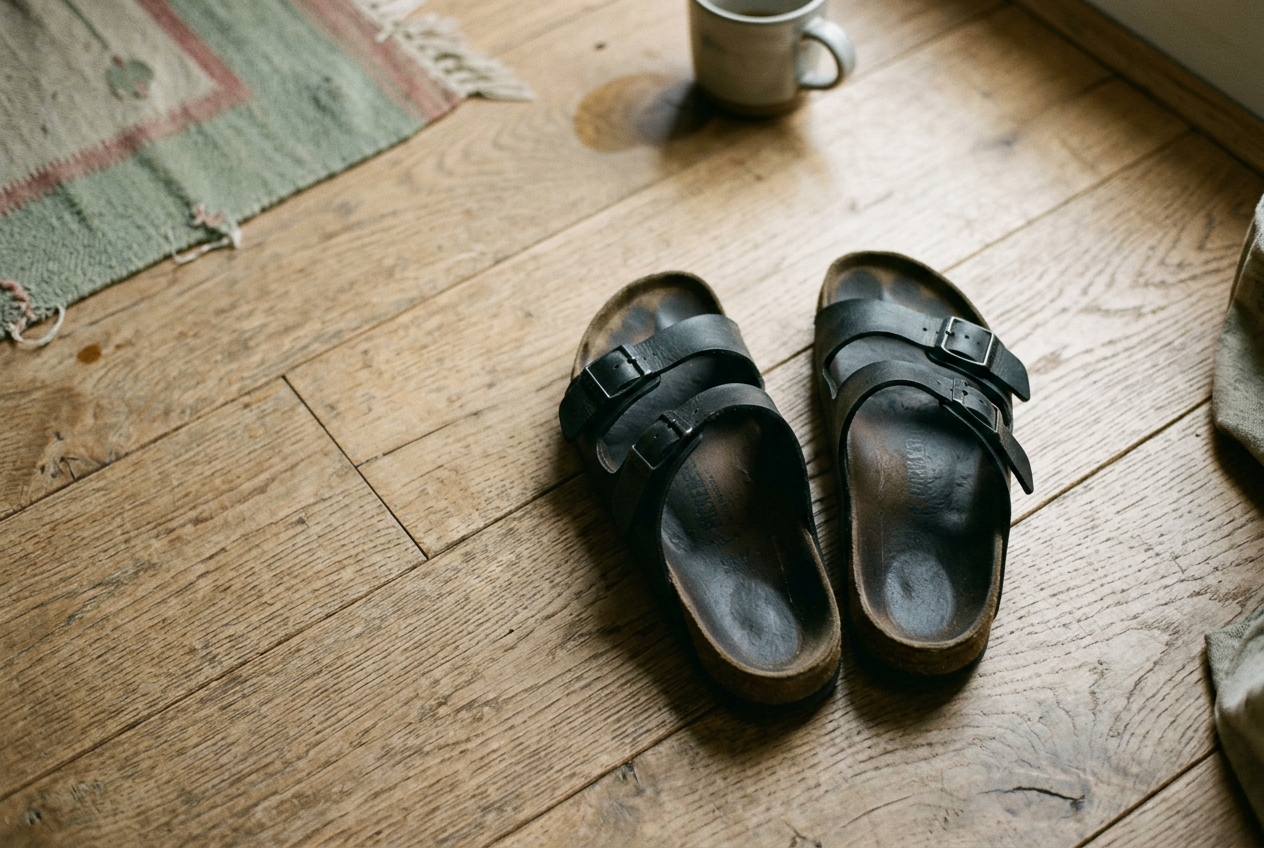
The test pair was a unisex two-strap sandal with leather uppers, a suede-covered cork-latex footbed and an EVA outsole. The cork-latex layer, meaning granulated cork bound with latex, had a visible sealed edge but no waterproof covering over the suede surface. It is a familiar construction because it works: the shaped footbed supports the heel and arch without relying on a thick layer of soft foam.
Dry, the pair was easy to wear for a full walking day once the straps were adjusted correctly. Wet, it became a different shoe. The footbed did not collapse or suffer dramatic damage from one accidental soaking, but the suede held moisture long after the leather straps stopped looking wet, the cork edge needed a slow indoor dry, and the next wear felt stiffer and less settled underfoot.
That distinction matters. A cork sandal can tolerate an accident. It is still a poor choice for a routine that reliably includes spray parks, sudden downpours or standing water around an outdoor shower.
Why dry cork feels so convincing
The dry test pair felt firm rather than cushioned. Its deep heel cup, the raised rim that positions the heel, kept the back of the foot centered, while the footbed’s arch shape spread pressure across more of the sole. There was also a toe bar, a low ridge under the toes, which gave them something to grip as the sandal flexed.
None of this felt plush. That is useful to say plainly because cork sandals are often described as comfortable when the more accurate word is supportive. The footbed did not absorb every pavement edge, and the raised arch would be too assertive for some flatter feet, but it reduced the loose, slapping movement common in flat slides.
Fit did much of the work. With the front strap loose enough for the toes to spread and the rear strap secure without pinning the instep, the sandal stayed on without constant toe clenching. A footbed that is too short defeats the design: toes crowd the front rim, the heel sits on the rear edge, and every sculpted feature lands in the wrong place.
This advice applies across women’s and men’s wardrobes, so the coverage is unisex. Ignore the gender label if the brand offers equivalent lengths and widths, but check the actual footbed outline. A regular-width cork sandal may be broader than a fashion slide, while a narrow version can still feel roomy to a genuinely slim foot.
The suede top layer also helped when dry. It reduced the clammy feeling that can develop where bare skin meets smooth synthetic material, and it gained a visible footprint as the fibers compressed. That personalized look is part of the appeal. It is also the part that becomes inconvenient when water arrives.
What the soaking changed
The test pair got wet through the footbed rather than receiving a few harmless drops. Water darkened the suede, reached the exposed edges around the heel and sat beneath the toes, where pressure had already flattened the nap. The sandal remained wearable for the trip home, although each step felt cooler, heavier and less secure.
Grip changed first. Damp suede against a damp foot allowed more movement than the dry surface, particularly on slopes, and tightening the straps only transferred pressure to the top of the foot. The EVA outsole still separated the cork from the ground, but it could not stop water entering from above.
The more persistent change appeared during drying. Left indoors with airflow, away from direct heat, the leather upper lost its wet look before the suede footbed stopped feeling cool and damp. By the following morning, the pair was not an appealing option for bare feet. A thicker molded footbed creates sheltered areas around the heel cup and toe bar, so surface moisture does not leave as evenly as it would from a flat sole.
Once dry, the suede felt rougher and the footbed seemed stiffer for the first wear. Some of that stiffness eased as body heat and movement returned to the cork-latex structure, but the surface no longer had the same uniformly soft hand. One soaking did not ruin the test pair. It did add maintenance and remove the main reason to choose it that day.
Odor is the slower problem. Cork itself is not a magical shield against smell; damp suede can hold sweat, skin oils and water, especially when the sandal is worn again before it has dried throughout. The test pair did not develop an instant offensive odor, which would make for better drama than reporting, but repeated wet wear would create the conditions for one.
Sealed cork is protected, not waterproof
The visible cork edge on the test pair had a clear coating known as cork sealer, a flexible finish that slows moisture entering through the sidewall. After the soaking, the coating looked intact, with no obvious crumbling or gap between the footbed and outsole. That was reassuring, within limits.
Sealer does not turn a suede-topped cork sandal into a water sandal. It protects the exposed perimeter, while water can still enter through the footbed covering, around the toe bar and near the upper attachments. Leather straps bring their own drying concerns, including stiffness, surface marking and possible stretching if they stay saturated.
Sealed cork is the practical choice when most wear will be dry and the likely water exposure is a spilled drink, damp grass or a short dash through rain. Inspect the edge occasionally. A chalky, dull surface or fine cracks in the coating suggest that resealing may be due, but follow the sandal maker’s care directions because finishes and adhesives differ.
The cost sits around that of a decent pair of sneakers for many leather-and-cork models, though construction and brand alter the band. That price makes sense if the shaped footbed fits well and dry-weather use dominates. Paying it for a pool sandal is volunteering for chores.
EVA wins the wet test, with qualifications
An EVA footbed, made from a lightweight closed-cell foam, absorbs far less water than suede-covered cork and can be wiped dry quickly. A one-piece molded EVA sandal is therefore easier after a downpour: rinse off dirt, shake away water, wipe the surface and leave it in moving air.
The tradeoff is underfoot character. EVA can feel softer at first, yet it may become warm and slick against bare skin, and a molded arch that does not match the foot has no suede or cork to settle around it. Heat is another concern. Leaving foam sandals in a closed car or direct, intense sun may distort them, depending on the material and construction.
Check the whole shoe, not the product name. A sandal advertised with an EVA footbed may still have leather straps, fabric lining or absorbent padding, which means the sole dries fast while the upper remains wet. The useful wet-weather version is molded from washable synthetics throughout, with no hidden layer waiting to become a damp sponge.
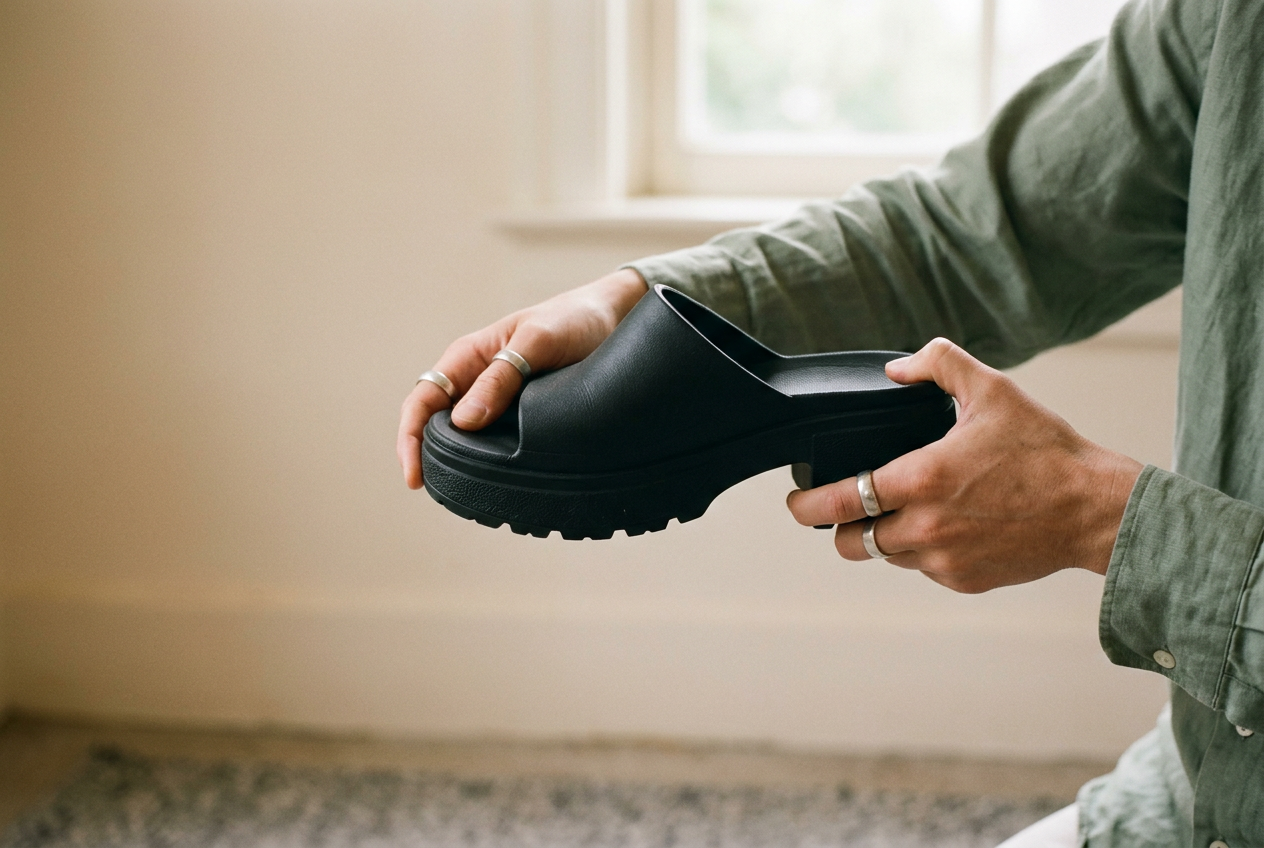
For commuters who want the visual bulk and shaped profile of a cork sandal but regularly meet summer rain, molded EVA is the cleaner decision. It is often cheaper than leather-and-cork construction, although it may look more casual and usually has less repair potential once the foam wears or tears.
When a fully washable sandal is worth it
A fully washable sandal makes more sense when water is part of the plan rather than an interruption. Look for synthetic webbing or molded straps, a nonabsorbent footbed and a sole with enough tread for wet pavement. “Washable” should appear in the maker’s care instructions; a synthetic-looking sandal is not automatically approved for soaking or machine washing.
This category is less refined with tailored clothes, and webbing straps can rub when grit gets trapped underneath. It does, however, remove the drying anxiety that followed the test pair home. Rinse the sandal, open adjustable straps so trapped water can escape, and let it air-dry before the next wear.
For city use, the choice comes down to frequency. Keep the sealed cork pair if wet days are rare and the footbed’s firm shape solves a real fit problem. Choose molded EVA when fast drying matters more than a suede surface. Buy the washable sandal when the route itself includes water, because no amount of cork sealer changes the purpose of the shoe.
Questions people ask
Can cork footbed sandals get wet once?
Yes. One unexpected soaking does not necessarily ruin a well-made, sealed cork footbed, but the suede covering may dry slowly and feel rougher afterward. Remove surface dirt, open the straps and air-dry the sandals away from radiators, hair dryers and strong direct sun.
How can
I tell whether cork sandals are waterproof?
Most leather sandals with suede-covered cork footbeds are not waterproof, even when the exposed cork edge is sealed. Check whether the entire sandal is described as washable or water-friendly. A coated sidewall protects only one route by which moisture can enter.
Is an EVA footbed more comfortable than cork?
EVA often feels lighter and softer immediately, while shaped cork usually feels firmer and more supportive when its arch and heel cup match the foot. In wet conditions, EVA is more practical because it dries faster, though smooth foam can become slick against damp skin.
What should I wear if my sandals get wet every week?
Choose a fully washable sandal with synthetic straps, a nonabsorbent footbed and wet-surface tread. Molded EVA also works if the whole shoe is water-friendly. Save suede-lined cork for drier days, when its shaped support is useful enough to justify slower drying and occasional resealing.
One update a day
Today's fashion update, in your inbox
One fashion update each morning — no hype, no filler, just pieces worth wearing.