Humid Weather Can Turn Cork Footbeds Into a Repair Job
Exposed cork tolerates ordinary sweat, but repeated soaking and rushed drying strip its seal and loosen its edges. Here is when to reseal, air out, or call a cobbler.
October 1, 2026 · 8 min read
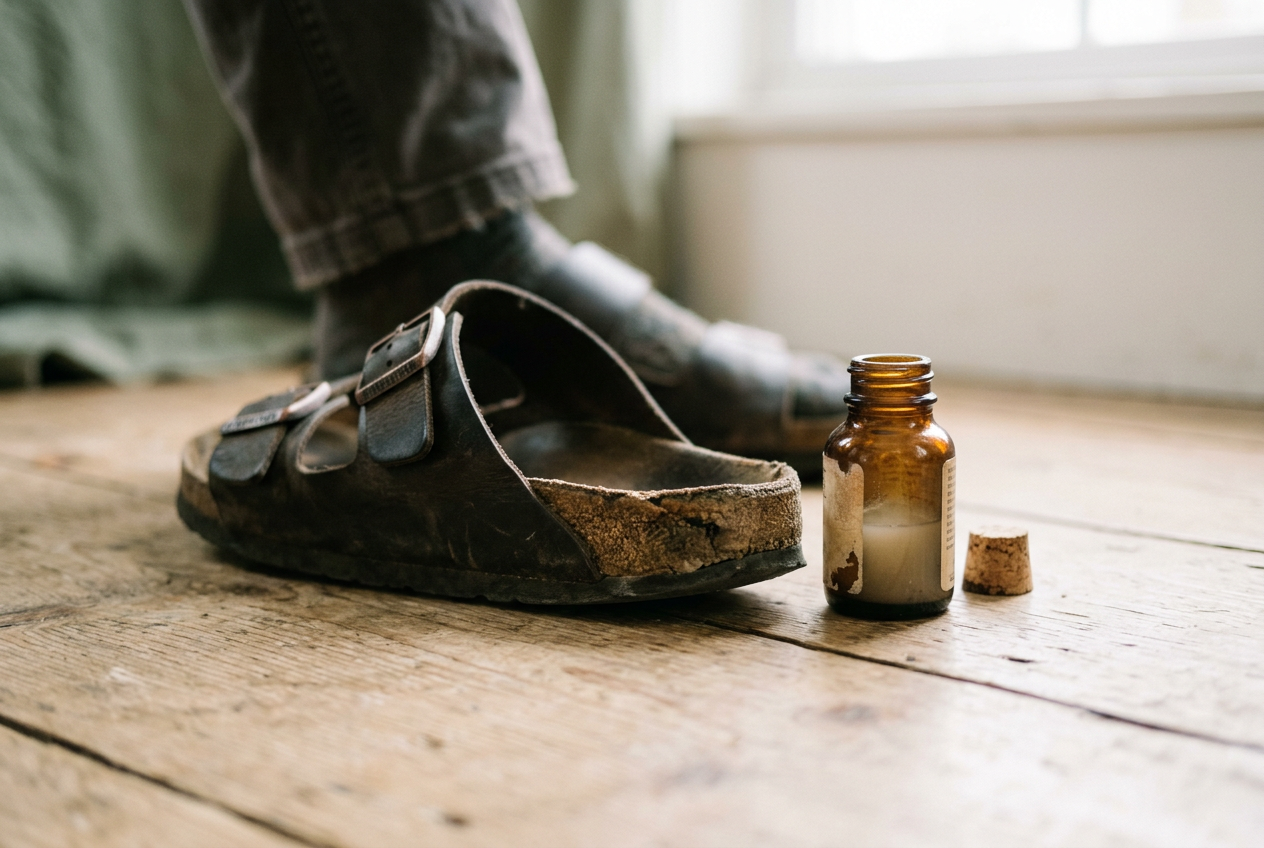
The working example for this guide is a broken-in pair of Birkenstock Arizona sandals with the brand’s standard cork-latex footbed, meaning granulated cork held together with latex, worn through a humid week that included sweaty walks and one encounter with rain-darkened pavement. They were not submerged. They did, however, stay damp long enough to show why cork care is mostly a matter of timing.
This is unisex advice. The same material behavior applies across men’s and women’s sizing, although fit still determines where the footbed takes its worst knocks.
Cork is resilient, not aquatic
A cork footbed feels forgiving because countless small air pockets allow it to compress under pressure. The latex binder keeps the cork granules together, while the raised heel cup and toe bar shape the foot rather than behaving like a flat slab. That construction works well for everyday walking. It does not turn the sandal into pool footwear.
On the Arizona pair, sweat entered primarily through the suede footbed lining, while rain reached the exposed cork edge from the side. Those two routes matter. A damp lining tends to hold odor and feel clammy; a wet cork edge can lose its protective finish, darken, and begin shedding granules after repeated wet-dry cycles.
Cork sealant is the thin flexible coating painted around the exposed edge. On a healthy footbed it usually has a slight sheen, though the exact finish varies with wear and the product used. When that surface turns uniformly dull, rough, or absorbent enough to darken at once under a damp fingertip, the edge is asking for maintenance rather than another heroic walk through a thunderstorm.
The sealant slows moisture entry. It does not waterproof the sandal, protect the suede lining, or excuse leaving the pair beside a dripping umbrella overnight.
Drying comes before deodorizing
After the Arizona pair became damp, the useful move was to unbuckle the straps, wipe away surface water, and place the sandals where air could move around the footbeds. A small fan across the room helps in sticky weather. Direct heat does not.
Do not put cork footbeds on a radiator, under a hair dryer, or in hard sun to speed matters up. Fast heating can dry the upper unevenly and stress the cork-latex structure, while leather straps may stiffen or change shape. Humidity makes the wait longer, which is inconvenient but still cheaper than cooking an investment-priced sandal because dinner plans have begun.
Let the pair dry fully before wearing it again. In a humid room that may mean leaving it overnight or longer, depending on how wet the lining became. Alternating between two pairs is more useful than owning one excellent sandal and wearing it damp every morning.
Odor usually builds in the footbed lining, where sweat, skin oil, and debris remain after the visible moisture has gone. Cork may absorb some moisture at an unsealed edge, but painting sealant over the sides will not deodorize the surface under the foot. Brush loose debris from a dry lining, then use a cleaner intended for the footbed material and follow the sandal brand’s directions; flooding suede with a homemade mixture creates a second drying problem and can leave a stiff, blotchy nap.
Powders are not my first choice. They can cake into the toe bar and mix with sweat, producing a pale paste in the exact place a sandal should remain pleasant. A dry brush and modest application of a compatible cleaner require more patience but less archaeological work later.
Reseal the edge before it starts shedding
Birkenstock’s public care guidance tells owners to renew cork sealer when exposed cork loses its shine. That is a useful visual rule for other cork-edged sandals too, provided the maker recommends resealing and the product is compatible with the existing finish.
Start only when the cork is dry. Brush away dust and any loose granules without digging into the edge, then apply a thin coat of cork sealant to exposed cork rather than slathering the entire sandal. Keep it off the suede footbed, straps, and tread. Follow the product label for drying, because applying a second layer or walking too soon can leave a tacky edge that collects grit.
On the Arizona pair, the most vulnerable areas were the outside heel edge and the front corner near the big toe. Those are common impact points: the heel gets clipped against steps, while a short fit pushes the toes toward the front rim. Sealant can protect intact cork in either location, but it cannot rebuild material that has already fallen away.
A suitable fit leaves the foot seated inside the heel cup with space at the front, rather than hanging over either end. Width matters as well. If the foot presses against the raised sidewall on every step, the lining and cork edge receive concentrated friction, and no amount of sealant will turn the wrong footbed width into the right one.
Check fit before spending money on care products. A pair that is too short, too narrow, or repeatedly removed by stepping on the opposite heel will keep losing cork at the same point.
Cosmetic cracking has a limit
A fine line in the surface coating is not automatically structural damage. Sealant flexes during walking and can show narrow cracks or worn patches before the cork beneath it fails. Clean the area, inspect it in good light, and press nearby with a fingertip. Intact cork should feel firm and unified rather than loose or sandy.
The concern rises when a crack extends through the cork, opens as the sandal bends naturally, or reaches the junction between footbed and outsole. The outsole is the rubbery bottom layer that contacts the ground. Once cork breaks away near that bond, the footbed loses support at its edge and the outsole may begin separating, particularly where the shoe flexes under the ball of the foot.
Missing chunks matter more than a tired-looking finish. So does a heel edge that compresses asymmetrically, a split that returns after superficial sealing, or a section that can be moved independently with light finger pressure. Stop wearing the sandal if the footbed feels unstable or the sole is peeling enough to catch the ground. Tripping over one’s own tasteful neutral sandal is an undignified form of cost-per-wear analysis.
A shoe repairer familiar with cork footbeds may be able to rebuild a damaged edge, renew the outsole, or assess whether the crack has traveled too far into the structure. Take the pair in while the damage remains localized. Smearing household glue over loose granules may conceal the opening, but it can also harden the wrong area and complicate a cleaner repair.
The Arizona pair’s dull edge called for resealing, not reconstruction: the cork remained firm, no crack opened under normal flex, and the outsole bond stayed flat. That distinction is the point of the inspection. Worn-looking cork can remain serviceable; moving cork is already making plans.
Give wet jobs to a different sandal
If a pair regularly encounters pool decks, beach showers, soaked grass, or summer downpours, exposed cork is the wrong material for that assignment. A one-piece molded EVA sandal, made from a closed-cell foam that resists water absorption, is easier to rinse and dry. Birkenstock sells molded EVA versions of familiar shapes, while many footwear brands offer similar waterproof constructions.
The tradeoff is feel. Molded foam does not age, contour, or breathe in the same way as a cork-latex footbed with a suede lining, and it may become slippery when sweat sits between skin and sandal. Try it with wet feet if the retailer permits, then check whether the straps hold the foot without toe-gripping.
Keep cork for dry commutes, city walking, and days when it can rest afterward. Use molded foam for the jobs that involve hoses. One sandal does not need to demonstrate moral range.
Questions people ask
Can cork footbeds get wet once without being ruined?
Yes. A brief shower or damp sidewalk usually does not destroy a sound cork-latex footbed. Wipe off surface water and let the sandal air-dry away from direct heat. The larger risk comes from repeated soaking, wearing the footbed while it remains damp, or storing it before the lining has dried.
How can
I tell when cork sealant needs replacing?
Inspect the exposed edge for a loss of sheen, rough patches, or cork that darkens quickly when moisture touches it. Apply a compatible cork sealer only after the sandal has dried, and keep the coating thin. Sealant maintains intact cork; it will not repair a deep split or replace missing granules.
Why do my cork sandals smell even after the edges are sealed?
The odor is likely concentrated in the footbed lining rather than the sealed edge. Sweat and skin debris remain where the foot sits, especially around the toes and heel cup. Dry the sandal fully, brush the lining, and use a cleaner approved for that material instead of soaking it or covering it with powder.
When should cracked cork go to a shoe repairer?
Seek repair when a crack opens during normal flex, reaches the outsole, releases granules, or leaves part of the edge moving independently. A dull coating or hairline surface mark may only need resealing. Until the deeper damage is assessed, stop wearing a pair with an unstable footbed or separating sole.
One update a day
Today's fashion update, in your inbox
One fashion update each morning — no hype, no filler, just pieces worth wearing.