Cork Footbeds Darken. Bad Arch Pressure Usually Stays Bad.
Ten walks can soften straps and clarify a cork footbed’s fit. They cannot move an arch ridge or toe bar that was wrong from the first block.
September 18, 2026 · 8 min read
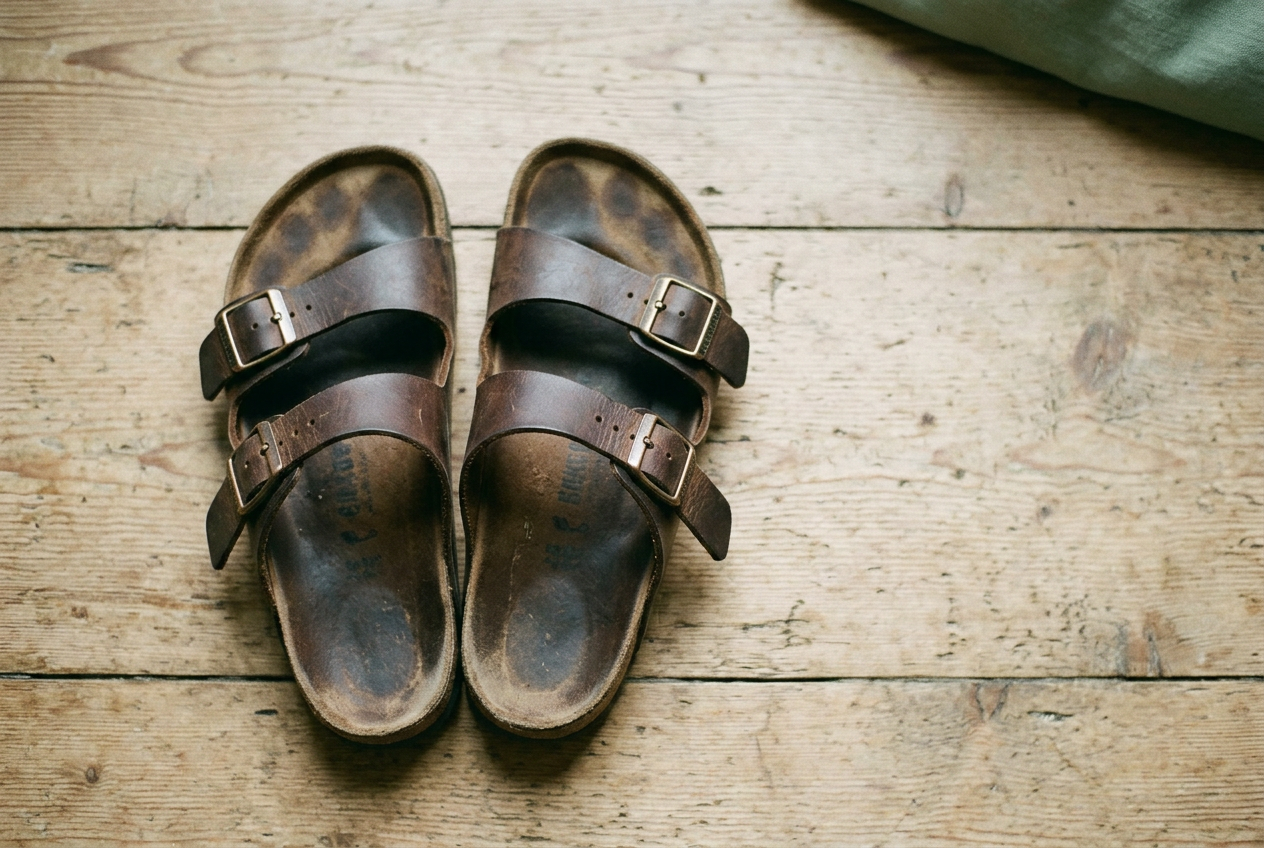
The test pair was a new, unisex two-strap sandal with suede uppers, a suede-lined cork-latex footbed and an EVA outsole. Cork-latex means granulated cork bound with latex, a mixture that compresses slightly under body weight while keeping the molded contours that support the heel, arch and toes.
I wore the same pair for ten ordinary walks, mostly on sidewalks and store floors, without socks. I started with short outings and extended them only when the previous walk left no broken skin or lingering soreness. This was less heroic than it sounds. Walking repeatedly in a sandal that has already filed a complaint against your foot is not testing; it is paperwork.
The first ten walks changed the suede surface, eased the straps and made the points of contact easier to read. They did not change the underlying geometry. That distinction matters across men’s and women’s wardrobes because cork-footbed sandals are commonly sold in unisex shapes or closely related fits, yet feet of the same stated size can have very different arch lengths, toe spreads and instep volumes.
Walks one through three reveal placement
On the first walk, the test pair felt firm under the inner arch, with the strongest pressure just behind the ball of the foot. Firmness alone was not the problem. The important detail was that the raised contour sat beneath the arch rather than pressing into the ball joint or ending back near the heel.
The toe bar, the raised ridge intended to sit in the crease beneath the toes, lined up under the test foot when the heel rested inside the heel cup. It felt obvious but did not force the toes to curl. That is the useful starting condition: awareness without a need to grip.
A toe bar that hits the pads of the toes is too far forward. One that sits under the middle of the forefoot is too far back. Neither position improves because cork darkens or the suede becomes less fuzzy; the ridge remains where the mold put it, while the foot spends each step trying to negotiate around it.
The upper strap began with enough room to slide a fingertip beneath it without lifting the footbed during the stride. The front strap was one hole looser, allowing the toes to spread as weight moved forward. Tightening both straps until the foot looked neatly packaged made the sandal feel more secure while standing, then pushed the toes against the front edge in motion. Shoes do enjoy making their best case before anyone walks anywhere.
By walk three, the inner arch pressure faded soon after taking the sandals off. There was no hot spot, meaning a small area of concentrated friction or pressure, and no tenderness the next morning. That recovery pattern mattered more than whether the footbed felt soft. It did not.
Walks four through six show what is changing
The suede lining began to flatten beneath the heel, ball and toes. A light gray-brown shadow also appeared under the forefoot where heat, moisture and pressure had compressed the nap, while the low hollow beneath the center of the arch remained comparatively pale.
This darkening was normal molding. It followed the broad areas carrying weight, appeared on both sandals in roughly comparable zones and did not coincide with pain. A footprint does not need perfect symmetry, since most people load their feet somewhat differently, but a concentrated dark patch at the edge of a painful ridge deserves attention.
During walk four, the upper straps started to lie closer to the instep, so I moved one buckle tighter before walk five. That was a response to the suede upper relaxing, not an attempt to force the foot into the footbed. After the adjustment, the heel still lifted a little during each step. Cork-footbed sandals are not meant to clamp down like hiking shoes, and eliminating every millimeter of movement can transfer friction to the strap edges.
The front strap stayed in its original position. Tightening it reduced lateral movement, but it also stopped the forefoot from widening naturally and increased pressure along the sandal’s outer lip. A small amount of side-to-side play felt less tidy and worked better. The foot should remain over the footbed rather than spilling onto its rim, yet it needs enough room to change shape under load.
By the sixth walk, the arch contour felt less abrupt. Some of that change came from compression in the suede liner and cork-latex surface; some came from learning the sandal’s stride, which was flatter and less flexible than the sneakers used as the alternative. The result was tolerable, then unremarkable. That is about as glamorous as useful comfort gets.
Walks seven through ten settle the verdict
Walk seven was long enough for the initial arch pressure to return, though at a lower intensity and later in the outing. It remained centered under the arch and disappeared shortly after the sandals came off. The toe bar stayed aligned with the toe crease, and there was no rubbing between the toes or at the front edge.
The sandals were not becoming cushioned. The footbed was becoming specific. By walk eight, the heel area showed a darker oval, individual toe marks were beginning to separate, and the forefoot impression spread across the width rather than forming one hard, dark point. None of those marks proved that the sandal fit, but they matched the absence of blisters and persistent soreness.
The strap setting stabilized after the single adjustment. Moving the buckle tighter again made the upper edge bite when the foot swelled later in the walk, so I returned it to the previous hole. Strap holes are coarse adjustments, and feet change volume with heat and time on foot; the best setting at the front door may be one hole too strict after several miles.
At walk ten, the test pair had lost its new-shoe stiffness without losing the pronounced arch. The toe bar still announced itself. The heel cup still guided the foot. If either contour had landed in the wrong place, ten walks would have made the disagreement familiar rather than solved it.
That is the dividing line. Normal molding reduces surface harshness and creates a clearer footprint. A shape mismatch keeps producing pressure at the same misplaced ridge, often earlier in each outing or for longer afterward.
Read the footbed, but believe the foot
Darkening comes from more than pressure. Sweat, skin oils, dust and friction all alter the suede liner, so a dark footprint is evidence of contact rather than a medical scan. The most useful comparison is between the mark and the sensation recorded during the walk.
Broad darkening beneath the heel and ball is expected. Toe marks can appear at different rates, particularly if one toe grips more than the others, while the arch often stays lighter because less of the suede meets the foot there. A sharply darkened strip beside a blister suggests rubbing. A pale patch over a painful arch ridge can still indicate excess pressure, since discomfort may come from the contour underneath rather than visible abrasion on top.
Also inspect the edges. Toes touching the front rim while the heel is centered usually mean the sandal is too short or the toe-bar placement is pushing the foot forward. A heel riding on the rear lip points to the same problem in reverse. If the length looks generous but the foot rests on the sidewall, a wider fitting or a less sculpted footbed is the practical alternative.
Some cork-footbed lines offer more than one width, although the useful difference varies by model. Width should be judged while standing, when the forefoot spreads, and with the straps loose enough that they are not disguising a narrow platform. A longer size may add misplaced space without putting the arch and toe bar where they belong.
The ten-walk decision
Keep the pair when pressure decreases across the trial, soreness clears soon after wear, the toe bar sits in the toe crease and strap relaxation can be handled with one sensible buckle change. The footbed should show broad contact marks without the foot repeatedly climbing an edge.
Stop earlier if a strap breaks skin, numbness appears, or pain changes the way you walk. By walk ten, return or resell an unworn-looking eligible pair if the arch ridge still presses into one fixed spot, the toe bar sits beneath the forefoot, or the heel and toes cannot both remain inside their cups. Check the retailer’s return rules before taking any sandal outdoors, since darkened suede makes a persuasive case that the merchandise is no longer new.
A softer alternative may suit feet that dislike pronounced contours, while an adjustable sandal with a flatter removable footbed gives more latitude for an orthotic or replacement insole. That tradeoff loses the locked-in feel of molded cork, but it also avoids spending ten walks waiting for fixed geography to move. It will not.
Questions people ask
How long do cork footbed sandals take to break in?
Ten progressively longer walks should reveal whether surface firmness and strap stiffness are easing. The sandals may continue molding after that, but a badly placed arch ridge or toe bar will not relocate. Improvement should be noticeable during the trial, with discomfort appearing later, fading faster or disappearing.
Should cork footbed sandals hurt under the arch at first?
Firm, broad pressure beneath the arch can be normal if it decreases during the first several walks and leaves no lasting tenderness. Sharp pressure, numbness or soreness centered at the edge of the arch contour suggests the molded shape does not match the foot and deserves an early stop.
Where should the toe bar sit?
The toe bar should meet the crease where the toes bend, with the heel centered in its cup and a little space remaining at the front. If the ridge presses into the toe pads or sits beneath the forefoot, changing the straps will not correct its position.
Does a dark footbed mean the sandals have molded properly?
Darkening shows where moisture, oils and repeated contact have flattened the suede, but it does not confirm good fit by itself. Broad marks under the heel and forefoot are ordinary. Compare concentrated dark areas with rubbing, blisters or persistent pressure, and let the foot’s response carry more weight than the footprint.
One update a day
Today's fashion update, in your inbox
One fashion update each morning — no hype, no filler, just pieces worth wearing.