Try Sandals Late, but Don’t Buy Them Loose
Late-day feet expose strap pressure that a morning fitting can miss. Check the sandal in sequence so swelling room does not become blister-making movement.
September 14, 2026 · 7 min read
Late afternoon is a useful time to try sandals because heat, standing and walking can leave feet fuller than they were over breakfast. It is also an excellent time to buy a sandal too large, particularly when immediate relief from a tight strap makes extra length feel generous rather than unstable.
The distinction shows up after several minutes of walking. Useful room lets the foot expand without meeting a hard strap edge. Excess room lets the foot move against the shoe, leaving the skin to conduct unpaid quality control.
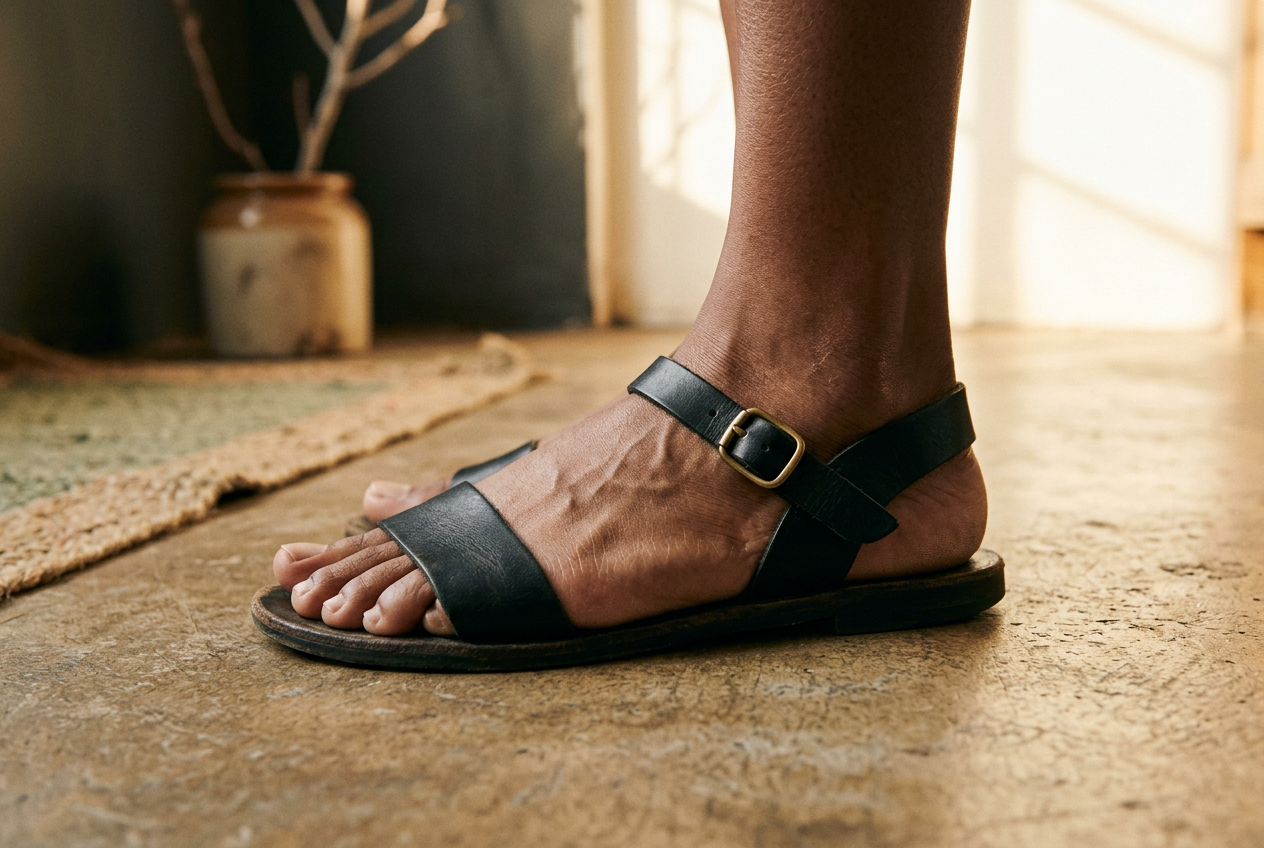
My test case is a black leather sandal with a broad fixed strap across the forefoot. A buckled back strap controls the heel, while a shallow molded footbed, meaning the shaped surface directly beneath the foot, sits over a rubber outsole. It is an ordinary design, which makes it useful: there is no stretch panel, padded lining or platform height to disguise what the straps are doing.
This is unisex fit advice. The size printed inside may come from a women’s, men’s or European scale, but the checks stay the same because they concern where the foot sits and how much it moves.
Late-day fitting reveals pressure, not your automatic size
Feet do not expand by an identical amount every day. Temperature, time spent standing, socks, activity and individual anatomy all affect what arrives at the shoe store, so a late fitting should be treated as a pressure test rather than proof that everyone needs to size up.
Start with the size you normally wear in open shoes. If the sandal comes only in whole sizes, try the neighboring size as well, but do not assume the larger one wins because it feels airy while you are seated. Sandals have less upper material to stabilize the foot than closed shoes, and a few millimeters of extra movement can become repeated rubbing over a longer walk.
The black leather pair feels close across the forefoot when first fastened late in the day. That alone is not a failure. The relevant question is whether the leather lies against the foot with even contact or presses a narrow line into it, especially near the strap edges, where a pleasant fitting-room compromise tends to become a blister by the second errand.
Set the foot before judging the straps
Place the sandal flat on the floor and settle your heel into its intended position before fastening anything. Do not push the toes forward to make the back look tidy, and do not leave the foot hanging behind the footbed while adjusting the buckle. Both maneuvers create a photograph of fit rather than a walkable fit.
Fasten the back strap firmly enough that it makes contact without pulling the heel out of position. Stand with weight distributed normally, then flex each foot several times. This takes less than a minute, though the full test needs at least several minutes of walking because warm leather and webbing can behave differently once they have been loaded repeatedly.
On the test pair, centering the heel exposes a narrow margin of footbed in front of the longest toe. That margin is useful. A broad empty shelf is not expansion room because feet generally become fuller across the forefoot; they do not require a spare patio beyond the toes.
Check strap pressure while the foot is loaded
Judge the forefoot strap while standing, not while holding the shoe in your lap. The loaded foot spreads, and the fixed leather strap on the black sandal becomes most informative when the toes bend during a step.
Slide one fingertip flat beneath the strap at its center if the construction allows it. Treat this as a comparison tool rather than a universal measurement: the strap should not clamp the fingertip, yet enough open space for the finger to turn freely can indicate that the foot will shift. Then check the edges by rocking forward onto the ball of the foot. A strap that feels acceptable in the middle may still cut near the little toe joint or across the base of the big toe.
Material changes the allowance. Unlined leather can soften and shape around the foot, although it will not create more footbed length. Thick coated leather and many synthetic uppers tend to yield less, while textile webbing may relax after repeated wear. Buying a painful leather strap in the hope that it will become kind is a break-in plan, not a fit plan.
Look at the skin after several minutes. A light, broad impression that fades promptly suggests close contact. A deep line, pinching at one edge or whitening where the strap bears down points to concentrated pressure. The larger size only helps if it removes that pressure without introducing movement elsewhere; otherwise, seek an adjustable forefoot strap or a wider version of the same general shape.
Check heel position before walking farther
The heel should sit within the back of the footbed rather than on its rim. On a sandal with a heel cup, meaning a raised border shaped around the heel, the foot should remain inside that border without being squeezed by it.
Walk at a normal pace and watch what happens when the heel rises. A small amount of vertical separation can be normal in flexible sandals, especially styles without a back strap, but the heel should return to the same spot rather than landing closer to one edge on each step. With the black leather pair buckled correctly, the back strap follows the heel without sawing across it. Loosening the buckle one hole feels gentler while standing and produces rubbing almost immediately when walking.
Also check side-to-side placement. If the heel spills over the footbed despite adequate length, the problem is likely width or footbed shape. Extra length will not correct that mismatch. It merely adds sole in front while the heel continues its border dispute at the back.
Test forward slide with a stop, not a pose
Forward slide is the easiest flaw to miss on a carpeted fitting area. Walk briskly for several passes, stop with purpose, then turn and repeat. If stairs are available and appropriate for trying merchandise, a careful descent can expose movement that level walking hides.
Watch the longest toe and feel the forefoot strap. The toes should remain behind the front edge, and they should not grip the footbed to hold the sandal on. Toe gripping often means the foot is doing work that a better-positioned strap or more supportive footbed should handle.
On the black pair, the usual size keeps the heel centered and leaves that narrow front margin intact after each stop. The next size up removes nearly all awareness of the forefoot strap, but the foot travels forward until the toes approach the edge, then slides back when the pace changes. It feels roomy for thirty seconds. Over a real walk, that travel would put the strap edge across the same skin again and again.
A slick lining can worsen the problem even when the length looks correct. Smooth synthetic footbeds, polished leather linings and perspiration can reduce grip, so test the sandal with the bare feet or hosiery you expect to wear. A fit that depends on perfectly dry feet has chosen an ambitious career.
Separate expansion room from friction room
Expansion room exists around the volume of the foot. You should feel even contact under a fixed strap, retain some buckle adjustment in both directions and keep your heel centered after walking. The footbed needs a modest visible margin at the front and back, but that space works only when the straps prevent travel across it.
Friction room announces itself through displacement. The heel lifts and lands in a different place, the toes creep toward the edge during a stop, or the strap shifts across the skin instead of flexing with it. Tightening the back strap may reduce movement, though it cannot rescue a forefoot strap that is too wide or positioned too far forward.
Compare both sizes for the same amount of time. If the smaller size presses only at a fixed forefoot strap and the larger size slides, neither is correct; look for an adjustable design, a wider fitting or a differently placed strap. Paying more does not solve the geometry. Better construction may improve materials and finishing, but an expensive strap can still occupy the wrong inch of your foot.
Before buying, repeat the walk after sitting for a few minutes. The black leather sandal passes when the original buckle setting remains secure, the heel returns to its centered position and the toes retain their narrow margin. The larger size fails on forward travel. Relief at the strap was real, but so was the sliding.
Questions people ask
How late in the day should I try sandals?
Late afternoon or early evening is useful after a typical day of standing and walking. There is no required hour, and the goal is not to make your feet as swollen as possible. You want to test the sandals when your feet resemble their likely size during actual wear.
Should sandal straps feel tight when they are new?
They can feel close, particularly in firm leather, but they should not create sharp pressure, pinching or a deep line at an edge. Mild, even contact may soften with wear. Painful pressure is a poor investment, since leather can shape to the foot but cannot correct badly placed straps.
How much space should be left in front of the toes?
Keep a narrow visible margin so the longest toe remains on the footbed during walking and sudden stops. A large empty area is not useful swelling allowance. It increases leverage and movement, especially when the forefoot strap cannot keep the foot from traveling forward.
Is it better to size up if my feet swell?
Only when the larger size relieves pressure while keeping the heel centered and the toes stable. If sizing up causes forward slide, heel lift or side-to-side movement, choose a wider or more adjustable sandal instead. Width and strap placement often matter more than added length.
One update a day
Today's fashion update, in your inbox
One fashion update each morning — no hype, no filler, just pieces worth wearing.