A Half-Size Up Can Fix Toe Pressure and Ruin Heel Hold
Extra length and extra width do not create the same space. This fitting-room check shows whether your squeezed forefoot needs a wide sneaker, a longer one or a different shape.
August 29, 2026 · 8 min read
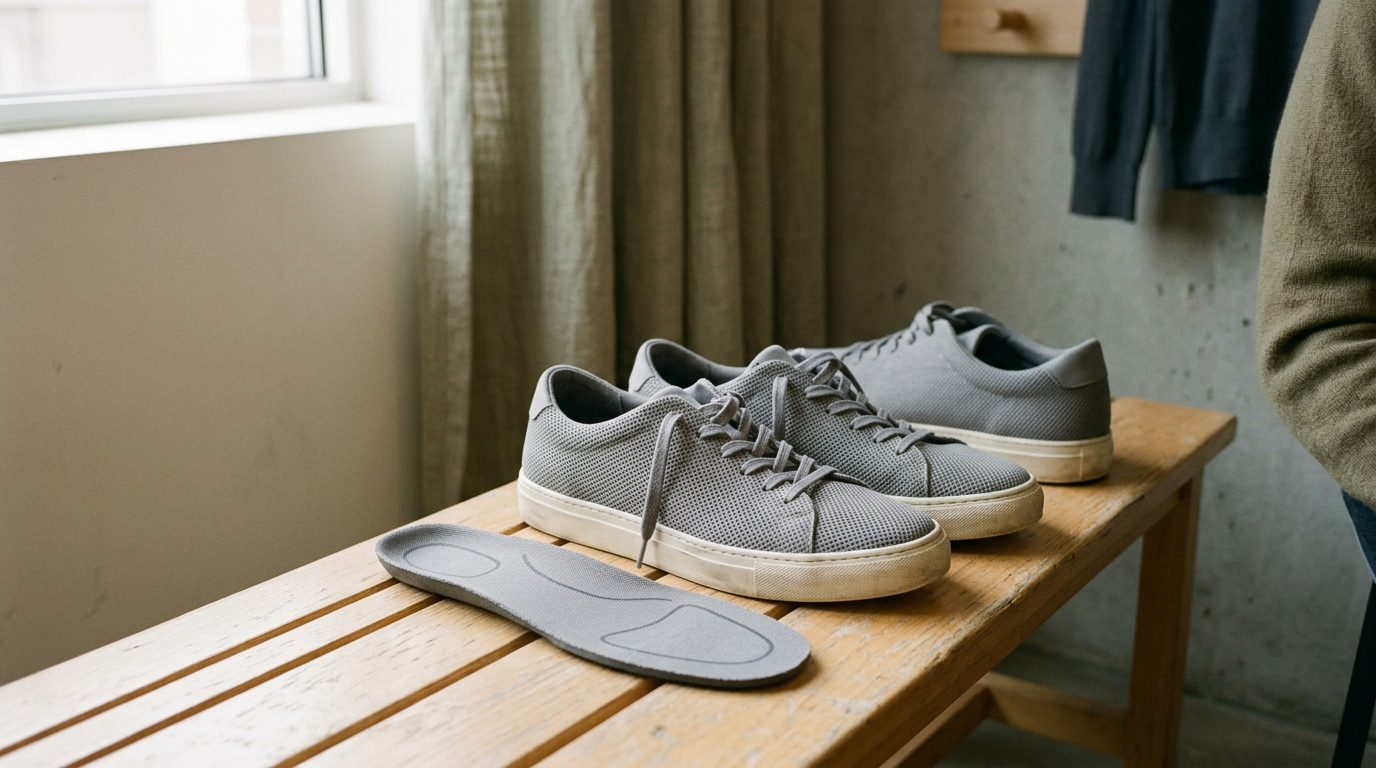
The anchor for this explainer is one gray everyday sneaker compared in three fittings: the usual regular size, a half-size larger in regular width, and the original length in wide. It had an engineered-mesh upper, meaning the fabric used tighter and more open zones for structure and ventilation, with a padded collar, removable foam sockliner and rubber outsole.
On foot, the usual size pressed at the outer forefoot. The half-size up relieved that pressure, but the heel began to lift during a brisk turn. The wide version kept the original toe-to-heel length while giving the forefoot more room, and heel hold remained closer to the regular fit. One small sizing change had moved the problem from the front of the shoe to the back.
Efficient, in the least useful sense.
This is unisex fit guidance. Women’s and men’s size labels differ, but the spatial decision is the same: determine whether your foot needs more length, more width or a shoe built on another shape.
The same sneaker, three different spaces
A sneaker is formed around a last, the foot-shaped mold that determines its internal length, width and volume. Moving up half a size usually means moving to a longer last. The forefoot may gain a little width through size grading, which is how dimensions change between sizes, but added length is the main event.
That extra length appears beyond the toes, yet it also changes where the foot sits relative to the shoe’s flex point and heel. The ball of the foot may land slightly behind the place where the sole is designed to bend. Once the shoe flexes, the upper can crease in a less cooperative spot while the back of the foot travels farther before the collar catches it.
A wide fitting usually keeps the same nominal length and adds circumference around the foot. In the gray test sneaker, that gave the little-toe side enough room without creating a longer runway in front. This is the useful distinction: half-size up stretches the floor plan, while wide changes its side-to-side capacity.
Width is not standardized neatly across brands. Some wide sneakers gain room mostly at the toe box, the enclosed front area around the toes. Others widen through the midfoot, and a few use a wider heel as well. The letter printed on the box tells you there is a difference from that brand’s regular fitting, not precisely where the difference lives.
Extra length changes heel hold
Heel hold depends on more than a tight collar. The heel counter, the firmer structure wrapping the back of the shoe, needs to meet the rear of the foot closely enough to limit vertical movement without digging into the Achilles area.
In the half-size-up gray sneaker, the laces could pull the midfoot down, but they could not remove the added distance along the sole. The heel lifted slightly during ordinary forward walking and more clearly during the turn, when the foot changed direction inside the shoe before the shoe itself followed. That is the slip shoppers often miss while standing on carpet and admiring their socks.
A small amount of heel movement can settle as a stiff upper softens, especially in a structured leather sneaker. Mesh is less likely to rescue an overlong fit because it already yields around the foot. A padded collar may disguise the gap at first, then compress with wear and reveal it. Buying long on the theory that thick cushioning will remain thick is a hopeful administrative error.
Length can be correct even when the toes feel crowded. If pressure sits on the sides of the forefoot, particularly around the little-toe joint, more empty space in front does not address the direction of the pressure. It gives the foot more room to slide toward it.
A wide width keeps the length decision intact
The wide version of the test sneaker relieved the same outer-edge pressure without moving the toes farther from the front or shifting the heel away from the counter. That result makes wide the better first test when toe length already feels adequate and the heel is secure.
It is not an automatic win. A wide last may also add volume over the instep, the top of the foot beneath the laces, so a low-volume foot can feel loose through the middle even when the forefoot is happier. Tightening the laces may control mild excess volume, but visible puckering or overlapping eyestays suggest the shoe contains more upper than the foot can fill.
Heel shape matters too. A shopper with a broad forefoot and narrow heel may still slip in a wide version if the brand scales the rear along with the front. That foot often does better in a sneaker described as having a roomy or anatomical toe box rather than a uniformly wide build. Product descriptions are imperfect, so the movement check matters more than the adjective.
Remove the sockliner and stand on it only as a rough diagnostic, not as a fitting verdict. If the forefoot spills over its edges while there is adequate space beyond the longest toe, width deserves the next trial. Sockliners can be narrower than the inside of the upper, and soft mesh can accommodate more than the foam outline implies, so put the shoe back together before deciding.
Read the pressure before changing the size
Forefoot discomfort does not all point to width. Toes hitting the front on a downhill step, or the longest toe touching while standing, indicates a length problem. Pressure across the side joints with clear space ahead indicates width more often. Numbness under tightly drawn laces can come from low upper volume or lacing tension rather than either labeled dimension.
Also check where the shoe bends. The widest part of the forefoot should sit near the sole’s main flex point. If that joint sits ahead of the bend in the usual size, more length is unlikely to help. If it sits behind the bend and the toes are close to the front, a half-size up may align the foot better while adding needed clearance.
Do this with the socks you plan to wear. A padded athletic sock occupies more room than a thin fashion sock, and testing in one before regularly wearing the other turns a sensible fit decision into an avoidable exchange.
The movement check catches the bad trade
Lace each candidate with normal tension while standing, since feet spread under body weight. Do not wrench the top eyelets tight to make a loose shoe pass. The purpose is to evaluate the fit the shoe provides, not the knot you can impose on it.
Walk briskly rather than taking two ceremonial fitting-room steps. Turn in both directions, stop without shuffling, then rise onto the balls of the feet. If the store has a ramp or safe stairs, take a few downward steps because the foot moves forward most clearly there.
During the check, track two sensations separately. At the front, note whether the toes strike the end or the forefoot feels compressed from the sides. At the back, notice whether the heel stays seated or lifts before the sole leaves the floor. Mild fabric movement is not the same as the foot visibly climbing inside the collar.
Compare the regular half-size up with the wide version at the original length, ideally on opposite feet before switching sides. The half-size-up gray sneaker felt acceptable in a straight line, yet the quick stop exposed forward slide and the turn exposed heel lift. The wide version passed both movements while removing the original side pressure. Standing still had hidden the entire argument.
Keep the shoe on for more than a minute. Heat and weight let the foot spread, while the upper reveals whether it gives gently or keeps pressing at a seam. Engineered mesh may relax slightly, but a fused overlay or stitched eyestay will not stretch like the open fabric beside it. Pressure under a structural strip deserves a different fit now, not a private break-in program involving blisters.
Laces can diagnose, but they cannot shorten a shoe
A runner’s loop, a lacing method that uses the top eyelets to create small loops before crossing the lace through them, can improve heel hold when the underlying length is correct. It is useful for a secure shoe that needs a little more collar tension.
It should not be the first repair for a half-size-up sneaker that only became necessary because the regular width crushed the forefoot. If the runner’s loop clamps the ankle while the foot still slides along the sockliner, the shoe remains too long or too roomy. The discomfort has merely received a transfer.
Alternative lacing can relieve pressure over a high instep by skipping an eyelet near the sore area. Again, that works when the shoe’s basic length and width are sound. Laces adjust upper tension; they do not relocate the flex point, narrow a wide heel or make a tapered toe box match a broad foot.
Sometimes neither size is the right shoe
If the regular width pinches, the wide width loses the heel, and the half-size up allows forward slide, stop negotiating with that model. Its last does not match the foot. Look for a sneaker with a broader toe shape and a more sculpted heel, or compare another brand’s wide fitting.
This can cost another fitting session and may rule out the colorway you wanted. It is still cheaper in time and discomfort than keeping a shoe that requires thick socks, adhesive heel grips and aggressive lacing before it has reached the sidewalk. In the gray sneaker comparison, the wide fitting worked. In another construction, walking away would be the correct size choice.
Questions people ask
Should
I size up if my toes feel cramped in sneakers?
Size up when the longest toe reaches the front or hits it during a downhill step. If there is already clear space ahead and the pressure sits along the sides of the forefoot, try the same length in wide first. Extra length may relieve the squeeze while creating forward slide and heel lift.
How much heel slip is acceptable in a new sneaker?
The heel should move with the shoe rather than climbing noticeably inside the collar. A stiff upper can show slight movement before it softens, but the foot should not lift during a turn or slide forward during a stop. Mesh collars may compress with wear, so obvious new-shoe looseness rarely improves.
Does a wide sneaker also have a wider heel?
Sometimes. Brands build wide fittings differently: one may add room mainly around the forefoot, while another scales the midfoot and heel too. Test the wide version with a brisk walk, a turn and a toe rise. If the forefoot feels right but the heel lifts, try a different last rather than more lacing pressure.
Can insoles or heel grips fix a half-size-too-long sneaker?
An insole can reduce internal volume, and a heel grip can fill a small collar gap, but neither changes where the shoe bends relative to the foot. If sizing up solved side pressure and caused clear heel lift, compare the original length in wide before buying accessories to correct the new problem.
One update a day
Today's fashion update, in your inbox
One fashion update each morning — no hype, no filler, just pieces worth wearing.