A Wide Sneaker Can Still Pinch Your Toes
Width labels describe a size category, not the space inside a sneaker. The removable insole reveals whether toe taper or midfoot volume is causing the squeeze.
August 15, 2026 · 8 min read
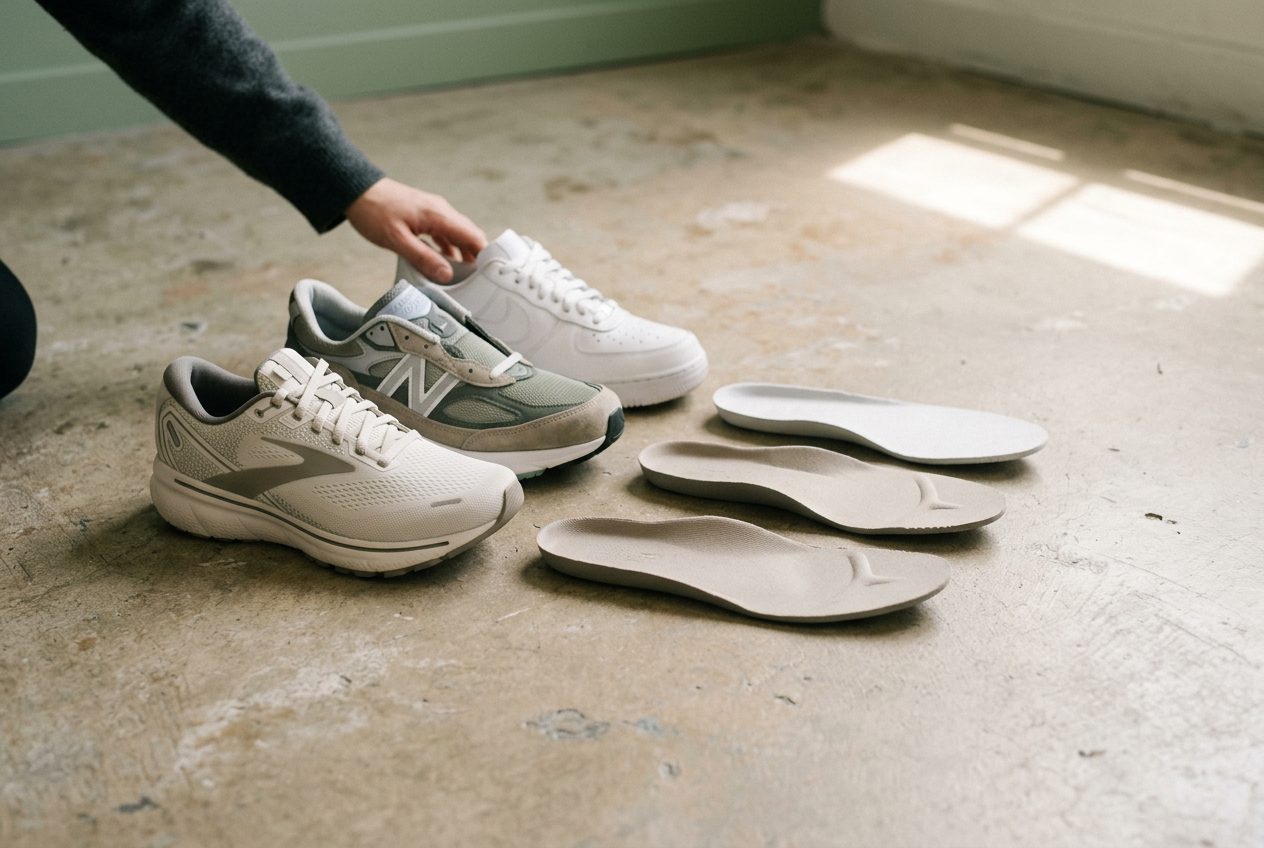
The wide Brooks Ghost 16 looked like the sensible answer to a forefoot pinch. After a week of commuting, however, its heel felt generous while the little-toe side still registered every longer walk, a poor bargain in which more shoe had produced no useful room where it mattered.
The label was not wrong. It was incomplete.
Sneaker width is a category applied around a particular part of the shoe, usually the ball of the foot, rather than a complete description of the cavity inside. It does not tell you how quickly the toe box narrows, how much space the upper leaves over the midfoot, or whether the insole follows a straight or curved footprint. Feet, inconsiderately, contain all those parts.
This is unisex fit advice. Women’s and men’s shoes use different width letters and size scales, and brands do not convert them with enough consistency to justify guessing, but the diagnostic method is the same across both departments.
Width and shape are different measurements
A width label such as wide or extra wide describes the shoe relative to that brand’s standard version. It does not promise a rounded toe box. Two shoes can measure similarly across the ball while one keeps its width toward the toes and the other sweeps inward after the big-toe joint.
That distinction explained the Ghost 16. Its engineered mesh upper, meaning a knitted synthetic fabric structured with tighter and looser zones, could yield around the forefoot, yet the insole footprint curved inward along the little-toe side. Going wide added useful circumference and upper volume, but it did not turn the front into a rectangle.
The shape differs again in a New Balance 990v6. Brand documentation offers that model in multiple widths, while the hands-on comparison showed a firmer, more structured upper and a straighter-looking insole through the forefoot than the Ghost. A shopper may therefore find that the appropriate 990v6 width feels more orderly around the toes, even though its suede and mesh construction gives less softly than running-shoe mesh. Width and flexibility are separate negotiations.
Nike’s Air Force 1 ’07 makes the opposite point from another direction. It is commonly sold without the same menu of width choices, but its leather upper and broad-looking sole can feel roomy to some feet. The removable insole still reveals taper, and the relatively stiff leather limits how much the shoe can disguise a mismatch during the first wears. A broad exterior is not an architectural drawing of the interior.
These are different sneaker types and price bands. The Ghost sits in the premium everyday-running range, the leather Air Force 1 in the mainstream lifestyle range, and the US-made 990v6 costs appreciably more. The comparison is not a race between them. It shows why a width letter cannot be used as a shortcut across constructions, lasts and purposes; a last is the foot-shaped form around which a shoe is built.
The insole is the least glamorous useful tool
Take the removable insole out before deciding that a pinching sneaker is too short. Place it flat on the floor, set your heel into its heel cup, then stand with normal weight on that foot. Wear the socks you expect to use with the shoe.
The insole is a footprint of the shoe’s base, not a perfect map of all available space. An upper can extend beyond its edge, particularly when it is soft mesh, and feet spread more under body weight than they do while dangling from a fitting stool. Still, the test exposes problems that disappear when both shoe and foot are hidden.
Look at where the toes sit rather than obsessing over a prescribed gap at the front. If the longest toe has adequate space but the little toe hangs over the outer edge, extra length will move the whole foot forward without correcting the taper. The shoe may then crease in the wrong place, the heel may lift, and the foot may slide until the narrow section catches it again. That is a shape mismatch wearing a longer-size costume.
On the Ghost 16 insole, the telling point was not the front edge. The longest toe cleared it. The outer forefoot spread beyond the printed and compressed footbed area where the insole began turning inward, matching the irritation felt after walking. A longer Ghost would have supplied vacant space ahead of the toes while loosening an already comfortable heel.
Midfoot fit needs a second check. If the foot’s inner or outer edge spills over the insole through the arch, a wider platform may help, but if the footprint fits and the top of the shoe presses down, the problem is volume. Midfoot volume means the vertical and surrounding space over the arch, and it can be restricted by the upper pattern, tongue padding or lacing even when the base is wide enough.
Loosening the laces can confirm that diagnosis. It does not create more platform under the foot, and opening them until the throat gapes can reduce heel control, but a small adjustment may release pressure over a high instep without changing size. If the sides still bulge heavily over the sole or the foot sits on the insole rim, lacing is being asked to perform structural work for which it receives no salary.
Read pressure marks before the return window closes
Indoor wear tells more than a stationary try-on, provided the shoes remain returnable under the seller’s policy. Walk on clean floors for long enough to warm the upper and let the foot spread. Stairs are useful because they load the forefoot and expose heel movement, though there is no need to stage a domestic endurance event.
Afterward, remove the insoles and inspect them under direct light. Compression, darkened patches and rubbed-away surface printing show where the foot has loaded the foam. A strong mark at the outer forefoot beside an otherwise empty toe area supports the taper diagnosis. A broad mark spilling along both sides suggests insufficient platform width, while concentrated heel-edge wear can mean the foot is shifting inside a shoe that is too loose elsewhere.
Also inspect the sock and foot immediately after taking the shoe off. A temporary lace pattern across the top points toward low volume or overtight lacing. Redness at the little-toe joint, combined with insole overhang in the same place, implicates toe-box shape more directly. Numbness, persistent pain or pressure that makes the gait change is not break-in.
Stop wearing the pair.
Pressure marks need context. A used insole records how someone walked in that shoe, but soft foam also compresses with time, and a secondhand pair may have adapted to another foot. For fitting a new pair, the most useful evidence comes from your own short indoor trial rather than a heavily worn display model.
The Air Force 1 ’07 requires particular patience here because leather changes more slowly than mesh. It may soften at flex points, but the sole platform and basic taper will not expand because the wearer has suffered with admirable consistency. The 990v6 feels more fixed around its suede overlays for the same reason. The Ghost’s mesh is more forgiving, yet its insole still sets the base beneath that stretch.
Choose the correction that matches the mark
A toe reaching the front usually calls for more length. Toes clearing the front but hanging over one side call for a less tapered shape, possibly in the same labeled width. Overhang through most of the forefoot makes a wider platform worth testing, while top pressure over a footprint that sits neatly on the insole points toward greater upper volume or a lacing adjustment.
Try only one correction at a time. Moving from standard to wide while also adding half a size makes it hard to tell which change fixed the pressure, and it can introduce heel slip that gets dismissed as the price of comfortable toes. It is not. Another model may hold the heel while carrying its width farther forward.
This is where shopping by model beats loyalty to a width letter. The Ghost 16 wide may suit a foot needing more circumference around the ball and a flexible upper, but it remains a poor match for a forefoot that needs a straighter outer edge. The 990v6 offers more width choices and firmer containment, at a much higher price. The Air Force 1 ’07 can feel spacious in casual use, though its standard-width labeling and leather structure leave fewer adjustment routes.
Bring thin and thick socks if both appear in the intended wardrobe. A sneaker that works only with its laces nearly released and the thinnest available sock has no reserve for heat, longer walks or normal daily swelling. That does not make it unusable. It makes it occasion footwear, which is a grand title for a shoe that can manage dinner but objects to the walk there.
Questions people ask
Does a wide sneaker have a wider toe box?
Sometimes, but the label does not guarantee that width continues through the toes. A wide version may add circumference around the ball or more material over the foot while retaining the standard model’s taper, so compare the removable insoles and check whether the outer toes remain on the footprint.
Should I size up if my little toe rubs?
Only if the foot is also short of front clearance. When the longest toe has room but the little toe crosses the insole edge, extra length can loosen the heel without changing the narrow section. Test a less tapered model or another width in the same length first.
What if the insole fits but the shoe still feels tight?
Pressure over the top of a foot that sits within the insole usually indicates low upper volume rather than inadequate platform width. Loosen the laces modestly and check the tongue placement; if pressure remains or heel control disappears, choose a model built with more room over the midfoot.
Can a sneaker break in enough to fix a shape mismatch?
Mesh and leather can soften, and foam can compress, but the sole platform and basic toe-box outline change little. If your foot hangs over the insole or develops focused pressure during an indoor trial, do not budget a week of discomfort for a structural correction the shoe cannot make.
One update a day
Today's fashion update, in your inbox
One fashion update each morning — no hype, no filler, just pieces worth wearing.