The Almond Toe Looks New Again. Wide Feet Pay the Fit Cost.
Shoes are getting narrower and visually longer after several years of blunt square toes. The silhouette can work on a wide forefoot, but only when the shoe’s widest point matches yours.
Women's · August 10, 2026 · 7 min read
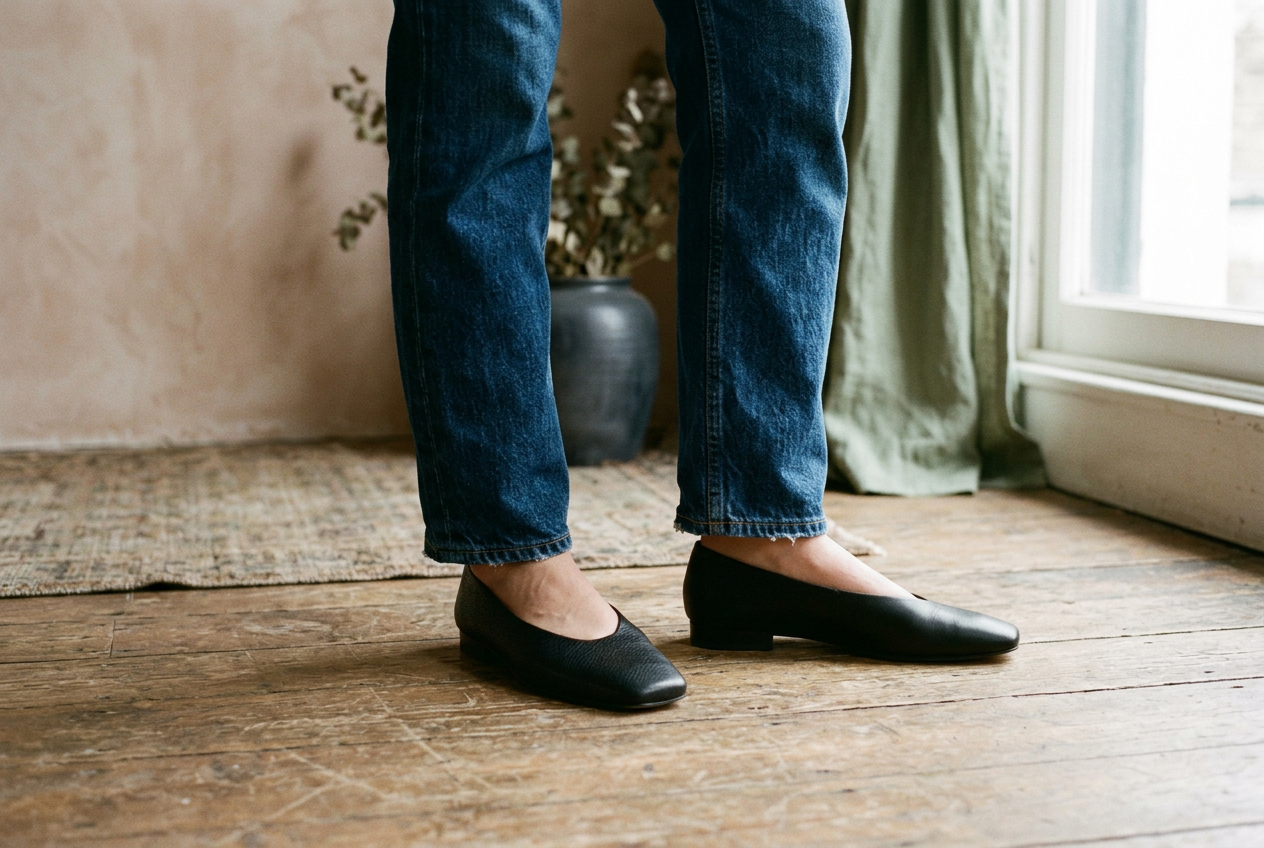
The useful shoe to keep in view is Reformation’s black leather Bethany Ballet Flat, an almond-toe style that shows why this change looks persuasive and why it can be difficult to fit. Its toe extends beyond the foot’s natural end, giving trousers and longer skirts a cleaner finish than the short, chopped-off line of a blunt square flat.
That extension is also where shoppers can misread the shoe. A long toe may contain empty space at the tip while narrowing too early around the forefoot, so the shoe looks roomy from above but presses the little-toe joint and the inside edge of the big toe. For women with wide forefeet, the important measurement is not total shoe length. It is the width and shape around the ball of the foot.
The square toe is losing its monopoly
Square toes are not disappearing. They remain useful on sandals, loafers and shoes with architectural heels, particularly when the upper repeats the same strong horizontal line. What is fading is their status as the automatic signal that an otherwise simple shoe is current.
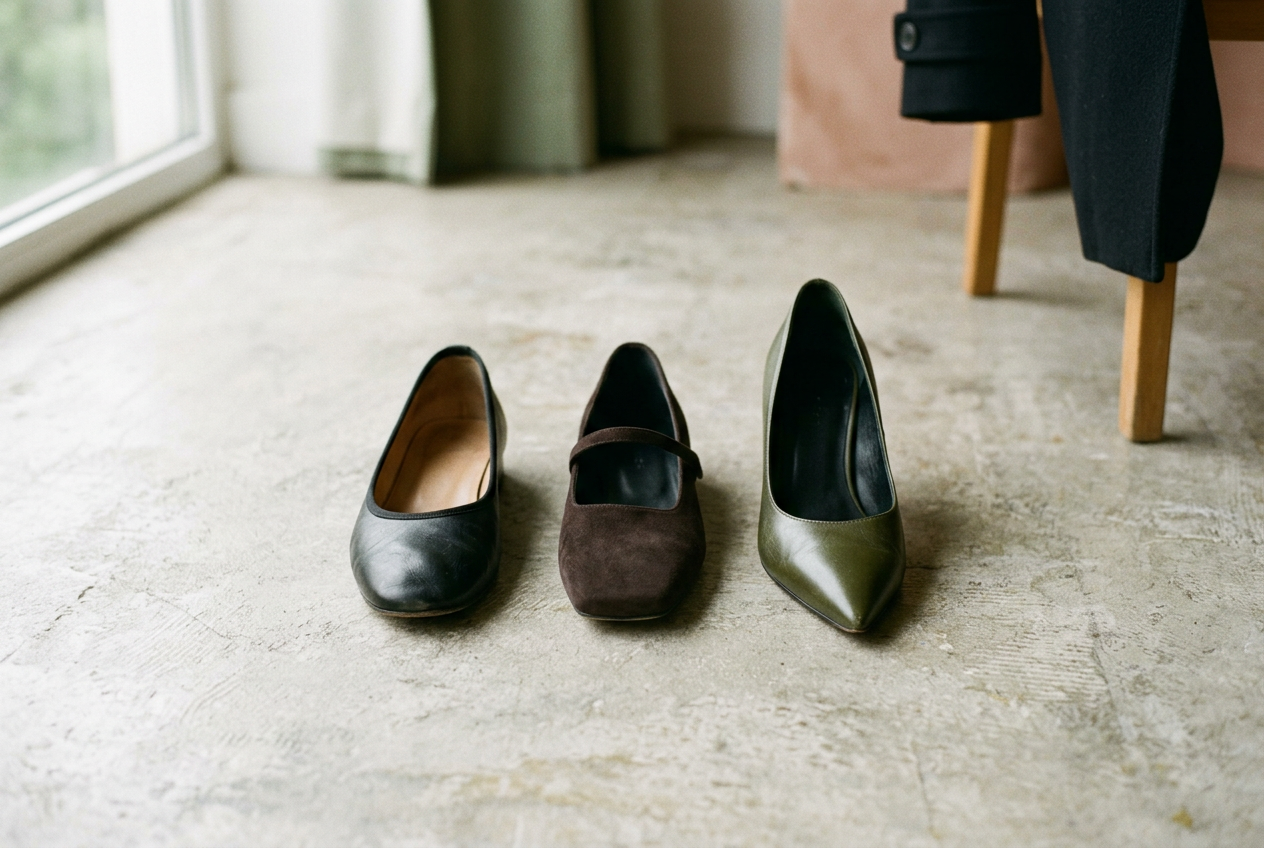
The alternative appearing across designer collections and more accessible retail is neither a severe needle point nor a conventional round toe. It is an elongated almond: softly curved at the sides, narrower at the tip and stretched forward enough to alter the proportion of the whole shoe. On a ballet flat, the effect is especially clear because there is no heavy sole or high heel competing with the outline.
The Bethany flat makes a good reference because its identity rests on that outline rather than decoration. Worn with full-length straight jeans, the black leather toe remains visible as a narrow continuation of the leg instead of forming a broad stop beneath the hem. Under a midi skirt, it can look quieter than a square flat, although the extra length may feel overly prim with a short, fitted skirt. This is a proportion shift first.
Styling follows.
A longer toe also gives mass-market manufacturers a relatively direct way to update a familiar ballet flat. The upper pattern and last, meaning the foot-shaped form around which a shoe is built, can change while the basic construction remains recognizable. That helps explain why the silhouette can travel from expensive leather shoes to synthetic versions quickly, without requiring a new category or unfamiliar styling instructions.
Visible length is not usable width
An almond toe should not force the toes themselves into an almond shape.
Inside a well-fitted version, the big toe and second toe may sit behind the decorative extension, with unused space continuing toward the point. The widest part of the foot should still meet the widest part of the shoe. If that alignment is wrong, sizing up adds length but may move the shoe’s broadest area too far forward, leaving the heel loose while the forefoot remains pinched.
Use the Bethany’s long black outline as the fitting-room test case. Stand with full weight on both feet, because the forefoot spreads under load, then locate the big-toe joint and little-toe joint through the leather. Both should sit within the broad section of the upper rather than against the taper. A faint awareness of the leather is normal.
A hard edge, visible bulge or toe resting diagonally is not a break-in issue.
The vamp, meaning the upper section covering the front of the foot, changes the calculation too. A low-cut vamp reveals more of the foot and can reduce pressure over the toe joints, but it may also let a wide forefoot spill over the sole. A higher vamp holds the foot more securely, though it can press from above when the shoe is shallow. Look from the side as well as from overhead.
If the upper is stretched smooth and tight before walking, it has little reserve for a warm afternoon.
Heel slip deserves a few minutes, not an instant rejection. An unlined or softly lined leather flat can flex differently after several steps, and a very small amount of movement may settle once the sole bends. Repeated lifting that makes the toes grip the shoe is different. That pair is too long, too voluminous at the heel or both, even if the forefoot still feels narrow.
Leather can yield, but the sole will not move sideways
Leather is often presented as the forgiving choice, and it is, within limits. A soft leather upper can relax where a toe joint presses against it, especially when the shoe is worn for short indoor periods before a full day out. It cannot relocate the edge of the outsole or turn a narrow last into a wide one.
This distinction matters with a flat such as the Bethany. If the foot sits fully over the sole but the upper feels close, modest easing may be realistic. If the little-toe joint extends beyond the sole’s perimeter, stretching the leather only creates an overhang, which can weaken the upper and leave the foot unsupported. Patent leather and heavily coated leather tend to give less readily.
Woven leather or mesh can feel accommodating sooner, although an open structure may show strain and lose its intended line.
Synthetic uppers vary, but shoppers should not count on meaningful stretch. A soft lining can disguise pressure during a quick try-on, then friction emerges once the foot warms. At the lower end of the market, roughly less than the cost of a decent pair of sneakers, prioritize a correct shape from the first wear rather than buying on the promise that the material will soften. Contemporary leather flats often cost as much as good sneakers or more; at that level, a structurally wrong fit is not worth rehabilitating with pads and stretching spray.
Sole stiffness creates another tradeoff. A thin, flexible sole lets the shoe follow the foot and can make an elongated toe feel less cumbersome, but it may offer little cushioning on hard pavement. A firmer sole protects the forefoot better, yet the projecting toe can catch if the shoe does not flex where the foot bends. Walk up a step during the try-on.
Scuffing the tip immediately suggests the extension is fighting your stride.
A wide-foot fitting sequence that takes ten minutes
Start with your usual size and the socks or hosiery you intend to wear, rather than going up automatically. Stand, walk and turn on a hard surface if the store permits it. Carpet can hide heel slip and soften pressure that will be obvious outside.
Next, press a thumb lightly over the empty tip. Space in front of the toes is acceptable in an elongated design; compression at the sides is not. Wiggle the toes without curling them. The movement may be small, but each toe should remain forward-facing rather than being pushed inward by the taper.
Then compare both feet. Fit the larger one and assess the smaller heel separately, since a thin heel grip is a less costly correction than trying to stretch an undersized forefoot. A half size up is reasonable only if the ball of the foot then aligns with the shoe’s widest point and the heel remains controlled. If added length produces more slipping without easing the side pressure, the problem is the last.
For online orders, trace each bare foot while standing and compare the outline with a removable insole when the shoe arrives. The insole is not a perfect map of internal volume, but a foot outline spilling well beyond its edges at the joints is useful evidence. Wear the shoes only on a clean indoor floor until the decision is made, checking the retailer’s return conditions before adding heel grips or bending the soles.
Width options are preferable to length substitutions. Where a true wide fitting is unavailable, look for an almond toe with a later taper, meaning the sides stay fuller until they pass the toe joints. Product photographs from directly above reveal this better than angled images. The Bethany’s silhouette is the reference, not an instruction to force that exact shape onto every foot.
How to wear the shift without buying the hardest version
A shallow ballet flat is the purest expression of the elongated almond, but it is also demanding because the foot must stay secure without laces or much upper coverage. A loafer with the same softened point gives a wide forefoot more structure and may offer a roomier instep. An ankle boot can carry the shape with less concern about heel slip, provided its last does not taper early.
Color affects how much commitment the change requires. Black emphasizes the continuous line seen in the Bethany and works neatly beneath dark jeans or trousers. A brown or burgundy almond toe still looks directional, but the lower contrast against denim and bare skin makes the extra length less severe. Pale colors show every part of the outline and can make a very long flat dominate an outfit.
There is no need to discard a square-toe shoe that fits. A moderately squared sandal still has practical space across the toes, and a softened square loafer is unlikely to look stranded next season. The buying decision is narrower: if choosing a new flat now, an almond shape has more momentum, but a foot pushed outside the sole pays too much for that update.
Questions people ask
Are almond-toe shoes bad for wide feet?
Not by definition. A wide foot can fit an almond toe when the shoe stays broad through the toe joints and narrows only in front of them. Avoid pairs where the taper begins beside the big-toe joint, even when there appears to be plenty of empty length at the tip.
Should
I size up in an elongated almond-toe flat?
Try your regular size first. Size up only when the larger shoe places the ball of your foot at its widest section without causing heel slip; extra length alone rarely solves side pressure. A wide fitting or a later-tapering last is usually the better answer.
Will leather almond-toe shoes stretch after a week?
Soft leather may ease slightly over a prominent joint after several short wears, but the outsole does not become wider. If your foot already sits beyond the sole edge, or the toes angle inward, a week of wear is more likely to mark the shoe than correct its fit.
How much empty space should an elongated toe have?
Some unused space in front is part of the design, so the usual visual check at the tip can mislead. Judge the shoe at the toe joints instead: the foot should sit over the sole, the toes should point forward and the heel should remain secure during a normal stride.
One update a day
Today's fashion update, in your inbox
One fashion update each morning — no hype, no filler, just pieces worth wearing.