Slim Sneakers Look Right. Their Toe Boxes May Not.
Low-profile sneakers sharpen an outfit but leave less room for cushioning, wide forefeet and orthotics. The Adidas Samba OG shows where the tradeoff starts.
August 10, 2026 · 7 min read
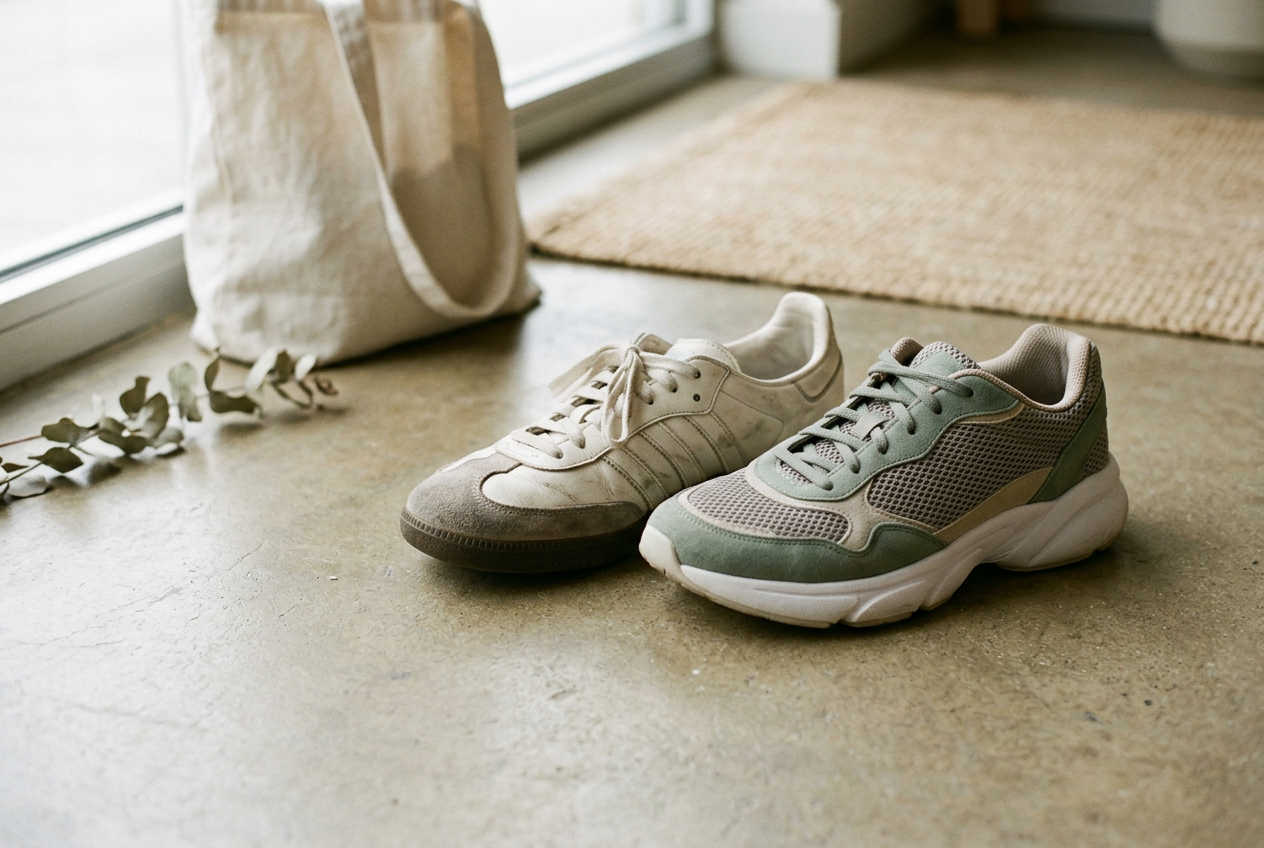
The sneaker getting dressed has moved closer to the ground. Adidas Samba OGs, Puma Speedcats and Onitsuka Tiger Mexico 66s make wide trousers fall cleanly, let a long skirt keep its line and look less technical under tailoring than a thick mesh runner. Fashion coverage and retail assortments have been building around that narrower profile, while the exaggerated sole that dominated recent seasons is beginning to look less automatic.
The useful question is not whether slim sneakers are back. They are. It is who has to give up comfort to wear them.
I kept returning to one black-and-white Adidas Samba OG during a week of evaluation. Its leather upper, suede T-toe overlay and gum rubber outsole make it a clear example of the shift: visually compact, low under the heel and firm beneath the forefoot. With straight jeans and loose trousers, it did exactly what the silhouette promises. By late afternoon, though, pressure at the outside toes became the part of the outfit I noticed most.
This is unisex coverage because the mechanics apply across wardrobes, although the size printed on the box may follow a men's or women's scale. Foot length, forefoot shape and internal volume matter more than the department where the shoe is displayed.
The shape changed before the comfort did
A slim sneaker is not just a regular sneaker with a thinner sole. Its toe often tapers sooner, the upper sits closer to the foot and the midsole, meaning the cushioning layer between foot and ground, has less depth available to absorb repeated impact. That combination produces the neat line. It also removes the spare space that lets a foot spread during a long day.
The Samba's toe box, the interior space around the toes, looked longer from above than it felt inside. The suede overlay holds the front shape, while the leather softens with wear but does not turn a tapered outline into a broad one. My longest toe had enough forward clearance. The smaller toes met the sidewall as the foot warmed and spread.
That distinction matters in a fitting room. Many shoppers test length by pressing a thumb in front of the longest toe, then assume the size works. A slim shoe can pass that test while failing across the ball of the foot. If the upper draws a visible curve around the outside toes, or the little toe sits partly on the edge of the sole rather than over its flat base, going longer may create heel slip without solving the shape mismatch.
The better test takes a few minutes. Stand with full weight on both feet, then rise onto the balls of the feet and walk down a hard aisle rather than remaining on carpet. The toes should move independently, the heel should stay seated without aggressive lacing, and the widest part of the foot should align with the widest part of the shoe. Leather may relax at a pressure point.
The sole platform will not become wider.
Low cushioning is not neutral
The Samba OG felt firm rather than punishing during short trips. On a longer stretch of pavement, the thin platform passed more surface texture through the shoe than the running-style alternative I would normally choose, a mesh sneaker with a rounder forefoot and a deeper foam layer. Some readers will prefer that ground contact. Others will start changing their stride before they identify the shoe as the cause.
Low-profile construction tends to work best for someone already comfortable in flat casual shoes, particularly when the day mixes sitting with modest walking. It asks more on hard floors, long commutes and standing-heavy days because there is less material available to soften each step. A soft foam insert can alter the first impression, but it cannot make a shallow shoe deep.
Watch the heel when assessing cushioning. If an added insole lifts it above the stable back of the shoe, the foot may slide and the collar may rub even though the sole feels softer. Tightening the laces to hold that raised heel often transfers pressure across the top of the foot. The result is more padding underfoot and a worse fit everywhere else.
That is where the low sneaker can become poor value. The silhouette spans affordable canvas pairs, mainstream leather models and luxury versions costing several times more, yet a higher price does not purchase more internal space. Paying for softer leather or finer finishing may reduce break-in at the upper. It does not change a narrow sole into the correct platform for a broad forefoot.
Orthotics need depth as well as length
An orthotic, meaning an insert designed to support or alter how the foot sits in a shoe, occupies more room than a thin factory liner. Slim sneakers rarely advertise that lost volume in photographs. From the side, the low wall that looks elegant is the same wall expected to contain the foot, the original liner and the added device.
Bring the orthotic to the fitting. If the factory liner lifts out without damage, remove it before adding anything; stacking both can push the heel too high. Check that the orthotic lies flat rather than curling at the sides, then lace the shoe and make sure the eyelet panels do not pull far apart. A foot spilling over the support is not a break-in problem.
The Samba remained the limiting case in my evaluation. Its compact upper held the foot securely with the standard interior, but the silhouette offered little spare vertical room for a substantial insert. A thin comfort insole is a different proposition from a structured orthotic with a raised heel cup. Readers who rely on the latter should start with removable liners, a deeper heel counter and a toe shape that follows the foot, even if the resulting sneaker looks slightly fuller.
There is a reasonable compromise: choose a visually low shoe with a broad, foot-shaped sole rather than the narrowest retro model available. A tonal upper and outsole reduce visual bulk, while straight lacing and minimal overlays preserve the clean effect. The trend is readable without copying its most restrictive version.
The outsole tells you where the shoe will age
The outsole is the rubber layer that meets the ground. On the Samba, the gum rubber felt secure on dry pavement and picked up visible grime quickly, although one week was not enough to judge meaningful tread loss. Its low edge also showed scuffs that a thicker, sculpted runner would hide among deeper grooves and mixed materials.
Thin does not automatically mean short-lived. Dense rubber can outlast soft exposed foam, and a stitched or well-bonded cupsole may age better than its delicate profile suggests. The concern is where the wearer concentrates force. If you drag one heel, roll heavily onto an outer edge or walk on rough pavement, a shallow tread has less material to surrender before wear changes the way the shoe sits.
Inspect the heel corners and the area beneath the ball of the foot after the first several wears. Early smoothing in one small zone matters more than general dirt. Rotating the pair slows concentrated wear, while wiping grit from gum rubber keeps the edge looking intentional; neither measure can restore tread once it has flattened.
A fit standard for joining the shift
Start with the outline of your bare foot on paper. This is not a sizing system, but it exposes a mismatch that mirrors and product photographs can disguise. If the forefoot stays broad or squared near the toes, a sharply tapered sneaker is unlikely to become comfortable merely because the leather is soft. Look for a rounder front and a sole that remains wide beneath the smaller toes.
Next, decide where the pair will work. The Samba was convincing for a dinner, an office day with limited walking and short city errands. It was not the shoe I wanted for hours on hard pavement. Assigning a slim sneaker a narrower job is more useful than expecting it to replace a cushioned everyday pair.
Socks alter the fit enough to test. A thin, smooth sock preserves room and suits the close interior; a thick athletic sock can create pressure at the toe seam and across the instep. Wear the sock weight you intend to use before the return window closes, preferably later in the day when feet are less likely to be at their smallest.
Finally, reject any pair that needs numb toes, heel slip or tightly cinched laces to look right. Half a size up can help when the foot needs length, but it is not a dependable width adjustment, and sizing down to stop heel movement usually makes a tapered front worse. Different model, not different pain threshold.
The low-profile shift remains attractive because it changes proportion without demanding a complicated outfit. I am less decided on whether its narrowest examples deserve to become default shoes. My Samba OG stayed in rotation, beside the rounder mesh pair rather than in place of it.
Questions people ask
Are slim sneakers comfortable for all-day walking?
They can be comfortable when the toe shape matches the foot and the wearer already tolerates firm, flat shoes. For long days on pavement, a thin midsole transmits more ground feel and leaves less cushioning to compress. Test the pair on a hard surface and keep a deeper-soled alternative for walking-heavy plans.
Should I size up in narrow sneakers?
Size up only when you need more length. A longer shoe may still taper across the same part of the forefoot, while the extra space can let the heel slide. If your smaller toes sit over the sole edge or the upper pulls around them, choose a broader model instead.
Can slim sneakers hold orthotics?
Some can, particularly models with a removable factory liner and enough depth around the heel. Bring the orthotic when trying them on and avoid stacking it over a thick liner. If the insert raises your heel above the shoe's back or spreads the lacing panels apart, the interior is too shallow.
Do gum soles wear out quickly?
Gum rubber is not inherently fragile, and dense rubber may wear better than exposed foam. Durability depends on tread depth, walking surface and where your stride concentrates pressure. Check the heel corners and forefoot after several wears; localized smoothing is a more useful warning than dirt across the whole sole.
One update a day
Today's fashion update, in your inbox
One fashion update each morning — no hype, no filler, just pieces worth wearing.