Suede Bags Look Right for Summer. White Clothes Pay the Price.
Suede has crossed out of fall, helped by softer shapes and summer color. A cobalt shoulder bag against white cotton shows both the appeal and the maintenance problem.
November 10, 2026 · 7 min read
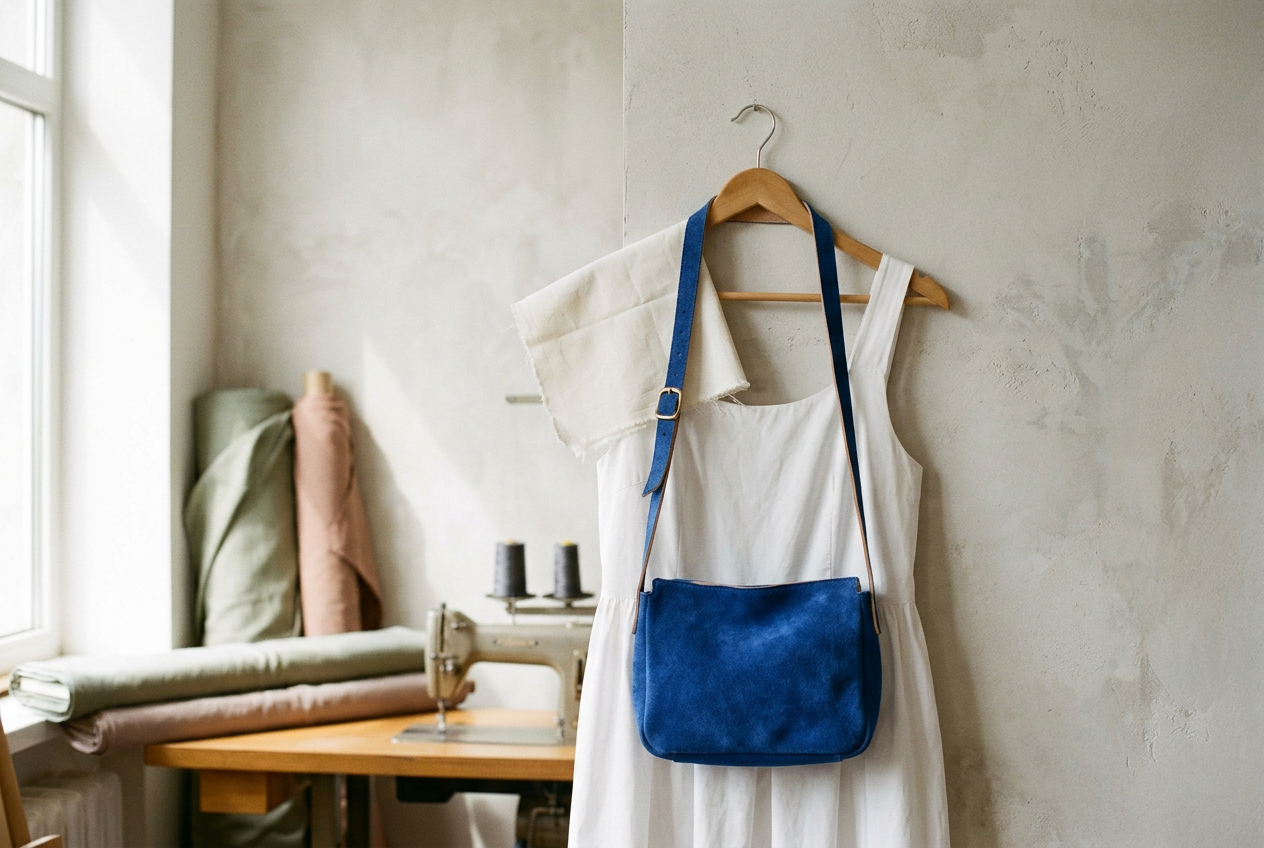
The useful case is an unlined cobalt-blue suede shoulder bag worn at hip level with a white cotton poplin dress. The color makes the familiar bag shape feel current, while the matte surface looks less formal than smooth leather in strong summer light. It is also close to a worst-case pairing: concentrated dye, a pale absorbent fabric, heat, movement and repeated contact at the hip.
That blue bag explains why suede has seasonal momentum and why buying it still requires more thought than buying the same silhouette in coated canvas. The advice here applies across wardrobes. Color transfer does not care whether a bag was filed under women’s, men’s or unisex accessories.
Suede has stopped waiting for September
Recent fashion coverage and retail assortments have treated suede as a warm-weather texture rather than a material to store beside boots until fall. The shift is clearest in slouchy shoulder bags, compact crossbody styles and soft totes, where the surface supplies interest without metal-heavy decoration. Brown remains visible, but pale sand, butter tones and dense reds or blues make the seasonal change easier to read.
Suede is leather finished to expose a soft fibrous surface; depending on construction, that surface may come from the underside of a hide or from a split layer. Its nap, meaning the raised fibers that create the soft feel, absorbs light rather than reflecting it. That is why cobalt suede can appear deep in shade and almost chalky where the fibers have been brushed in another direction.
Warm-weather styling strengthens that effect. Suede looks substantial beside poplin, linen and washed denim, yet its muted finish keeps saturated color from reading like patent leather. A cobalt shoulder bag with a white dress feels deliberate even when both pieces have plain shapes. The texture does most of the work.
The movement is not proof of a permanent reset. Suede bags have returned often enough that the broad category is not a micro-trend, although particular versions, especially oversized bohemian shapes or unusually bright colors, may date faster. What appears to be fading is the assumption that suede must arrive in tobacco brown and leave when temperatures rise. Whether shoppers keep carrying it through humid weather is less settled.
The color decision changes the risk
Pale suede seems like the obvious partner for light summer clothes. A cream, oat or sand bag is less likely to leave a dramatic dark mark on white cotton if loose color transfers, but it collects visible evidence from the world around it: denim rub, makeup, pavement dust and the oils left by hands. Cleaning can also change the nap, producing a smoother patch that catches light differently even after the original mark has faded.
Saturated suede gives the strongest styling return. The cobalt bag can replace jewelry or a printed layer, and it makes navy, khaki or gray clothing look less predictable without requiring a complicated outfit. Saturation also raises the stakes. Excess dye may crock, meaning it rubs from the leather onto another surface, especially when friction and moisture are present.
A deep red, green or blue mark on white poplin can be more difficult to ignore than dust on the bag.
Dark brown, charcoal and black conceal routine grime better, which makes them easier to carry repeatedly, but darkness should not be mistaken for guaranteed colorfastness. Dye quality, finishing and the amount of loose pigment matter. A black suede bag can still leave a gray cast on a cream coat or pale trouser leg, and the problem may emerge only after body heat, humidity or a long walk has increased friction.
The practical ranking therefore depends on which object you are most willing to protect. Pale suede prioritizes the clothing but asks more care of the bag. Saturated suede offers the clearest trend signal while creating the most conspicuous transfer risk. Dark suede is forgiving about dust yet still deserves testing before it spends a day against white fabric.
A white-cloth test is more useful than the color name
Before removing tags, check the retailer’s return conditions and the maker’s care instructions. Then press a clean piece of white cotton against an inconspicuous area, such as the underside of the strap, and rub it several times with moderate pressure. Repeat with another piece of cotton that is barely damp, not wet. Visible color on either cloth is a warning against pairing the bag with pale clothing.
This small test cannot reproduce hours of summer wear, and passing it does not make the cobalt bag rainproof. It does reveal loose surface dye before the dress becomes the testing material. The damp round matters because perspiration and humid air can make transfer more likely, although soaking suede during a home test may create a mark of its own.
Also inspect the edges and strap attachment points. Those areas receive pressure, and unfinished suede on the back of a strap may transfer more readily than the main panels. An unlined bag adds another contact zone: loose pigment or fibers can reach a pale wallet, canvas pouch or the cover of a paperback.
If a product page offers no material detail beyond “suede effect,” confirm whether the bag is leather or a synthetic microfiber. A synthetic version can reproduce the matte appearance at a lower price, often below the cost of a decent pair of sneakers, but stain resistance and dye stability still vary by finish. Genuine suede bags begin around familiar leather-accessory prices and extend far into designer pricing; a high price does not remove the need for the cloth test.
Summer changes the maintenance calculation
Dry dust is manageable. Use a dedicated suede brush with light strokes, following the direction of the nap before gently working a flattened area in more than one direction. Brushing too hard can create a visibly rough patch, particularly on pale suede, so the goal is to lift the fibers rather than scrub the surface.
Rain is less cooperative. Water can darken suede temporarily, leave tide lines as it dries or alter the texture where droplets land. If the cobalt bag gets caught in a shower, blot rather than rub, keep it away from direct heat and support its shape while it dries. Stuffing it loosely with plain, colorfast tissue or a clean cloth helps a soft bag avoid collapsing into creases.
A suede protector may reduce the speed at which moisture and grime enter the surface, but it can deepen the color or change the hand, meaning how the material feels. Test any product on a hidden patch and follow the bag maker’s guidance. Spraying is not a one-time conversion into an all-weather bag, and overspray around hardware or contrasting leather can leave another problem to solve.
Storage takes space rather than expertise. Keep the bag in a breathable dust bag, away from plastic and strong light, and do not press it under heavier accessories. The cobalt shoulder bag’s charm depends on an even nap; a flattened side panel will show against white poplin more readily than it would against a dark coat.
The trend is worth buying selectively
For someone who travels by car, works indoors and rotates bags, summer suede can earn its upkeep. Choose a compact shape that touches less of the body, test it before first wear and carry the cobalt version with navy, mid-wash denim or darker prints until its color stability is clear. The white dress can wait.
The calculation changes for commuters, frequent travelers and anyone whose summer includes sudden rain. A smooth finished-leather bag offers easier wiping, while coated canvas handles repeated contact with clothing with less anxiety. Neither gives saturated color the same soft depth, but both demand less weather checking.
Pale suede is the harder investment call. It may stay visually quieter after the current color cycle passes, yet every handle mark remains part of the ownership experience. At a designer price, professional cleaning may be worth considering, though no cleaner can promise that altered nap or dye loss will disappear. At a lower price, the care burden can exceed the value a buyer hoped to get from an easy seasonal bag.
I remain undecided on the cobalt shoulder bag with the white dress. The combination captures the shift better than a brown suede tote ever could, but the sensible first outing is with darker clothing and a clear forecast. That compromise is less photogenic. It is also how the bag gets a second summer.
Questions people ask
Do suede bags transfer color onto clothes?
They can. Transfer is more likely when the bag contains loose dye and repeatedly rubs against pale fabric, particularly in humid conditions or near perspiration. Test a hidden section with dry and barely damp white cotton before wearing dark or saturated suede against white clothing.
Is pale suede easier to wear in summer?
Pale suede coordinates easily with white, linen tones and light denim, and any transferred color may be less conspicuous. The bag itself shows hand oils, denim rub and street dust sooner, however, while spot cleaning can leave a change in texture even when the stain improves.
Can a suede bag be carried in rain?
A brief accidental shower does not guarantee permanent damage, but water may leave tide marks or flatten the nap. Blot moisture, support the bag while it dries and avoid direct heat. A tested protector can add resistance, though it does not turn suede into an all-weather material.
Which suede color is the lowest-maintenance choice?
Dark brown or charcoal usually hides ordinary dust and handling better than cream suede, but neither is automatically colorfast. If the bag will touch pale clothes, its white-cloth test matters more than the shade name. Smooth leather or coated canvas remains the lower-maintenance alternative for daily summer use.
One update a day
Today's fashion update, in your inbox
One fashion update each morning — no hype, no filler, just pieces worth wearing.