Soft Suede Totes Are Rising. Summer Clothes Pay the Price.
The slouchy suede tote looks right for summer, but pale clothes, dark denim, rain, and raw interiors complicate daily wear. Here is what to inspect before buying.
October 26, 2026 · 7 min read
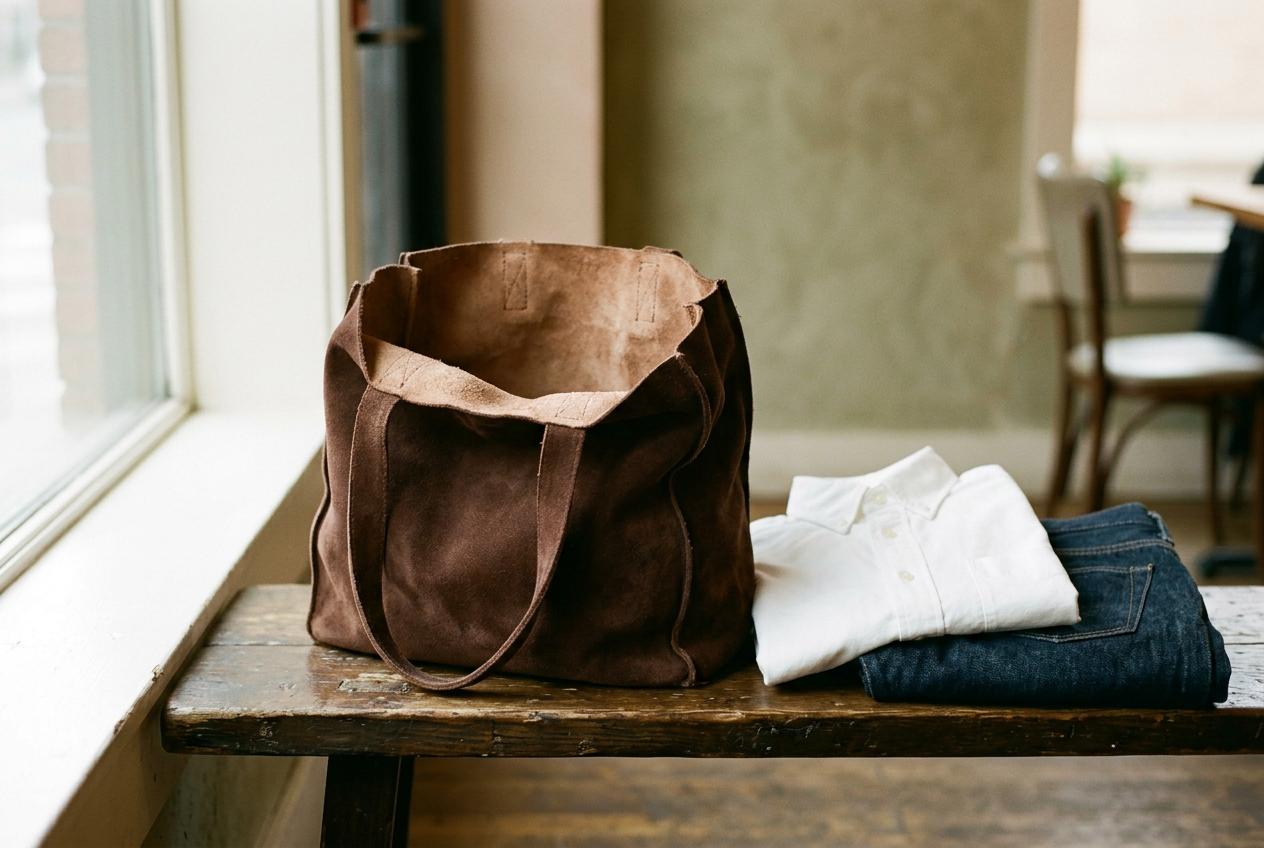
The soft tote has loosened up. Instead of the stiff, polished leather carryall that holds its rectangular shape, current versions tend to be wide, lightly structured, and cut from suede that folds against the hip. The appeal is immediate: a large bag looks less corporate when its sides collapse, while brown, tobacco, sand, and muted red give summer whites some weight.
Use one shopping case as the anchor for the practical test: a secondhand chocolate-brown suede shoulder tote, large enough for a laptop, with two broad straps, a magnetic closure, and no fabric lining. It is the sort of bag that may cost roughly what a decent pair of sneakers costs secondhand, while a new designer version can move well beyond that. The advice here is unisex because the material behaves the same way against a white shirt, dark jeans, or a pale suit regardless of which department supplied them.
That brown tote can look better with softened corners and a little collapse. It becomes harder to recommend once the dye reaches a cream trouser leg.
The color can travel in either direction
Suede has a nap, meaning the fine raised fibers that create its soft, directional surface. Those fibers increase the contact area between bag and clothing, especially on a slouchy tote that swings, folds, and rubs against the body rather than sitting away from it. Heat and perspiration add moisture. A dark suede bag worn against a pale linen shirt or ivory skirt therefore faces a tougher test than the same material used for an evening clutch.
The relevant failure is crocking, the transfer of surface dye through rubbing. A bag can look evenly colored on a shelf and still leave brown or red marks on light fabric after repeated contact, particularly around the lower corners, side seams, and back panel. Colorfastness, meaning how well a material retains its dye during wear or cleaning, cannot be judged from saturation alone.
Dark denim creates the reverse problem. Indigo can rub onto a sand, cream, or pale gray tote, and removing that blue cast from suede without disturbing the nap is difficult. The chocolate-brown inspection tote is safer with denim than a beige one would be, yet its own dye presents more risk to a white poplin shirt. There is no universally safe summer color here.
Mid-brown merely hides incoming marks better while remaining capable of making outgoing ones.
Before buying, ask for permission to press a clean white cotton cloth against a concealed area and rub it several times. Test dry first. If store policy allows, repeat with a barely damp section of cloth, since moisture can loosen excess dye; do not perform a damp test on a secondhand bag you do not own without the seller’s consent. Any visible color on the cloth is a reason to treat the bag as an occasional piece, not a daily tote for pale clothes.
Rain changes more than the surface
A summer bag still meets sudden rain, spilled water, and damp skin. Suede absorbs moisture more readily than a smooth coated leather surface, which can leave tide marks or flatten the nap where droplets dry. Saturation also adds weight, and a large unstructured tote may stretch around the base when it is carrying a laptop or bottle.
Protector spray can reduce exposure, but it does not make suede waterproof. It may also deepen the color or alter the hand, the way a material feels to the touch, so any product needs a patch test in a hidden spot and time to dry outdoors or in strong ventilation. A treatment schedule is another practical cost: the bag has to be emptied, brushed, sprayed, dried, and brushed again rather than grabbed from the hook after a wet commute.
The chocolate-brown tote has an advantage over pale suede because small water marks are less obvious. Its open top and soft base remain liabilities. If the forecast regularly dictates what can be carried, the bag is not functioning as an everyday bag, however good its proportions look.
An unlined interior saves weight and exposes the work
An unlined tote lets the suede fall naturally, but the inside matters as much as the exterior. Raw suede can shed fine fibers onto a light wallet, charging cable, or tablet sleeve. Pens and cosmetics can mark it permanently, while dark interior dye may transfer to pale pouches when humidity rises.
Turn the opening outward gently and inspect the seams without pulling them. Stitching should be even, with no widening holes where the handles meet the body. Check the base from inside for thin, glossy patches, which suggest repeated abrasion, and run a dry tissue along the interior corners to look for loose dye or fiber shedding. A magnetic snap should sit on reinforcement rather than tugging directly at one soft layer of suede.
A removable zip pouch helps with small items but does not support the bag’s base. A thin organizer insert can add structure and separate contents from raw suede, although a rigid insert changes the slouch that made the tote appealing. For a laptop, use a padded sleeve and confirm that the loaded base stays level. If the center drops while the corners lift, the bag is being asked to carry more structure than it contains.
Inspect the bag in the order it will fail
Start with the handles. On the chocolate-brown tote, broad shoulder straps are preferable to narrow ones because the load spreads across more material, but width does not correct stretching around the attachment points. Hold the empty bag by each strap and look for elongated stitch holes, rippling suede, or a difference in length. Darkened handles are normal on secondhand suede; a sticky or polished surface is harder to reverse.
Next, brush the nap lightly in opposite directions with clean fingers. The shade should shift as the fibers move. Areas that remain flat and shiny may be compressed by wear or contaminated by oil, while bald spots indicate lost fibers rather than dirt that can be cleaned away. Pay close attention to the back panel, where clothing contact is greatest, and to the lower corners that meet seats and floors.
Then inspect color. Compare the protected material beneath a strap or pocket edge with the exposed body. Some fading can be attractive, but a strong mismatch means future marks may appear as high-contrast patches. Use the dry white-cloth test if permitted, and examine the cloth before moving to another area so that the source of any transfer is clear.
Check the interior after that. Smell matters: heavy fragrance can be covering smoke, mildew, or stale moisture, none of which is a minor fix in an absorbent material. Look for powdery residue around seams and for water lines at the base. If an unlined interior feels unusually brittle, flex only a small edge rather than folding the body.
Finish by loading the bag with items similar in weight to what you carry. A secondhand seller may not allow this, but a new-bag fitting should. Put the tote on the shoulder over the thickest clothing you expect to wear, confirm that the opening remains reachable, and walk long enough to see where the back panel lands. If it repeatedly strikes a pale trouser leg, colorfastness matters more than how comfortable it felt in front of the mirror.
The price has to include the limits
New suede totes range from accessible mall pricing to luxury levels, while secondhand examples can offer better material for the price if their handles and corners remain sound. Construction should decide whether the saving is real. Replacing a lining that does not exist, rebuilding stretched handle anchors, or correcting broad dye transfer can cost enough to erase the advantage of buying used, and some surface loss cannot be repaired at all.
At the price of a decent pair of sneakers, a clean secondhand tote can make sense as a dry-weather bag worn with medium and dark colors. At several times that level, I would want a stable dye test, reinforced handles, a protected base, and either a proper lining or an interior finish that does not shed. A return policy has value here because color transfer may only become visible after friction.
The trend remains persuasive but conditional. For a reader who wears white linen, pale tailoring, or raw dark denim through summer, smooth leather or tightly woven canvas is easier to live with. The chocolate-brown suede tote earns its place when softness matters more than weather resistance and the wardrobe around it can absorb the risk. I am less convinced by pale suede as a daily commuter bag, particularly when it is unlined.
Questions people ask
Do suede tote bags transfer color onto clothes?
They can, especially when dark suede rubs against pale clothing in heat or moisture. Before buying, request a dry white-cloth test on a concealed area. Visible dye does not mean the bag is unusable, but it does make white shirts, cream trousers, and long days of shoulder contact poor pairings.
Can dark jeans stain a pale suede bag?
Yes. Indigo dye can transfer from dark or raw denim onto cream, sand, and light gray suede, usually where the bag rests against the hip. The blue cast may be difficult to remove without changing the nap, so carry pale suede away from new denim until the jeans have stopped shedding noticeable dye.
Is an unlined suede tote practical for a laptop?
Only with added protection. Use a padded laptop sleeve, keep liquids in a separate sealed pouch, and check whether the loaded base sags. An organizer can shield the raw interior and spread the load, but a stiff insert will make a deliberately slouchy tote look and feel more structured.
What should
I check when buying a secondhand suede tote?
Inspect handle attachments, flattened or missing nap, interior water lines, odor, and dye transfer in that order. Load the bag if the seller permits, then note where it touches your clothing. Walk away if the suede is bald at stress points or if a dry cloth picks up enough color to leave a clear mark.
One update a day
Today's fashion update, in your inbox
One fashion update each morning — no hype, no filler, just pieces worth wearing.