Dark Jeans Can Blue-Stain a Pale Leather Bag Before Lunch
A protectant may buy time, but leather finish matters more. Test the bag and the denim before they meet, then treat any blue cast according to how deeply it has settled.
October 19, 2026 · 8 min read
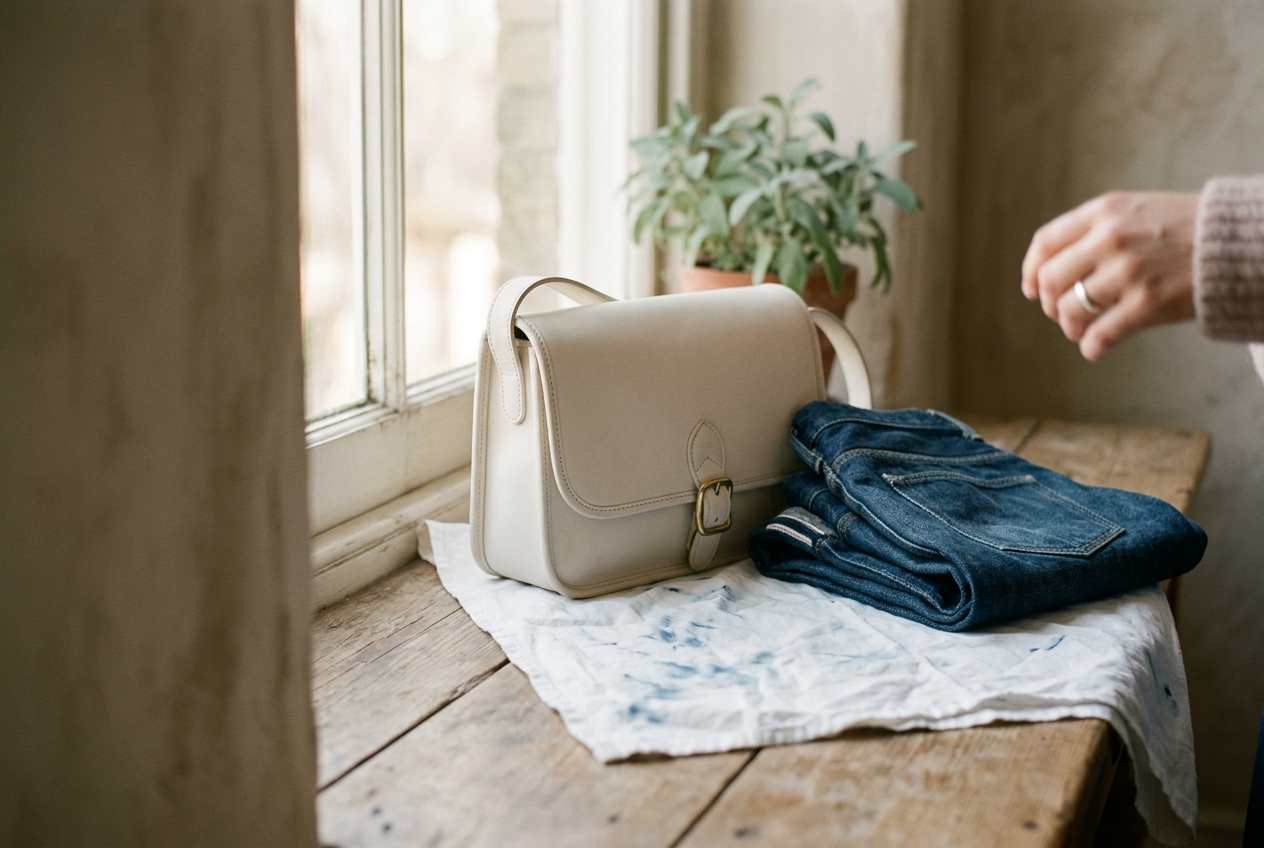
Take one high-risk pairing: a chalk-colored smooth calfskin shoulder bag, worn at the right hip against new raw-indigo jeans. The bag swings as you walk. Its back panel presses into the upper thigh whenever you sit. By the end of a commute, a faint blue crescent can appear exactly where the two surfaces kept rubbing.
That chalk bag is the decision test throughout this guide. The advice is unisex because dye transfer follows materials and contact, not the department where the bag or jeans were sold.
The first-wear problem starts with loose indigo on the denim surface. Raw or heavily dyed jeans may release color through friction, while moisture from rain, humidity, or body heat can make transfer more likely. Pale leather shows the result first, but the more important variable is the bag’s finish. A blue mark sitting on a durable topcoat is a different problem from dye that has entered porous leather.
Check the leather before buying a spray
Smooth leather is not one uniform material. Pigmented leather, meaning leather covered with an opaque color layer and protective finish, usually gives transferred dye less room to sink in. The chalk calfskin bag may have this construction even though the grain still feels supple.
Aniline leather, meaning leather colored with transparent dye and little protective coating, remains more absorbent. Semi-aniline leather has a light protective layer but can still mark. Suede and nubuck have raised fibers rather than a smooth sealed face, so indigo can lodge between those fibers and resist ordinary wiping.
Start with the maker’s care information. Look inside the bag, check its product page if it still exists, or ask the retailer to identify the leather and recommended protectant. A generic instruction such as “genuine leather” tells you little about surface protection. A bag described as untreated, vegetable-tanned, aniline, suede, or nubuck needs more restraint.
Do not try to identify an unknown finish with water. A droplet test can leave a dark ring on absorbent leather, turning a care check into the first stain. If the finish remains unclear and the bag is valuable or difficult to replace, skip the home experiment and ask a leather-care specialist.
Test the jeans first
Before the chalk bag reaches the right hip, rub a clean white cotton cloth across the jeans where the bag will sit. Use firm pressure for several passes. A dry test that leaves the cloth blue shows that the denim can transfer color through ordinary friction.
Repeat with a second white cloth that is barely damp, not wet, if the jeans’ care label permits exposure to water. The damp test approximates a humid day or light rain. Strong blue transfer means the pale bag should not touch those jeans yet, even if the denim looks dry and the outfit has already been planned.
Washing may remove some excess dye, but it also changes raw denim and can affect shrinkage or fading. Follow the denim label rather than treating repeated washing as a universal fix. If preserving a dark, crisp finish matters, the lower-risk choice is physical separation: carry the bag by hand, shorten its strap so it sits above the jeans, or wear a longer top between the two surfaces.
For the chalk shoulder bag, strap position is not a minor styling detail. A bag that lands on a cotton shirt is safer than one that repeatedly strikes the upper thigh, and moving it by a few inches may prevent more damage than an expensive bottle of protector.
Patch-test any leather protectant
A protectant is a sacrificial barrier intended to slow moisture and soil from reaching the finish. It is not an invisible shield, and no suitable product makes pale leather immune to concentrated indigo under pressure.
Choose only a formula labeled for the bag’s leather type. Smooth-leather products may flatten suede or nubuck. Conditioners can deepen pale leather, while wax-heavy formulas may change its hand, meaning how the surface feels when touched. Silicone-based sprays can also alter sheen or complicate later professional treatment, depending on the finish.
Patch-test inside a slip pocket, beneath a removable strap end, or on a covered section near the base. The spot must be discreet yet made from the same leather as the body; testing fabric lining says nothing about how chalk calfskin will react. Apply the smallest amount directed by the product maker, then let it dry for the full stated interval.
Inspect the patch in daylight. Compare color, shine, texture, and flexibility with untreated leather nearby. Rub it with a white cloth to check whether the bag’s own pale pigment lifts. Any darkening, tackiness, stiffening, or color release is a stop sign.
If the patch remains unchanged, treat the bag according to the product directions, with ventilation and enough drying time before wear. More product is not more protection. Saturating seams or edges can produce tide lines, soften adhesives, and leave residue around hardware.
Return to the chalk bag only after the protectant has cured as directed. Then repeat the practical contact test by pressing an inconspicuous protected area against the denim for a short interval. If blue appears, the pairing still needs a clothing barrier or a different bag.
Prevention works better than cleaning
The safest first wear is controlled. Do not debut a pale leather bag against unwashed dark denim on a rainy day, especially when the strap length places the bag directly on the hip. Check the weather, carry it away from the jeans, and inspect the back panel during the day rather than waiting for a broad blue patch.
A temporary barrier can be part of the outfit. A cotton overshirt, longer jacket, or untucked knit keeps the leather from grinding against denim, provided the garment itself does not bleed color. This is a better tradeoff than wrapping the bag in a coating that changes the chalk finish.
Hardware and edges deserve attention too. Piping often receives a different coating from the main panel, and folded corners take more friction. On our chalk calfskin example, the lower back edge will usually meet the jeans before the front flap does, so that is the area to inspect first.
Decide whether the blue is on or in the leather
A removable surface transfer often looks slightly gray-blue and follows contact points. It may lessen when lightly buffed with a clean, dry white microfiber cloth. Work on a small section and check the cloth after each pass. Stop if the bag’s own color appears on it.
Penetrated color tends to look embedded rather than dusty. It may follow pores, creases, raw edges, or scratches, and it will not shift with gentle dry buffing. On aniline leather, suede, nubuck, or worn corners where the finish has broken down, transferred indigo can enter the material instead of resting above it.
Do not keep rubbing because the first pass failed. Friction can burnish leather, creating a shinier patch, while repeated cleaner use can spread blue dye beyond its original edge. Once the chalk bag’s pale pigment begins to lift, the repair has changed from stain removal to finish restoration.
For finished smooth leather, use only a cleaner approved by the bag maker or labeled for that exact leather category. Put a small amount on a white cloth rather than pouring it onto the bag. Test in the same hidden location used for the protectant, then dab or wipe with minimal pressure and allow the area to dry before judging it.
Avoid alcohol, acetone, hand sanitizer, household stain removers, abrasive sponges, and melamine foam. These can dissolve or abrade the topcoat that holds the bag’s color. The blue may seem to disappear because the chalk finish disappeared with it, leaving a dull, pale, or sticky patch that requires recoloring.
Know when to stop
Stop home cleaning if the leather darkens and stays dark after drying, the surface feels tacky, the bag’s color transfers to the cloth, or the stain sits in suede, nubuck, aniline leather, stitching, or a raw edge. A specialist may clean the transfer, recolor the area, or renew a damaged finish, but absorbed indigo is not always fully reversible.
Value matters here. Professional work makes sense for an investment bag, a sentimental piece, or a pale color that would be hard to match at home. For an inexpensive everyday bag with an unknown coating, the service may cost enough that prevention remains the only proportionate strategy.
The chalk calfskin bag should meet the raw-indigo jeans only after both tests are clear: the denim releases little or no blue onto white cloth, and the bag’s hidden protectant patch shows no change. If either test fails, change the strap position or choose a darker bag.
Questions people ask
Can dark denim stain a leather bag after it has been washed?
Yes. Washing can remove some loose indigo, but dark jeans may continue to release dye through friction, especially when damp. Test the thigh and waistband areas with a white cloth before carrying a cream, white, blush, or pale gray bag against them.
Does waterproofing spray prevent denim dye transfer?
A compatible protectant may slow surface transfer and make early marks easier to remove, but waterproofing does not guarantee resistance to indigo. Its performance depends on the leather finish, application, curing time, and repeated contact, so a hidden patch test and a denim rub test still matter.
Can a magic eraser remove blue dye from white leather?
Melamine foam is abrasive and can remove the bag’s protective coating or pale pigment along with the transferred dye. The area may look cleaner at first but dry dull or uneven. Use a maker-approved leather cleaner on finished smooth leather, or stop and consult a specialist.
Is absorbed denim dye permanent on leather?
It can be. Dye that enters unfinished leather, exposed fibers, worn corners, suede, or nubuck may resist cleaning because it is no longer sitting on the surface. A leather-care specialist may reduce the stain or recolor the area, but full removal cannot be assumed.
One update a day
Today's fashion update, in your inbox
One fashion update each morning — no hype, no filler, just pieces worth wearing.