Sweaty Weather Dulls Sterling Silver. Don’t Polish It Yet.
A cloudy sterling chain may need soap, not polish. Learn to separate sweat and sunscreen residue from tarnish, chlorine damage, and intentional darkening before you clean.
October 30, 2026 · 8 min read
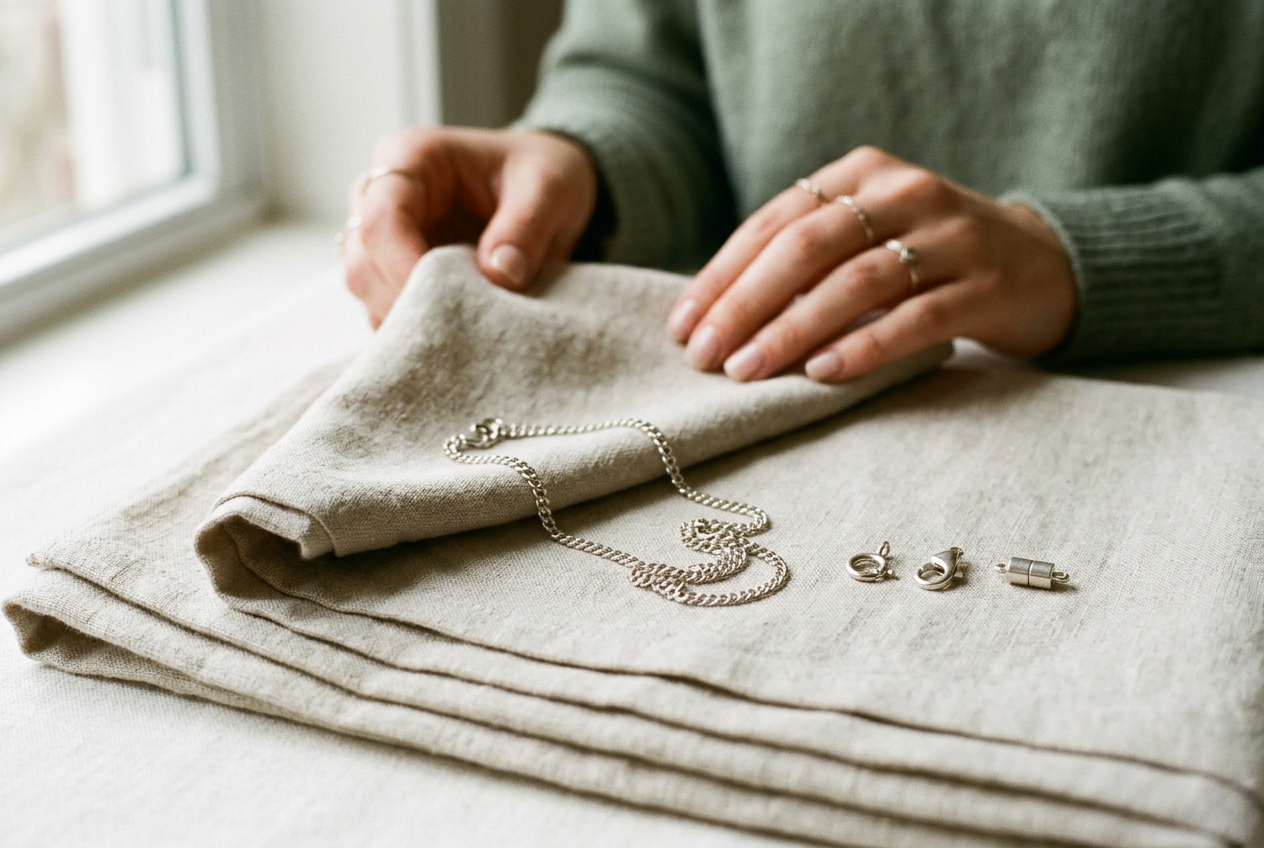
The useful test is an uncoated 18-inch curb chain stamped 925, worn at the collarbone through a humid week and under daily sunscreen. Its flat links collect a gray film along the neck-facing side, while the outer face loses its crisp shine. That change can look like tarnish, but reaching for a silver cloth first may remove more metal than the chain needs.
This is unisex care advice. The chemistry does not change with the wardrobe, although close-fitting chains, rings and cuffs tend to collect more sweat and product because they stay against the skin.
Start with the surface, not the color
Sterling silver contains at least 92.5 percent silver, with the remaining alloy commonly made from copper to give the soft precious metal more strength. The 925 stamp refers to that silver proportion. It does not mean the piece is pure silver, waterproof or immune to changes at the surface.
Ordinary tarnish is usually silver sulfide, a dark compound that forms when silver encounters sulfur-containing substances in the environment. Humidity and perspiration can help reactions along, but sweat alone is not the full explanation. Air pollution, some cosmetics, rubber and sulfur-rich materials can all contribute, which is why the same chain may stay bright for months and then darken quickly in a different room, storage pouch or routine.
Tarnish often develops as a yellowish cast before shifting through brown, gray or black. It follows the exposed metal rather than sitting only where a creamy product accumulated. On the curb chain, a uniform warm-gray tone across the outer links would point more strongly toward tarnish than the cloudy stripe limited to the side touching a sunscreened neck.
Residue behaves differently. Sunscreen, body lotion, dry shampoo and skin oil can settle between links and soften the reflection without chemically darkening all of the silver underneath. The film may feel slightly draggy under a fingertip. A gentle wash lifts it.
Polish removes it too, but polish also abrades or chemically loosens a minute amount of the silver surface, so using it as the first response spends finish for no reason.
Give the chain a wash before a polish
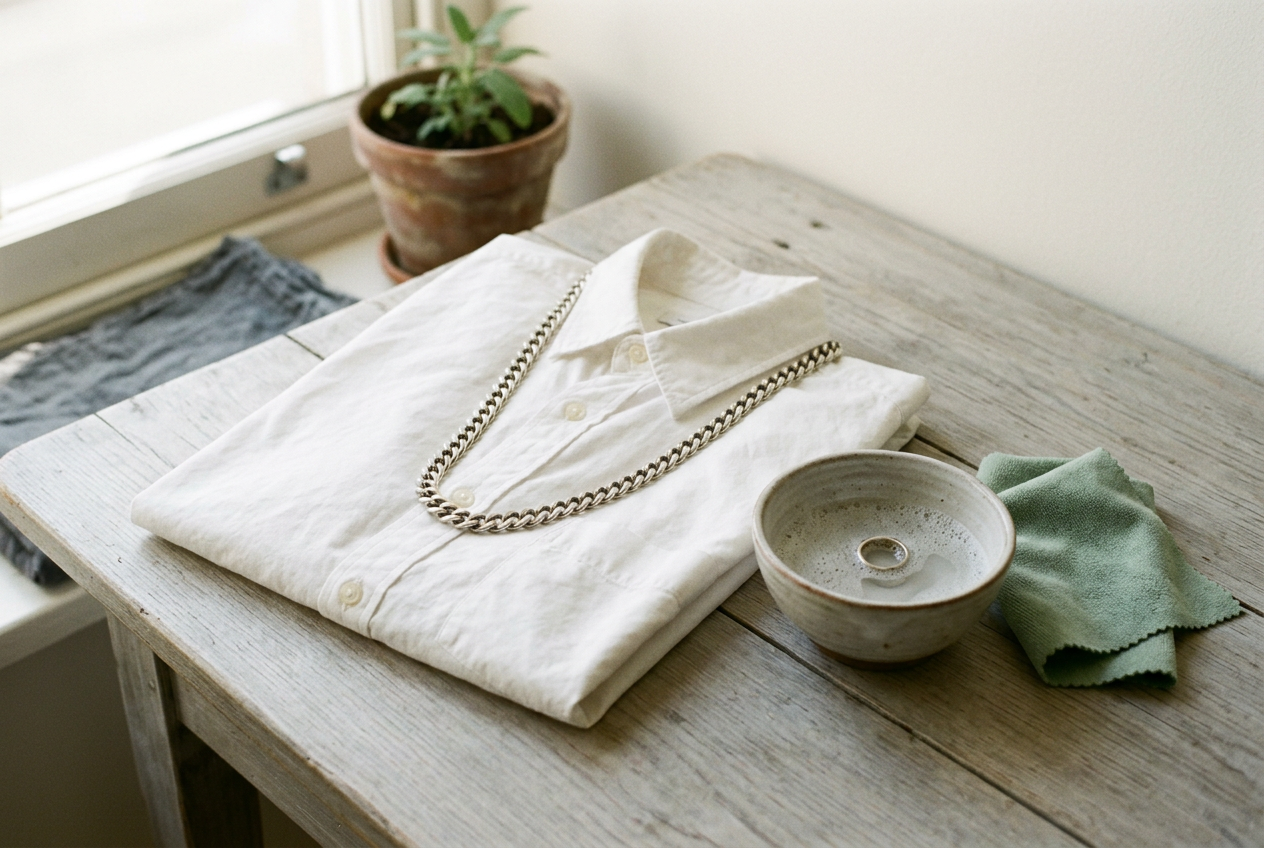
Put a small amount of mild dish soap into lukewarm water, wet a soft lint-free cloth and wipe the curb chain link by link. A very soft toothbrush can reach between plain metal links, provided there are no delicate stones, glued components or intentionally darkened recesses. Rinse thoroughly, because dried soap creates another dull film, then pat the chain dry and let the spaces between the links air-dry before storage.
The job takes a few minutes. It also answers the important question. If the neck-facing gray stripe disappears and the silver regains an even reflection, the problem was mainly product and body residue. Stop there.
Jewelry with pearls, turquoise, opals or other sensitive materials needs care tailored to the stone and setting; soaking a mixed-material piece on the strength of generic silver advice is a poor trade. The same caution applies to jewelry with adhesive-set elements. Clean only the exposed metal with a barely damp cloth or take the piece to a jeweler if its construction is unclear.
To protect clothing, finish the rinse. Soap and loosened black material left in a chain can transfer onto a white collar, particularly where a necklace sits under a shirt. Drying matters too. A clean cotton cloth should come away without a dark, greasy streak before the chain returns to pale fabric.
Use a polishing cloth only on tarnish
A silver polishing cloth contains fine polishing agents that lift tarnish from the surface. On a plain, solid sterling curb chain, it is the sensible next step when washing leaves a yellow, brown or gray cast. Hold one section at a time and use light pressure along the visible faces. Black residue on the cloth is expected; it reflects removed tarnish and a very small amount of metal.
Do not scrub until every link looks chrome-bright. Sterling has a softer, warmer reflection than many plated fashion metals, and chasing a mirror finish can round crisp link edges over repeated cleanings. Toothpaste and gritty household powders are worse choices because their abrasiveness is hard to control. Silver dip works quickly, but it can reach every crevice, affect some stones and strip finishes the owner meant to keep.
The curb chain in this case has no decorative blackening, so a cloth can move across the broad link faces after the soap wash. Even then, the inner joints do not need aggressive work. Tarnish tucked into moving contact points is less visible, while polishing compound trapped there can turn into fresh residue against the neck.
A polishing cloth should not be laundered unless its maker explicitly says otherwise. Washing can remove the treatment that makes it effective. Replace it when it becomes ineffective or loaded with grime, rather than compensating with harder pressure.
Intentional oxidation changes the rule
Oxidized silver is sterling that has been deliberately darkened, often with a sulfur-based treatment, to create a black or charcoal patina. Designers use it to emphasize engraving, deepen the spaces between chain links or make raised silver details stand out. That dark layer is a finish. It is not dirt.
Repeated polishing removes intentional oxidation because the cloth cannot distinguish a designed silver-sulfide layer from unwanted tarnish. On a ring with bright high points and black recessed lines, confine the cloth to the raised areas and keep it out of the grooves. A liquid dip is especially blunt. It can lighten the whole design in one cleaning, leaving the pattern flat and uneven.
This is where the plain curb chain remains a useful control. Its darkening is accidental unless the product description or original appearance says otherwise. A curb chain sold with blackened link edges needs different handling even though both pieces carry the same 925 stamp, and the safest routine for that version is mild washing, thorough drying and only selective polishing where bright silver was intended.
Once oxidation has been polished away, continued cleaning will not bring it back. A jeweler may be able to reapply the finish, but that adds cost and may not recreate the exact shading. When the design depends on dark recesses, professional cleaning is worth more than a stronger home product.
Chlorine calls for restraint
Pool water and household bleach are not ordinary sweat exposure. Chlorine can react with silver and, more readily, with the copper in sterling, causing rapid discoloration and potentially damaging the surface. A single swim does not guarantee a ruined necklace, but wearing sterling into a chlorinated pool creates a problem that no aftercare can reliably prevent.
Remove the chain before swimming or cleaning with bleach. If it was exposed, rinse it promptly in fresh lukewarm water, wash with mild soap and dry it fully. A light discoloration that remains on a plain piece may respond to a polishing cloth. Persistent blotches, roughness, pitting or a change around a clasp deserve a jeweler’s inspection rather than repeated rounds of abrasion.
Salt water also leaves deposits and can be hard on joints and clasps, so the practical rule is broader than tarnish chemistry: jewelry worn tightly against the skin should come off before swimming. Store the dry piece separately in a closed bag or anti-tarnish pouch, away from bathroom humidity and rubber bands.
Read skin marks separately from metal condition
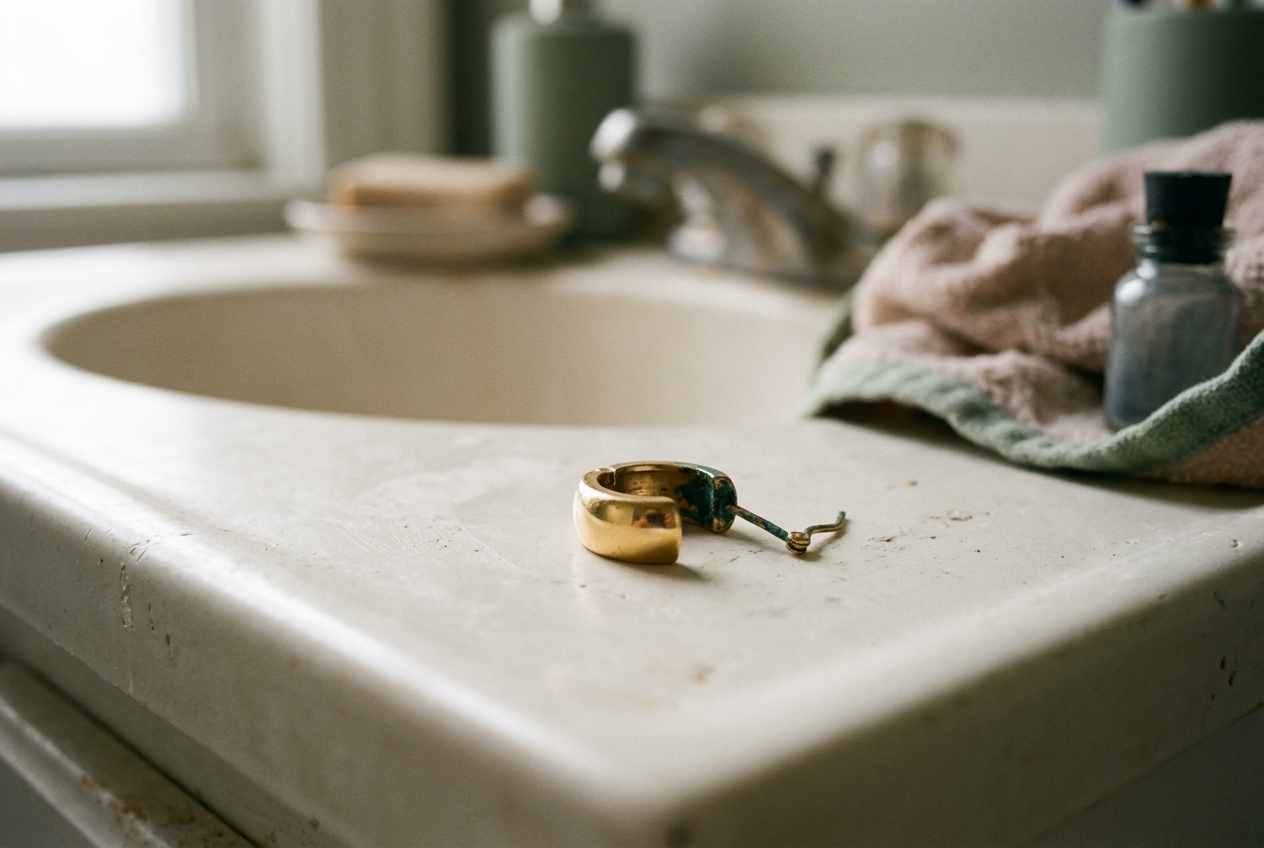
A gray or black streak on the neck does not automatically mean an allergy or a fake chain. Tarnish particles can mix with sweat, oil or cosmetics and rub onto skin, particularly under a close chain that moves all day. Copper compounds may leave a greenish mark. Both are surface clues, not diagnoses.
Wash the skin and clean the necklace, then note whether the mark returns without lotion underneath. The 18-inch curb chain may also sit too tightly in hot weather, when perspiration and friction increase at the collarbone; moving to a slightly longer length reduces contact but will not correct poor-quality alloy or chlorine damage.
Itching, swelling, burning or a persistent rash is different from a wipeable color mark. Remove the jewelry and do not keep testing it against irritated skin. Sterling is commonly alloyed with copper, but alloy composition and surface contamination can vary, especially when a seller gives little material information. Ongoing symptoms belong with a qualified medical professional, not another polishing session.
Questions people ask
Does sweat tarnish sterling silver?
Sweat can speed surface changes by keeping the metal warm and damp, but sulfur-containing compounds usually drive silver tarnish. Sweat also mixes with sunscreen, skin oil and cosmetics to create a removable gray film, so wash the piece before deciding that it needs polish.
Why does sterling silver leave a black or green mark on skin?
A black or gray mark may come from tarnish particles mixed with oil or cosmetics. Green can reflect compounds formed from copper in the sterling alloy. A wipeable mark is not the same as an allergic rash; itching, swelling or persistent irritation means the jewelry should come off.
Can a polishing cloth ruin oxidized silver?
Yes. Intentional oxidation is a dark surface finish, and a silver cloth removes it along with unwanted tarnish. Polish only the bright raised areas if the design depends on black recesses. Skip liquid dip, which can strip darkening from places that are difficult to control.
Should sterling silver be removed before swimming?
Yes, especially before entering a chlorinated pool. Chlorine can discolor sterling and attack the copper in its alloy, while salt water can leave deposits around links and clasps. If the chain went into the water, rinse it promptly, wash with mild soap and dry it before assessing any remaining damage.
One update a day
Today's fashion update, in your inbox
One fashion update each morning — no hype, no filler, just pieces worth wearing.