Gold-Filled Beats Vermeil Where Jewelry Rubs Most
Hand-washing and sunscreen do not affect every gold layer equally. Construction, friction and the location of exposed edges determine whether gold-filled or vermeil is the sounder buy.
October 18, 2026 · 8 min read

Use one ordinary object as the test case: a 2-millimeter half-round band worn on the index finger of the dominant hand, left on through hand-washing and exposed to sunscreen during application. It catches a towel. It touches soap dispensers and bag handles. Product gathers beneath it.
That narrow band makes the construction difference visible. A gold-filled version generally places a more substantial layer of gold alloy over its core, while vermeil uses a thinner electroplated layer over sterling silver. Neither construction has a universal lifespan, and neither should be sold as permanent. The useful distinction is where each one begins to show wear and what appears underneath.
The advice here is unisex because skin contact, ring placement and daily friction matter more than the wardrobe around the jewelry.
The gold reaches the surface in different ways
Gold-filled jewelry bonds a sheet or layer of gold alloy to a base-metal core with heat and pressure. Under U.S. labeling guidance, an item described as gold-filled generally has a gold-alloy portion equal to at least one-twentieth of the metal’s weight; a mark such as “1/20 14K GF” identifies that proportion and the gold alloy used.
The core is commonly brass, though construction varies. The bonded gold is generally much thicker than a standard plated finish, which gives rubbing more material to work through before the base appears. That does not mean every surface is equally protected. Cut edges, drilled holes and soldered joins can expose or disturb the core, especially when a piece has been formed from layered sheet or wire.
Vermeil, pronounced ver-MAY, is gold electroplated over sterling silver, an alloy containing 92.5 percent silver. Under U.S.
guidance, the gold must be at least 10 karat and the coating at least 2.5 microns thick, with a micron meaning one-thousandth of a millimeter.
That silver base is part of vermeil’s appeal. If the gold wears thin, the material underneath is still precious metal rather than brass. Electroplating also suits sculptural forms that would be difficult to make from gold-filled stock, although raised details and contact points can still lose color before recessed areas do.
Return to the slim ring. On the gold-filled version, the top surface may keep its color while the lower edge or a poorly finished join reveals the core. On the vermeil version, the coating is continuous when new, but repeated contact at the underside can polish through it sooner because the gold layer starts thinner.
Hand-washing adds friction as well as water
Gold does not disappear because it meets tap water once. The problem is repetition. Soap loosens skin oils, water sits beneath a close band, and a towel rubs the same narrow contact points after every wash. Residue left in the inside curve may prompt more vigorous cleaning later.
Fit changes the equation. A ring that rotates freely rubs around more of its circumference, while a close ring traps moisture and cleanser against the skin. The 2-millimeter band has another quirk: its slim edge concentrates contact into a small area, particularly when the wearer grips a steering wheel, lifts a bag or stacks it against another ring.
Frequent hand-washing therefore favors gold-filled for an everyday ring, assuming its edges and joins are properly covered. Vermeil makes more sense when the ring comes off before washing, appears in an occasional stack or has a design worth replating later. If removing a ring throughout the day is unrealistic, solid gold is the more durable alternative, though the price jump is substantial.
Sunscreen creates a residue problem
Sunscreen formulas differ, so exposure does not produce one predictable chemical reaction. The recurring issue is the film left on skin and jewelry. That film attracts dust, settles around settings and chain links, and increases the amount of wiping or washing needed to restore the surface.
Our slim index-finger band receives sunscreen directly as the opposite hand spreads product over the arms, neck or face. The underside gets the heaviest buildup. If the ring is then twisted under running water and rubbed with a towel, the cleaning action adds mechanical wear to the exposure itself.
Vermeil can tolerate ordinary contact, but its limited gold thickness leaves less room for repeated polishing. Gold-filled has a larger reserve of gold alloy in comparable plain forms, though sunscreen can still collect at a seam or exposed edge. “Water-resistant” marketing does not resolve those construction details.
Apply sunscreen before putting on jewelry when practical, then let the surface film settle rather than sliding a ring through fresh product. For jewelry already exposed, rinse according to the maker’s care instructions and dry it with a soft cloth using pressure light enough to lift moisture, not polish metal.
Wear starts at predictable contact points
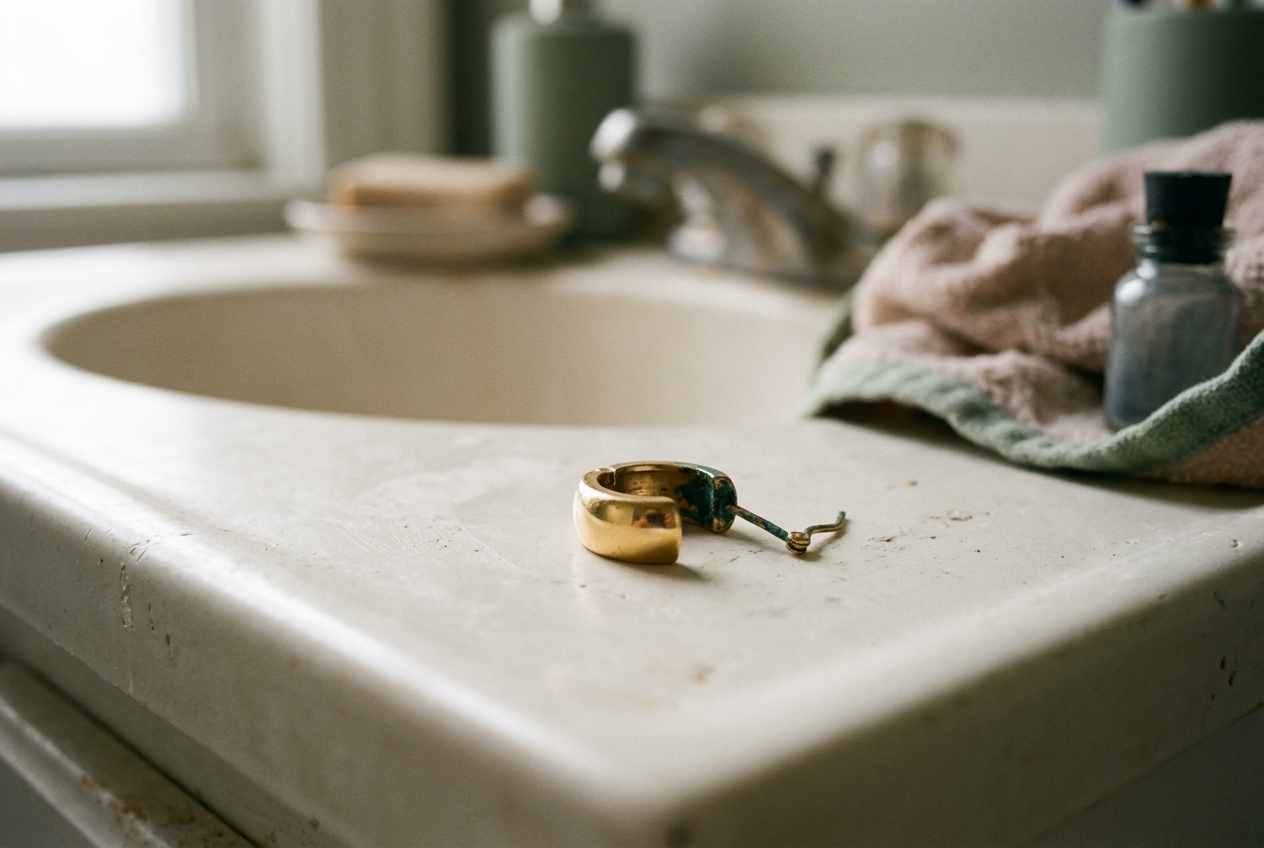
On a ring, inspect the underside of the band, the edges between adjacent fingers and any point touching another ring. Vermeil usually reveals a cool silver-gray tone as its gold wears away; exposed sterling can later tarnish. Gold-filled may show a warmer or darker core at an edge, and brass containing copper can discolor skin under some conditions.
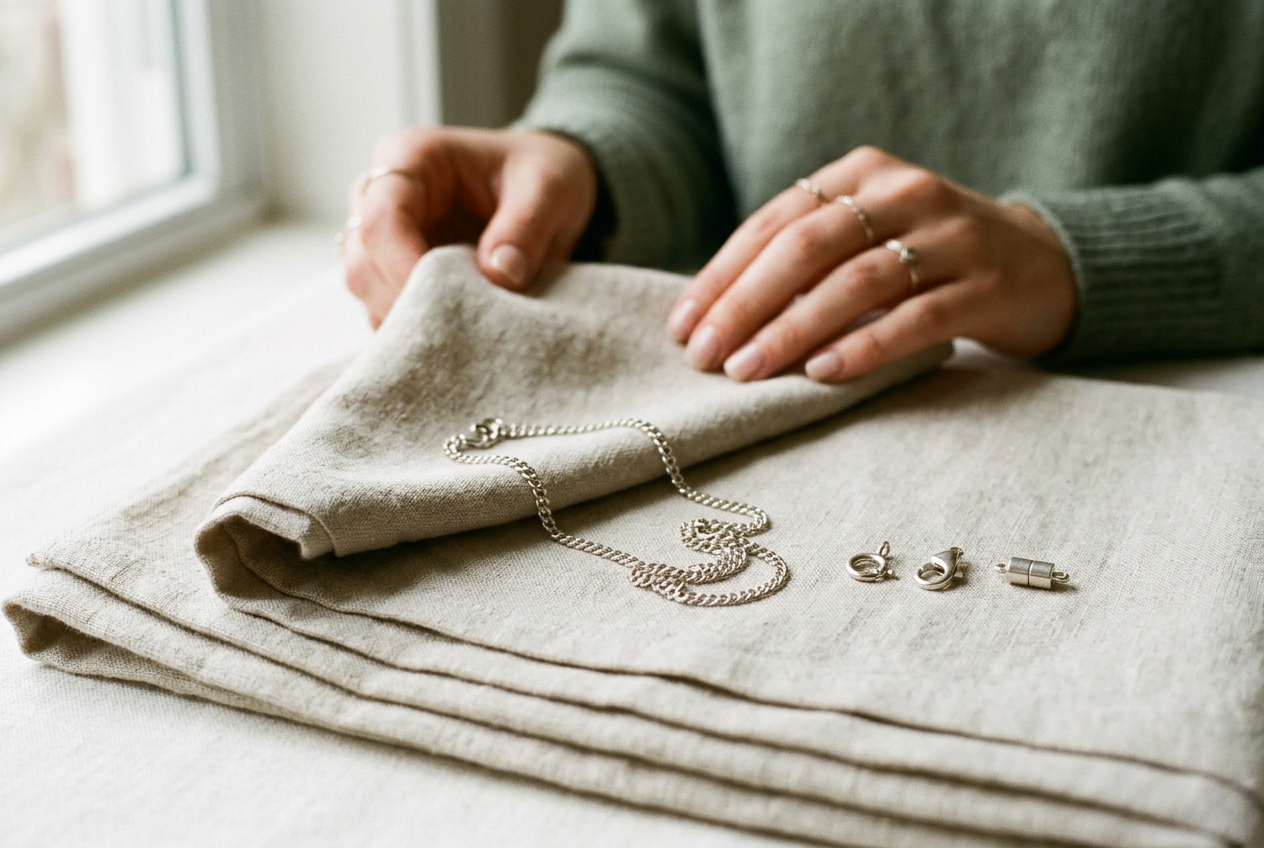
A bracelet wears differently. The section resting on a desk receives steady abrasion, while the clasp and connecting rings move against one another. Gold-filled is the more defensible daily choice for a plain chain or cuff because wrists meet tabletops, sleeves and bag straps throughout the day. Check whether the clasp is also gold-filled, since findings can use a different finish from the main chain.
Necklaces face less blunt friction, which gives vermeil a stronger case. A pendant still slides over sunscreen at the chest, and fine links rub at the clasp, but a necklace worn over fabric or added after body products settle can preserve its finish more easily than the index-finger band. Gold-filled remains preferable for a chain worn continuously, particularly if the pendant bail travels back and forth along it.
Match the material to the habit
For a ring that stays on during every hand wash, choose well-finished gold-filled or move up to solid gold. Look closely at cut edges, interior seams and solder points rather than relying on the color of the top surface. A vermeil ring can be a reasonable fashion purchase, but daily dominant-hand wear asks too much of a thin coating unless periodic replating feels acceptable.
For a bracelet worn at a keyboard or stacked beside a watch, gold-filled earns its usual premium through construction rather than prestige. Vermeil is easier to defend for a wider cuff worn away from the wrist bone, especially if it comes off for exercise, bathing and product application.
For a necklace, the answer is closer. Vermeil offers a sterling silver base and can support detailed pendant shapes at a mid-tier jewelry price, while gold-filled is a practical choice for a simple chain expected to handle regular skin contact. In both cases, inspect the clasp, jump rings and pendant bail because a seller may describe the main component prominently while listing different materials for the findings.
Both categories sit between inexpensive flash-plated jewelry and solid gold, but price alone cannot identify the better finish. Vermeil may cost more because of its silver base or design work. Gold-filled may deliver better wear value in a plain chain. Ask for the gold karat, the gold-filled fraction or vermeil thickness, the base metal and the material used at the clasp.
If those details are absent, the label gives too little information for an investment-minded purchase.
Care should reduce rubbing
Take the slim ring off before applying sunscreen when that habit is manageable. After hand-washing, dry beneath it rather than rotating it repeatedly against wet skin. Use mild soap only when cleaning is needed, rinse away residue and pat dry with a nonabrasive cloth.
Avoid aggressive polishing cloths unless the maker recommends one for that finish. A cloth designed to remove tarnish can also remove plated gold. Store pieces separately so ring edges, bracelet clasps and necklace chains do not polish one another between wears.
Questions people ask
Is gold-filled jewelry waterproof?
Gold-filled jewelry generally handles ordinary water exposure better than thin plating, but “waterproof” is too broad a promise. Soap residue, pool chemicals, saltwater and towel friction create different stresses, while exposed cut edges or solder points may behave differently from the broad gold-covered surface.
Does vermeil turn silver when the gold wears off?
The visible surface can shift toward the cool gray-white color of sterling silver where the gold coating has worn through. That silver may tarnish later, especially around recessed areas or product buildup, but it can often be cleaned or professionally replated if the underlying piece remains sound.
Which material is better for stacking rings?
Gold-filled is generally more defensible because neighboring bands rub along their edges whenever the fingers move. Even so, a gold-filled cut edge or seam can expose its core. Vermeil works better in a stack worn occasionally, with enough space to prevent constant metal-on-metal contact.
Can sunscreen ruin a gold-filled necklace?
A single application is unlikely to define the necklace’s lifespan, but repeated residue and cleaning can accelerate wear at the clasp, pendant bail and moving links. Apply sunscreen first, add the necklace after the film settles, and wipe away buildup gently rather than polishing the chain with pressure.
One update a day
Today's fashion update, in your inbox
One fashion update each morning — no hype, no filler, just pieces worth wearing.