Peep-Toe Shoes Are Back. Tights Expose the Fit Problem.
The revived peep-toe pump looks convincing with bare feet. Add tights, and toe seams, slippery linings and an oversized opening can turn a polished shoe into a seasonal novelty.
Women's · October 31, 2026 · 7 min read
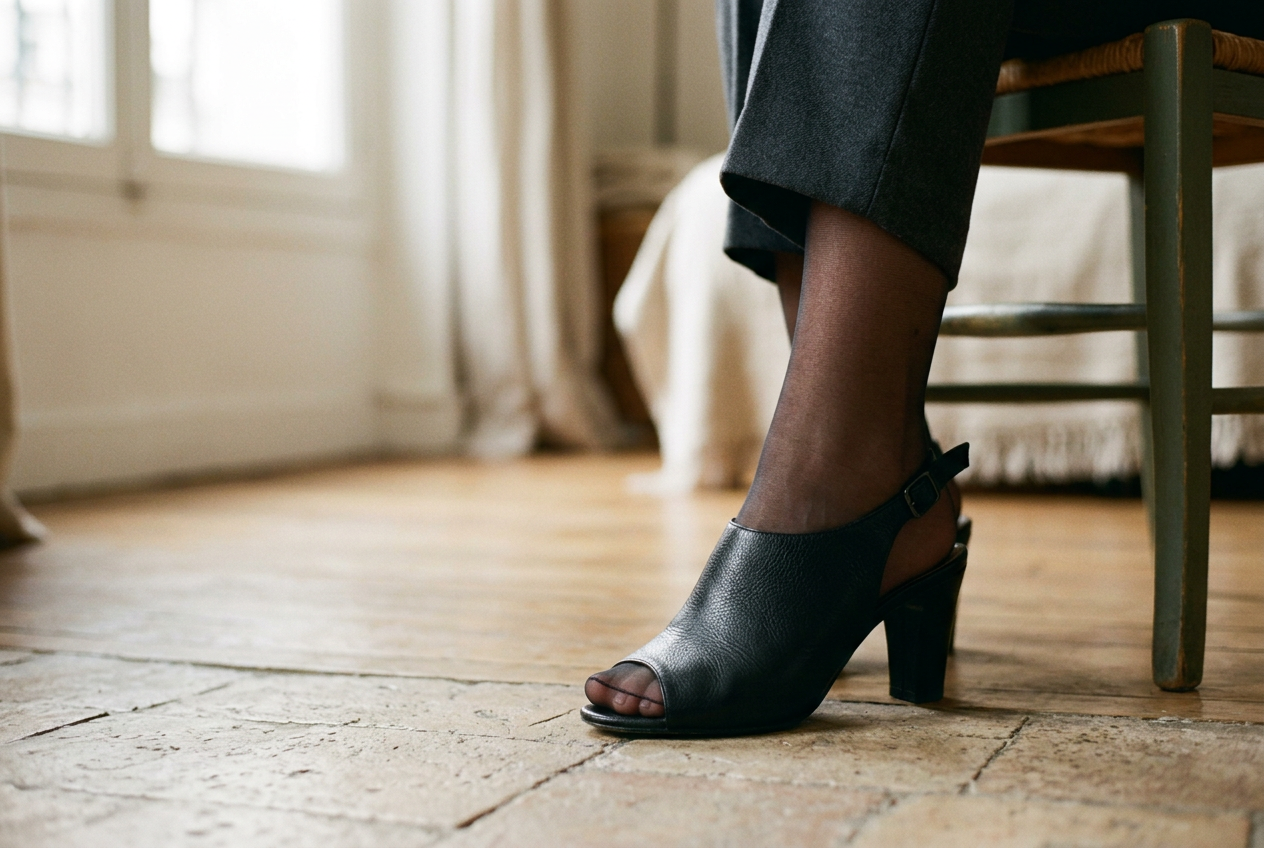
Peep-toe shoes have moved back into view after years in which a fully closed pointed pump or an openly strappy sandal handled most dressed-up footwear. The emerging version is usually quieter than its platformed predecessor: an almond or softly squared toe, a slim heel, and a neat opening that reveals part of one or two toes.
That small opening creates a large practical question. A closed pump conceals hosiery mechanics, while a sandal accepts that the foot is visible. The peep-toe sits between them, framing whatever happens at the front of the shoe, including a twisted tights seam, compressed toes or a foot that has slid too far forward.
For this analysis, the useful reference is a black leather slingback pump with a medium heel and an oval opening no wider than the wearer's big toenail, paired with charcoal 20-denier tights. Denier measures the weight of hosiery yarn; lower numbers generally produce a sheerer appearance. This shoe is close enough to a classic pump to work with tailoring, yet open enough to expose every fit decision.
This is women's coverage, and the sizing advice reflects women's pumps and hosiery. The underlying mechanics also explain why some peep-toe styles look current in product photographs but become harder to wear once temperatures call for tights.
The hosiery seam becomes part of the design
Standard tights usually have a seam running across or beneath the toes. Inside a closed shoe, its exact position matters mainly for comfort. In the reference slingback, the opening acts like a frame: if the seam rotates upward, a dark horizontal line appears across the exposed nail or skin, even when the rest of the tights look smooth.
Sandal-toe tights are the most practical answer. The term describes hosiery with a sheer, minimally reinforced toe rather than the darker reinforced panel found on many everyday pairs. They do not always eliminate the seam, but a fine seam can be positioned beneath the toe more discreetly than a thick band. Check the product description rather than relying on the hosiery's overall sheerness, because sheer legs can still end in a reinforced toe.
The alignment takes time. Put the tights on before applying body lotion, smooth the toe section without stretching it hard, then settle the seam under the pads of the toes before stepping into the shoe. If the seam moves as soon as the wearer walks, the shoe may be causing the problem rather than the hosiery. A steep footbed or slick lining pulls the foot forward and rolls the fabric with it.
Opaque tights are less forgiving. Their heavier toe seam is more visible, and the dense fabric can make a tiny opening look accidental, as though a closed shoe has split. A deliberately tonal combination can still work, particularly black hosiery with a black leather or suede shoe, but the opening needs a clear shape and clean edges. Contrast hosiery turns the toe aperture into the focal point, which is a demanding styling choice for an otherwise conventional pump.
Opening size decides whether the shoe leaves summer
The best transitional opening is small and structurally supported. On the reference shoe, the oval reveals the center of the big toe and perhaps the edge of the second, while the leather still encloses the sides of the forefoot. That containment matters once hosiery reduces friction between the foot and lining.
A wider cutout may look elegant on a bare foot, especially when it follows the natural line of the toes, but it exposes more seam and gives the forefoot more room to escape. It also starts to read as a sandal. That is not a defect in warm weather; it is a limitation if the purchase is meant to work from early fall into cooler months.
The edge needs inspection. Soft nappa leather, a smooth and flexible leather used for many dress shoes, can feel gentle at first but may stretch around the opening, leaving it wider and less controlled after wear. Patent leather tends to hold its shape, although its firmer edge can press into the nail or the skin above it. Suede is visually compatible with tights and has a little more surface grip, but an unsupported suede upper can relax quickly if the foot is already pushing forward.
Look down at the shoe while standing, not only while seated. No toe should bulge through the opening, and the cut edge should not sit directly across the nail bed. A shoe that appears neat when the foot is unloaded can become abruptly smaller once body weight spreads the forefoot.
Forward slide is the larger comfort problem
Peep-toe discomfort often gets blamed on the opening, but the heel pitch deserves more attention. Pitch is the slope between heel and forefoot inside the shoe. As that slope increases, the foot carries more weight at the front, and smooth tights make it easier for the toes to move toward the aperture.
In the black slingback reference case, a medium heel is more useful than a very high, slender one because the foot arrives at the opening with less force. A properly adjusted slingback strap also keeps the heel from lifting, although it cannot compensate for a shoe that is too long. Buying extra length to protect the toes usually backfires: the foot travels through the spare space, then protrudes farther.
Width is different. A forefoot that feels compressed across the joints needs a wider last, meaning the foot-shaped form around which the shoe is constructed, rather than a longer size. Peep-toe pumps with a softly squared front often give the toes more usable room than sharply tapered versions, provided the opening remains centered and the sidewalls stay high enough to contain the foot.
Adhesive forefoot pads can reduce sliding, but they also take up internal volume. A thin suede-textured pad placed behind the ball of the foot is less intrusive than a thick gel cushion directly beneath it. Test any insert at home before removing protective sole films, since the added height may push the toes against the top edge of a shallow opening. Heel grips mainly address heel lift; they do little to stop a steep forward slide.
The hosiery itself changes the fit. A pump that feels secure barefoot may become loose with sheer tights, while a close patent upper may feel harsher because the fabric removes the small amount of skin friction that was holding the foot in place. Anyone between sizes should test the shoe with the hosiery intended for it, late enough in the day for normal foot swelling to appear.
The versions with a life beyond bare legs
A peep-toe has the best chance of becoming more than a summer micro-trend when it behaves like a closed shoe. That means a modest heel or stable block heel, a defined opening with reinforced edges, and an upper that covers most of the forefoot. A secure slingback or instep strap is useful, but only if it holds the rear of the foot without forcing the toes forward.
Dark leather and suede extend the styling window because they sit naturally beside charcoal, brown or black hosiery. The reference black slingback can work with a below-knee skirt and fine tonal tights, or with full-length trousers that reveal the toe only in motion. Under trousers, the opening becomes a detail rather than the center of the outfit, which is probably the easiest way to wear the revival before the weather warms.
The least adaptable version combines a high heel, a broad aperture and a pale, smooth lining. Barefoot, that construction can look clean and light. With tights, it magnifies the seam and offers little resistance to forward movement. A heavily platformed peep-toe has a separate problem: it recalls an earlier cycle so specifically that the styling burden becomes larger than the practical gain.
Fishnet or patterned hosiery avoids the solid horizontal toe line, but it does not solve pressure or sliding. The open knit can bunch at the aperture, and the effect is intentionally decorative rather than neutral. It suits evening styling; it is not a universal workaround.
This is not yet an easy investment purchase
The return is visible enough to test, but the silhouette still asks more of the wearer than a closed pump. At a mass-market or mid-priced level, inspect the opening for raw-feeling edges, check whether the lining becomes slick beneath the forefoot, and confirm that the strap has enough adjustment. Those details matter more than a fashionable toe shape.
At designer prices, novelty alone is not a reason to spend. A better candidate uses a leather lining with some grip, keeps the opening narrow and places the heel under the body rather than at the extreme back of the shoe. The construction should justify the cost even if peep-toes recede again. Otherwise, a closed slingback offers more weather coverage and creates fewer hosiery negotiations.
The black leather reference pump passes only if the charcoal tights stay aligned during a walk, the toes remain behind the cut edge and the slingback does not drop. That is a stricter test than looking polished in a mirror. It should be. The opening makes every small fit error public.
Questions people ask
Can peep-toe shoes be worn with tights?
Yes, but fine sandal-toe tights work better than pairs with a dark reinforced toe. Position the seam beneath the toes before putting on the shoe, then walk indoors to see whether it rotates into view. Tonal hosiery and shoes make any remaining seam less conspicuous.
How much toe should show in a peep-toe pump?
A small opening that reveals the center of the big toe and perhaps part of the second is the most adaptable. If several toes push through, the shoe may be too short, too steep or too open. The leather edge should not cross the nail bed or leave a pressure mark.
How do
I stop my foot sliding forward in peep-toe heels?
Start with a lower heel pitch and the correct width rather than sizing down. A thin, textured forefoot pad placed behind the ball of the foot may add grip, but thick gel inserts can crowd a shallow toe box. Test the complete setup with tights before wearing the shoes outside.
Are peep-toe shoes worth buying for fall?
They can be if the upper is mostly closed, the aperture is narrow and the color works with tonal hosiery. Broad openings and high heels remain closer to warm-weather occasion shoes. If you need one pump for commuting, formal wear and colder days, a closed slingback is still the more dependable purchase.
One update a day
Today's fashion update, in your inbox
One fashion update each morning — no hype, no filler, just pieces worth wearing.