New Peep-Toe Shoes Look Wider. The Opening Still Decides.
A wider-looking sole does not guarantee more room at the toes. One current slingback and an older secondhand pump show where the revived shape has improved, and where it still presses.
Women's · October 25, 2026 · 8 min read
The useful change in the latest peep-toe revival is not the visible sliver of pedicure. It is the possibility of more space behind it. Recent versions often sit on squarer or softly almond-shaped soles, rather than the sharply tapered base common among older pumps, which suggests that the toe box, meaning the front chamber that holds the toes, has moved closer to current expectations.
That suggestion needs testing. A peep opening can make a narrow shoe look accommodating because skin is visible, while the upper still compresses the forefoot behind the opening. The cut edge may then become the pressure point, particularly if it crosses a toenail or the outside of the big toe.
For a hands-on comparison, I set a current black leather slingback peep toe beside an older black leather pump bought secondhand. Both carried the same women's size, though that label offered less useful information than the outline of each sole. This is women's coverage, and the fit observations apply most directly to women's pumps and slingbacks rather than open-toe shoes built on men's sizing.
The comparison pair
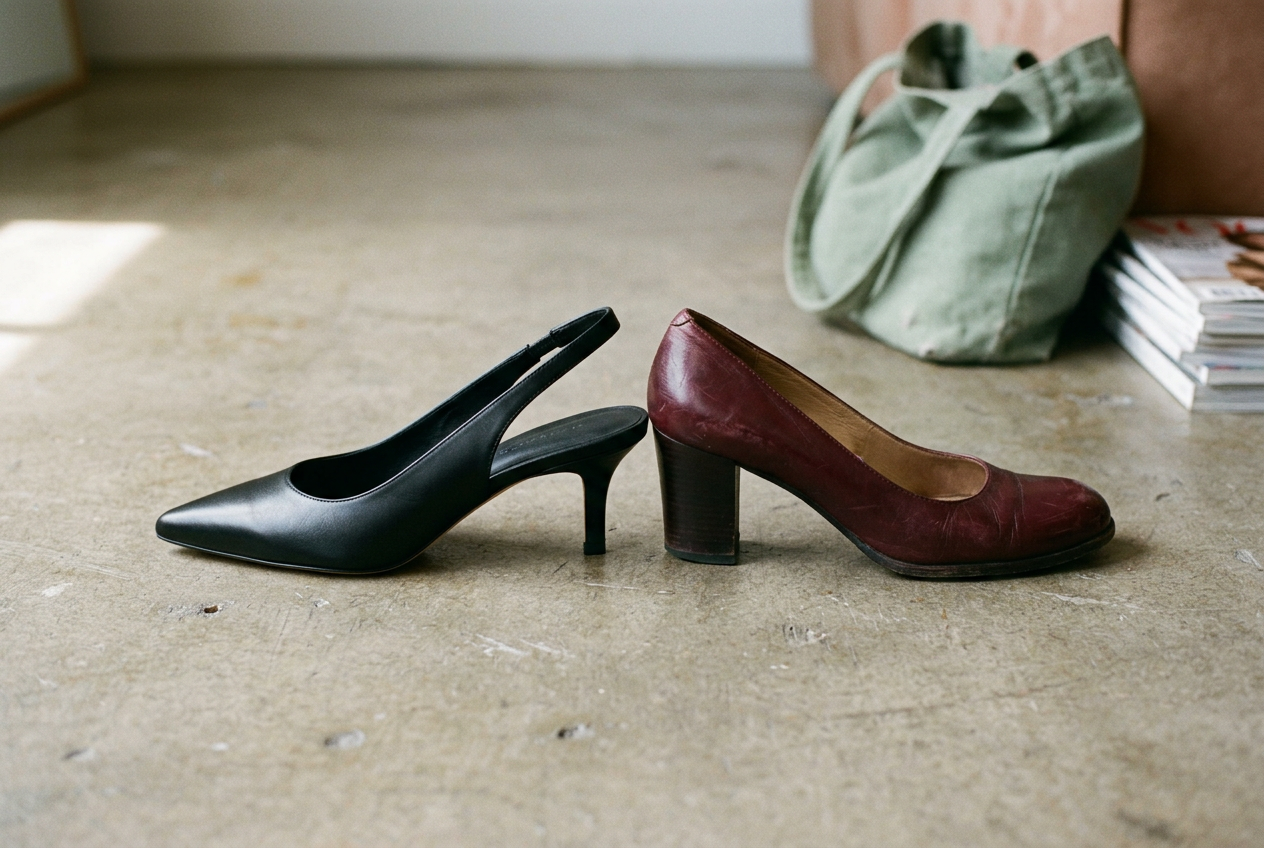
The current shoe became the anchor for the week: a black slingback with a low-to-mid heel, a soft leather upper and an almond-shaped forepart that looked broad from above. Its opening was shallow and slightly horizontal, revealing the tips of the first two toes without exposing the toe joints. A thin binding covered the cut edge, while a rubber section under the forefoot supplied more grip than a bare leather sole.
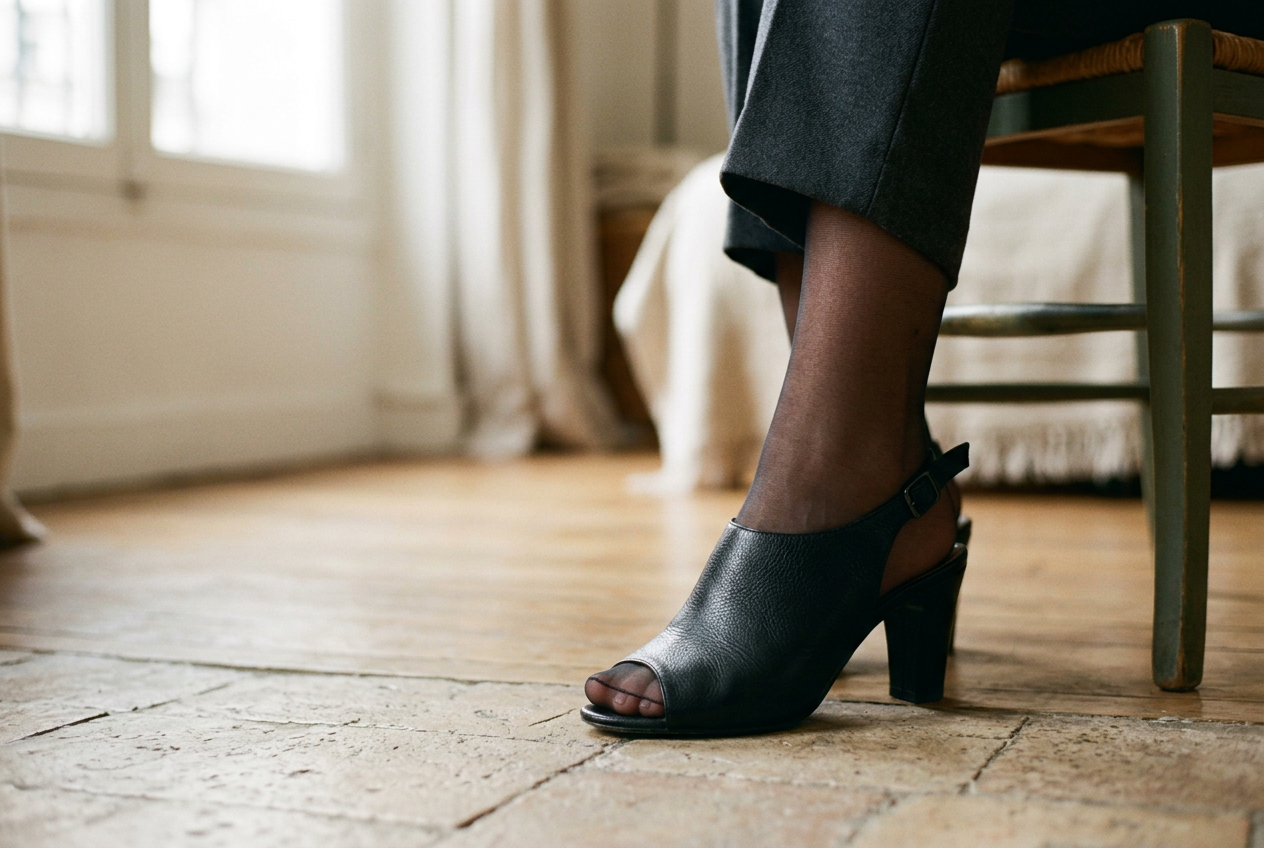
The secondhand pump was older but not reliably dateable, which is common in resale listings without an original box or receipt. Its leather felt firmer, the heel sat higher, and the outsole narrowed earlier as it approached the toes. The peep was deeper and more rounded, so it showed more of the big toe even though the shoe provided less usable width behind it.
I wore the pairs in alternating short sessions over one week, including indoor standing, pavement walking and stairs. This was a fit comparison rather than an endurance claim. Neither shoe had the cushioning or stable base of a walking sneaker, and a peep-toe pump should not be judged as if a visible opening cancels the effects of heel pitch.
The current black slingback won the first half hour. Its leather yielded around the sides of the forefoot, and the broader outsole kept the little toe from feeling pushed under its neighbor. Later, the opening edge began to touch the corner of the big toenail. The older pair created the opposite sequence: the cutout itself did not bite, but the narrow forefoot compressed the toes before the shoe had been on long enough for edge pressure to matter.
A wider outline can hide a tapered interior
The strongest improvement in the current pair was the sole shape. Placed heel to heel with the older pump, it carried more width toward the front rather than drawing quickly into a point. That let the toes sit flatter, which mattered more than the amount of skin showing through the opening.
Still, an external outline is only a clue. Shoes are formed around a last, the solid foot-shaped mold that establishes their internal shape, and a broad outsole can extend beyond a narrower interior. Padding and lining also consume space. In the black slingback, the visible sole looked generous, but the leather upper curved inward just behind the peep, where the big toe and second toe needed room.
This is the central tradeoff in the revival. Contemporary peep toes can look less pinched because their fronts borrow from square-toe sandals and rounded pumps, yet the opening still encourages the foot to move forward. A slingback that loosens during walking allows more sliding than a closed heel counter, while a higher heel increases that forward movement. The opening then catches the toes rather than relieving them.
A useful fitting check is to ignore the aperture for a moment and look at the widest part of the foot. That area should sit over the widest part of the shoe without spilling beyond the sole or forcing the upper to bow. If the match is wrong, a larger peep will expose more toe without creating more room.
The edge matters as much as the leather
Soft leather is not enough. The current pair's upper flexed more readily than the older pump, but its bound opening created a small ridge. Binding is the narrow strip that finishes a raw edge; it can make a cutout durable and neat, although the extra layers may press more firmly than a thin turned edge.
On the black slingback, that ridge met the nail rather than the flesh of the toe. It was tolerable while standing, then noticeable on a downhill stretch as the foot shifted forward. The pressure did not improve much during the week because the binding itself was reinforced, even as the surrounding leather softened.
The older pump had a thinner opening edge. Its problem sat farther back, where the stiff upper crossed the outer forefoot. Wear in the insole showed that a previous foot had settled slightly off-center, and my foot followed that existing depression. Secondhand leather shoes may feel broken in, but they are broken in to someone else's gait and toe spread.
Synthetic uppers require more caution at this point. Some become a little more flexible with warmth, but they do not usually reshape like uncoated leather, and a plastic-backed binding can remain firm against the same spot. A shoe that already cuts across a nail in the fitting room is a poor candidate for a hopeful break-in period.
A ten-minute test reveals more than the size label
Start with the toe view. In the better-fitting current slingback, the opening framed the toe tips and left the joints covered. When I deliberately pushed the foot forward, more of the second toe appeared and the big toenail met the binding. That visual change made forward slide easy to spot.
Next, press the upper gently across the widest part of the foot. A slight contour is expected in a close pump, but a deep ridge or a little toe that sits on the outsole edge indicates that the internal forefoot is too narrow. Going up a full size may lengthen the shoe and loosen the slingback without adding width in the right place, so a wide fitting or a different last is the cleaner alternative.
Walking on a hard floor matters because carpet disguises instability. Include a turn and a few steps down if the store permits it. The foot should not surge into the opening, and the slingback should stay in place without being shortened until it pulls the toes backward. Adhesive forefoot pads can reduce sliding, though they also take up internal volume, which makes them a poor fix for a shoe that is already snug.
Allow about ten minutes rather than making the decision from a seated try-on. Leather warms, the foot settles, and repeated contact reveals whether the opening lands on skin or nail. The time cost is modest compared with buying a fashion shoe that only works while sitting.
For online shopping, product photos taken from directly above are more useful than angled campaign images. Look for a sole that maintains width past the ball of the foot, then inspect the opening placement. A narrow vertical peep concentrates exposure on the big toe; a shallow horizontal opening distributes the edge across more toes, but may touch several nails if the foot slides.
Returns matter here. If a retailer permits only unworn returns, test the shoes on a clean hard surface and resist wearing them outside to see whether they improve. The black slingback's pressure appeared during controlled indoor wear, early enough to keep the decision reversible.
Secondhand pairs need a different standard
An older peep toe can still be the better buy when its last matches the foot and the leather has remained supple. Resale also offers shapes that the current market is only beginning to revisit, often for less than a new leather pump, though cleaning and possible heel-tip replacement add cost.
Inspect the opening for cracking, stretched stitching and a darkened edge that may feel rough. Then look inside. A sharply compressed insole, visible toe marks or lining that has lifted near the peep can alter where the foot sits. The older black pump looked clean from above, but its settled footbed steered my forefoot toward the narrow side of the shoe.
Do not assume vintage sizing translates directly into a current size. Compare the outsole with a comfortable shoe of similar heel height, paying attention to where maximum width occurs rather than matching total length alone. A narrow older pair does not become roomy because the front is open.
The revived silhouette has improved, but unevenly. The current black slingback offered a calmer toe shape and more forefoot support than the secondhand pump, then lost ground at its reinforced opening. That is enough progress to keep peep toes in consideration, not enough to buy them by appearance alone.
Questions people ask
Are modern peep-toe shoes wider than older pairs?
Some are wider through the outsole, especially styles influenced by square and almond toes, but the interior can still taper behind the opening. Compare where the shoe reaches its maximum width with the widest part of your foot. The peep itself says little about usable space.
How much toe should a peep-toe shoe show?
Toe tips are easier to manage than exposed joints because the opening is less likely to cut across a flexing part of the foot. More exposure is not automatically uncomfortable, but the toes should remain flat and should not push farther through the opening while walking downhill.
Can a cobbler fix pressure at the peep opening?
A cobbler may soften or stretch leather around a pressure point, depending on the construction, but a reinforced binding or synthetic edge has less room to change. Stretching also cannot correct a last that is too narrow through the whole forefoot. Ask before wearing the outsole outside.
What should
I check when buying peep toes secondhand?
Check the outsole width, the position of existing insole impressions and the condition of the opening edge. Avoid cracked leather or lifted lining near the toes, then budget for cleaning and worn heel tips. Compare the pair with a comfortable shoe rather than relying on the printed size.
One update a day
Today's fashion update, in your inbox
One fashion update each morning — no hype, no filler, just pieces worth wearing.