Two-Tone Sneakers Hide Summer Wear Only in the Right Places
Darker panels can make summer sneakers look presentable longer, but many two-tone pairs leave the messiest areas pale. The useful distinction is placement, not color count.
November 8, 2026 · 8 min read
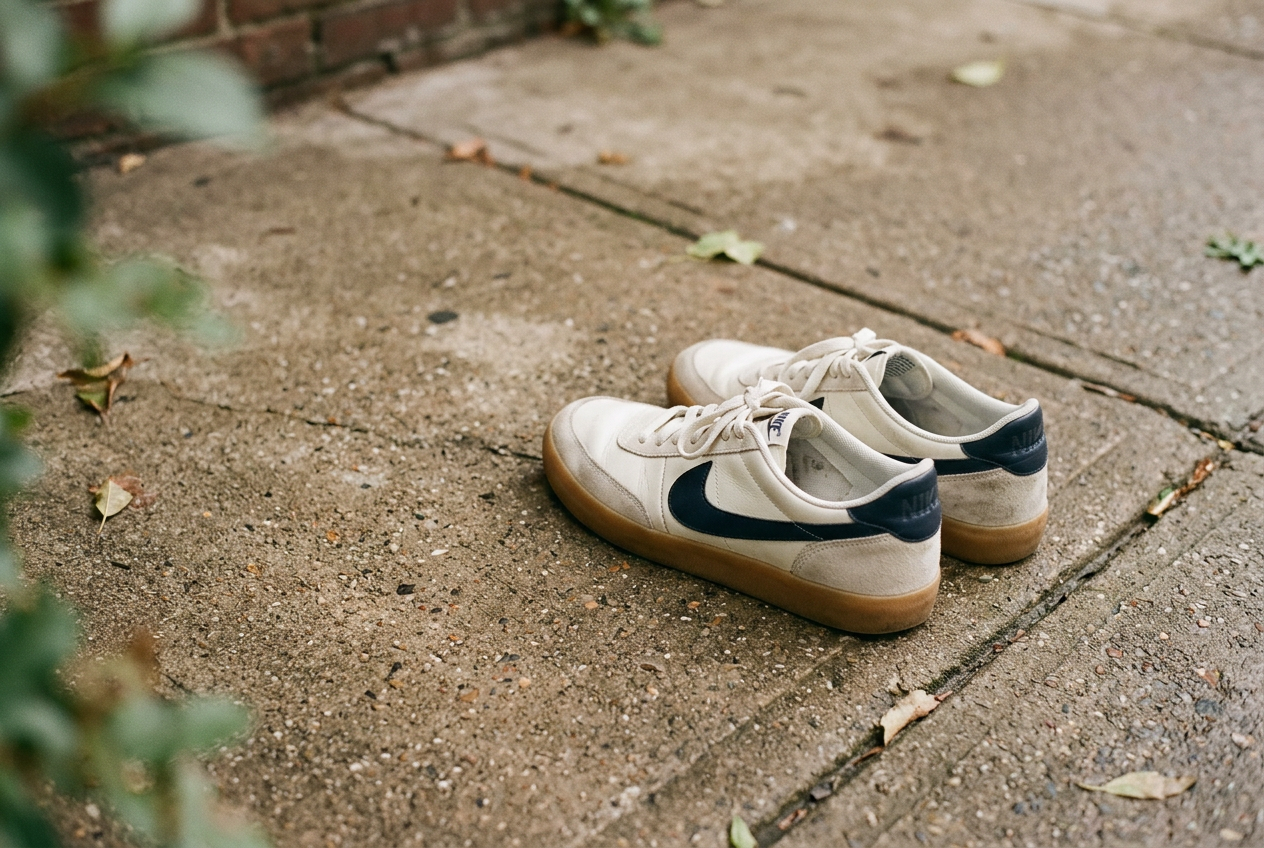
The Nike Killshot 2 Leather in its familiar Sail, Midnight Navy, and gum combination makes a useful test case. It has the visual ingredients now recurring across sneaker assortments: a pale base, a dark side logo and heel tab, suede accents, and a gum rubber sole. Beside a completely white leather court shoe, it looks easier to live with. Look closer, though, and most of the navy sits where dirt is less likely to become the main problem.
The toe remains pale. So does the eyestay, meaning the reinforced area around the lace holes. The light suede around the front may disguise a faint scrape better than bright white smooth leather, yet it can also hold dust and water marks. The Killshot shows why “two-tone” is too broad to function as a care claim.
This is unisex coverage because the placement and material advice applies across wardrobes, whether a retailer files the shoe under women’s or men’s sizing. The size printed on the box still needs checking against the brand’s conversion chart, particularly with a low-profile court shoe that offers less forefoot volume than a chunkier retro runner.
The contrast has moved beyond the logo
A review of current US retail assortments shows two-tone treatments across low court sneakers, terrace shoes and retro runners. Adidas Samba OG and Handball Spezial colorways commonly use contrasting stripes and heel details. Puma Palermo and Reebok Club C variations make similar use of side branding, while New Balance and ASICS often distribute darker synthetic or suede panels more widely across their running-derived uppers.
Those are different propositions even when a product grid makes them look like one trend. A cream sneaker with a green logo gives an outfit a clearer line than an all-white pair, and it avoids the clinical brightness that can make fresh white shoes feel disconnected from washed denim or softly colored summer clothes. It does little to protect the front edge from a bicycle pedal, a stroller wheel or the underside of another shoe on public transit.
A dark overlay, meaning a second panel stitched over the base upper, earns its place when it wraps the toe perimeter or covers the heel counter. The contrast Swoosh on the Killshot 2 is largely decorative in this respect. Its navy heel tab is more useful, since the back of a shoe collects marks from driving, crossed ankles and the other foot during removal, but the pale front still sets the pair’s cleaning rhythm.
This distinction matters because product names and filters rarely separate functional color blocking from ornamental contrast. The thumbnail supplies a quick impression. The side and top views reveal where the darker material goes.
Toe, eyestay and heel do different work
The toe takes visible punishment first. Dust settles into stitching at the front, rubber edges meet curbs, and pale suede picks up changes in texture even when it does not show a sharp black scuff. A darker mudguard, the panel running around the lower edge of the toe, can hide that gradual graying. A dark logo positioned several inches behind it cannot.
The eyestay has a quieter problem. Hands transfer sunscreen, moisturizer and street residue while laces drag across the surface, so a white or cream panel can become dingy around the lowest holes. Dark leather or synthetic material here is useful, though dark suede may reveal flattened nap where the laces rub. Nap is the raised surface of suede, which changes shade when its fibers are pressed in different directions.
At the heel, darker color does a convincing job with ordinary transfer marks, especially on smooth leather or a coated synthetic panel that can be wiped. It will not conceal abrasion once the top color has worn through. Black material with a pale base underneath can show scratches as bright lines, while mid-brown, navy and charcoal tend to produce a less severe contrast.
Return to the Killshot 2 and the compromise becomes clear. The navy heel tab handles one high-contact zone, and the gum sole avoids the yellowing anxiety associated with a bright white outsole. Its pale toe and lace area still need roughly the same attention as an all-white pair. It is easier-looking rather than uniformly easier-care.
Material can cancel the color advantage
Dark smooth leather is the most straightforward option for readers who want less maintenance. Once loose grit has been removed, small surface marks can usually be addressed with a lightly damp cloth and a product appropriate for the finish. Pale smooth leather can also clean well, but every missed edge remains visible.
Suede complicates the calculation. A charcoal suede toe may conceal dust better than an ivory one, although water, oil and repeated rubbing can alter its texture. Brushing after the shoe is dry takes more time than wiping leather, and aggressive spot cleaning may leave a patch with a different nap. The light suede at the Killshot 2 toe is therefore neither the least practical choice nor the carefree one its muted color might suggest.
Mesh presents another tradeoff. Retro runners often place dark suede or synthetic overlays around a light mesh base, which helps along the perimeter while leaving an absorbent, difficult-to-wipe area on top of the foot. Dark mesh conceals dry dust, but sunscreen or spilled drinks can still leave a tide mark. A fully dark technical runner may be easier visually, though it gives up the lightness that makes cream-and-color combinations appealing in summer.
Gum rubber is worth separating from the upper discussion. It hides changes in color better than a white sidewall and tends to look intentional with wear, but its textured edge still traps grime. On the Killshot 2, the gum sole does more practical work than the navy Swoosh.
Machine washing remains a poor default for mixed-material shoes because prolonged soaking, heat and tumbling can affect adhesives, suede and structure. The lower-effort routine is less dramatic: let dry dirt dry, brush it away, then treat the remaining mark according to the upper material. A two-tone shoe that requires separate suede and leather tools may save visual worry without saving care time.
The shape still has to suit the foot
Color blocking can draw attention away from fit in a product image. The Killshot 2 has a long, low court profile, and that shallow appearance matters more to comfort than its contrast panels. Someone with a broad forefoot or a high instep may find a running-derived sneaker more accommodating, even when the court shoe is available in the correct numerical size.
For purchases across women’s and men’s departments, use the retailer’s stated conversion rather than assuming the same number carries over. Also check whether the listed width changes with the department or model. Two shoes sold as unisex in styling can sit differently if they use separate lasts, the foot-shaped forms around which shoes are built.
The practical comparison is between like shapes. If an all-white court shoe already fits well, a two-tone version on the same sole can update the wardrobe without introducing a new break-in problem. Moving from that shoe to a chunkier retro runner may improve space and cushioning, but it also changes trouser proportions and feels warmer around the foot when the upper uses layered suede.
Buy the panel map, not the trend label
For the lowest visible upkeep, look for a medium-to-dark toe perimeter, eyestay and heel, preferably in smooth leather or a wipeable synthetic material. The base can remain cream or white through the side quarter, where contact is lower. A gum or colored rubber sole edge helps further.
If the shoe has a dark logo and heel tab but a pale toe, buy it for the color composition. Do not pay a premium on the assumption that it will replace an all-white pair’s cleaning needs. The Killshot 2 belongs in this category: visually softer and less stark than white-on-white, with a practical sole and heel detail, yet still vulnerable at the front.
Price alone does not settle the issue. Two-tone versions appear throughout the same broad bands as mainstream lifestyle sneakers, and sale status can create larger differences than construction. Spend more only when the upper material, fit or panel placement improves something you will notice. Contrast branding by itself is a weak reason.
The trend has plausible staying power where color follows contact. Dark overlays on the toe and heel borrow from workwear logic and long-established running-shoe construction, so they do not depend on one summer’s palette. Pale sneakers with a contrast logo may remain attractive too, although their advantage is stylistic rather than functional.
All-white sneakers are not obsolete. Smooth white leather can be easier to restore than light suede, and a single-material upper avoids juggling cleaning methods. Two-tone pairs win only when the darker sections meet the ground, the laces and the other shoe often enough to matter.
Questions people ask
Do two-tone sneakers stay cleaner than all-white sneakers?
They can look cleaner for longer when dark panels cover the toe perimeter, eyestay and heel. A pair with only a dark side logo gains little practical protection, while dark suede may still need brushing and stain care even when it hides dry dust.
Which two-tone sneaker materials are easiest to care for?
Smooth dark leather or a wipeable synthetic panel works well in high-contact areas. Suede can conceal color changes but shows altered texture, and mesh absorbs spills. A gum or colored rubber sole also disguises everyday discoloration better than a bright white sidewall.
Are two-tone sneakers worth replacing white sneakers for summer?
Replace a worn pair if the new shoe fits well and puts darker material where your current sneakers become dirty first. If the contrast appears only on the logo or heel tab, expect a styling update rather than a major reduction in cleaning.
How should two-tone sneakers fit across women’s and men’s sizing?
Use the brand or retailer’s conversion chart and check the listed width, since styling may be unisex while the sizing system is not. Low court shoes can feel shallow through the forefoot; layered retro runners usually take up more visual and physical space.
One update a day
Today's fashion update, in your inbox
One fashion update each morning — no hype, no filler, just pieces worth wearing.