Your Mesh Sneakers May Be Ventilated in the Wrong Places
Open mesh over the toes and top of the foot matters in summer. Decorative panels, thick linings and structural overlays can make an airy-looking sneaker wear much warmer.
October 28, 2026 · 7 min read
The summer sneaker problem is no longer finding visible mesh. It is finding mesh that remains open after the brand has added the pieces required to hold your heel, support the laces and stop the upper stretching sideways.
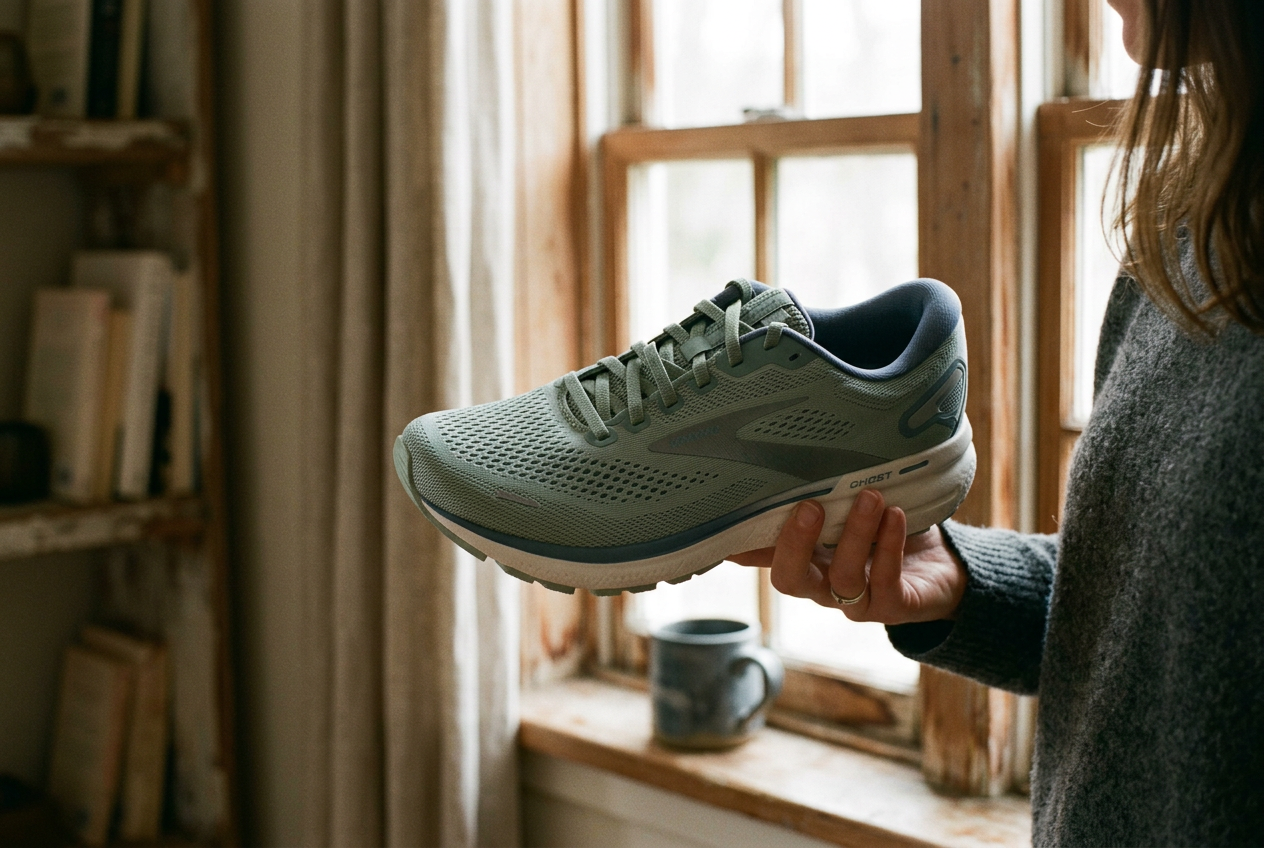
My test case was the Brooks Ghost 16, worn for a warm week on routine walks and errands with the same thin synthetic socks. Brooks describes its upper as engineered air mesh, meaning the knit changes density across the shoe rather than using one equally open fabric, with 3D Fit Print overlays adding structure without traditional sewn panels. It sits in the mainstream premium running-shoe bracket and is sold in women's and men's sizing, but the inspection method here is unisex and applies across wardrobes.
The Ghost 16 is useful precisely because it is neither a nearly transparent racing shoe nor a leather sneaker with two apologetic perforations. Its upper looks breathable from several feet away. Up close, the openings vary, the tongue carries padding, and printed reinforcement crosses parts of the mesh. That is normal construction.
It also shows why counting mesh panels tells you very little.
The useful ventilation zones
Feet do not experience heat evenly. The sole contains many sweat glands, while pressure and friction tend to build around the toes and ball of the foot during walking; an upper cannot ventilate through the outsole, but it can give the resulting warmth and moisture somewhere to escape around the front and top.
Start with the toe box, the space that surrounds the toes. A summer sneaker benefits from open mesh directly above the toes and along the upper edges of the forefoot, especially if your toes touch the upper when they flex. Mesh located only on the outside wall may look sporty while the denser fabric over the toes keeps the warmest part of the shoe covered.
The next useful area is the instep, meaning the raised top of the midfoot. Air does not rush through a sneaker with every step in the manner suggested by product graphics, but thinner material here releases some heat and dries faster after wear. A heavily padded tongue can cancel much of that advantage. On the Ghost 16, the upper material around the laces is visibly more open than a solid synthetic panel would be, yet the tongue remains a substantial layer between foot and outside air.
The result is ventilation, not air conditioning.
The side walls matter more for moisture release than for a dramatic cooling sensation. Open medial mesh, on the arch side, is often interrupted by support around the laces; lateral mesh on the outer side tends to get more uninterrupted space. Neither compensates for a sealed toe box. Meanwhile, the heel is usually the least promising place to demand openness because the heel counter, the stiff structure that cups the rear of the foot, needs enough substance to limit collapse and slipping.
Overlays can close an open-looking upper
An overlay is a reinforcing layer placed over or bonded to the base fabric. It can keep the foot centered, spread lace pressure and stop soft mesh from bagging out, which is why removing every overlay would create a different form of discomfort. The issue is placement.
On the Ghost 16, the printed structure is relatively thin, but holding the shoe toward a bright window shows where light passes freely and where the pattern becomes dimmer. The clearest areas sit toward the front and along portions of the side walls. Around the lace rows, the mesh is interrupted by denser reinforcement, while the heel becomes predictably opaque. This crude light test does not measure airflow.
It does expose a supposedly breathable panel that has been covered from the outside or backed from within.
Fused films are more obstructive. These smooth synthetic pieces are bonded to mesh without stitching and commonly appear around the toe edge, lace holes and logo. A narrow film can protect a high-wear seam. A wide logo laid across the forefoot can turn a large patch of mesh into decoration, particularly when another lining sits behind it.
Interior construction is easier to miss. Some sneakers place an open knit outside and a continuous textile lining underneath, which improves the feel against the foot and contains stretch but reduces the effective opening size. A gusseted tongue, meaning a tongue joined to the upper by fabric wings, can keep debris out and improve the hold around the midfoot; those wings also add layers over the instep. On a hot day, secure can become warm.
Feet are not moved by the branding argument.
Inspect the upper from both sides
A useful shop check takes about a minute and does not require squeezing the midsole with the concentration of a laboratory technician.
First, look through the toe box toward a light source. Genuine open mesh should show points of light across the area above the toes, rather than only at the sides. If the store lighting is poor, place a finger inside the shoe and see how clearly its outline appears through the upper. This compares zones within one shoe; it does not reliably compare a black sneaker with a white one because color changes how much light you perceive.
Next, run a finger behind the visible mesh. A second layer will be obvious by touch even when it is color-matched. Pay attention to the area beneath a large side logo and to the strip crossing the base of the laces, where several structural pieces often overlap. If your finger encounters soft foam behind the tongue, assume that section will retain more warmth than the perforated surface suggests.
Then bend the forefoot where the shoe naturally creases. Mesh openings may narrow when the upper folds, and a stiff toe overlay can press across the joints if the shoe is shallow. This is also where fit enters the ventilation discussion: an open upper resting tightly against the toes leaves less room for air movement and may create more friction, while sizing up solely for cooling can introduce heel slip. Try the appropriate width before adding length.
Finally, remove the sock liner if it lifts out easily and inspect the underside of the upper. Do not force glued components. The sock liner, often casually called the insole, affects underfoot moisture but cannot make an impermeable upper breathe; perforations beneath it may lead only to solid foam and outsole rubber.
The Ghost 16 passed the practical version of this check: useful openness at the forefoot, no broad synthetic slab sealing the toe area, and reinforcement concentrated where the laces and heel need it. During the warm week, the front felt less stuffy than a lifestyle sneaker with a lined textile upper, though the padded tongue still held warmth over the instep. By late afternoon, it remained a closed shoe. Mesh does not repeal summer.
Breathability still has a bill
Very open mesh usually gives up something. Fine knits can snag, pale layers show dust, and soft forefoot fabric may let a wide foot push over the edge of the platform. A more structured upper can feel hotter but hold the foot better on side slopes or during faster movement. The right choice depends on whether the shoe is for ordinary walking, running or standing for long periods.
For casual use, a sneaker with open forefoot mesh and modest lace reinforcement is often the sensible middle ground. People who wear through uppers near the little toe should favor a denser knit or a small, well-placed overlay there, even if it sacrifices some airflow. That trade costs less discomfort than a hole appearing where the foot already presses.
Dark mesh can also be more practical than white in dusty conditions, though color does not determine the underlying openness. Wash according to the brand's care instructions rather than treating every mesh upper as machine-safe. Heat and aggressive washing can affect bonded overlays, and a detached reinforcement panel ventilates well only because it has failed.
Questions people ask
Is more visible mesh always more breathable?
No. The outer mesh may sit over a full lining, fused film or padded tongue, and each layer reduces the open path for heat and moisture. Hold the shoe toward light and inspect it from inside; the most useful mesh is open through the entire upper, particularly above the toes.
Where should summer sneakers have mesh?
Prioritize the area above and around the toes, followed by the top and sides of the forefoot. Open side panels can help moisture escape, but they do not make up for dense material over the toes. Expect the heel and lace rows to be more reinforced because they manage fit.
Do waterproof mesh sneakers stay cool?
Usually not as cool as unlined mesh. A waterproof membrane blocks liquid water while allowing some vapor to move through, but it still adds a layer and can slow moisture release. Choose it for wet conditions, not as the default answer to hot, dry weather.
Can socks make breathable sneakers feel warmer?
Yes. Thick cotton socks can hold moisture and occupy more space, bringing the foot closer to the upper. A thinner moisture-managing sock may improve the result, although it cannot rescue blocked ventilation. Test fit with the sock weight you plan to wear rather than the disposable fitting sock in the store.
One update a day
Today's fashion update, in your inbox
One fashion update each morning — no hype, no filler, just pieces worth wearing.