
Pendant Necklaces Are Back. The Cord Is the Weak Point.
Long pendants have returned on leather, waxed cotton and synthetic cord. The pendant may carry the look, but the cord determines whether it survives beyond one season.
November 5, 2026 · 8 min read
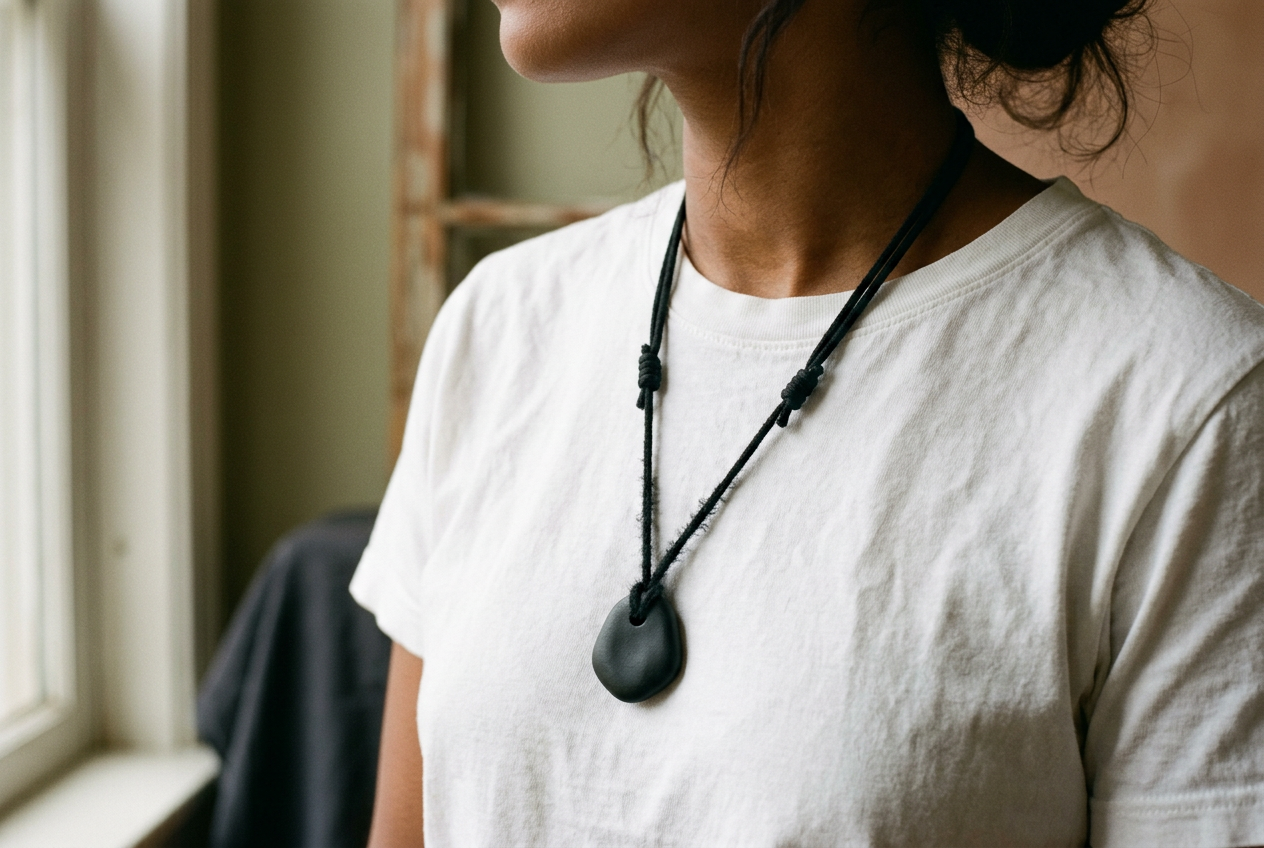
The necklace I kept returning to during this evaluation was uncomplicated: a weighty metal pendant on a long black waxed-cotton cord, secured by two sliding knots and worn over a white cotton T-shirt. It looked current without requiring a new outfit formula. It also exposed nearly every practical weakness in the trend.
After repeated wear, the cord developed a pale, slightly fuzzy patch where it passed through the pendant. One sliding knot began to creep, lengthening the necklace as I moved, while the other stayed firm. The white shirt showed no obvious dye mark, but a damp white cloth rubbed along the cord picked up a faint gray cast. None of this made the necklace unwearable.
It did make the pendant feel more durable than the part holding it.
That imbalance matters now because the long pendant has moved back into everyday styling, often sitting somewhere from the upper chest to below the sternum rather than close to the neck. The format appears on leather thongs, waxed cotton and smooth synthetic cord, carrying metal shapes, stones, shells and resin pieces. This is genuinely unisex coverage: the construction tests apply across wardrobes, even though cord length and pendant scale change how the necklace sits over different necklines and body proportions.
The cord changes the whole proposition
A chain necklace arrives with familiar quality signals. Links should move freely, a clasp should close cleanly, and plating should look even. Cord is harder to judge because a new one can appear flawless under store lighting even when its surface coating is doing most of the work.
Waxed cotton, meaning cotton fibers coated to make the cord smoother and more resistant to moisture, gives the test necklace its dry, low-shine finish. It drapes more softly than stiff leather and can be retied at home, but friction eventually pushes fibers through the coating. The first warning is not a dramatic break. It is that pale halo at the pendant opening, followed by flattening where the cord bends repeatedly.
Leather has more visual authority and tends to suit a substantial pendant, particularly when the surface is dense and the cut edges are smooth. Thin leather can stretch around a heavy focal piece, however, and inexpensive painted finishes may crack at knots or leave color on a light collar. A round leather cord generally bends more evenly than a flat strip, while a flat strip can twist and show its unfinished side unless the pendant keeps it under tension.
Synthetic cord covers several materials rather than one standard. Nylon and polyester options can resist sweat and abrasion better than cotton, yet a glossy surface may read closer to utility cord than jewelry, and cut ends can feel sharp if they were heat-sealed carelessly. The better versions are tightly braided, flexible and consistent in diameter. Loose braiding catches on rough pendant holes, creating small pulled loops that cannot be smoothed back into place.
The test necklace landed in the middle. Its waxed cotton looked considered, but the rubbed patch showed that the pendant opening had not been polished enough for the material passing through it.
Inspect the point that moves
The useful quality check happens where cord meets pendant. A bail, the loop that connects a pendant to its necklace, should have a smooth interior with enough space for the cord to move without being pinched. Run the cord back and forth through that opening. If it drags, squeaks or catches while new, repeated wear will concentrate damage there.
Fixed pendants require a different look. Some are drilled through the stone, resin or metal itself, leaving the cord in direct contact with the hole. Check both edges with a fingertip and, if the design allows it, pull a small section of cord through so the hidden area becomes visible. A rough lip can cut fibers slowly, which is easy to miss because the damage develops inside the pendant rather than beside it.
Weight also changes the result. A heavy pendant helps a long necklace hang neatly, but it keeps the cord under tension and makes every rough edge more consequential; a very light pendant avoids that strain, although it may drift sideways or bounce rather than staying centered over a shirt. The best balance depends on clothing, not just the necklace. Fine knitwear provides more friction than a smooth woven shirt, while a deep neckline leaves the pendant moving directly against skin.
On the black test piece, the pendant stayed centered over cotton and shifted more over a slick shirt. The creeping knot then mattered twice: the necklace became longer, and the pendant began striking a waistband when seated. A length that looks deliberate while standing can become irritating once the wearer moves through a normal day.
Knots should adjust without surrendering
Sliding knots are appealing because they remove the need for a metal clasp and let one necklace work with several necklines. A sound knot moves only when deliberately pushed. It should not loosen when the pendant is tugged gently or when the cord is lifted by one side.
Test both knots separately. Hold the cord close to the knot rather than pulling from the pendant, then move it through several adjustment cycles. A knot that feels gritty may be abrading the cord; one that slides with almost no resistance may creep during wear. Knots tied over a short, blunt tail are also less reassuring because the end has little room to move before escaping.
Some necklaces use metal end fittings instead. A crimp, meaning a small metal sleeve compressed around the cord, can give a cleaner finish and support a conventional clasp, but it makes home replacement more difficult. Look for a straight connection without visible glue, gaps or crushed fibers. If the cord enters a closed fitting that cannot be reopened, a jeweler may need to rebuild the ends when replacement time comes.
This is where price requires judgment. At the lowest costume-jewelry tier, paying for a replacement may exceed the value of the complete necklace. In the middle, roughly where a well-made everyday accessory competes with other considered wardrobe purchases, accessible knots or standard findings add meaningful value. At luxury prices, a permanently trapped cord is difficult to defend unless the brand offers restringing or replacement parts.
Dye transfer is a before-wearing problem
Dark cord against a white shirt is the easiest version of this trend to style and the fastest way to reveal unstable color. Before wearing a new necklace over pale clothing, rub an inconspicuous section with a clean white cloth that is barely damp, then repeat with a dry cloth. Visible color on either cloth warrants caution around collars, silk and anything difficult to wash.
This test is deliberately harsher than dry wear, but summer heat, fragrance, body lotion and rain can all introduce moisture. Leather deserves particular restraint because soaking it can stiffen or distort the cord. Use only a light pass, let it dry away from direct heat, and stop if the surface becomes tacky.
The faint gray picked up from the test necklace did not transfer visibly during ordinary wear, so I would keep it over washable cotton rather than reject it. I would not place it against cream silk. That is the kind of undecided result worth recognizing: the necklace passes as an everyday piece, but not as a thought-free one.
Replacement decides the shelf life
The strongest purchase is a pendant that can leave its original cord. Look for an open or generous bail, a drilled passage wide enough for a new cord, or knots that can be untied without cutting. Ask whether the seller offers replacement cord and whether the pendant opening accepts a standard jewelry cord rather than a proprietary molded end.
Cord diameter matters. A thinner replacement may let a pendant tilt or expose a sharp edge that the original cord filled; a thicker one may not pass through at all. Before discarding a worn cord, record how it travels through the pendant and keep a short sample to match its diameter and finish.
Replacement can also improve the necklace. Waxed cotton offers an approachable home repair, leather restores structure, and a tightly braided synthetic can be sensible for frequent wear, provided its sheen suits the pendant. The new cord does not need to imitate the original, but its strength and knot behavior must suit the pendant’s weight.
I would keep the black test necklace because its pendant can slide free once the knots are opened. The fuzzy section is a warning, not a verdict. If the cord had been glued permanently into narrow caps, the same wear would make the whole piece feel seasonal.
The buying line
Choose the necklace when the cord bends without cracking, the pendant opening feels smooth, the knots resist a light pull and the construction permits restringing. Skip one with painted leather already creasing at the knot, loose synthetic braiding or glued ends that turn an inexpensive wear component into a permanent structural weakness.
The trend itself may last because long pendants solve a real styling problem: they add a vertical line to plain shirts, open collars and uncomplicated dresses without the stacking required by shorter necklaces. The individual piece lasts only if its least glamorous component can tolerate movement or be replaced after it cannot.
Questions people ask
How can I tell if a pendant cord will fray?
Move the cord through the pendant opening and feel for drag or catching. Check for pale fibers, flattened sections or pulled loops near the contact point. A smooth opening and tightly made cord reduce wear, although a heavy pendant will still make that area the first place to inspect.
Is leather better than waxed cotton for a pendant necklace?
Leather can look more substantial and hold its shape, but thin or heavily painted leather may stretch, crack or transfer dye. Waxed cotton is softer and easier to retie at home, though its fibers eventually emerge through the coating. The better choice depends on pendant weight and repair access.
Can
I replace a pendant necklace cord myself?
Usually, if the pendant slides free and the necklace uses accessible knots. Match the original cord’s diameter, test that the new material passes through without scraping, and choose a knot suited to its surface. Closed metal end fittings or glued caps may require jewelry tools or professional restringing.
Should a long pendant necklace be adjustable?
Adjustability is useful when the necklace must clear different necklines or waistbands, but only if the sliding knots hold their position. Test the full range before buying. If the pendant is heavy and the knots creep under a gentle pull, a fixed-length cord with a reliable clasp may wear better.
One update a day
Today's fashion update, in your inbox
One fashion update each morning — no hype, no filler, just pieces worth wearing.