Bubble-Hem Skirts Go Everyday, but Washability Is the Test
The new bubble skirt is cotton, casual and often machine washable. Its longer-term value depends on waistband recovery, a stable lining and whether the hem works under a coat.
Women's · November 4, 2026 · 8 min read
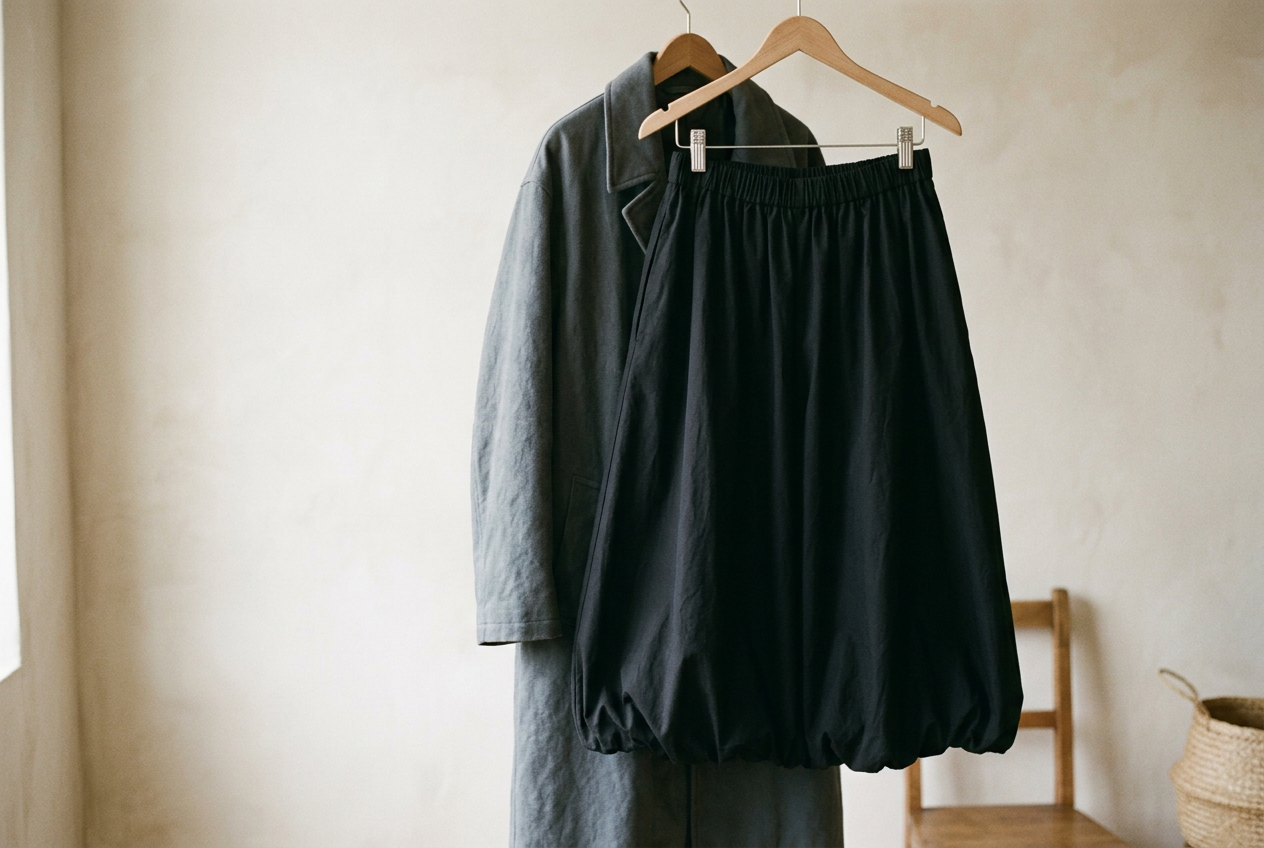
The useful reference point is COS’s black Bubble-Hem Midi Skirt, a cotton style the brand has documented with an elasticated waistband, side-seam pockets and machine-wash care. Those details place it firmly in daywear: it is meant to pull on, carry a phone and return to the laundry rather than wait in a garment bag for an invitation.
That change matters. A bubble hem, where the outer fabric turns under and joins a shorter inner layer to create volume, used to receive some protection from its occasion status. It could be dry-cleaned, hung carefully and worn without a coat crushing it. An everyday skirt faces repeated sitting, washing, damp waistbands and winter layers.
The shape still has to look intentional after all of that.
This is women’s coverage, since the current retail translation is concentrated in women’s skirts and sizing. The construction test, however, is less about the label than the forces acting on the garment. A practical bubble needs to spring back at the waist, stay aligned inside and compress without forming a permanent ledge around the hips.
The care label has become part of the silhouette
Cotton poplin is helping the bubble hem move into daylight. It feels familiar, takes a machine wash and has enough crispness to hold air between its outer shell and lining. A black poplin version can sit beside a T-shirt, fine knit or button-down without reading as a reduced formal dress.
The same crispness can expose poor construction. Cotton creases where the wearer sits, while a tightly gathered hem may dry into irregular folds unless it is reshaped. If the outer shell and inner layer shrink at different rates, one starts pulling on the other. The skirt may then kick forward, rise at one side or develop a diagonal drag line that steaming cannot remove.
COS’s machine-wash instruction is therefore more consequential than it first appears. It signals convenience, but it does not promise that the sculpted shape will emerge untouched from every cycle. Use a cool, gentle wash if the label permits it, reduce the spin speed and remove the skirt promptly. While damp, distribute the hem gathers with both hands and hang it from the waistband, making sure the lining is not caught around itself.
A synthetic shell behaves differently. Lightweight nylon and polyester resist wrinkling, dry quickly and can make a clean, buoyant bubble, though heat becomes the risk: a hot dryer can affect elastic and set hard creases into the folded hem. A cotton-rich shell feels less technical but usually demands more reshaping. Neither is automatically the durable choice.
Jersey is the doubtful option. Its stretch may sound useful for daily wear, yet the weight tends to pull the volume downward, and a full jersey bubble can collect around the thighs rather than stand away from them. A compact knit with restrained volume can work. A thin, heavily gathered one is likely to look tired first.
Start by stretching the waistband
Elastic recovery means the waistband’s ability to return to its original measurement after stretching. It is the first practical check because a bubble skirt carries more fabric than a straight skirt, and that weight hangs from the elastic whenever the garment is on a hanger or body.
In a fitting room, mark the relaxed width with your hands, stretch the waistband firmly for several seconds, then release it and wait. It should return evenly, without one section remaining rippled or loose. Run your fingers around the casing as well. Elastic that has rolled inside its fabric channel will feel like a cord in one area and a broad band in another, creating pressure rather than distributing it.
A stitched-through waistband, recognizable by rows of stitching that secure the elastic to the surrounding fabric, is less likely to roll. The tradeoff is repairability. Replacing elastic becomes slower because every securing row has to be removed, whereas loose elastic in an accessible casing can be exchanged by a competent home sewer or alterations shop.
Fit can mislead here. Sizing down may make the waist feel secure, but it also pulls the upper skirt flat before the volume begins, producing a shelf below the waistband. Sizing up gives the bubble room, though the extra garment weight can then drag on weaker elastic. The better size sits without a deep waist indentation and allows the fullness to begin gradually.
The COS skirt’s elasticated waist is one reason it reads as everyday clothing, yet it is also the component most likely to decide how long that impression lasts. Pockets add another load. Put your phone into each pocket during a try-on and walk; if the waistband drops on that side or the skirt rotates, the construction is already near its limit.
Lining twist is the failure to catch early
Lining twist occurs when the inner layer rotates away from the outer skirt, pulling the hem or side seams with it. It can come from fabric cut off-grain, meaning the stable direction of the cloth is not aligned with the pattern piece, or from unequal shrinkage after washing.
Turn the skirt inside out before buying. The lining seams should fall beneath or parallel to the outer side seams, without spiraling toward the front. Then hold the waistband at its side points and let the skirt hang freely. A lining that immediately turns is unlikely to improve once body heat, movement and laundering enter the picture.
The hem attachment deserves equal attention. Some bubble skirts use a continuous bagged-out hem, meaning the shell and lining are sewn together with the seam hidden inside. Others secure the turned-under shell at selected points. Continuous attachment makes a defined bubble but transmits any lining distortion around the full circumference; spaced attachments allow more movement, although the volume may settle less evenly.
Reach inside and feel the seam allowance. A thick ridge suggests several layers have been gathered into a narrow join. That ridge can print through after ironing, collect lint and become uncomfortable when pressed against the legs on a crowded seat. A flatter join with evenly distributed gathers is a better sign than a dramatic bubble packed into a small opening.
After washing, do not judge twist while the skirt is bunched on a rack. Hang it from both sides of the waistband, smooth the lining downward and check whether its side seams still point to the floor. If they angle forward, repeated pressing may disguise the problem but will not correct the cut. At that point, alteration is rarely good value because separating and rebuilding a bubble hem is substantial work.
Outerwear sets the practical volume limit
The newest skirts are often photographed with small tops or cropped jackets, which leaves the silhouette undisturbed. Daily wear is less cooperative. A hip-length blazer can stop directly over the widest part of a bubble, while a fitted coat presses the fullness down and releases it in a ring below the coat hem.
Take the coat you wear most often to the fitting room. Button or zip it, sit down, then stand and remove it. The skirt should recover with a quick shake rather than remain flattened at the back. If the coat strains across the hips before you have added a sweater, the skirt is too full for that outerwear even when both pieces fit separately.
Long, relaxed coats are easier because they contain the whole silhouette, but fabric friction still matters. A rough wool interior can grip cotton poplin and pull the skirt upward as you walk. A smooth coat lining lets it fall again. Short jackets avoid compression, though they leave the bubble fully exposed and make its scale more visually dominant.
This is where moderate volume earns its keep. The COS example has the daywear logic right in concept: cotton, pockets, elastic and a midi length. Its practical value still depends on whether the particular size hangs cleanly under the buyer’s own coat. A bubble that only works with one cropped jacket has not fully made the transition to everyday clothing.
Which construction can last beyond the trend
Look for a lightweight shell with enough body to stand away from the legs, a lining that follows the same care method, and volume distributed through the lower skirt rather than concentrated in a hard band. Those choices make the shape easier to wash and quieter to style when the strongest phase of the micro-trend passes.
Avoid paying an investment-level price for exposed elastic, a twisting lining or an exceptionally exaggerated hem that conflicts with your outerwear. Better fabric cannot compensate for those decisions. At a lower high-street price, a dramatic version may still make sense as a seasonal experiment, provided the care burden and limited coat compatibility are acceptable.
The longer-lived alternative is a restrained balloon skirt, which curves outward and narrows toward the hem without folding the outer shell fully under. It gives less of the rounded bubble effect, but it can use a conventional hem, carries less hidden bulk and is simpler to alter. Someone who wants the proportion rather than the precise construction may get more wear from it.
I remain undecided on the biggest bubbles. Their move into washable cotton is real progress, and the pull-on format is useful, but the construction still asks more of a lining and waistband than the easy styling suggests. The modest version passes. The one that cannot sit beneath your winter coat does not.
Questions people ask
Can a bubble-hem skirt go in the washing machine?
It can if the care label permits machine washing. Use the labeled temperature, avoid overloading the drum and remove the skirt promptly, since a compressed wet hem can dry into uneven folds. Reshape the gathers while damp and hang from both sides of the waistband so the lining remains aligned.
How can I tell whether the elastic will last?
Stretch the full waistband for several seconds and watch whether it returns evenly. Check for rolled or narrow sections inside the casing, then add a phone to the pocket and walk. A waistband that drops, twists or stays extended during the fitting is unlikely to improve with wear.
Why does a bubble skirt twist after washing?
The shell and lining may have shrunk by different amounts, or one layer may have been cut away from the stable direction of the fabric. Hang the skirt straight and inspect the inner side seams. If they spiral toward the front, pressing can conceal the twist briefly but cannot correct the underlying cut.
What coat works over a bubble-hem skirt?
A long coat with a smooth lining usually interferes least because it contains the full skirt and lets the fabric drop back into place. Cropped jackets also avoid crushing the hem. Fitted hip-length coats are harder: they often press the bubble into a ridge or grip cotton as you walk.
One update a day
Today's fashion update, in your inbox
One fashion update each morning — no hype, no filler, just pieces worth wearing.