Bubble Hems Can Go Flat in the Wash. Check the Inside First.
Elastic, lining and internal tethers produce similar volume on the rack but age differently. Turn the hem inside out and read the full care label before paying for the puff.
Women's · October 23, 2026 · 8 min read
Bubble hems have moved beyond the directional mini skirt and into a wider retail mix of dresses, midi skirts and occasion separates. The shape looks uncomplicated from the fitting-room mirror: fabric curves outward, folds under and returns toward the leg. Inside, however, brands are using distinct construction methods that can behave very differently once water, heat and wet fabric weight enter the picture.
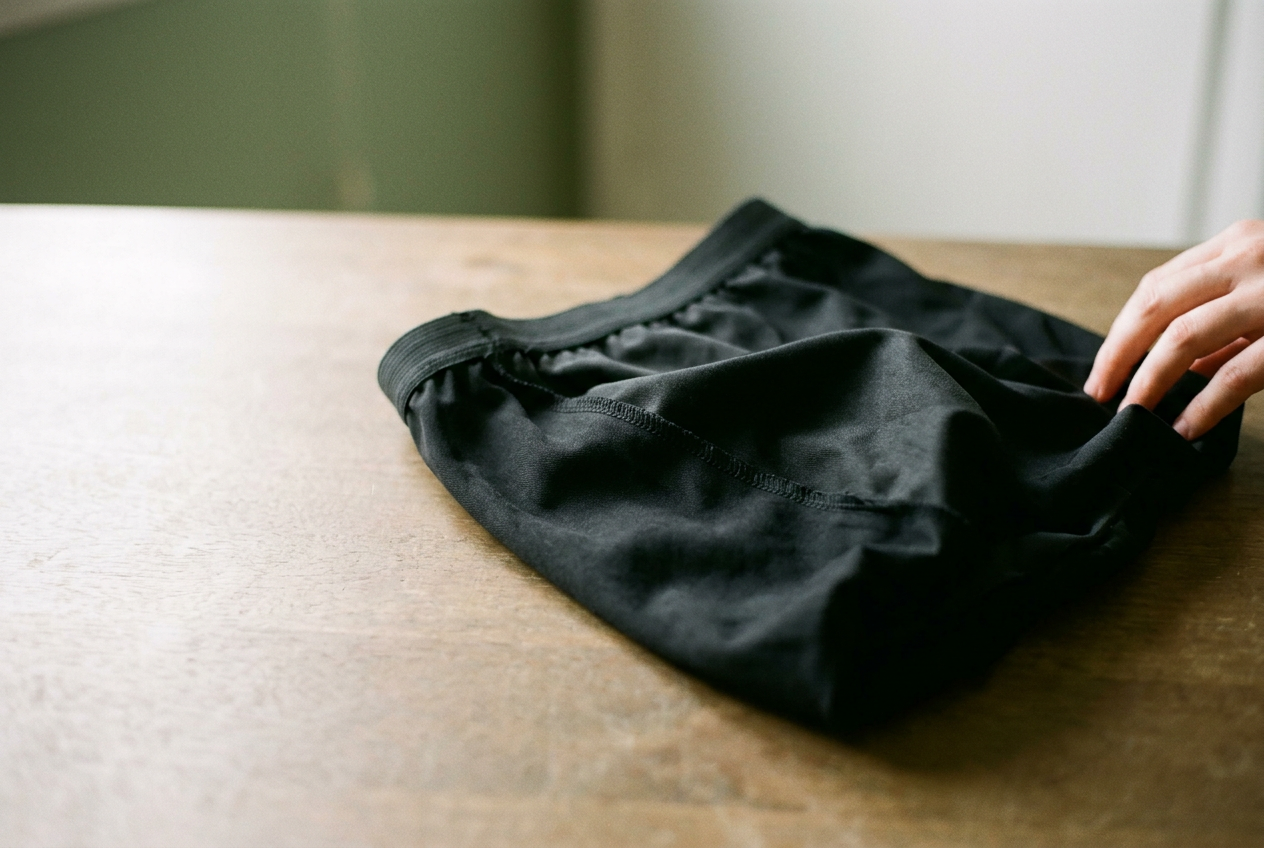
The useful reference on my table is a black polyester bubble mini with a woven shell, a separate lining and elastic hidden where the two layers meet. It looks structured on the hanger, but the puff comes mostly from gathered fabric rather than a stiff material. Turn the hem inside out and the whole proposition becomes clearer. The elastic supplies the tension, the lining limits the drop, and a narrow line of stitching carries much of the load.
The fit examples here use women's skirts and dresses, though the same inspection applies to bubble shorts and other wardrobes. What matters is not the gender label or the amount of volume. It is what holds that volume in place.
The puff starts with excess fabric
A bubble hem needs an outer layer that is wider, longer or both relative to the point where it is secured underneath. Bringing that excess fabric into a smaller circumference creates the rounded shape. Some garments distribute the fullness with elastic. Others sew the shell continuously to a shorter lining, while more sculptural versions hold selected areas up with internal tethers.
All three can look convincing when steamed and arranged for a product photograph. Laundering exposes the differences because the shell becomes heavier when wet, fibers may change dimensions, and hidden attachments are pulled in directions they do not experience during ordinary wear. Drying method matters as much as washing. A bubble skirt hung from its waistband while saturated places sustained weight on the very components meant to keep its hem lifted.
Fabric also changes the result. A light polyester shell usually asks less of the structure than a dense cotton poplin, while viscose can become notably weaker and heavier when wet. Crispness is not durability. A fabric may produce an excellent bubble in the fitting room yet soften after repeated cleaning, leaving the construction intact but the silhouette less emphatic.
Elasticized hems are easy to make and easy to distort
An elasticized bubble usually gathers the outer shell onto elastic at the lower edge or secures it to an elasticated lining. Some versions place the elastic inside a casing, meaning a folded fabric channel that allows the elastic to move. Others stitch through the elastic so the gathers stay distributed along fixed points.
This is the construction most prone to looking uneven after laundering. Heat can reduce elastic recovery, the ability to return to its original length after stretching, while a free-moving elastic can twist inside its casing. Even if the elastic remains sound, gathers may migrate toward one area during washing and drying. The skirt has not technically collapsed, but the bubble becomes full at one side and thin at the other.
The black polyester mini demonstrates the tradeoff. Its elastic gives the wearer room to move and makes the lower edge feel less restrictive than a rigid seam would. Yet the shape depends on that elastic staying short, flat and evenly tensioned. If one section relaxes or rolls, no amount of steaming the shell will restore the original distribution until the elastic is worked back into place or replaced.
Before buying, stretch a small section of the hem and release it. The return should feel prompt rather than slow, and the elastic should lie flat without a hard spiral under the fabric. Check whether the gathers are anchored by stitching. A fully enclosed casing may be repairable because the elastic can sometimes be replaced, but it is also more likely to twist; stitched elastic is steadier, though replacing it requires more labor.
Low heat is the practical rule. A care label that permits machine washing but warns against tumble drying is telling you something about the structure, not merely the shell fabric.
A shorter lining usually gives steadier volume
In a lined bubble hem, the outer shell folds underneath and joins a shorter inner layer along a continuous seam. The difference in length forces the shell outward before it turns under. Because a fixed seam determines the circumference, the fullness is less likely to slide around during washing than it is with free elastic.
This is often the most stable everyday construction, provided the shell and lining respond similarly to cleaning. Polyester joined to polyester tends to present fewer dimensional surprises than a natural-fiber shell attached to a lining with very different shrinkage or stretch. The word lined on a product page is not enough. A loose lining that hangs independently does nothing to support the bubble; it must connect to the outer hem or to another internal support.
The failure here is differential shrinkage, meaning one layer changes size more than the other. If the lining shortens while the shell stays stable, the bubble may become tighter and more exaggerated. If the shell contracts or the lining stretches, the hem can flatten, droop or pull into diagonal folds. A twisted side seam after cleaning often points to competing layers rather than a loss of volume alone.
Lift the outer hem in the fitting room and find the join. It should run evenly around the garment without puckered gaps, loose sections or lining fabric caught at different depths. Then let the skirt fall naturally. If the lining shows below the bubble while the garment is dry and properly positioned, laundering is unlikely to improve it.
A lined construction costs more fabric and usually more sewing time than a basic elastic finish, which helps explain why it appears more often in the middle of the market and above. Price still does not guarantee compatibility between layers. The fiber-content label remains more useful than the brand tier.
Internal tethers make shape precise but localize failure
An internally tethered bubble uses narrow tape or thread chains to connect selected points of the outer shell to a shorter inner layer. A thread chain is a flexible strand made from looped sewing thread rather than a strip of fabric. Instead of pulling the entire circumference inward, the tethers lift specific sections and allow deeper folds between them.
This method can create controlled, sculptural volume without squeezing the leg. It also concentrates stress. If one tether stretches, pulls through the shell or comes unstitched, that section drops while the rest of the hem stays raised. The resulting dip is conspicuous because the construction was designed around repeated attachment points.
Inspect each point you can reach. A secure tether should be caught into a seam or reinforced with a bartack, a short, dense block of stitching used where fabric takes extra strain. Be wary of a long thread chain attached to a single layer of delicate shell fabric with only a few visible stitches. The attachment may survive normal walking but struggle with the weight of a wet hem.
Tethered pieces benefit from a laundry bag, a low-agitation cycle when the label allows washing, and flat or supported drying. Wringing is particularly unhelpful because it twists the outer layer while the tethers hold isolated points in place. Dry cleaning may be the maker's answer for a complicated version, but that adds recurring cost to a silhouette that may not remain central in a wardrobe for years.
The care label settles more than the product description
Start with the cleaning instruction, then compare the shell and lining fibers. A washable polyester garment with compatible layers is a lower-maintenance proposition than a cotton shell attached to a viscose lining and marked for cautious cleaning. Elastane in the hem or lining adds comfort but makes high heat a poorer bet.
On the black mini, the decisive detail is not the smooth polyester exterior. It is the hidden elastic at the joined hem, because that component determines whether the gathers remain evenly spaced. A shopper who reads only the shell composition misses the part most likely to change the silhouette.
Dry-clean-only wording is not automatic evidence of better construction. It may reflect delicate fabric, complicated trim or a brand's conservative care position. Decide whether the cleaning routine fits how often you expect to wear the garment. A party dress cleaned occasionally carries a different burden from a bubble skirt intended for weekly rotation.
For washable pieces, plan to reshape the hem while damp. Spread the gathers evenly, untwist the lining and support the garment as it dries rather than hanging it by the waistband at full wet weight. That adds several minutes to laundry day. It is modest upkeep, but it is still part of the price.
The inside determines the investment call
At the lower-priced end, elastic is acceptable when it lies flat, recovers quickly and can be reached for repair. A lined hem is the safer choice for regular wear if its layers have compatible care instructions. Internal tethers make sense when their attachment points are reinforced and the sharper, placed volume is important enough to justify gentler cleaning.
The black polyester mini passes as a trend purchase rather than an investment piece. Its shell is practical and its lining controls the length, yet the bubble still depends on narrow elastic that will need cool cleaning and occasional redistribution. I would buy that construction at a price where future elastic replacement would not feel disproportionate. I would not pay a designer premium for the same interior finish.
Turn the garment inside out before deciding. The useful evidence is a flat strip of elastic, an even shell-to-lining seam, or a tether secured into reinforced stitching. If the attachment already looks strained under dry fabric, leave it on the rail.
Questions people ask
Can a collapsed bubble hem be restored after washing?
Sometimes. Redistribute gathers around an elasticized hem, untwist the lining and reshape the garment while damp before drying it with support. A permanently stretched elastic, shrunken lining or detached tether requires sewing rather than steaming, because the failure sits inside the construction.
Is a lined bubble hem always better than an elasticized one?
No. A well-sewn elastic hem can outlast a lined version whose layers shrink differently. Lining offers steadier distribution, but compare fiber content and care instructions, then inspect the joining seam. Compatible materials and even attachment matter more than the presence of lining alone.
Should bubble skirts be hung or folded?
Fold them for long-term storage if hanging pulls the garment downward or presses the bubble against neighboring clothes. After washing, avoid hanging a saturated skirt from its waistband unless the care label directs it; wet weight can stretch elastic and load internal tethers.
What is the quickest fitting-room check for a bubble hem?
Lift the hem and identify what holds it up. Elastic should sit flat and snap back, a joined lining should meet the shell evenly, and tethers should attach at reinforced points. Let the garment fall again and check that its volume returns without manual arranging.
One update a day
Today's fashion update, in your inbox
One fashion update each morning — no hype, no filler, just pieces worth wearing.