Bubble Hems Can Survive a Chair. The Wrong Lining Cannot.
Bubble skirts have reached everyday cotton dresses, but their volume depends on what happens inside the hem. Check the lining, elastic and care label before buying.
Women's · November 7, 2026 · 8 min read
The useful object here is the pure-cotton bubble-hem midaxi dress that M&S has listed among its everyday womenswear. It brings together two ideas that do not automatically cooperate: a machine-washable cotton dress and a sculpted hem whose shape depends on one layer of fabric being held shorter than another.
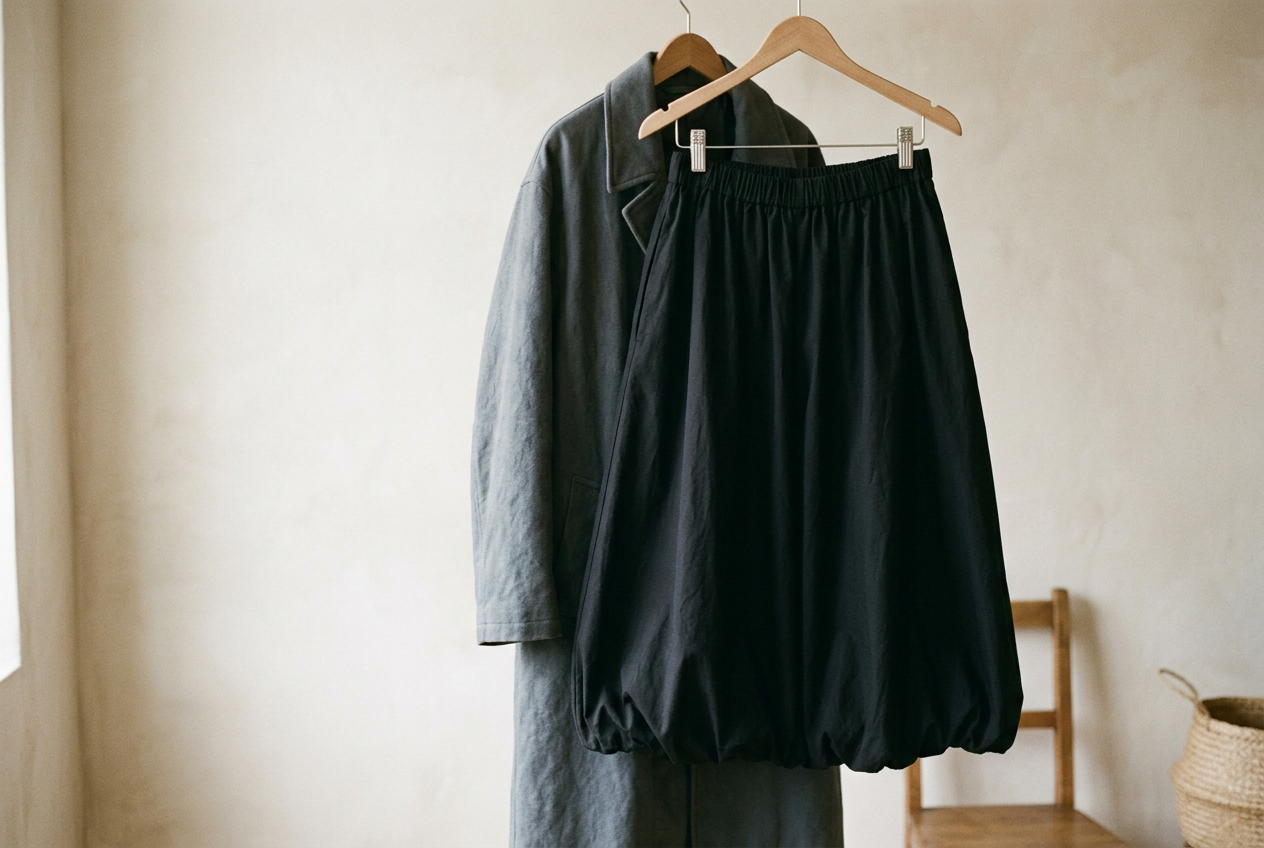
That tension matters more than the bubble itself. A bubble hem, meaning an outer skirt folded or gathered inward to make a rounded lower edge, looks uncomplicated from across a fitting room. Inside, the maker may have joined the shell to a shorter lining, drawn it into elastic, or merely turned the fabric under and secured it with a narrow band. Those routes can produce a similar product image.
They do not sit, wrinkle or wash alike.
The M&S dress is also a useful sign of where the revival has arrived. Once a silhouette appears in cotton, at midaxi length and with ordinary laundering in mind, it is no longer being offered only for weddings or evening photographs. The bubble hem is making a claim on the weekday wardrobe. Construction now has to do more than hold until the car arrives.
The daywear shift is a construction test
Recent bubble skirts and dresses range from short taffeta versions to long cotton-poplin shapes sold alongside shirt dresses. The latter category is the more convincing measure of the trend. Poplin, a tightly woven fabric with a smooth surface, can support a rounded outline without the stiffness or shine associated with occasionwear, while a longer skirt makes the volume easier to combine with flat sandals, sneakers or a plain knit.
It also exposes weak engineering. A short party skirt can flare outward and call the result intentional. On a midaxi dress, uneven gathering may leave one side full and the other nearly straight, while the back can flatten into a shelf after a commute. A longer shell carries more weight, so thin elastic has more fabric to control and more opportunity to roll inside its channel.
The best daywear version does not need to remain perfectly inflated. It needs to settle evenly. That distinction is easy to miss online, where the skirt is hanging freely and the hem has often been arranged before photography.
What produces controlled volume
Start with the relationship between the shell and the lining. In the most dependable construction, the outer skirt is longer and somewhat wider than a separate inner layer, then both are joined near the lower edge. The shorter lining draws the excess shell inward, while the joining seam establishes where the curve ends. The result has a clear lower boundary rather than a vague bunch of fabric around the calves.
A lining should be wide enough for a normal stride. If it pulls across the thighs in the fitting room, the outer skirt may look generous while movement remains restricted underneath. For this women’s fit check, walk briskly, use stairs if they are available and sit without arranging the skirt first. A lining that climbs immediately will keep climbing during wear.
Elastic changes the character of the shape. An elastic casing, a fabric tunnel through which elastic runs, lets the hem expand as the wearer moves and makes the gathering less rigid. A broad, flat band usually distributes fullness more calmly than cordlike elastic. It can still twist, particularly if the casing is much wider than the elastic or the band has not been secured at intervals.
Some dresses use both systems: a lining controls the overall length, while elastic refines the gathered edge. That can work well, although it adds fabric and warmth around the lower leg. In humid weather, an unlined cotton shell with an elasticized turn-up may feel better, even if its bubble is less exact by late afternoon.
This is the tradeoff to accept. More internal structure gives a steadier silhouette. Less structure is cooler, lighter and often easier to wash.
A chair tells more than a mirror
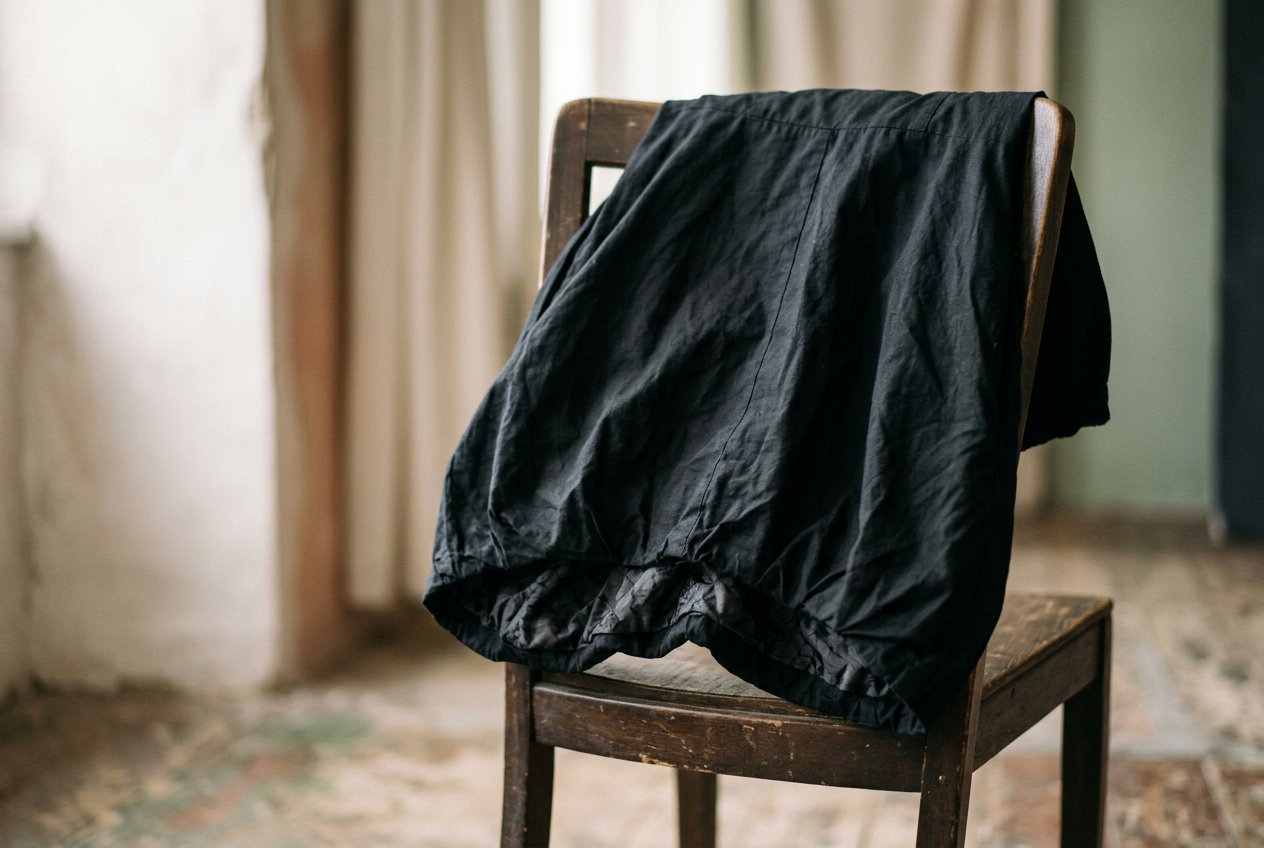
Return to the M&S cotton midaxi proposition. Cotton poplin responds honestly to pressure. After the wearer sits, the back panel will crease where it meets the chair, and the folded-under section can be pressed against itself. That is not evidence of poor quality.
The revealing part comes after standing.
If the hem is well balanced, the rear volume drops back within a few steps and the wrinkles spread through the bubble rather than collecting at its lowest point. If a narrow elastic band has rolled, one area may stay tucked high while another hangs loose. A tight lining can also trap the outer layer above it, leaving a flattened back and a fuller front.
Use a chair during the fitting-room test for several minutes, with feet on the floor rather than legs extended. Stand without tugging the hem. Then look at the side seams. They should remain close to the sides of the body; if one has rotated toward the front, the skirt’s layers may be pulling against each other.
Pockets deserve attention too. They add weight at two fixed points, which can distort a light shell once a phone or keys go inside. Place one ordinary item in a pocket and walk. A bubble dress intended for daily use should not develop a single low corner because the pocket bag is dragging on the outer skirt.
The polished fitting-room pose is therefore the least useful view. Sit in it.
Why wrinkles become trapped
A straight cotton skirt can be pressed from waistband to hem. A bubble skirt contains a folded space, so creases can form on the visible shell, the hidden turn-up or both. Pressing one layer against the ironing board may sharpen a crease into the other layer, particularly around the gathered edge.
Fabric choice decides how noticeable this becomes. Crisp cotton holds the architecture but records sitting. Polyester taffeta tends to spring back more readily, although heat can damage it and the fabric may feel too formal for the intended daytime role. Viscose can drape attractively before washing, yet a wet viscose shell becomes heavy and may pull against elastic or lining while drying.
Fiber content does not decide quality on its own; it tells the buyer which failure to anticipate.
Dark matte fabric hides internal shadows and minor creasing. Pale poplin makes both visible, especially when the folded-under section ends at an obvious horizontal line. Prints can disguise the join, though a large motif may break abruptly where the fabric gathers.
For a wearable bubble, some wrinkles are part of the proposition. The problem is not rumpling. It is a garment whose rumpling cannot be released without dismantling the shape.
Laundry separates volume from theater
The machine-washable appeal of the M&S cotton dress is precisely why its construction deserves scrutiny. During laundering, a free-running elastic band can twist inside its casing, while a shell and lining may rotate at different rates. The dress can emerge clean but uneven, with fullness bunched into one quadrant.
Before washing any bubble hem, read the garment’s own care label rather than relying on the fiber name. Fasten closures, empty the pockets and place the dress in a large mesh bag if the label permits machine washing. The bag reduces tangling; it cannot make an unsuitable garment washable. A crowded drum gives the folded hem more surfaces to catch against.
After the cycle, find the side seams while the fabric is damp. Hold the dress from the shoulders or waistband, then ease the gathers around the full circumference rather than pulling down on the lowest section. If the elastic has turned, work it flat through the casing with your fingers before drying. Do not stretch a wet viscose shell to recover length, since the weight of the water may exaggerate the distortion.
Air drying requires its own judgment. A heavy dress on a narrow hanger can lengthen from the shoulders while water pools in the bubble. A drying rack supports more of the garment, but the hem should be opened and repositioned so that the hidden layers are exposed to air. Tumble drying may shrink a cotton shell enough to alter its relationship with a synthetic lining, even where each material seems familiar, so the label has the final word.
A handheld steamer is often more practical than an iron. Hang the dry garment, lift sections of the bubble and steam the shell without pressing the folded edge flat. Persistent wrinkles inside the turn-up may still require access through the lining or casing. If that access does not exist, this is a high-maintenance dress wearing a casual label.
The two-minute buying decision
Put one hand inside the hem. The aim is not to audit every seam but to learn what creates the volume. A separate lining joined to the outer shell will feel like two distinct layers meeting near the bottom. An elastic-only version will reveal a casing around the edge.
If the interior is inaccessible and the product description says little beyond “bubble,” assume care will be harder rather than easier.
Next, spread a small section of the hem between both hands. The gathers should travel a little and then return. A rigid clump may become a permanent lump after washing; elastic that feels thin against a substantial cotton skirt may lack enough control once the fabric is wet.
Finally, check whether the lining hangs independently when the dress is held upright. A twisted lining in a new garment is unlikely to improve at home. Neither is a side seam already turning forward.
The revival is convincing at the level of silhouette. I am less decided about the average daywear execution. The M&S pure-cotton midaxi idea makes sense because cotton, length and washability move the bubble away from event dressing, but the name on the product page cannot tell a buyer whether the casing will roll or the lining will climb. That decision still belongs to the inside of the hem.
Questions people ask
Do bubble-hem skirts flatten when you sit down?
They compress, particularly at the back, but a well-balanced shell should recover after a few steps. Persistent flatness usually points to a tight lining, uneven gathering or twisted elastic. Sit for several minutes before buying, then stand without rearranging the skirt and check whether the side seams remain in place.
Can you machine-wash a bubble-hem dress?
Only when its care label allows it. Use a roomy load and consider a mesh bag, then redistribute the gathers while the garment is damp. Machine washing is less forgiving when the elastic runs freely inside a loose casing or when the shell and lining use fibers that shrink or dry at different rates.
Which fabric holds a bubble hem best?
Cotton poplin offers useful structure for daywear, though it creases after sitting. Taffeta rebounds well but can read formal and may be heat-sensitive. Softer viscose gives a looser bubble and needs support while drying. Construction matters as much as fiber: a stable lining and evenly distributed hem can improve any of these fabrics.
Is an unlined bubble skirt worth buying?
It can be, especially for warm weather, provided the turned-under hem is neatly secured and the elastic lies flat. Expect a softer, less consistent bubble than a lined version. The advantage is lower weight and easier access for steaming or untwisting the casing after laundering.
One update a day
Today's fashion update, in your inbox
One fashion update each morning — no hype, no filler, just pieces worth wearing.