Your Sneaker Heel Slips. Test the Laces Before Sizing Down.
Heel lift can mean excess length, but it can also mean the upper has too much room. A short indoor fit test separates a lacing fix from the wrong size or shape.
August 10, 2026 · 7 min read
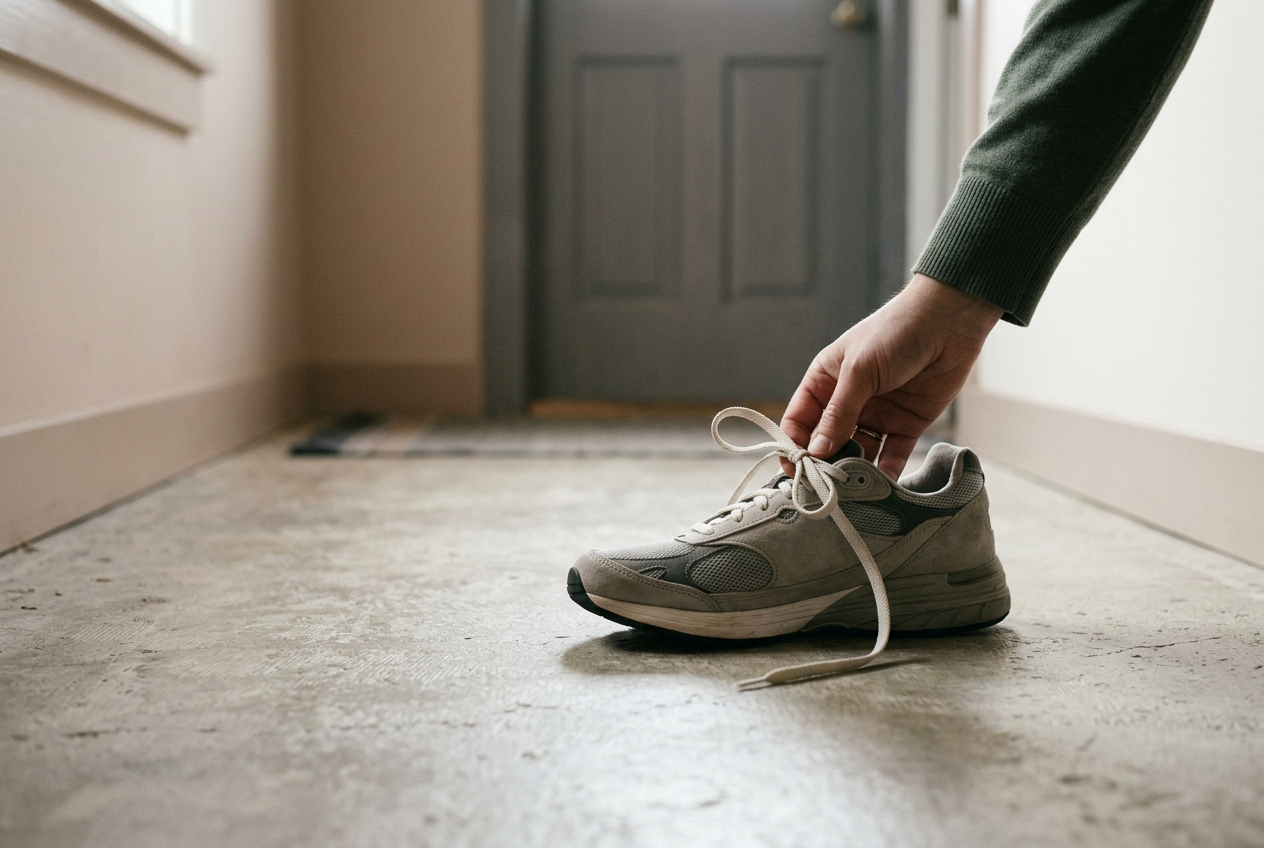
The shoe hanging this guide together is a mesh running-style sneaker with a padded tongue, a firm synthetic heel counter and one spare eyelet at the top of each lace row. I wore it indoors with the thin cotton-blend crew socks I would normally pair with it. The forefoot felt calm, the longest toe had usable space, and the heel lifted on stairs.
That combination often triggers an immediate size exchange. It should not. Sizing down reduces length, but it also moves the shoe's widest point and flex point backward, which can turn a manageable heel issue into cramped toes and a crease pressing across the wrong part of the foot. Discomfort loves a rushed administrative decision.
This advice is unisex because the mechanics apply across men's, women's and unisex sneaker sizing. The number printed on the box matters less than the relationship between foot length, foot volume and the shoe's shape.
Start by identifying where the spare room sits
Heel slip describes movement, not its cause. Low-volume fit, meaning the foot does not fill enough of the shoe's vertical space, can let the rear foot rise even when the sneaker is the correct length. A loose upper may wrinkle over the instep, the laces may draw unusually close together, and the tongue may feel as though it is floating rather than holding the foot.
Length problems look different. Seat the heel against the back of the shoe, stand normally and check whether the longest toe has practical clearance without a large unused section ahead of it. Then walk down a hallway, turn sharply and use a few stairs if available. A foot that slides forward before the heel lifts, or a sneaker that bends well ahead of the toe joints, is giving stronger evidence of excess length.
The white mesh test shoe did not push my foot forward, and its forefoot crease landed near the toe joints. Its lace rows, however, pulled closer together than expected. That made low volume the first thing to test, not a smaller box.
If the sneaker has a removable insole, take it out and stand on it as a secondary check. The outline can reveal conspicuous unused length or toes spilling over the sides, although it cannot reproduce the way the upper, foam and heel structure hold a moving foot. Treat it as evidence, not a verdict.
Run the lacing test before changing socks
A runner's loop, meaning a lacing method that uses the top eyelets to hold the heel more firmly, is the quickest useful test. Lace the sneaker normally to the second-highest eyelets. Feed each lace end vertically through the top eyelet on the same side, leaving a small loop, then cross the ends through the opposite loops. Pull the laces back and slightly downward before tying them.
Direction matters. Yanking straight upward can drive the lace crossing into the top of the foot while doing little to seat the heel. Drawing the laces back closes the loops around the ankle opening, which reduces movement without tightening every lower eyelet until the shoe resembles packaged meat.
Walk the same route again. In the test shoe, the loop reduced lift while preserving the original toe room, and the lace rows no longer needed to be hauled together from top to bottom. That result identified a fixable hold problem. It did not prove the fit was perfect.
Pay attention to the tongue during this pass. Tongue pressure is the load created where the laces push the tongue against the top of the foot, and it is the main tradeoff of aggressive heel-lock lacing. Firm contact is useful. A hard ridge, tingling, numbness or the urge to loosen the shoe after a few indoor laps means the laces are buying heel hold with pressure elsewhere.
A padded tongue spreads that load better than a thin, unstructured one, but thick foam is not diplomatic immunity. If the runner's loop only works when tied painfully tight, the upper probably has more volume than your foot can fill, or the rear shape does not match you.
Change sock thickness one step, not three
Repeat the route in the socks you expect to wear most. Then try one moderately thicker pair, ideally with added knit density rather than a bulky seam around the toes. The aim is to see whether a small increase in volume steadies the foot, not to stuff the shoe until movement becomes physically unavailable.
With the mesh test sneaker, moving from a thin cotton-blend crew sock to a denser athletic sock reduced the remaining lift, but it also made the forefoot warmer. That tradeoff may be reasonable for a gym shoe or a cool-weather walking sneaker. It is a poor rescue plan for a summer shoe bought specifically for light socks.
Socks also compress and shift during wear. A fit that depends on an unusually thick pair will change when the knit packs down, and buying a separate sock wardrobe to rehabilitate one sneaker is rarely the sensible use of money. If your normal sock plus a runner's loop works without tongue pressure, keep testing. If only the thickest sock makes the heel behave, the shoe is marginal.
Check whether the heel counter meets your heel
The heel counter is the structured piece wrapping the back of the foot. Its height, curve and width determine where the shoe contacts the heel, while the padded collar above it softens that contact and can disguise a poor shape for the length of a fitting-room walk.
Untie the shoe, seat the heel fully and retie it with normal tension. Feel for gaps beside the heel rather than only behind it. A broad, rounded counter may leave a narrow heel moving inside a correctly sized forefoot; a low counter may sit below the point where it can hold; a sharply curved one can press the Achilles area before the rest of the shoe feels secure.
The counter on the test shoe was firm and high enough to resist collapse, and the runner's loop drew its collar around the heel without creating a hard edge. That is a favorable result. If the rear remains visibly gapped after sensible lacing, or if the top edge rubs while the base still floats, changing sock thickness will not redesign the molded structure.
Pressing the counter with a thumb can show how rigid it is, but rigidity alone does not predict fit. A soft counter may follow the foot yet offer little hold. A stiff one may stabilize well or become an expensive blister delivery system. Shape decides which version you get.
Decide between a smaller size and a different last
A last is the foot-shaped form around which a shoe is built. Two sneakers in the same labeled size can use different lasts, leaving one narrow at the heel and another generous through the rear and instep.
Consider sizing down only when the foot has obvious forward-and-back travel, the flex point sits ahead of the toe joints, and there is more length beyond the longest toe than your intended activity needs. Try the smaller size indoors with the same socks and lacing. Reject it if the toes meet the front on descents, the forefoot presses sideways, or the arch structure now lands in the wrong place.
Choose a different last when length is right but the rear remains loose, especially if tightening closes the lace rows completely or creates immediate tongue pressure. A model with a narrower heel, lower-volume upper or differently curved counter is the cleaner alternative. Brand size charts cannot reveal all of that geometry, so a different model within the same brand may fit less like its apparent sibling than expected.
The test shoe stayed in contention because normal socks and a runner's loop controlled the lift without moving the foot forward or punishing the tongue. Had the counter remained broad at the sides, I would have changed models rather than sizes. Toe room is not spare upholstery.
Keep every test indoors on a clean surface until the decision is made. A few consistent passes with the same route, socks and pace tell you more than repeatedly tightening the laces while standing still, and they preserve the option to return a shoe that has failed on shape rather than effort.
Questions people ask
Will heel slip disappear after sneakers break in?
A stiff sole may flex more easily with wear, which can reduce the amount the shoe pulls at the heel. Padding can also compress, however, creating more space rather than less. Do not rely on break-in to correct obvious forward sliding, side gaps around the counter or a shoe that already needs painful lace tension.
How much heel lift is acceptable in a new sneaker?
A slight movement that does not rub, pull the sock down or make the foot slide forward can be workable, particularly in a shoe with a stiff new sole. Repeated lifting that creates heat at the collar, changes your stride or continues after a comfortable runner's loop points to a fit mismatch.
Can thicker socks fix heel slip?
A moderately thicker sock can fill a small amount of excess upper volume and improve hold. It is a practical fix only if that sock suits the weather, activity and forefoot fit. If extra thickness crowds the toes or makes the shoe too warm, choose a lower-volume sneaker instead.
Should
I size down if a runner's loop does not work?
Size down only if the shoe also shows excess length, such as forward sliding or a flex point that lands ahead of the toe joints. When toe clearance and flex are already right, failed lacing usually supports trying another last with a narrower heel or lower-volume upper.
One update a day
Today's fashion update, in your inbox
One fashion update each morning — no hype, no filler, just pieces worth wearing.