Cork Sandals Should Mold, but They Shouldn’t Hurt
A cork-latex footbed needs several short wears to take an imprint. Persistent edge pressure, misplaced arch support and numb toes are fit problems, not character building.
September 2, 2026 · 8 min read
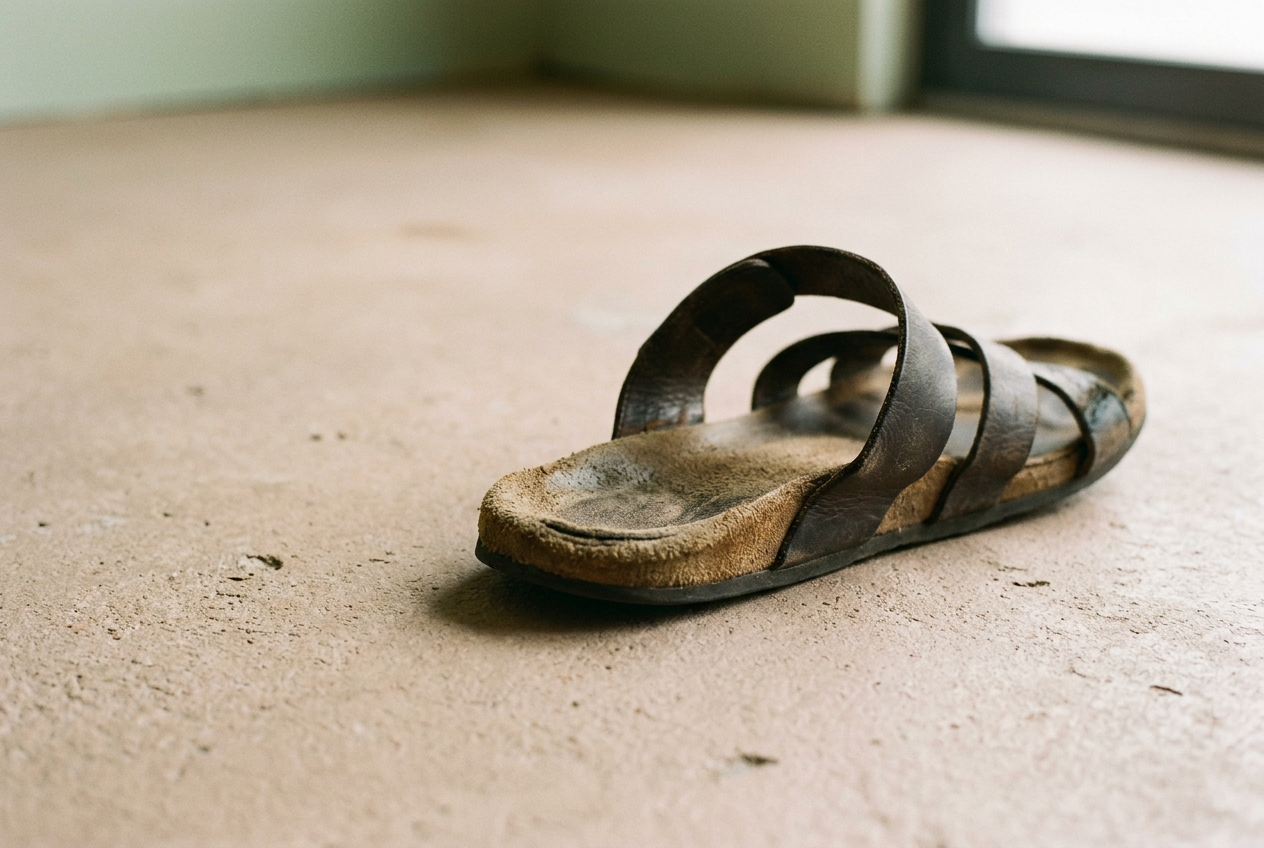
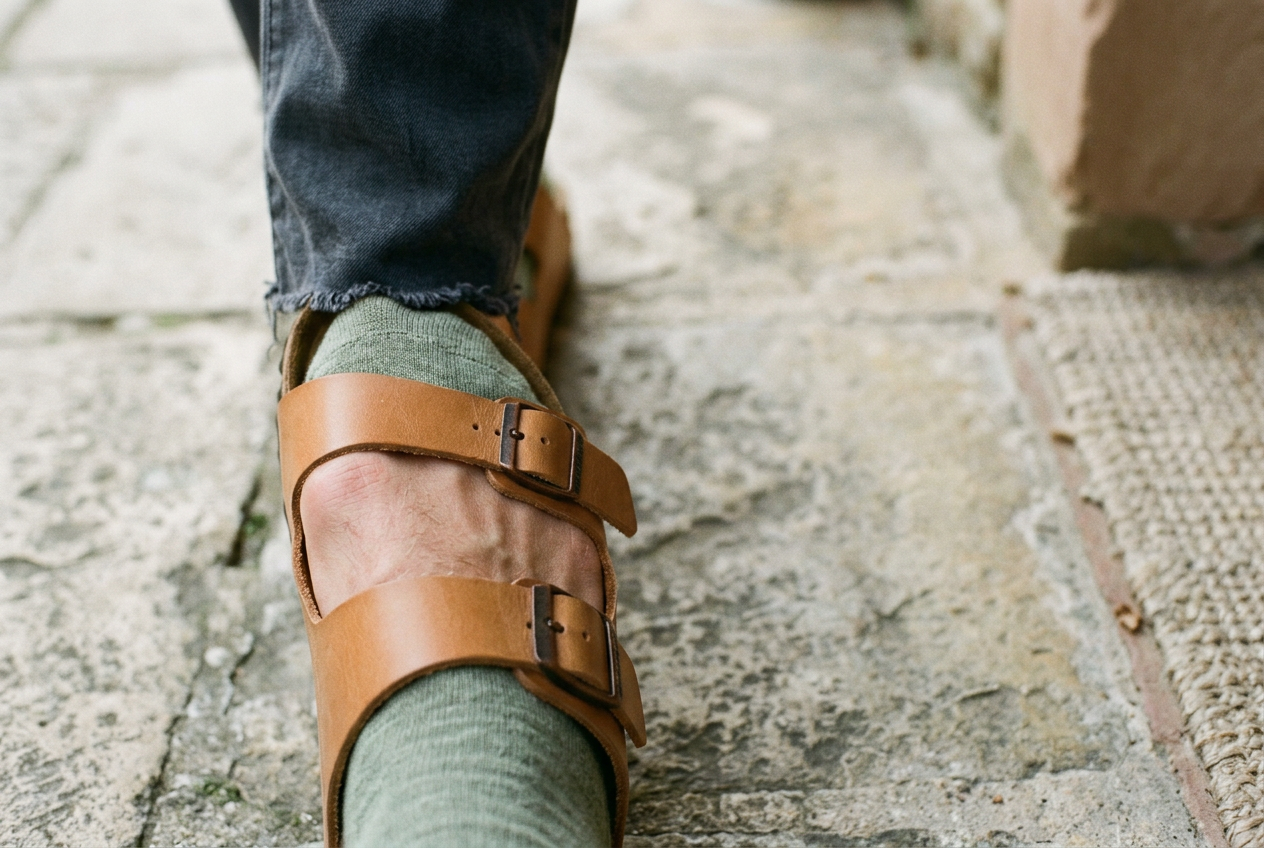
The test pair was a new unisex two-buckle sandal with full-grain leather straps, a suede liner, a cork-latex footbed and an EVA outsole, meaning a lightweight foam sole under the cork. It was worn indoors first, then on short neighborhood walks across one week, without socks once the initial strap position was settled.
This is unisex fit advice because the useful measurements are foot length, width and volume rather than the department named on the box. Conversion between women’s, men’s and European sizing varies, so treat the printed size as a route to the fitting room, not a binding decision.
The pair changed during the week. The suede became less grabby, the leather flexed more readily at the forefoot, and shallow heel and toe impressions appeared. One problem did not change: the outside of the left foot continued to press against the raised rim near the little toe. That persistent contact, rather than the general firmness underfoot, was the reason the pair failed.
Know which parts can change
A cork-latex footbed is granulated cork bound with latex, formed into a supportive platform with raised contours. It compresses modestly where the foot repeatedly loads it, but it does not stretch sideways or relocate its arch. Early molding creates a shallow footprint. It should not turn a narrow platform into a wide one.
The suede liner changes faster. Its nap, the fine raised surface of the leather, starts slightly fuzzy and can feel surprisingly resistant under bare feet. After several wears, that nap lies flatter under the heel and forefoot, reducing drag and making the sandal feel less officious. The liner may also show darker contact areas from normal skin oils.
Neither change means the cork underneath has collapsed.
Leather straps flex at buckle points and across the top of the foot, then may ease by a small amount as the fibers repeatedly bend. Stiffness at the first wear can be normal. A strap that cuts into the foot, leaves a deep groove or forces the buckle tongue against skin is not waiting to become generous; it is reporting that the sandal has too little volume or that the strap lands in the wrong place.
The EVA outsole softens the strike slightly, but it contributes little to the personalized fit. If the sandal feels rigid underfoot, most of that sensation comes from the shaped cork platform. Buyers expecting sneaker foam may interpret firmness as a defect, while buyers accustomed to structured footbeds may find it reassuring. Neither reaction tells you whether the outline fits.
Break them in without losing the return option
Start with a clean indoor floor and bare feet for about twenty minutes. Bare skin reveals strap friction and edge contact that thick socks can disguise, although socks are useful later if the leather merely needs help flexing. Stand, walk, turn and use stairs if available. Sitting on the sofa proves only that the sandals work as furniture.
At the end of that first wear, look at where the foot sits rather than waiting for soreness. The heel should rest inside the heel cup, the raised cradle at the back of the footbed, without climbing its edge. Toes need enough room to spread while staying inside the front rim. The arch contour should meet the arch instead of pressing forward into the ball of the foot or sitting behind the highest point.
If the outline looks right, repeat the indoor wear and extend it. The test pair moved from short sessions to roughly an hour around the house before going outside. That approach cost several evenings but no blisters, and it preserved the chance to return the shoes until their basic fit was clear.
Do not tighten the straps enough to pin the foot down. A small amount of movement is expected in an open sandal, while excessive tightening can create pressure that appears to come from the footbed. On the test pair, loosening the front strap by one buckle hole stopped a red line across the toes without making the sandal unstable. It did nothing for the left outer-edge pressure, which helped isolate that problem as width and shape rather than strap tension.
Outdoor wear should begin with a short route near home. Pavement adds impact, heat and slope, so a tolerable indoor fit can become less diplomatic after several blocks. Increase distance only if the previous wear left no blister, numb patch or tender pressure point that remained after the shoes came off.
Normal molding leaves a broad imprint
A healthy early imprint develops under broad load areas, especially the heel and forefoot. On the test pair, the suede flattened under both heels first; by the end of the week, the cork beneath had taken a subtle impression without producing a visible crater. The toe bar, the raised ridge that sits behind the toes, also felt less prominent once the feet stopped sliding over the new suede.
Symmetry is useful but not mandatory. Most people do not have matching feet, and the larger or wider foot should set the minimum space required. The left foot in this evaluation sat farther outward than the right, which explained why only one side met the rim. It did not make the pressure acceptable.
A pair cannot be broken in on behalf of the smaller foot while the larger one files a complaint.
Expect the sandal to feel more familiar rather than dramatically softer. Cork-latex keeps much of its structure, which is the point of buying this construction instead of a flat foam slide. If the sales pitch in your head requires a mattress underfoot by Friday, choose another category before everyone loses an afternoon.
Pressure has a location, and that location matters
General firmness across the sole often fades from notice as the suede settles and the foot adapts to a structured platform. Concentrated pressure is different. A hot spot under one part of the arch means the contour does not match the foot; pain against the rim suggests insufficient width or an incompatible outline; toes gripping through every step can indicate that the sandal is too long, too loose or poorly placed under the forefoot.
Numbness, burning and sharp pressure are stop signs during a fitting. Break-in can smooth a strap and compress the top layer of a footbed, but it cannot make a raised edge disappear. Continuing to wear the pair outdoors merely converts useful return evidence into an owned problem.
Watch the path of the heel, too. If it repeatedly lands on the inner or outer wall of the heel cup, check that the foot is centered and that the straps are not pulling it sideways. When adjustment does not correct the landing, the footbed shape is wrong. Sizing up may add length while leaving the same troublesome contour in a slightly more inconvenient location.
Change width or construction before changing length
Length is only one part of sandal fit. A wider version of the same size is the first alternative when the toes and heel sit correctly front to back but the sides touch the rim. A different footbed shape is more sensible when the arch support lands badly, because the last, the form used to establish a shoe’s shape, controls where that contour sits.
High-volume feet may need longer straps or more buckle range even when the footbed width is correct. Low-volume feet can have the opposite problem, with straps reaching their tightest holes before they secure the foot. Adding buckle holes can weaken the strap if they are badly placed, and it will not correct a buckle that already rests on a sensitive joint.
For buyers who want the cork shape with a gentler first wear, some sandals use a soft footbed, meaning a thin cushioning layer sits above the molded cork. That construction reduces initial firmness but adds material between the foot and the contours, so the support may feel less direct. Textile or softer suede straps can also reduce break-in time, though they will not solve an undersized platform.
The wider alternative to the test pair removed the left-edge contact while keeping the heel and toes inside the rims. That was a sizing decision, not a successful break-in. The original pair’s heel imprint and softened suede were normal; the unchanged little-toe pressure was the useful finding.
Keep water and heat out of the experiment
Do not soak cork sandals to accelerate molding. Water can stain the suede, affect adhesives and leave the cork drying unevenly, while direct heat can harden or damage materials rather than making them cooperative. Let damp sandals air-dry away from a radiator or hot car.
A dry suede brush can lift flattened nap and remove surface dust, but vigorous brushing will not erase a deep foot imprint. Cork sealer belongs on exposed cork edges only when the maker’s care guidance calls for it. None of this maintenance widens the footbed, which is worth remembering before a jar of shoe-care product becomes the final stage of denial.
Questions people ask
How long do cork footbed sandals take to break in?
Expect several short wears before the suede feels less grabby and the leather straps flex more naturally. The exact time depends on strap material, foot shape and walking distance, but improvement should arrive gradually without escalating pain. A week of controlled wear is enough to identify many fit problems, even if deeper cork molding continues later.
Should cork sandals hurt at first?
They may feel firm, unfamiliar or mildly resistant under the straps. They should not cause sharp pressure, numbness, burning or a blister during a short fitting. Discomfort concentrated at a rim, buckle or misplaced arch contour usually points to the wrong width, volume or footbed shape rather than a necessary break-in stage.
How much room should be around the foot?
Keep the heel and toes inside the raised edges with a slim visible margin, while making sure the foot does not slide so far that the contours miss their intended positions. Extra length is not useful if the arch sits incorrectly. Check the larger foot while standing, since feet spread under body weight.
Can stiff sandal straps loosen enough to fix a tight fit?
Leather straps can flex and ease modestly where they bend, and the suede underside may feel smoother after wear. They will not reliably create the space needed for a high-volume foot or correct a buckle that lands on a joint. If the loosest practical setting still leaves a deep mark, try another strap configuration or size.
One update a day
Today's fashion update, in your inbox
One fashion update each morning — no hype, no filler, just pieces worth wearing.