A Cork Footbed Softens. A Bad Arch Match Does Not.
After seven days in one pair of two-strap cork sandals, the surface felt friendlier. The misplaced arch stayed stubborn, which is the point at which break-in becomes wishful thinking.
August 22, 2026 · 7 min read
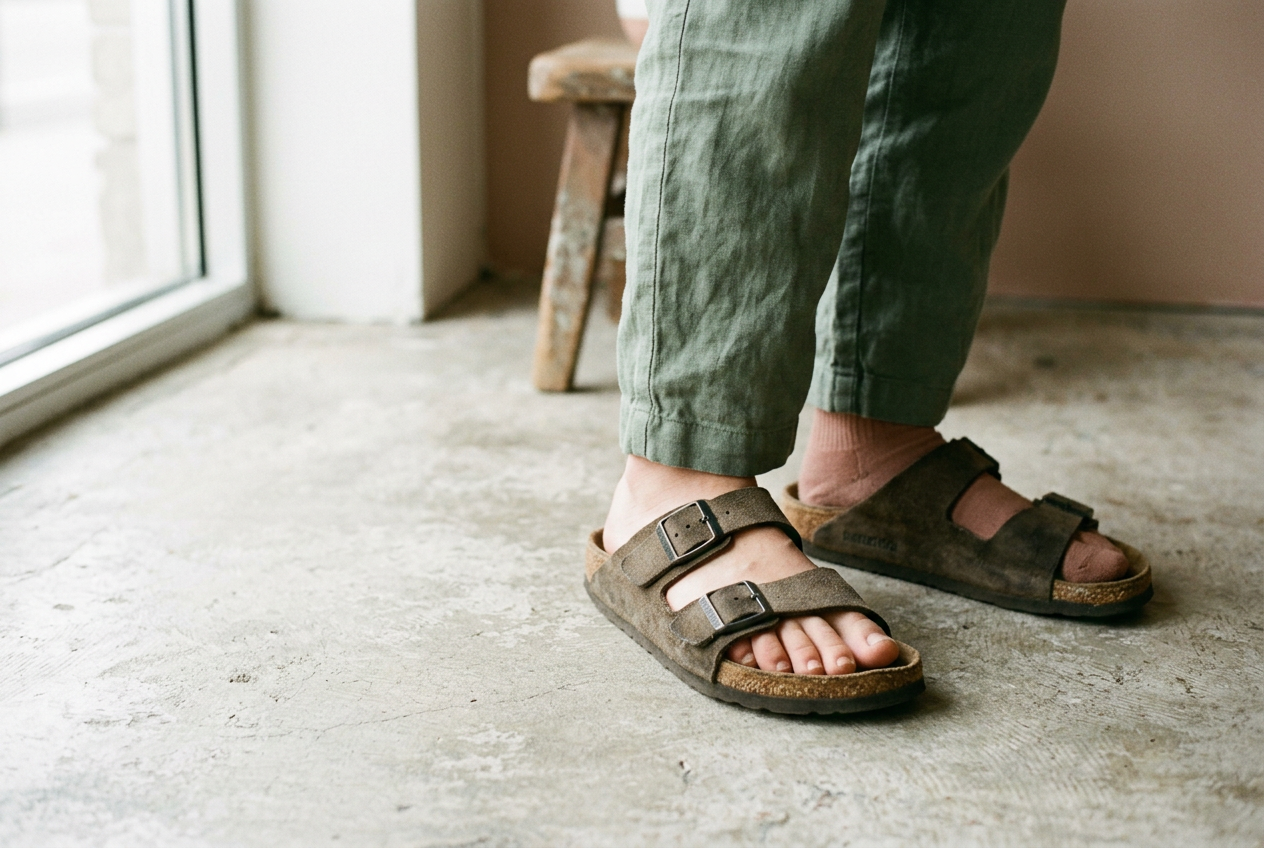
The test pair was a standard-width, two-strap sandal with leather uppers, a suede-lined cork-latex footbed, meaning ground cork bound with latex, and a thin EVA outsole. I wore it across seven consecutive days for indoor walking, errands and several longer stretches on dry sidewalks, always barefoot and with the straps adjusted to hold without clamping.
Its length looked right from the start. The heel sat inside the heel cup, the shaped recess that holds the back of the foot, and there was visible space ahead of the longest toe. The problem was narrower and more useful: the inner arch mound met my right foot slightly too far forward. By the end of the first outing, that spot felt less like general new-shoe firmness and more like sustained pressure from a piece of furniture.
This distinction matters because cork-footbed sandals arrive with a persuasive bit of folklore attached. Wear them, suffer briefly, and they will become yours. Some do improve. The suede loses its dry stiffness, leather straps flex more readily, and the cork-latex layer takes a shallow impression under repeated load.
None of that allows the main contours to pack a suitcase and move half an inch.
The advice here is unisex. Footbed geometry does not become more forgiving because a sandal appears in a women’s or men’s size run, although width labels, available lengths and strap placement may differ. Judge where the structures meet your foot, not which side of the store supplied the box.
What changed during the week
The first improvement came from the suede lining. On the opening day it felt slightly grabby against warm skin, especially under the ball of the foot, but the nap flattened in the areas receiving the most pressure and allowed the foot to settle without the same dry drag. That was normal wear, visible as darker, smoother patches rather than a deep footprint.
The leather straps also stopped resisting every step. They did not stretch into a different size, but they bent more easily at the points where the foot flexed, and one buckle could be left on the same hole without the upper feeling as rigid across the instep. A strap that begins firm yet sits flat can improve this way. A strap edge that cuts into skin, catches the little toe or requires the tightest hole to keep the sandal attached has a placement problem, not a character-building program.
Under the heel and ball, the cork-latex layer gave a little. “Molding” sounds dramatic, but the visible result after one week was modest compression rather than a custom cast. The heel sat more securely, and the transition from standing to walking felt less abrupt because the surface and lining had adapted to repeated pressure.
The evaluation pair was therefore better on day seven. It was not transformed.
That right arch mound remained easy to locate without looking. The pressure began in the same place, appeared after a similar amount of continuous walking and disappeared when the sandals came off. It never became a blister, largely because I stopped each longer wear before irritation advanced, but discomfort does not need paperwork to count.
The three fixed points buyers misread
The arch is the clearest test. A firm contour can feel unfamiliar across the whole midfoot during an initial try-on, particularly if the usual alternative is a flat slide or soft foam sandal. That broad awareness may fade as the top surface settles. A concentrated ridge that presses one section of the arch, however, usually means the mound is too high, too far forward or too far back for that foot.
Next comes the toe bar, the raised ridge designed to sit beneath the base of the toes. On the test pair, it landed correctly under the left foot and a fraction forward under the right, where it was noticeable but not painful. Its surface became less coarse during the week, yet its position did not change. If the ridge sits directly under a toe joint, makes the toes curl to keep the sandal on or rubs during every push-off, more wear will polish the problem rather than solve it.
The perimeter is equally stubborn. Cork sandals often have a raised rim around the heel and forefoot, and that edge helps contain a foot that matches the platform. On a foot that is wider than the usable area, the same rim presses into the side of the heel, the ball or the little-toe joint. Cork may compress under downward pressure, but an edge beneath a foot is still an edge beneath a foot.
My test pair passed this part: the forefoot stayed within the rim while standing and walking. Had the outer edge been under the little-toe joint, I would have tried the wide version or a less sculpted footbed rather than waiting for the sandal to surrender. Sandals are patient. They can outlast a return window without learning anything.
A better first-week wear test
Start indoors on a clean floor while the pair remains returnable. Check the fit while standing, since a seated foot is usually less spread, then walk long enough for the sandal to reveal where it holds and where the foot travels. The heel should remain inside the cup, each toe should clear the front rim, and the widest part of the forefoot should sit on the platform rather than over its border.
Do not tighten the straps until circulation becomes a theoretical concern. The front strap should guide the forefoot without forcing it backward; the rear strap on a two-strap style should give enough hold that the toes are not gripping for security. If the sandal only stays on when the buckles pinch, the upper volume or strap placement is wrong even when the numbered size appears correct.
For the first few outings, alternate the cork pair with shoes that are already comfortable. That approach costs more calendar time than wearing the sandals all day immediately, but it makes each pressure point easier to assess and avoids turning mild rubbing into damaged skin. Keep the test dry as well. Water can darken suede, stiffen leather and affect return eligibility, none of which helps answer a sizing question.
After each wear, note whether discomfort appears later, feels milder or covers a broader, less intense area. Those changes support continuing. On the evaluation pair, surface friction reduced and the heel felt more settled, both good signs. The right arch pressure remained focused and punctual.
That was the stop sign.
The stop-or-continue checklist
Continue cautiously when the footbed feels generally firm but no single contour dominates; the suede rubs lightly without creating a hot spot, meaning one localized area of pressure or friction; the straps crease as the foot bends but leave no sharp line; and the sandal feels better over successive short wears.
Stop and reassess when the arch mound presses one exact place every time, the toe bar sits under a joint, or a raised sidewall supports part of the foot instead of surrounding it. Numbness, broken skin, limping or pain that remains after removing the sandals also ends the experiment. That is no longer a discussion about patina.
Before giving up on the entire category, try the adjacent size or width while checking every contour again. Going longer can shift the arch and toe bar, but it may also leave the heel loose and create excess space at the front; choosing wide can move the foot fully inside the perimeter without fixing an arch that is too high. Change one variable and walk in both shoes.
The alternative for my right foot was not another week in the same pair. It was a sandal with a flatter contour and a softer molded EVA footbed, which sacrifices some of cork’s stable, structured feel but tolerates small differences between feet more readily. Buyers who like the firm platform yet miss one contour may do better with a different cork last, meaning the form that determines the footbed’s shape, rather than abandoning cork altogether.
What a successful break-in looks like
A properly matched cork footbed should become less distracting, not demand a growing tolerance for one feature. The top layer smooths, the straps flex and the weight-bearing areas gain shallow impressions, while the foot remains centered without active toe gripping. You may still notice firm support. Firm is a material quality; pain is not a premium finish.
By the end of this test, the left sandal was close to that outcome. Its arch met the foot cleanly, the toe bar sat behind the joints and the edge stayed outside the forefoot. The right sandal showed why buying for the larger or more particular foot matters: its cork had softened in the expected places, yet the main mismatch was intact.
Questions people ask
How long do cork footbed sandals take to break in?
The surface and straps can start feeling less rigid within several short wears, but there is no useful deadline that guarantees comfort. Look for steady improvement rather than counting days. If one contour still creates focused pressure after repeated indoor and short outdoor tests, extending the trial is unlikely to move that structure.
Will the arch support flatten with wear?
Cork-latex compresses modestly under repeated weight, so a high arch may feel a little less abrupt as the top settles. It will not become a flat footbed or shift forward or backward. If the mound hits the wrong section of your arch from the first wear through the seventh, try another shape.
Should my toes touch the toe bar?
The ridge should sit near the base of the toes, where they bend, without pressing directly under a joint or forcing the toes to curl. Light contact may become less noticeable as the lining smooths. Repeated rubbing during push-off points to incorrect placement, which a softer surface will not correct.
Can a wider cork sandal fix edge pain?
It can when the foot is resting on the raised sidewall because the platform is too narrow. A wider version will not necessarily fix a misplaced arch or toe bar, so recheck those points while standing. The useful result is simple: the whole forefoot sits inside the rim, including the little-toe joint.
One update a day
Today's fashion update, in your inbox
One fashion update each morning — no hype, no filler, just pieces worth wearing.