Thong Sandals Pull Between the Toes. Break-In Rarely Fixes It.
Toe-post pain usually comes from alignment, strap tension, footbed length, or walking motion. Some leather straps can be adjusted; a misplaced post belongs back in the box.
August 10, 2026 · 8 min read
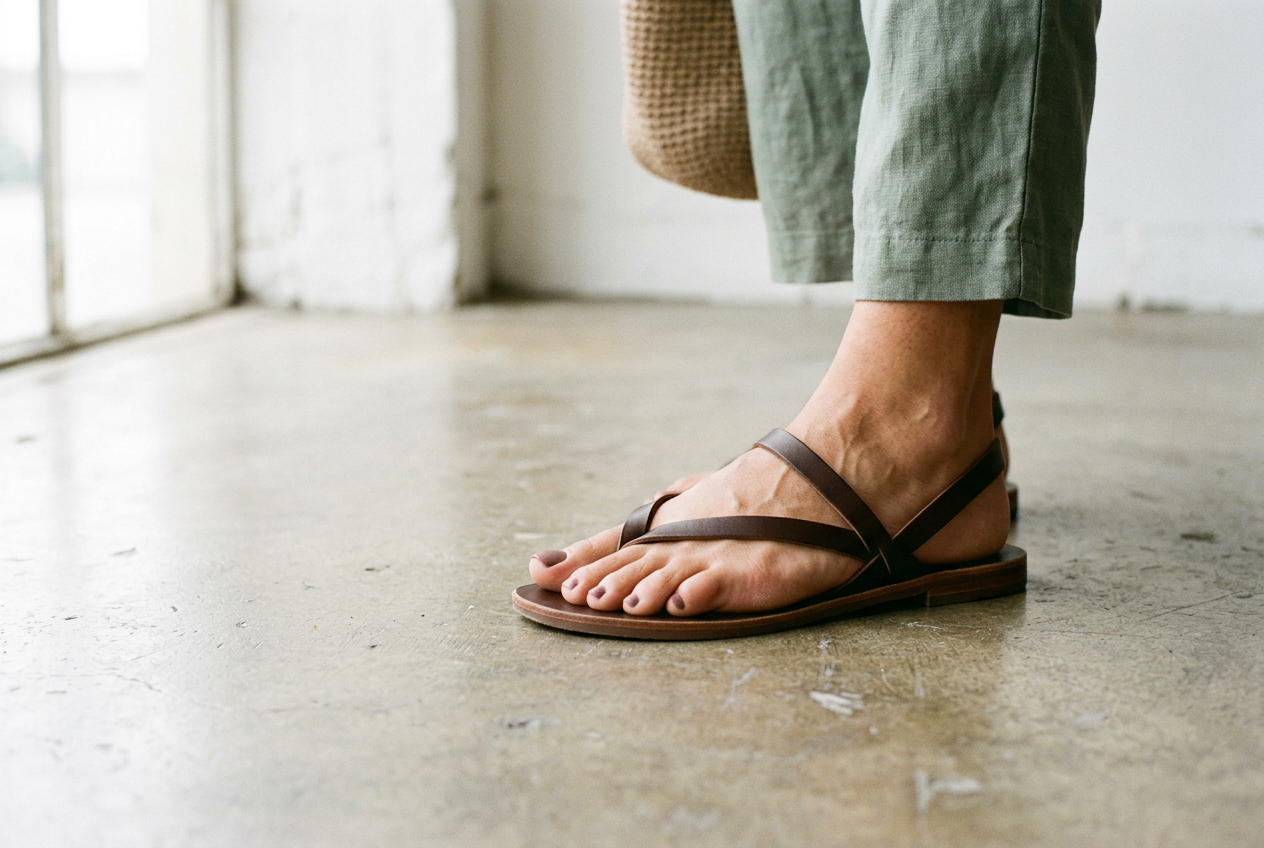
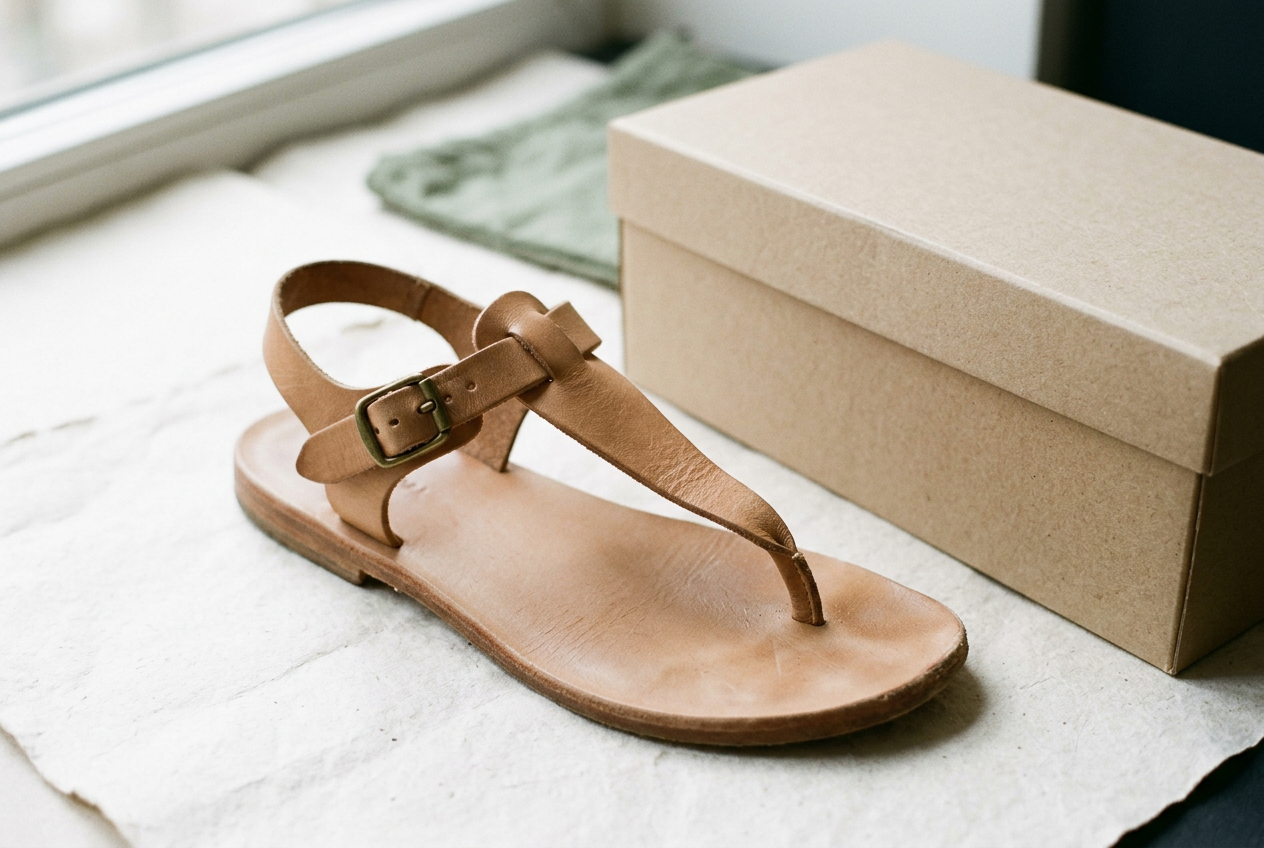
The working example for this fit check is a leather thong sandal with a fixed toe post, two stitched instep straps, a lightly padded leather footbed, and a rubber outsole. It looks uncomplicated. On foot, the post pulls backward with every step unless the toes curl to keep the sandal close, which is less walking than unpaid shoe supervision.
This is unisex fit advice. Thong construction works the same way across wardrobes, although brands may grade footbed width and strap volume differently in women’s and men’s size ranges. The number printed inside the shoe matters less than where the post lands and whether the upper holds that particular foot over the sole.
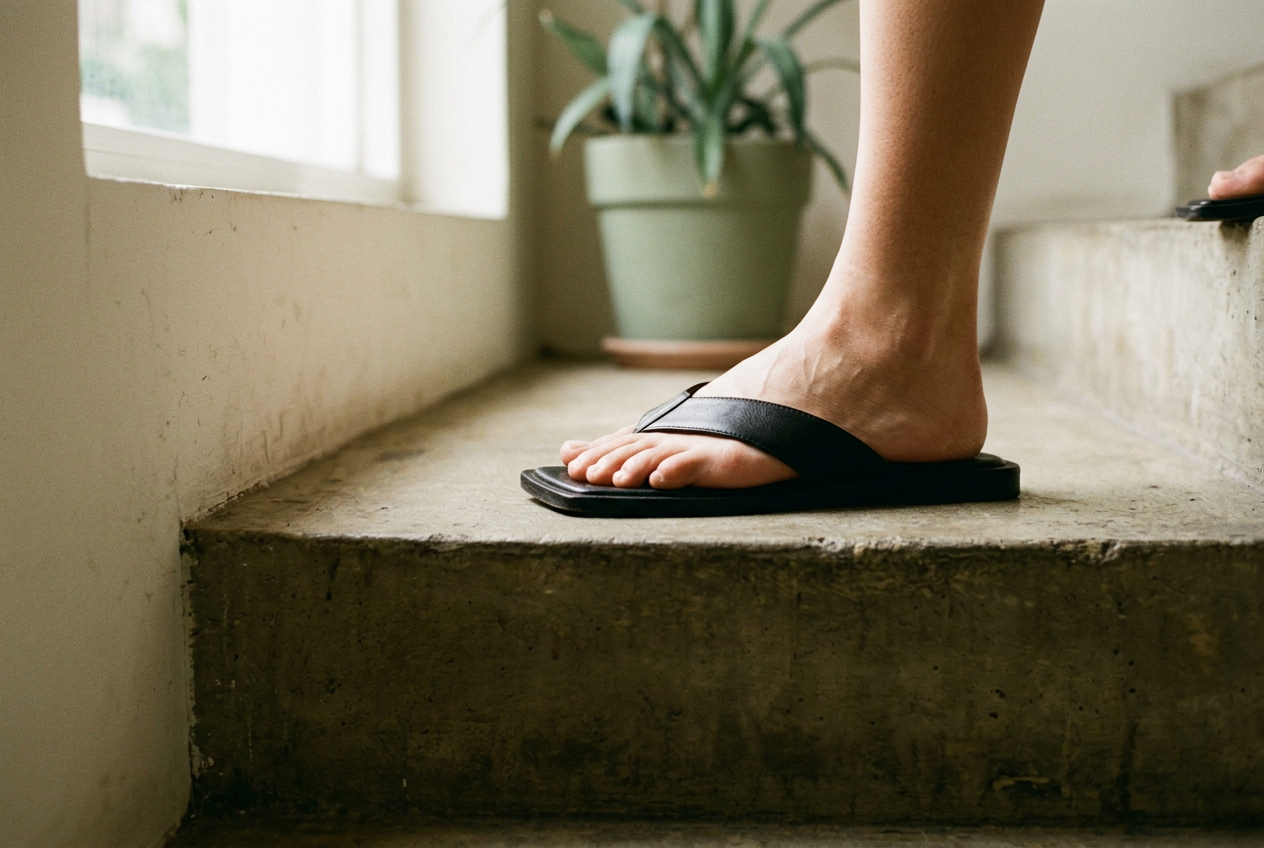
A toe post, meaning the upright piece that sits between the big toe and second toe, should stabilize the front of the sandal without becoming its main suspension system. When it carries too much of the shoe’s weight, the wearer feels pulling, rubbing, or a concentrated pinch in the web between the toes.
Calling all of that break-in is convenient for the seller. It is not a fit diagnosis.
Start with the toe-post position
Post placement is the first thing to inspect because it is usually fixed. On the leather sample, the post sits slightly too far forward for the foot being tested, so the foot must slide toward the front edge before the post settles into the natural toe gap. The instep straps then resist that movement and pull the post backward. Two parts of the sandal are effectively arguing through a small patch of skin.
A post set too far back creates the opposite problem. The heel may sit near the rear edge while the toes extend beyond the front, or the wearer may push the foot backward to make room between the toes. A post placed too far toward the inside or outside can also press against one toe rather than resting in the gap.
Check this while standing, since feet spread under body weight. Place the heel where the sandal intends it to sit, either centered over a flat footbed or inside a heel cup, meaning the raised contour around the back of the heel. The post should meet the natural toe gap without requiring the foot to shift forward, twist, or bunch its toes.
A soft post can make bad placement less abrasive. It cannot make the placement correct. Fabric wrapping, suede lining, and smooth leather reduce surface friction, while thick seams and molded ridges add it, but none changes the point where the post rises from the sole.
Strap tension decides who carries the sandal
Once the post is aligned, look at the straps. Their job is to keep the foot from sliding forward and to lift the sole during the step, which spreads the load over the top of the foot rather than hanging it all from the toe gap.
The sample sandal’s leather straps are snug across the instep while the forefoot sits slightly behind the position the post demands. That tension creates a backward tug. If the straps were much looser, the foot would slide and the toes would grip to stop the sandal escaping; the discomfort would feel different, but the post would still be doing more work than it should.
Press a finger under the straps while standing. This is not a hunt for a universal finger-width rule, since strap thickness and foot volume vary, but a check for concentrated pressure. The straps should make broad contact without cutting into the foot, and the sandal should follow when the heel lifts at a normal pace. If it stays on the floor until the toes clamp down, the upper is too loose or badly shaped.
Adjustable buckles offer the cleanest correction. Moving one hole can alter how far the foot travels before the straps engage, although tightening a strap to stop sliding may increase pressure elsewhere. Fixed leather straps sometimes allow limited stretching. Fixed synthetic straps usually offer much less useful change, especially when they are fused into a molded sole.
Footbed length changes the post relationship
The footbed is the surface directly beneath the foot. Its labeled size can be technically correct while its usable length is wrong, because the toe post divides that length into a front section for the toes and a rear section for the rest of the foot.
On the sample pair, there is enough sole in total, yet too much of it sits behind the heel when the post reaches the toe gap. Sizing down would reduce the unused rear space, but it would also shorten the front and bring the toes closer to the edge. Sizing up would add length without moving the post into a better relationship with the foot. This is a shape mismatch, not indecision between two sizes.
Toe shape matters here. A square or broad forefoot may need more width near the front even when overall length is fine, while a tapered foot can drift sideways on a wide, flat footbed. Raised edges can limit that drift, but they also become pressure points if the foot overlaps them.
Check where the sandal bends as well. The flex point, meaning the part of the sole designed to bend during a step, should sit near the ball of the foot. A stiff sole that flexes too far forward can lever the heel away from the foot, increasing the load on the straps and post. A very floppy sole may fold under the toes and encourage gripping.
Neither improves through optimism.
Walking motion can expose a marginal fit
A sandal may feel acceptable while standing and pull after half a room. Walk indoors on a clean floor at a normal pace, then try a gentle turn and a short flight of stairs if the return rules permit it. Do not shorten the stride or curl the toes to help the shoe pass.
During an ordinary step, the heel rises before the toes leave the ground. A well-fitted upper lifts the sole with the foot, but a loose upper lets the heel separate, after which the toes often contract to catch the sandal. That repeated gripping draws the foot toward the post and turns mild contact into rubbing.
A long stride can also drive the foot forward, particularly on a smooth leather footbed with little contour. Sweat, hosiery, or body lotion may increase sliding, although the direction depends on the materials. Smooth rubber can become grippy when damp, then pull at the skin rather than letting the foot glide.
The sample pair reveals its mismatch most clearly during push-off, when the forefoot bends and the tight instep straps draw the post backward. Slower steps reduce the force but do not remove it. A shoe that works only when approached cautiously has offered its own review.
What break-in can change
Leather can soften where it bends and stretch modestly where pressure stays consistent. A stiff leather post may become less abrasive, and a close instep strap may relax enough to distribute pressure more evenly. Suede usually feels gentler sooner because its surface is less slick and its edges are softer.
Break-in does not relocate a post, lengthen a footbed, or move the sole’s flex point. Molded rubber, EVA foam, and many coated synthetic straps may become warmer and more flexible during wear, but they tend to return close to their original shape. EVA is a lightweight cushioning foam; with extended use, it can compress rather than reshape itself around a major fit error.
Surface irritation and mechanical pulling also need separating. A slightly rough seam that stays in the correct place may improve after the material softens. A smooth post that yanks at every step has a geometry problem, even if it leaves no mark during the first indoor test.
What a cobbler may adjust
A cobbler can selectively stretch leather straps, add a buckle hole, or shorten an accessible leather strap when its construction allows restitching. The useful word is selectively. Stretching the entire upper can create sliding, while shortening one side may pull the post off-center.
A rough leather post can sometimes be skived, meaning thinned by shaving material from its underside, or covered with a softer lining. Added covering increases the post’s thickness, however, so it can reduce abrasion while increasing pressure between closely set toes. Ask the cobbler to inspect the sandal on your foot before approving that tradeoff.
Moving a fixed post usually requires opening or rebuilding the sole. On a stitched, repairable leather sandal, the work may be technically possible but disproportionate to the value of a new pair. On molded rubber or foam sandals, the post and sole often form one structure, leaving no sensible adjustment.
A thin, removable forefoot pad may reduce forward sliding when the post is correctly placed and the straps are slightly loose. It also takes up volume and can move the flex point under the foot, so it is a trial aid rather than a cure. Avoid permanent pads, cut straps, or home-applied heat until the return decision is settled.
For the sample leather pair, stretching the instep straps might reduce the backward pull, but it would not move the forward-set post. Paying for that adjustment would be a wager on a structural mismatch. I would return it and look for a footbed with the post set farther back relative to the heel.
The indoor return test
Start with the heel centered and the toes relaxed. Confirm that the post enters the natural gap without forcing the foot forward, then check that neither toes nor heel approach the sole edge during a normal step. The straps should lift the sandal without sharp pressure, and the sole should bend near the ball of the foot.
Walk long enough to repeat the same motion several times. A mark that appears at one rough edge may justify asking a cobbler about softening or lining it. A repeated tug, sideways post pressure, toe gripping, or an impossible choice between heel overhang and toe overhang supports a return.
Keep the soles clean while testing. The best adjustment for the wrong post position is still the original box.
Questions people ask
Should a thong sandal touch between the toes?
Yes, the post must make contact to stabilize the sandal, but it should sit in the natural gap rather than press hard against either toe. Contact that stays consistent can soften with leather wear; a post that pulls backward, pushes sideways, or forces the foot to change position indicates a fit problem.
Can a cobbler stretch thong sandals?
A cobbler can often stretch genuine leather straps by a limited amount, provided the straps and their attachment points can tolerate it. Stretching may help a snug instep, but it will not move a fixed toe post or add footbed length. Molded rubber and many synthetic uppers offer little useful adjustment.
Will sizing up stop the toe post from hurting?
Only if the larger size places the foot correctly relative to the post and sole edges. Some brands move the post as sizes increase, while others mainly add overall length. If sizing up leaves excess space behind the heel or causes more sliding, the sandal’s proportions are wrong for the foot.
How long should thong sandals take to break in?
Soft leather may feel less stiff after several short wears, but mechanical pulling should be evident during the indoor fit test and should not be treated as a project. If normal walking requires curled toes or produces the same tug at every step, leave the soles clean and the sandal returnable.
One update a day
Today's fashion update, in your inbox
One fashion update each morning — no hype, no filler, just pieces worth wearing.