Your Sandal Sole Matters More When the Pavement Gets Hot
Rubber, EVA, and leather handle hot sidewalks differently, but thickness and layering matter more than the material name alone. Here is what to inspect before buying.
August 10, 2026 · 8 min read
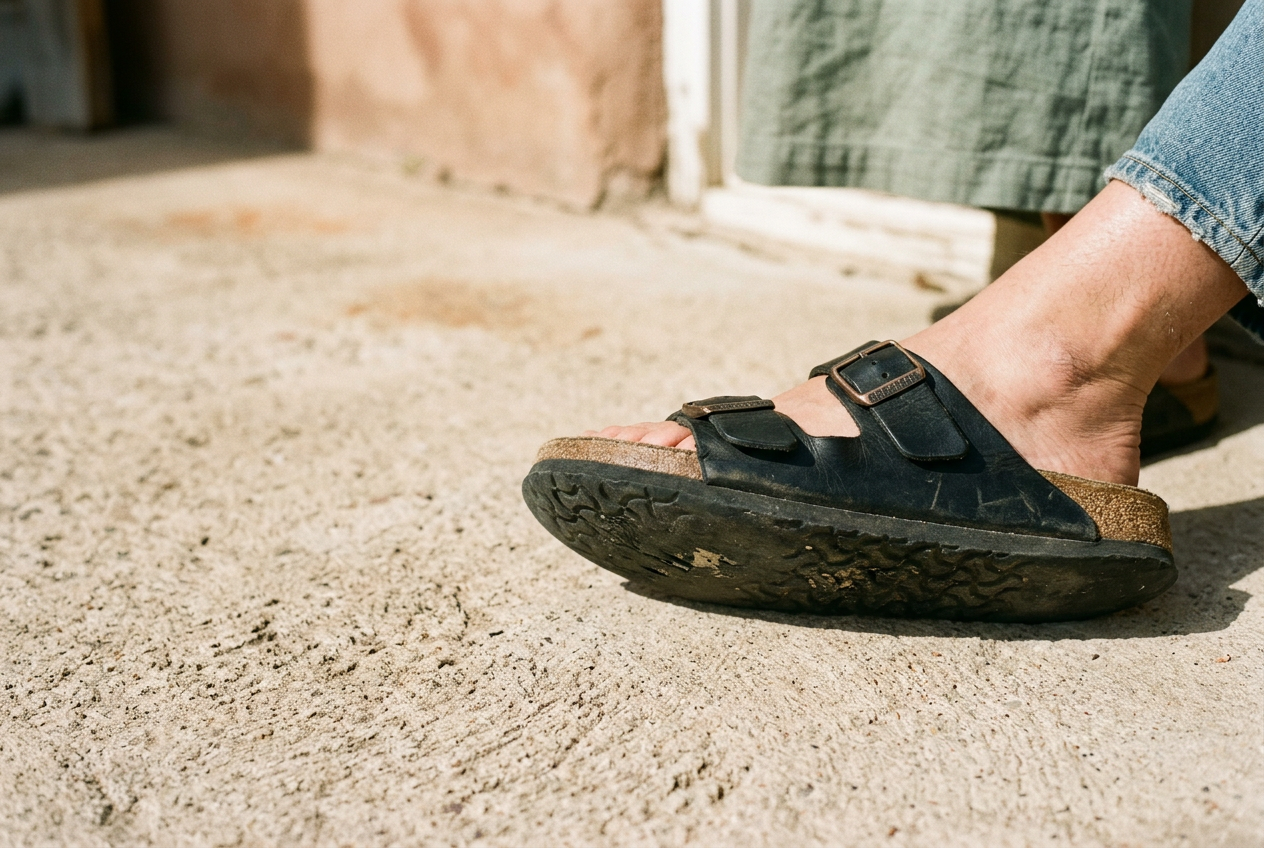
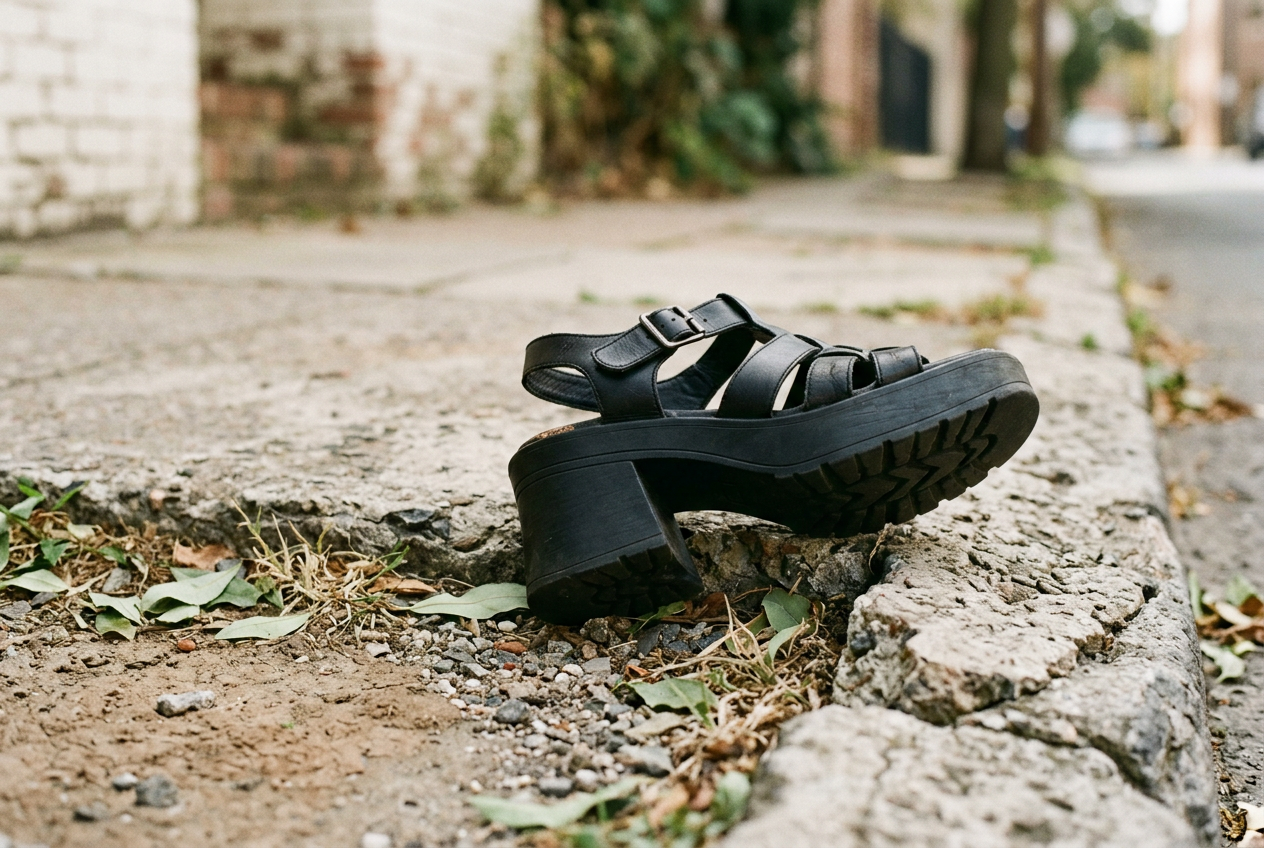
The sandal I kept returning to for this comparison was a black two-strap pair built in layers: a leather footbed under the foot, a molded EVA midsole in the center, and a thin rubber outsole touching the pavement. It is an ordinary hybrid, neither orthopedic-looking nor unusually technical, and that made it useful during a week of repeated outdoor walks over sunlit concrete and asphalt.
That layered pair also exposed the problem with shopping by material label. Calling it a “leather sandal” would describe what the foot touches but say little about heat from below; calling it an “EVA sandal” would ignore the rubber contact surface, while “rubber sole” would make the cushioning disappear on paper. All three materials were doing different jobs.
This is unisex footwear advice. Width, arch placement, and strap geometry still vary by style and size range, but hot pavement does not care which side of the store supplied the shoe.
The sole is a stack, not a single ingredient
The outsole is the layer that meets the ground. Above it, a midsole cushions and separates the foot from that contact layer, while the footbed is the surface directly under the foot. Some sandals combine all three roles in one molded piece; others use separate materials, adhesives, and edges that can be inspected without dismantling anything at the register, which is generally frowned upon.
Heat reaches the foot through conduction, meaning energy moves through materials that touch each other, but no material name predicts the result by itself. A thin black rubber sheet can heat quickly in direct sun and has little depth between the road and the foot. A thick EVA platform contains more air and creates a longer path for that heat. A leather outsole may feel substantial in the hand, yet a dressy sandal with only a slim leather sole and a light lining still offers very little insulation.
The black hybrid made this visible. Its rubber outsole became warm at the road surface, but the EVA center delayed how soon that warmth reached the leather footbed. On a thinner sandal with no real midsole, the change underfoot arrived sooner. This was a practical wear comparison, not a controlled laboratory test, so it cannot rank every formulation; it does show why the cut edge of a sole tells more than a hangtag that says “genuine leather.”
Color matters too. Dark exposed surfaces generally absorb more solar energy than pale ones, although road contact, sole thickness, shade, and walking time complicate the result. A thick black EVA sole can remain more tolerable than a wafer-thin tan leather one. Beige is not insulation.
EVA buys distance from the road
EVA, or ethylene-vinyl acetate, is a lightweight foam used for cushioning and molded soles. Its closed cells hold small pockets of gas, which help slow heat transfer and give the material its low weight. In a substantial midsole, that structure creates useful separation from hot pavement without requiring a heavy platform.
Underfoot, EVA tends to feel soft or springy when new, depending on density and shape. Very soft versions can let the heel sink while the arch stays in the wrong place, which feels pleasant for several minutes and less persuasive after a longer walk. Firmer molded EVA gives less immediate squish but usually keeps its geometry better during repeated wear.
The tradeoff is abrasion. A one-piece EVA sandal puts the foam directly against rough pavement, where the tread can smooth, nick, or wear unevenly, especially beneath the outside heel and forefoot. Compression set, meaning foam remains partly flattened after repeated loading, can also leave a once-generous footbed feeling lower and harder. Neither failure announces itself during a carpeted try-on.
Look at the bottom before buying. Deep tread is useful only if the material around it has enough substance to survive wear, and a very light sandal with soft, sharply cut lugs may sacrifice those edges quickly on coarse sidewalks. Press the heel and forefoot with a thumb, then watch how promptly they recover. Slow recovery is not automatic proof of poor quality, but it does tell you the sole is tuned toward softness rather than crisp support.
Low-cost molded slides often use EVA for the whole structure, which keeps production simple and the purchase relatively inexpensive. That can be a sensible beach or errand choice. For repeated city walks, an EVA midsole protected by a replaceable or harder-wearing rubber outsole is usually a better construction clue than more foam alone.
Rubber survives the walk, but thin rubber is not a heat shield
Rubber outsoles earn their place through abrasion resistance and traction. Formulation changes the outcome, but rubber generally tolerates gritty pavement better than exposed soft EVA, and a patterned rubber contact layer can improve grip when dust or a small amount of water reaches the ground.
It also bends differently. Thin rubber flexes readily, while a thick or dense slab may resist at the forefoot until wear softens the construction. Flexibility should occur near the ball of the foot rather than through the middle of the arch, because a sandal that folds everywhere can leave the foot doing the stabilizing work. Hold the heel and toe, apply modest pressure, and note where the sole wants to crease.
No wrestling match is required.
On the black hybrid, the rubber layer took the visible scraping while the EVA above retained its depth. That is the arrangement I would favor for someone walking outdoors most days: enough rubber to protect high-wear zones, enough foam to separate the foot from the ground, and a footbed that does not become slick with perspiration. The rubber itself did not make the sandal cooler. It kept the cooler-feeling layer from being sanded down by the sidewalk.
A full rubber sole without a foam midsole can feel firm and direct. Some readers will prefer that stable contact to a soft platform, particularly when straps hold the heel securely. On hot pavement, however, a thin construction gives heat less material to cross, and the foot may notice warm spots beneath the ball or heel before the upper causes any trouble.
Leather feels composed until the road joins in
Leather footbeds handle skin contact differently from molded foam. They can absorb some moisture, develop a worn-in surface, and feel less plasticky against a bare foot, though smooth finishes may still become slippery. The black hybrid’s leather top layer felt drier than a bare EVA footbed over repeated walks, but it did not supply meaningful cushioning by itself. That work belonged to the foam beneath it.
A leather outsole is another proposition. It is usually associated with dressier sandals, has a clean edge, and can flex attractively after break-in, yet rough pavement abrades it and wet surfaces expose its limited traction. Thin leather soles also transmit more of the ground’s texture and warmth than their polished appearance suggests. They are not faulty.
They are optimized for a different walk.
Buy a leather-outsole sandal for restaurants, offices, and shorter paved routes if the refined profile is the point. For regular outdoor mileage, look for a rubber forepart and heel insert, or budget for a cobbler to add protective rubber before the leather wears thin. Leather-soled sandals often sit in a higher price band because of their construction and finish, but price does not turn a slim sole into a summer hiking platform.
A leather footbed over EVA and rubber is the more useful compromise for many wardrobes. It keeps the visible and tactile quality of leather while assigning cushioning and abrasion to materials better suited to those jobs. The compromise adds seams and adhesive lines, which should sit flat and clean; gaps at the toe or heel can admit grit and water, then start a separation that heat may aggravate.
What to inspect in the store
Start with the sidewall. A visible layered edge, even one covered by a neat wrap, can reveal whether the sandal has a real midsole or only a thin outsole beneath decorative padding. Compare depth beneath the heel and forefoot, since a dramatic heel with a skimpy forepart may still leave the ball of the foot close to hot ground.
Next, turn the sandal over and identify what will take the abrasion. A rubber sheet or separate rubber pods under an EVA body can extend useful life without adding the weight of a full rubber slab. Pods must cover the heel strike and the area beneath the ball of the foot; decorative patches elsewhere contribute little beyond visual busyness.
Then check torsion, the sole’s resistance to twisting along its length. A sandal should accommodate normal foot movement without wringing like a cloth, particularly when the upper has only two narrow straps. Excessive flexibility, soft foam, and a loose heel can combine into an exhausting shoe even if each feature feels comfortable for thirty seconds.
Finally, inspect the footbed and fit together. Heat encourages perspiration, which makes a smooth footbed and loose straps more troublesome; the toes start gripping, the foot slides forward, and any promising midsole becomes irrelevant because the wearer is busy trying to keep the shoe. The anchored black pair worked because the straps held the foot over the shaped EVA, not merely because its materials looked sensible in a cross-section.
For frequent hot-weather walks, my purchase order would be construction first, then fit, then finish: a substantial EVA midsole, rubber at the main contact zones, and a leather or textured synthetic footbed if bare foam feels clammy. A one-piece EVA sandal remains the light, inexpensive alternative. A thin leather outsole remains the polished one. Neither needs to pretend it was built for an afternoon of asphalt.
Questions people ask
Are
EVA sandals always cooler on hot pavement?
No. Thick EVA usually provides useful insulation because its foam structure slows heat transfer, but a thin, dark EVA sole can still become hot in direct sun. Compare total thickness and layers rather than relying on the molded material name.
Is rubber too hot for summer sandals?
Rubber is reasonable at the ground-contact layer, where its abrasion resistance and traction matter. A thin full-rubber sole may pass warmth toward the foot sooner than rubber paired with an EVA midsole, so inspect what sits above it.
Do leather soles work for everyday summer walking?
They work best for shorter, dressier routes where a slim profile matters more than cushioning or wet traction. Repeated rough-pavement wear can abrade leather quickly, and a protective rubber layer may be worth adding before the sole becomes thin.
What sole construction should I choose for a city vacation?
Look for a secure upper, enough EVA depth beneath the forefoot, and rubber covering the main wear zones. Walk indoors before committing, because a hot-weather sole cannot rescue straps that slide or an arch shape that lands in the wrong place.
One update a day
Today's fashion update, in your inbox
One fashion update each morning — no hype, no filler, just pieces worth wearing.