A Textured Jelly Footbed Still Lets a Sweaty Foot Slide
Smooth, ridged and pebbled PVC footbeds behaved very differently after sweat. The useful grip came from heel and edge shaping, not decorative texture.
August 10, 2026 · 7 min read
Jelly slides make grip unusually easy to misread. A pebbled footbed looks prepared for weather, perspiration and perhaps a minor maritime incident, while a smooth one appears destined to eject the foot at the first warm crosswalk. During one warm week of ordinary city walking, the opposite happened.
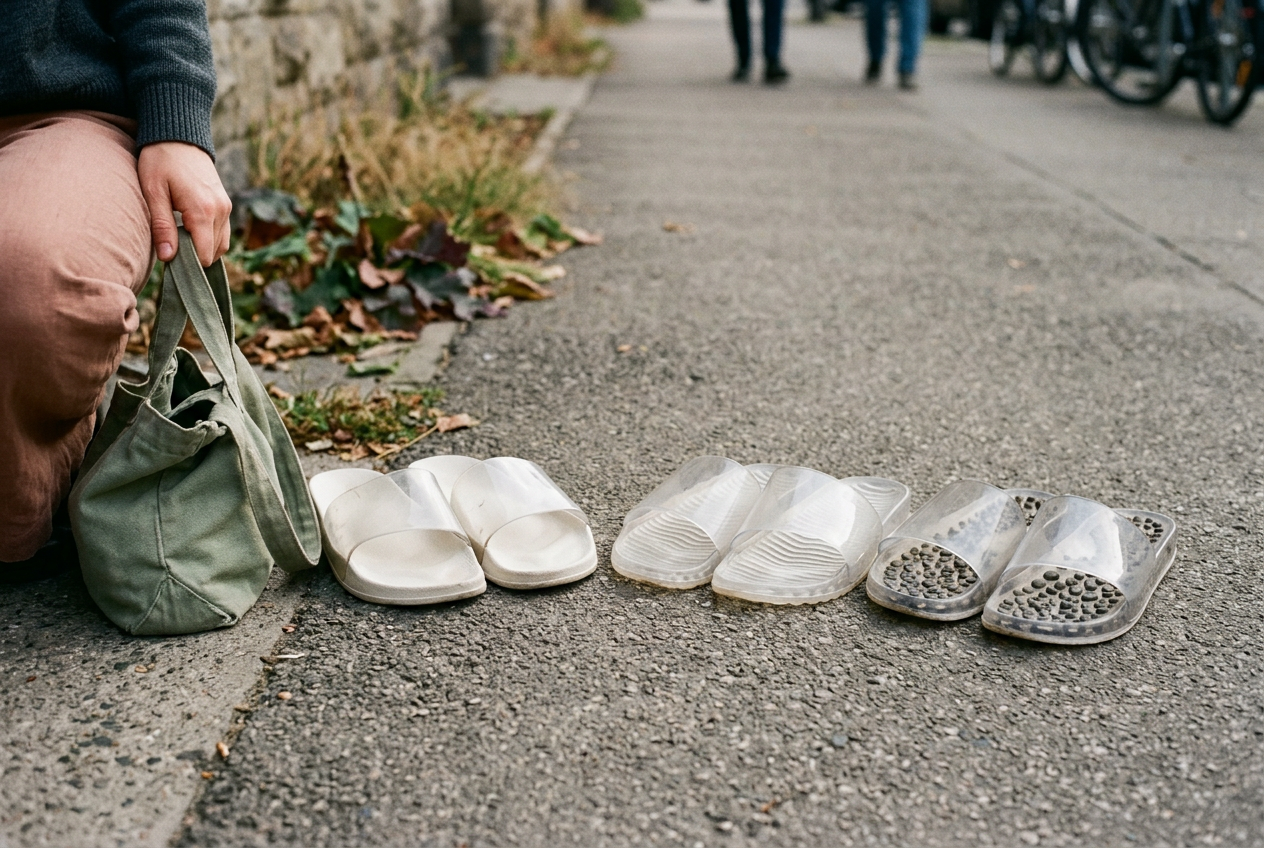
I compared three clear, one-piece PVC slides in the same nominal size, each with a broad single strap. PVC, or polyvinyl chloride, is the flexible plastic responsible for the jelly shoe’s shine, water resistance and limited interest in breathing. One footbed was smooth but shaped. One had shallow ridges across a nearly flat base.
The third, which became the useful failure of the week, was covered in small molded pebbles yet had no meaningful heel or side contour.
All three felt secure while standing on a dry floor. Sweat changed the result.
The test was walking, not posing
Each pair went around the same neighborhood route, which included concrete sidewalks, curb ramps, subway stairs and a grocery store with a smooth floor. I wore them barefoot, because a sock would have tested the sock, and kept walking after the first sign of moisture rather than declaring victory from the apartment lobby.
This was a hands-on comparison, not a laboratory friction test. The aim was narrower and more useful: to notice whether the foot stayed centered during normal starts, stops and turns, and whether any texture remained helpful once sweat sat between skin and plastic.
The smooth pair had a shallow heel cup, meaning a molded depression that cradles the heel, plus slightly raised edges along the rear half of the footbed. Its toe area curved upward a little. The ridged pair had low horizontal ribs and a broad, almost level platform. The pebbled pair was flat from heel to toe, apart from its field of close-set bumps.
That pebbled pair looked the most technical on the shelf. By the grocery aisle, my right heel had migrated toward the inner edge, and each turn required a small correction from my toes. The shoe was still on my foot. That is a low bar for footwear.
Texture changed contact, not control
Dry skin gripped the pebbled surface reasonably well because the bumps created many small points of contact. Once moisture spread across the PVC, those same points became pressure spots without providing a dependable barrier against sideways movement. The foot could still travel across them because the entire bed was level.
The shallow ridges did more. They interrupted the wet surface and gave the forefoot something to press against during a forward step, although their orientation did little to prevent lateral drift. On straight sidewalk stretches, the pair felt composed. Turning into a store or stepping around another pedestrian exposed the flat base, as my heel shifted while the strap tried to perform work that belonged to the footbed.
A strap can limit how far the foot rises. It cannot center a heel by itself unless it holds the foot very closely, which becomes its own warm-weather irritation. The vamp, meaning the upper section that crosses the front of the foot, needs enough clearance for swelling without leaving a large vertical gap. Too tight and the plastic rubs.
Too loose and the slide becomes a small tray attached to the toes.
The smooth pair gave the skin less visible texture to engage with, yet its heel cup and raised perimeter redirected movement before the foot reached an edge. Moisture still made the surface slicker. There was no miraculous conversion of PVC into cork. The difference was that the foot slid within a defined shape rather than across an open platform.
That distinction matters because underfoot grip and foot retention are related but separate. Surface texture can increase resistance between skin and footbed, while molded shaping controls where the foot can go when that resistance drops. Jelly slides need both, but shaping carried more of the load in this comparison.
The pebbles created another problem
After longer wear, the pebbled pair left a temporary dotted impression under the heel and ball of the foot. The bumps were not sharp, but PVC does not compress like foam, so raised texture remains present with every step. A pattern that feels pleasantly stimulating for thirty seconds in a fitting area may become tiresome once body weight, pavement heat and sweat join the meeting.
Deeper texture also held more grime. Dust settled around the molded dots, then mixed with moisture into a gray film that required a brush to remove. The smooth shaped pair rinsed clean with less attention, while the ridges needed a quick pass along their channels.
None of this makes pebbled footbeds useless. A modest pattern inside a shaped bed may improve dry contact and keep the sole from feeling suctioned to the plastic. The problem was the specific flat pebbled pair, where the texture had been asked to replace heel containment and could not do it.
Shape is visible before purchase
Turn the slide sideways. A useful footbed should show some depression beneath the heel and a slight rise around its edges, rather than reading as a level slab with decoration stamped into it. The contour does not need to be deep, and a high rim can rub if the foot is wider than the molded outline, but there should be a physical reason for the heel to return toward the center.
Next, press the foot into the slide and make a tight turn. Forward walking flatters loose footwear because the toes can grip without announcing themselves. A turn reveals whether the heel stays inside the footbed or crosses the rim, and whether the strap holds the midfoot without cutting into its upper surface.
This advice is unisex. Foot shape matters more than the department label, although size conversions can hide differences in width and strap volume. Judge the weighted foot, since it spreads under pressure, and ignore the tidy outline seen while sitting down.
Sizing down is not a reliable fix for a flat footbed. A shorter slide may tighten the strap, but it can also put the heel on the rear edge and push the toes toward hot pavement. If the correct length leaves too much space under the strap, the last, meaning the form that determines a shoe’s internal shape, is wrong for the foot. Try another model rather than bargaining with plastic.
Cost does not settle the matter
A glossy finish, dense pebbling or a designer logo can make molded PVC look more engineered than it is. Price may reflect the design, hardware, color or label, but none of those features guarantees that the heel cup has enough shape to manage sweat.
The practical buying order is contour first, strap fit second and surface texture after that. Arch shaping may help some feet, although rigid or aggressively placed support can feel harsher in PVC than it does under a padded lining. Anyone who needs substantial support for long walks should treat a jelly slide as short-trip footwear unless the individual pair proves otherwise.
The smooth shaped slide remained the one I would wear for an errand. It was still warm, still plastic and still capable of squeaking after sweat. It merely kept my heel where the shoe designer appeared to expect it.
Cleaning preserves what grip exists
Sweat, sunscreen and street dust leave a film that makes any PVC footbed feel slicker. Rinse the slides with cool water, use mild soap where needed and clean around ridges or pebbles with a soft brush. Let them dry away from direct heat, since a hot car or radiator can distort molded plastic.
Cleaning will restore the surface to its normal behavior. It will not add a heel cup to the pebbled pair.
Questions people ask
Are pebbled jelly slides less slippery?
Not by default. Pebbles can improve contact while the foot is dry, but shallow bumps on a flat PVC bed may lose much of that advantage after sweat. Look for a shaped heel area and raised side edges before treating surface texture as evidence of grip.
Should jelly slides fit tightly?
The strap should limit lifting without pressing hard across the top of the foot, particularly after feet swell in warm weather. A loose strap encourages sliding, but sizing down can create heel overhang and toe crowding. Keep the correct length and change models if the strap volume is wrong.
Do ridged footbeds keep the foot centered?
Ridges can resist movement in the direction they cross and may interrupt a layer of sweat, but they cannot replace side contour. In the tested ridged pair, straight walking felt secure while turns allowed the heel to drift across the nearly flat bed.
What should I check when trying on jelly slides?
Stand with full weight on both feet, check that the heel remains inside the molded outline, then walk and make a tight turn. If the toes must clench or the heel reaches an edge, decorative texture will not repair the fit. Try a slide with a clearer heel cup.
One update a day
Today's fashion update, in your inbox
One fashion update each morning — no hype, no filler, just pieces worth wearing.