Laces Can Fix Heel Slip. They Cannot Fix the Wrong Sneaker.
A runner’s loop helps some loose heels, while skipped eyelets and tongue anchoring solve different pressure problems. Here is how to test each before the return window closes.
August 11, 2026 · 8 min read
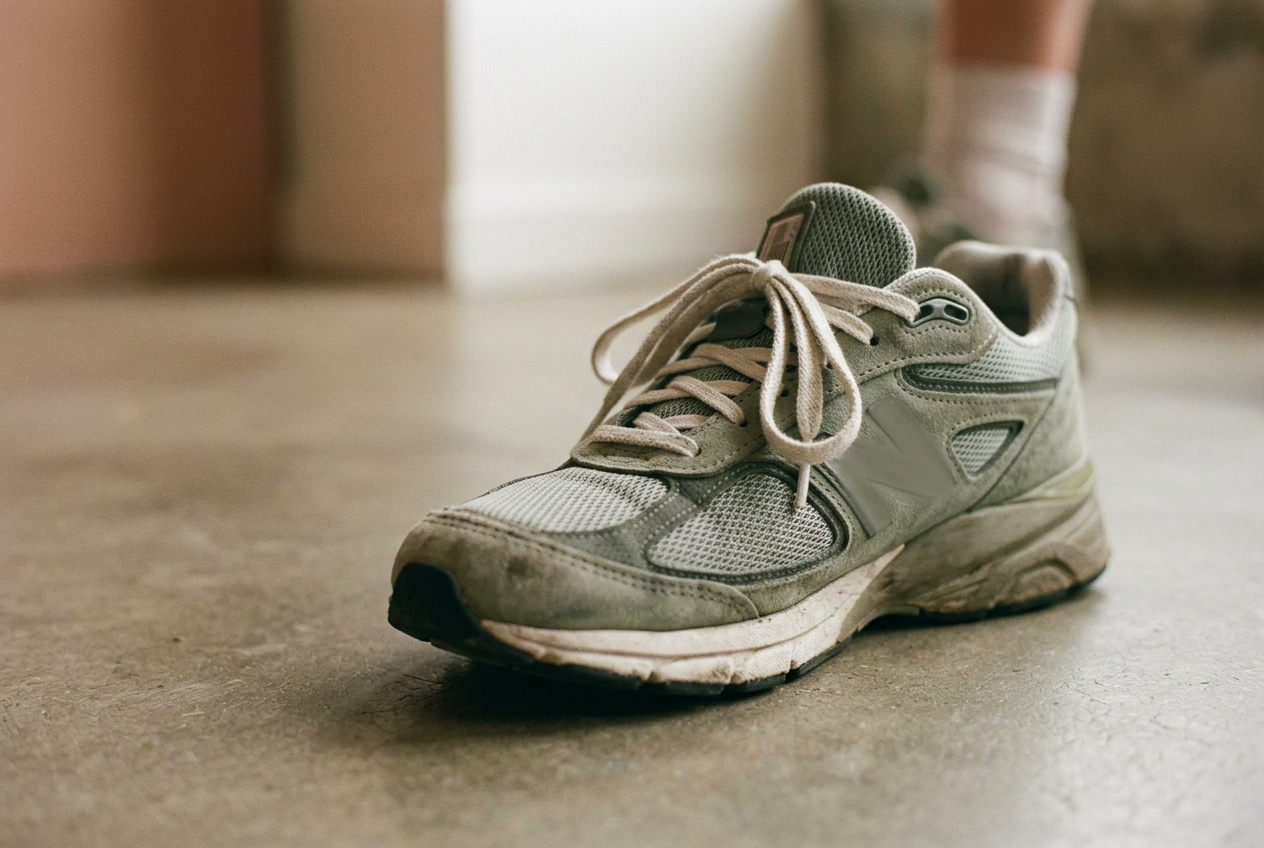
The test pair was a unisex low-top running-style sneaker with an engineered mesh upper, a padded tongue, six standard eyelet pairs plus an extra top pair, a removable foam sockliner and a molded heel counter, meaning the structured cup around the back of the foot. In my usual size, the forefoot felt right and the flex point sat under the ball of the foot, but the heel lifted during an ordinary walking week.
Not dramatically. It rose enough to rub the sock at the collar and make each step feel slightly late, as though the shoe needed a moment to catch up. That is the irritating middle ground in which a sneaker is neither an obvious sizing disaster nor dependable enough to keep.
This advice is unisex and applies across women’s and men’s sizing. The useful distinction is not the label on the box but whether the slip comes from poor lace distribution, the shape of the rear structure or too much internal space.
Diagnose the movement before relacing
Start with the sneaker loosely laced. Tap the heel on the floor to seat the foot at the back, then tighten from the bottom upward rather than hauling only on the top two crossings. Walk on level ground and, if that reflects normal use, take a flight of stairs. Watch for where the movement begins.
A small amount of vertical lift that decreases when the upper is snug usually gives lacing something to work with. Side-to-side movement inside the rear cup points more strongly to a heel-counter mismatch, while a foot that travels forward and backward through the whole shoe suggests excess volume, the total internal space around the foot.
The test sneaker showed mostly vertical lift. Its mesh vamp, the upper section over the front of the foot, did not collapse into deep folds, and the two eyelet rows remained separated when tied. Those details mattered because they showed that the entire shoe was not obviously too large. The problem sat near the collar.
Check sock choice once, but do not build a fit strategy around unusually thick socks unless those are what you plan to wear. A heavier sock can absorb a small amount of space; it can also make a previously good toe box hot and cramped. Footwear should not require seasonal upholstery.
Fix one: use a runner’s loop for vertical heel lift
A runner’s loop, also called heel-lock lacing, uses the extra top eyelets to pull the collar inward without tightening every crossing below it. It was the clearest improvement on the test pair.
Lace normally to the second-highest eyelet. Instead of crossing the lace ends, feed each end straight upward through the highest eyelet on the same side, leaving a small loop. Cross the ends, pass each one through the loop on the opposite side, then pull outward and slightly downward before tying.
The direction of that final pull matters. Yanking straight upward can cinch the lace against the front of the ankle, whereas pulling outward closes the loops and draws the collar around the heel. Walk for several minutes, then loosen it if the tongue edge presses or the top of the foot starts to tingle. More tension is not a personality trait.
On the mesh test sneaker, the runner’s loop reduced the delayed heel movement without crushing the midfoot, and it took only a few minutes to install. The tradeoff was a firmer collar and shorter lace tails. Sneakers with thick, rigid collar padding can feel lumpy once the top is pulled inward, and anyone already getting pressure at the Achilles area may find this arrangement worse.
This technique cannot change a rear cup that is too wide, too straight or too shallow. If the heel still rocks sideways after the loop is snug, stop tightening. The lace is already doing its job; the shoe is declining to participate.
Fix two: skip a crossing when the instep is under pressure
Skipped-eyelet lacing sounds like a loose-fit method, but it can improve heel hold when excessive pressure over the instep prevents the upper section from being tightened properly. The aim is to leave a small pressure-free window, then secure the collar above it.
Identify the crossing that sits over the sore or highest part of the instep. At that level, run each lace vertically to the next eyelet on the same side rather than crossing the tongue. Resume the normal crisscross above the gap and use the top eyelets as usual. The empty window should sit over the pressure point, not down near the toes and not directly at the ankle bend.
In the test pair, this setup felt less secure than the runner’s loop because the instep was not the source of the problem. It did, however, show the intended tradeoff: pressure eased at the skipped section, while the upper eyelets could be tied firmly without making the whole tongue feel strapped down.
This is the better experiment for a high instep, a prominent tendon or a tongue seam that becomes uncomfortable under a standard crossing. It is a poor answer to broad looseness. Skipping several crossings removes too much structure, and the foot may slide farther before the collar catches it.
Fix three: anchor a tongue that drifts
Some apparent heel slip starts with a tongue that moves sideways, changing lace tension as the wearer walks. A tongue-loop anchor uses the fabric keeper at the tongue’s center to hold both the tongue and the laces nearer the middle.
Undo the laces to just below the keeper. Rather than passing one ordinary crossed section behind it, feed the left lace through the keeper from one side and the right lace through from the other, crossing them within or immediately above the loop. Continue to the next eyelets and tie with even tension. If the keeper is narrow, do not force two thick laces through it; bunched webbing creates a new pressure point with impressive efficiency.
The tongue on the test sneaker was ungusseted, meaning it was not joined to the upper by elastic side panels, so it could drift a little. Anchoring stabilized it and made the top tension more consistent, although it reduced heel lift less than the runner’s loop did.
Use this method when the knot migrates off-center, one side of the collar becomes looser during a walk or the tongue repeatedly slides toward the outside of the foot. It will not remove space from a deep shoe, and it may make a thick padded tongue feel more prominent.
The return test
Lacing fixes pressure distribution. They do not rebuild the shoe.
Return the sneakers if the heel counter visibly flares away from the foot, if the heel rocks from side to side while the forefoot remains correctly fitted, or if the upper must be pulled so tight that the eyelet rows nearly meet. A rear cup can soften with wear, but it will not shrink into a different shape. Breaking it in is especially unconvincing when the existing shape is already too generous.
Excess volume leaves a broader set of clues. The vamp forms deep folds, the foot slides forward on descents, the laces bottom out before the upper feels secure, or the heel improves only after adding thick socks and an extra insole. An added insole may take up space, but it also raises the heel toward the collar edge and can reduce toe-box height, turning one fit problem into two smaller, angrier ones.
Sizing down is not always the answer. If the original length and flex point are correct, a shorter size can crowd the toes while leaving the rear shape unchanged. Look instead for a narrower width or a lower-volume model built on a different last, the foot-shaped form that determines the sneaker’s internal proportions.
The test pair stayed plausible because the runner’s loop controlled the lift without distorting the mesh upper or requiring painful tension. Had the eyelet rows touched, or had the molded rear cup remained wider than the heel, the better move would have been a return while the outsole was still clean enough to qualify.
Heel grips and tongue pads cost less than new sneakers, but adhesive accessories make more sense for a pair that cannot be returned than for a new purchase with an unresolved fit. Test lacing indoors first. A few minutes on clean flooring preserves more options than a hopeful outdoor walk followed by a blister and a stained sole.
Questions people ask
How tight should a runner’s loop feel?
It should draw the collar closer without creating tingling, numbness or a hard ridge across the front of the ankle. Walk for several minutes after tying it because collar pressure often becomes clearer once the shoe flexes. If relief requires aggressive tension, the sneaker probably has too much space or the wrong rear shape.
Can heel slip disappear after sneakers break in?
Stiff materials can flex more naturally after wear, and grippy collar lining may settle against the sock. A heel counter does not become narrower through break-in, however, while padding often compresses and creates more space. Do not rely on wear to cure side-to-side movement or a visibly flared rear cup.
Will thicker socks fix a loose sneaker heel?
A slightly thicker sock can reduce minor movement if it remains comfortable throughout the shoe. It is not a sound fix when the toe box becomes crowded, the foot overheats or the sneaker still slides through the midfoot. Test with the socks you would normally wear before deciding to keep the pair.
Should I add an insole to stop heel slip?
An insole can fill modest overall volume, but it raises the foot and may place the heel against a less padded part of the collar. Use one only if toe height and flex alignment remain comfortable. If the original sockliner plus normal lacing leaves the eyelet rows nearly touching, return the shoe instead.
One update a day
Today's fashion update, in your inbox
One fashion update each morning — no hype, no filler, just pieces worth wearing.