One Trouser Hem Rarely Works With Every Shoe
Sneakers, flats, and low heels lift and catch fabric differently. Use the leg opening, front break, and floor clearance to find a workable hem or justify a second pair.
September 14, 2026 · 8 min read
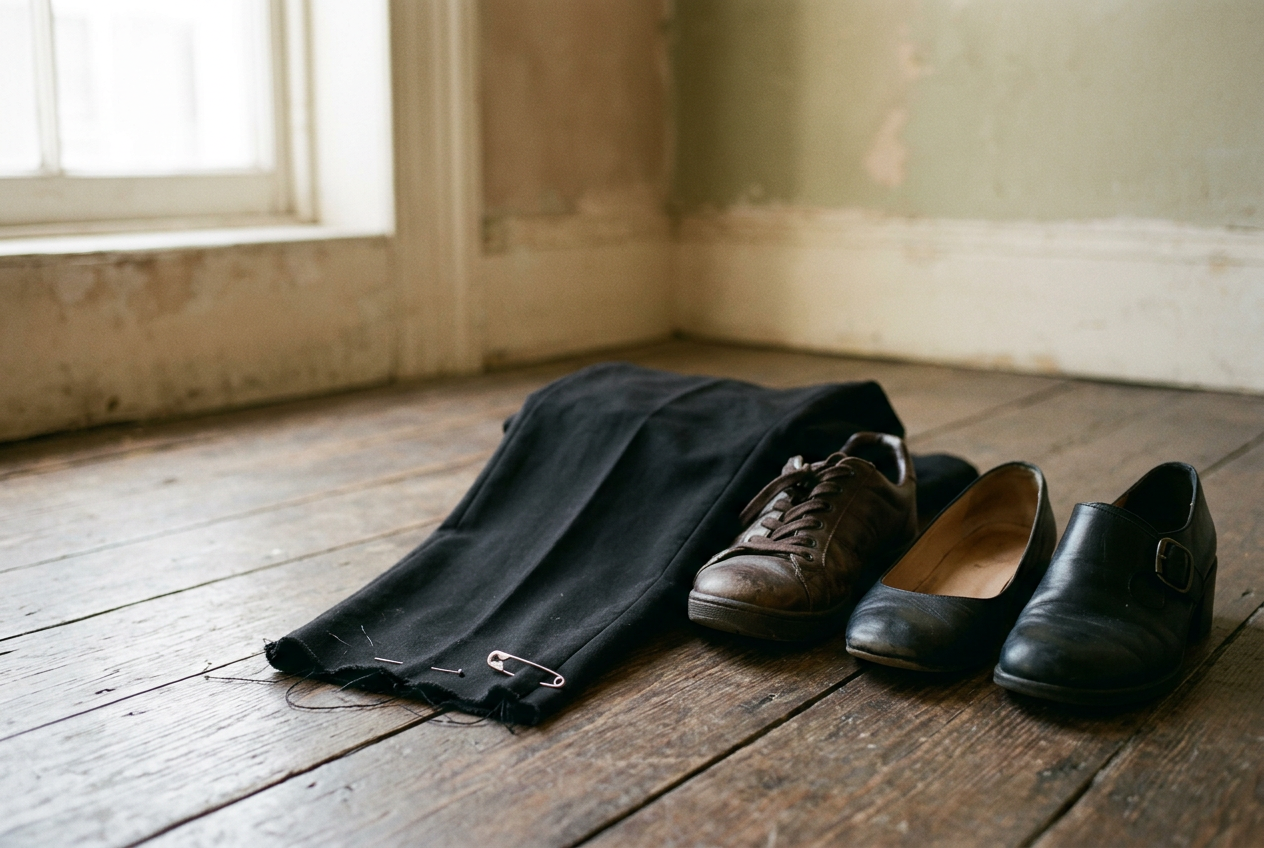
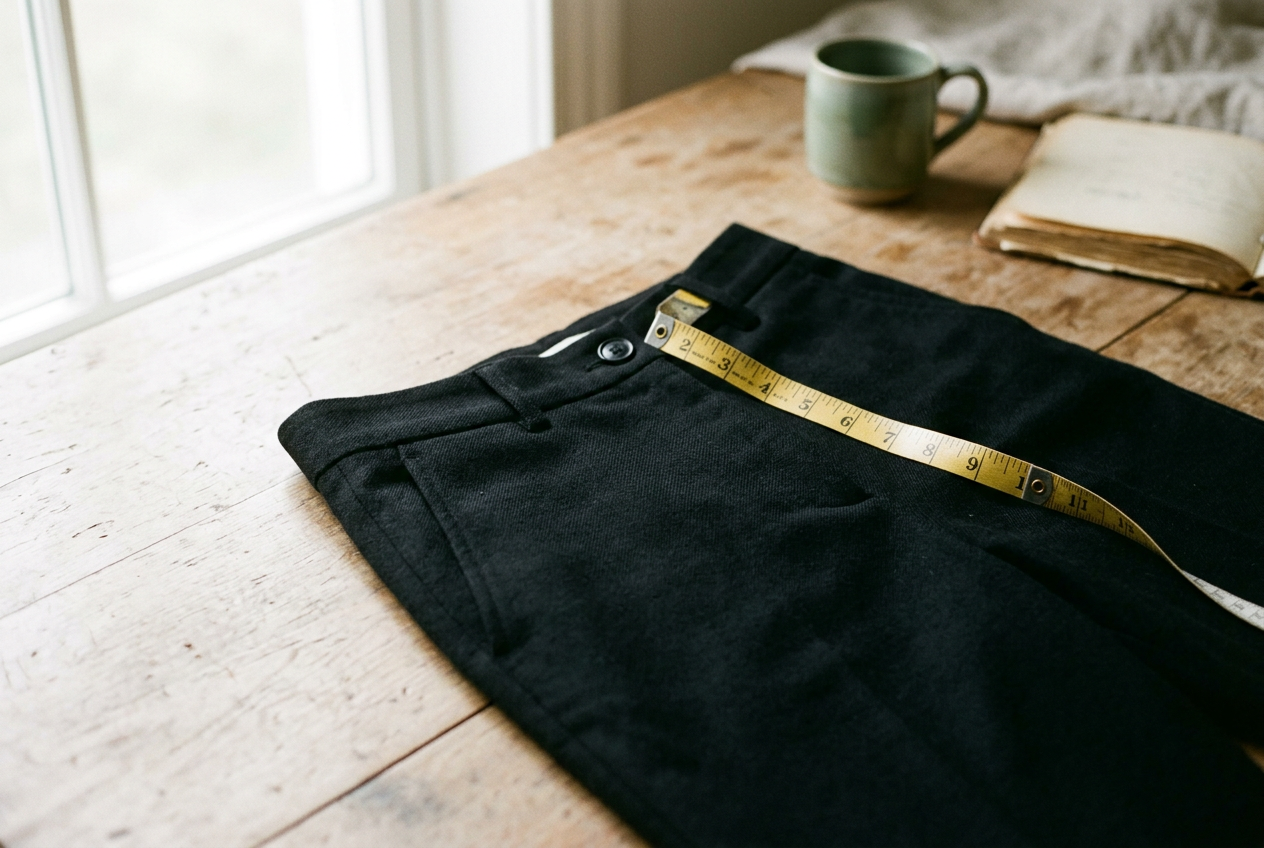
The working example for this guide is one pair of black, straight-leg wool-blend trousers with an unfinished hem, tested with a low-profile leather sneaker, an almond-toe flat, and a low block heel. It is an ordinary wardrobe problem, which makes it useful: the trouser is neither narrow enough to float above every shoe nor wide enough to conceal every mismatch.
This is unisex fit advice. Trouser departments may label cuts differently, but fabric still falls from the leg opening onto the shoe in the same way, and the fitting method works across women’s and men’s wardrobes.
The temptation is to choose one inseam, meaning the measurement along the inner leg from crotch to hem, and expect it to solve the whole rotation. Inseam matters, but it does not account for the volume of a sneaker upper, the extended shape of a pointed or almond toe, or the way even a low heel lifts the back of the trouser away from the floor.
Start with the leg opening
Measure the hem width, meaning the distance straight across the leg opening when the trousers are laid flat. This tells you how much freedom the hem has to fall around a shoe.
A slim opening tends to sit on top of sneakers and flats rather than around them. It usually looks best with little or no front break, the fold created where the front of the trouser meets the shoe, because extra length stacks at the ankle instead of dropping toward the floor. That makes a slim trouser fairly adaptable across low shoes, provided the hem clears the highest point of each upper.
A straight opening, like the one on the black wool-blend pair, allows a small break without swallowing the shoe. The sneaker pushes the cloth forward because its tongue and laces occupy more space than the flat’s low vamp, which is the upper section covering the top of the foot. The same hem therefore looks slightly fuller over the sneaker and cleaner over the flat, even when both shoes place the foot at a similar height.
A wide leg is much less forgiving. Its hem hangs near the floor rather than resting securely on the shoe, so a change from a flat to a low heel can expose a visibly larger gap, while a length cut for the heel may brush the ground in flats. If the opening is wide enough to cover most of the shoe, prioritize rear clearance rather than trying to create the same front break with all three pairs.
Pin the hem for the lowest shoe first
Put on the shoe that holds the heel closest to the floor. In this case, that is the almond-toe flat. Stand on a hard, level surface, settle the waistband where it will be worn, and pin both legs rather than assuming your body or the trouser is perfectly symmetrical.
Set the back hem roughly a quarter to half an inch above the floor. This rear clearance, meaning the space between the back edge of the hem and the ground, is enough to prevent routine dragging while still reading as a full-length trouser. Soft fabric may need slightly more clearance because it moves outward and downward while walking; a firm wool blend holds its line better, although it can preserve an unwanted crease if the first pressing is too aggressive.
Now look at the front. The black straight-leg trousers work with a slight break over the almond toe, where one shallow fold forms but the crease does not collapse into several wrinkles. A pointed flat can tolerate a touch more length because the toe extends under the cloth. A rounded ballet flat exposes the hem sooner, so the identical pin position may look longer and heavier.
Walk before changing anything. Take normal strides, turn, sit, and use a step if one is available. A hem that looks safe while standing can catch under the heel when the knee bends, particularly when slippery lining or a smooth sock lets the trouser leg move freely.
Check the sneaker by watching the front
Keep the flat’s pin position and switch to the sneaker. The sole may raise the entire hem, but the upper can also catch the front of the trouser higher than expected, creating a deeper break while the back remains well clear of the floor.
That mismatch is the central problem with the working pair. Lowering the hem does not fix it. More length would increase the pile of fabric over the laces, and although the rear edge might still remain safe because of the sole height, the front would look as if the trousers were cut for a slimmer shoe.
Instead, smooth the leg down and take several steps. If the cloth repeatedly releases from the sneaker and returns to one shallow fold, the compromise works. If it stays perched above the tongue or forms several horizontal folds, the opening is too narrow or the hem is too long for that sneaker. A lower-profile sneaker is the easier alternative; another inch of inseam is not.
Socks can change the result at the margins. A thick ribbed sock adds grip, while a smooth fine-gauge sock lets the trouser fall more readily, but neither corrects a hem that is fundamentally fighting the shoe’s upper.
Treat the low heel as the short version
Next, put on the block heel without moving the pins. The back of the black trousers will rise because the heel changes the foot’s angle and increases the distance between the garment and the floor. The front break may disappear as the fabric falls along a steeper line.
With a straight leg, that shorter appearance can still look deliberate. The test is whether the hem remains long enough to cover the top edge of the shoe at the front and whether the back ends below the narrowest part of the ankle. A low heel with a closed almond toe generally supports this compromise better than an open-back slingback, which leaves the lifted rear hem with no visual connection to the shoe.
Do not lengthen the trousers merely to restore the flat’s break over the heel. Once returned to the flat, that added cloth has nowhere to go except the floor. For one shared hem, clean and slightly short over the heel is the acceptable tradeoff; dragging in the lowest shoe is not.
This is also where toe shape matters more than the nominal heel measurement. An elongated toe continues beneath the hem and makes a shorter trouser look connected to the shoe, while a short round toe can leave an abrupt patch of exposed foot even when the heel heights match.
Choose the compromise by failure, not preference
After all three fittings, compare the failures. Minor changes in front break are normal. Floor contact, fabric trapped under the heel, and a hem that stays caught on the sneaker are reasons to alter the plan.
For the black straight-leg pair, the flat sets the safe length, the leather sneaker determines whether the opening is roomy enough, and the block heel gets the cleanest but shortest version. That hierarchy is more useful than chasing an identical silhouette, which is not possible when the shoes support and interrupt the cloth in different places.
Mark the final length with tailor’s chalk while wearing the flats, then measure from the floor at several points around each leg. Remove the trousers before replacing pins with a stable basting stitch or clips. Adhesive hem tape can test a length for a day, but repeated pressing may leave residue or a hard ridge on lightweight cloth, and it is a poor permanent choice for trousers that need dry cleaning or future alterations.
Ask for the smallest practical hem allowance if a tailor finishes the trousers. A deeper allowance gives the garment room to be lengthened later, although bulky fabric may create a visible line. The wool-blend working pair benefits from retaining some allowance because the crease can be pressed out and the hem adjusted if the shoe rotation changes.
Know when a second pair earns its space
A second pair becomes sensible when the best pin positions for the lowest flat and the regular heel differ by about three-quarters of an inch or more, especially with a wide leg. That distance is not a tailoring law. It is a useful fitting threshold: large enough that one shoe is likely to produce floor drag while the other makes the trousers look unintentionally cropped.
Buying twice is harder to justify for a straight office trouser worn mostly with low shoes. Keep one pair at the flat-safe length and accept the cleaner line with heels. If heels are central to the outfit and the trousers need to skim the shoe, duplicate only a proven cut rather than buying two pairs before the first has been washed, pressed, and worn through a normal day.
Fabric also affects the decision. Linen and loose viscose blends can relax during wear, turning a borderline flat hem into a dragging one, while tightly woven wool blends tend to preserve the fitted length more reliably. Washable trousers should go through their label-directed care routine before permanent shortening if shrinkage is plausible. An unfinished new hem offers options; a hem cut too short does not.
Questions people ask
Should trouser hems touch the floor when wearing flats?
No. Full-length trousers should sit close to the floor without making regular contact, with roughly a quarter to half an inch of rear clearance as a practical starting point. Check while walking, not only while standing, because a loose leg can swing under the heel even when the static length looks safe.
Can the same wide-leg trousers work with sneakers and low heels?
Sometimes, but the sole and heel need to place the trouser at similar heights. Fit the trousers to the lower shoe, then accept a little extra clearance with the higher one. If the wide hem drags in sneakers but looks correct with heels, separate lengths will usually look better and cost less effort than repeated temporary hemming.
How much front break should straight-leg trousers have?
Aim for no break or one shallow fold. Several horizontal folds usually mean the hem is too long, the opening is too narrow for the shoe, or the sneaker upper is holding the fabric up. Judge the break after walking a few steps so the trouser has settled naturally around the shoe.
Should trousers be hemmed before or after washing?
Wash or clean them first when the care label allows and the fabric may shrink or relax. This matters most with washable cotton, linen, and some viscose blends. If the trousers are dry-clean only, discuss the fabric and existing hem allowance with the tailor before any cloth is cut.
One update a day
Today's fashion update, in your inbox
One fashion update each morning — no hype, no filler, just pieces worth wearing.