Padded Sandal Straps Still Cause Blisters. Test the Edges.
Soft foam is only part of the fit. Strap edges, compressed padding and sweaty linings decide whether a sandal stays wearable past the fitting room.
October 12, 2026 · 8 min read
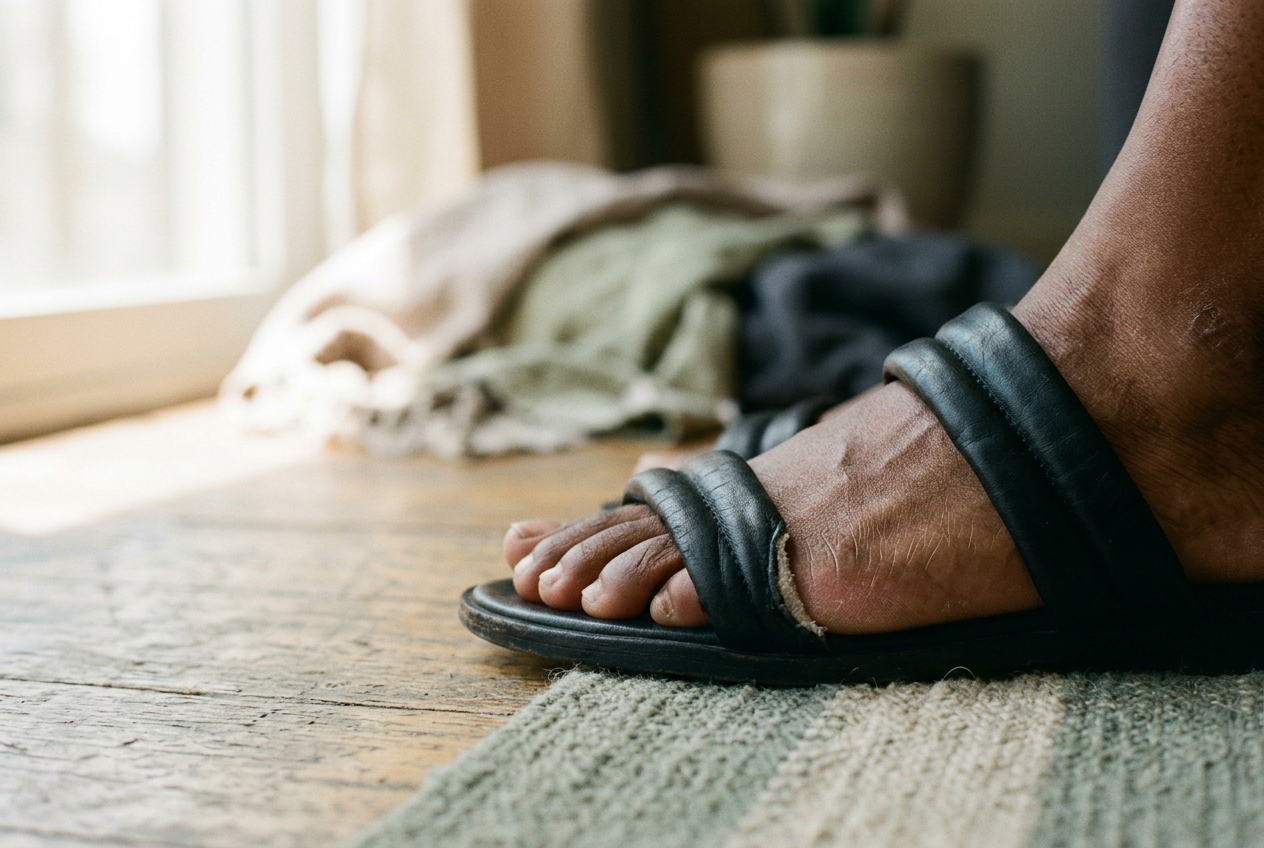
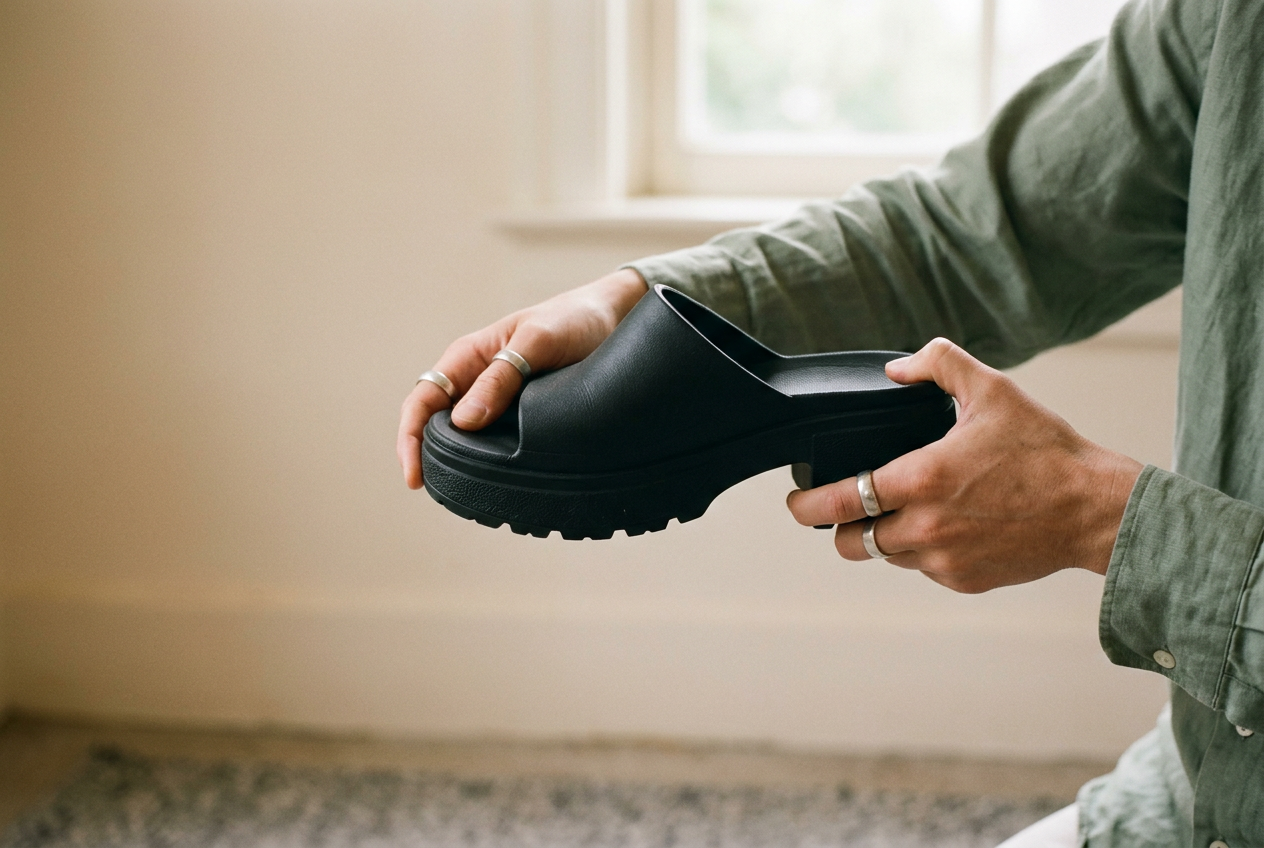
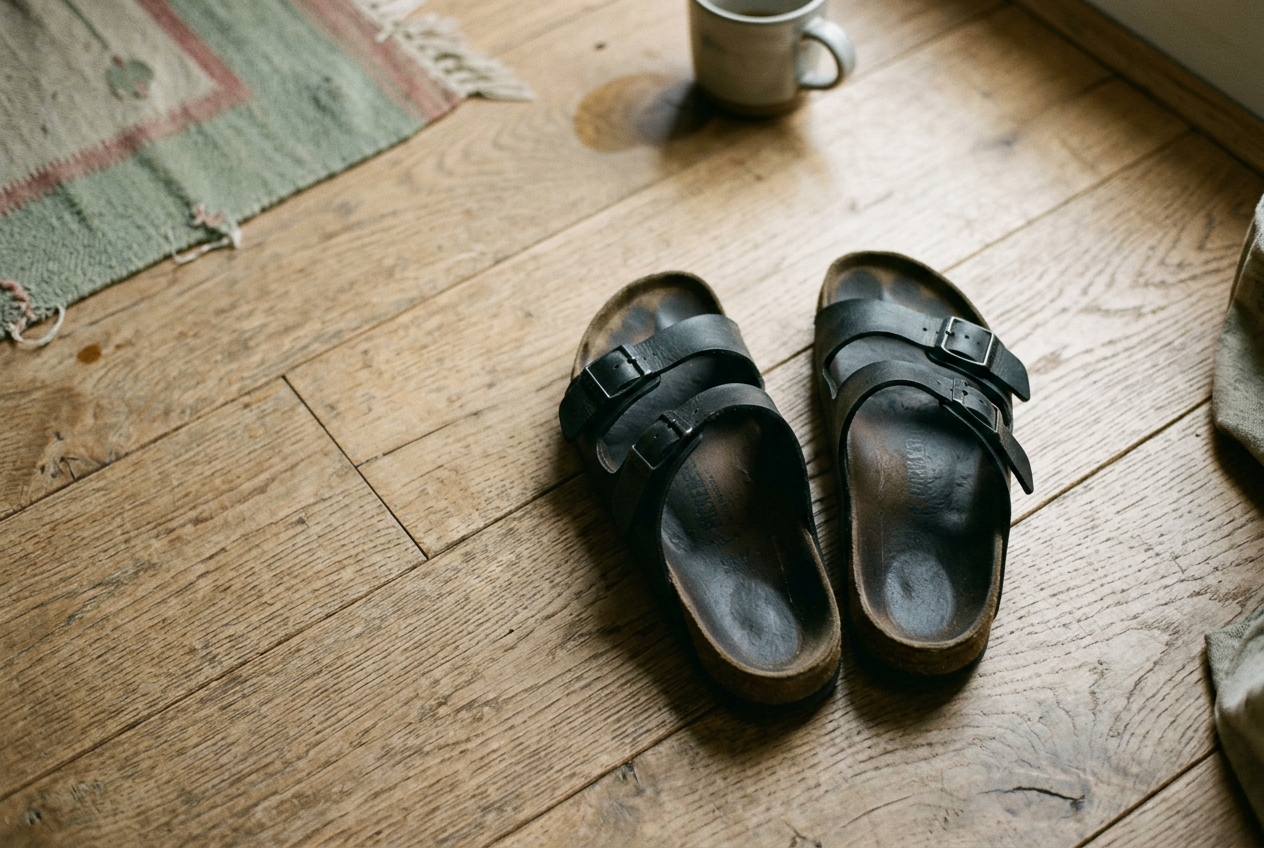
Take a common black two-strap sandal as the reference pair: one wide padded strap over the forefoot, another around the ankle, a synthetic lining and a stitched edge that crosses near the little-toe joint. The padding feels generous under a thumb. The trouble starts when the foot bends, because the strap edge stays relatively firm while the skin underneath moves.
That construction appears across price levels and across women's and men's departments, so this is unisex advice even though sizing labels and available widths may differ. A soft first impression tells you very little about where the sandal will rub after half an hour. Padding can reduce direct pressure, but it cannot rescue an edge placed over a moving joint.
The edge matters more than the middle
The center of a padded strap usually gets the attention. It looks pillowy, receives the ceremonial fitting-room squeeze and may feel pleasant while the wearer stands still under lighting that has never walked six blocks.
Blisters form through repeated shear, meaning layers of skin move against each other under friction. A strap does not need to feel hard to create that movement. It only needs to grip one patch of skin while the foot slides or flexes beneath it, over and over, until the area becomes hot and sore.
On the reference sandal, the important spot is the lower edge of the forefoot strap. If that edge lands behind the little-toe joint, it may stay on a quieter part of the foot. If it lands directly across the joint, every step folds the foot into the seam. A few millimeters of placement can matter more than an extra layer of foam in the center.
Inspect how the edge is finished. A folded edge turns the upper material inward, while edge binding, a narrow strip wrapped around the raw edge, adds another layer and often another seam. Either can work. Trouble comes when the finished edge is thick, stiff or sharply angled toward the foot.
Run a fingertip across the lining and then across the boundary where the padded section ends. A noticeable ridge is more useful information than overall softness. Press that ridge sideways rather than straight down. If it resists and catches the fingertip, it can do the same to damp skin.
Foam changes once it carries weight
Most soft strap padding is some form of foam, although shoppers should check the product description or material label rather than guessing the exact type. EVA, a lightweight closed-cell foam commonly used in footwear, can feel springy; polyurethane foam can feel plusher. Density and thickness vary, and those details are rarely obvious from the outside.
Under a fastened strap, foam does not remain evenly inflated. It compresses most where the foot presses hardest, which can leave the middle flatter while the stitched perimeter keeps its shape. Compression set is the amount of thickness foam fails to recover after repeated pressure. Even before permanent flattening occurs, a compressed strap can expose the edge ridge more clearly.
Return to the black two-strap sandal. Fastened on a comfortable hole, its forefoot padding may seem to spread pressure well. During walking, the foot shifts forward slightly and pushes up into the strap; the foam gives, the seam gives less, and the lower edge becomes the load-bearing line. Tightening the ankle strap to stop movement can make that line press harder.
Loosening it may allow more sliding. This is the tradeoff, and more padding does not remove it.
Very thick foam has another drawback. It takes up space inside the sandal, so a strap that looks roomy can fit shorter than its outer measurements suggest. A broad or high-volume foot may compress the padding from the first wear, leaving little reserve before the edge starts working against skin.
Sweat changes the lining
Dry fitting-room skin is a poor stand-in for a warm walk. Once sweat reaches the lining, damp skin can grip the material more strongly and soften at the surface, making repeated rubbing less tolerable. The sandal may also hold the foot differently as moisture changes the slip between skin, lining and footbed.
Synthetic microfiber can feel smooth when dry, yet its behavior depends on texture and finish. Some linings become draggy with moisture. Suede and other napped surfaces, meaning materials with a raised fuzzy texture, may manage small amounts of moisture differently, but a coarse nap or prominent seam can still abrade skin. No lining earns a universal pass.
The reference sandal's synthetic lining deserves attention where it wraps into the stitched edge. That turn creates a narrow zone with less cushioning and more structure. If a dry thumb skips across it instead of gliding, warmth and sweat are unlikely to improve matters. The exact friction will vary by skin, fit and walking pattern, which is why construction must be tested on the foot rather than judged from a material name.
Use the flex and rub test in store
Start by putting on both sandals and fastening them as you would outside. Do not cinch the ankle strap to correct a forefoot strap that is too loose; that pulls the foot backward without changing the forefoot opening, and it may create pressure at the ankle instead. Stand long enough for the foot to settle, then check that no edge sits directly in a toe crease or across the widest point of a joint.
Next, flex the sandal. Keep the heel down and lift it as though taking a step, allowing the forefoot to bend naturally. Watch the lower strap edge. It should move with the foot without digging into one narrow line, buckling inward or shifting over a joint.
Repeat the motion several times because the first bend may only arrange the materials.
Now walk briskly around the permitted fitting area, turn in both directions and use any available incline. Pay attention to heat rather than pain. A warming patch under one edge is an early sign of repeated friction, and waiting for it to hurt does not produce more useful data.
Take the sandal off and rub the lining with a clean fingertip. Move along the path the foot took, crossing seams rather than stroking only the padded center. A good candidate feels consistent through that route. A sudden rough patch, sticky finish or raised thread identifies the part that will do the work once the sandal gets damp.
Sweat is harder to reproduce without making store merchandise unsellable. Do not wet a shoe without permission. If the retailer allows it on a fitting sample, a barely damp clean fingertip can reveal whether the lining becomes noticeably grippier; otherwise, save the moisture check for home while the pair remains returnable and unworn outdoors.
Finally, hold the sandal at the heel and toe and bend it where your foot bends. The sole should flex near the forefoot rather than folding through the middle, while the strap edge should not collapse inward into the foot space. This test is more revealing than crushing the padding between finger and thumb because it loads the strap in the direction walking will.
For the reference black sandal, a pass requires the forefoot edge to remain behind the little-toe joint during that bend. If it rides onto the joint, the pair is wrong for that foot even if the foam feels expensive. There is no useful break-in plan for moving a stitched edge to a different location.
Know which problems can improve
A mildly firm upper may relax with wear, particularly if it is leather and the fit is otherwise sound. A sharp edge, exposed seam or misplaced strap is a different problem. Wear may soften it, but the foot pays for that experiment, and synthetic uppers often change less than shoppers expect.
The better alternative is usually a sandal with a differently positioned strap, a wider opening or a smoother edge construction. More foam is not automatically the upgrade. A thinner strap with a soft, flat lining can outperform a bulky padded one because it bends closer to the foot and leaves less of a ridge at its perimeter.
Price does not settle this. Higher-priced sandals may use better leather, denser foam or cleaner finishing, but they can still place an edge on the wrong part of a particular foot. Cheap padding can flatten quickly; costly padding can be beautifully made and anatomically inconvenient. Pay for construction that matches the foot, not for the visible depth of the cushion.
At home, wear a new pair on clean indoor flooring during the warmest part of the day, when feet may be fuller. Test the black two-strap shape with the same bare feet or socks intended for normal wear, and include stairs if that is safe in the space. Remove the sandals at the first persistent hot spot, then check whether its location matches an edge, seam or buckle anchor. That evidence is more useful than hoping the next outing will be different.
Questions people ask
Can padded sandal straps cause blisters?
Yes. Padding reduces pressure only where the foam sits and remains resilient. A stiff perimeter, raised seam or strap edge positioned over a bending joint can still create repeated shear, especially once the foot becomes damp and starts gripping the lining.
Should sandal straps feel tight when new?
They should hold the foot without forcing it into the edges. A strap that requires heavy compression from the first fitting has little room to accommodate swelling, while a loose strap can allow sliding. Neither problem is reliably fixed by tightening a separate ankle strap.
Will padded sandal straps stretch with wear?
Leather uppers may relax, while synthetic materials often change less, but foam compression can make a strap feel roomier without moving its stitched edges. That may reduce broad pressure and expose the edge more clearly, so stretching is not a dependable cure for a hot spot.
How can
I test sweaty sandal friction before wearing them outside?
Use the retailer's indoor return window. Wear the sandals at home when your feet are warm, flex through the forefoot and stop when one area begins heating up. With permission, a barely damp fingertip on the lining can show whether its surface becomes grippier.
One update a day
Today's fashion update, in your inbox
One fashion update each morning — no hype, no filler, just pieces worth wearing.