Three Summer Layers Without Bulky Sleeves or a Rumpled Waist
A ribbed cotton tank, fine-gauge cardigan, and light overshirt handled humid sidewalks and cold offices. The useful part is how their armholes and hems fit together.
August 10, 2026 · 8 min read
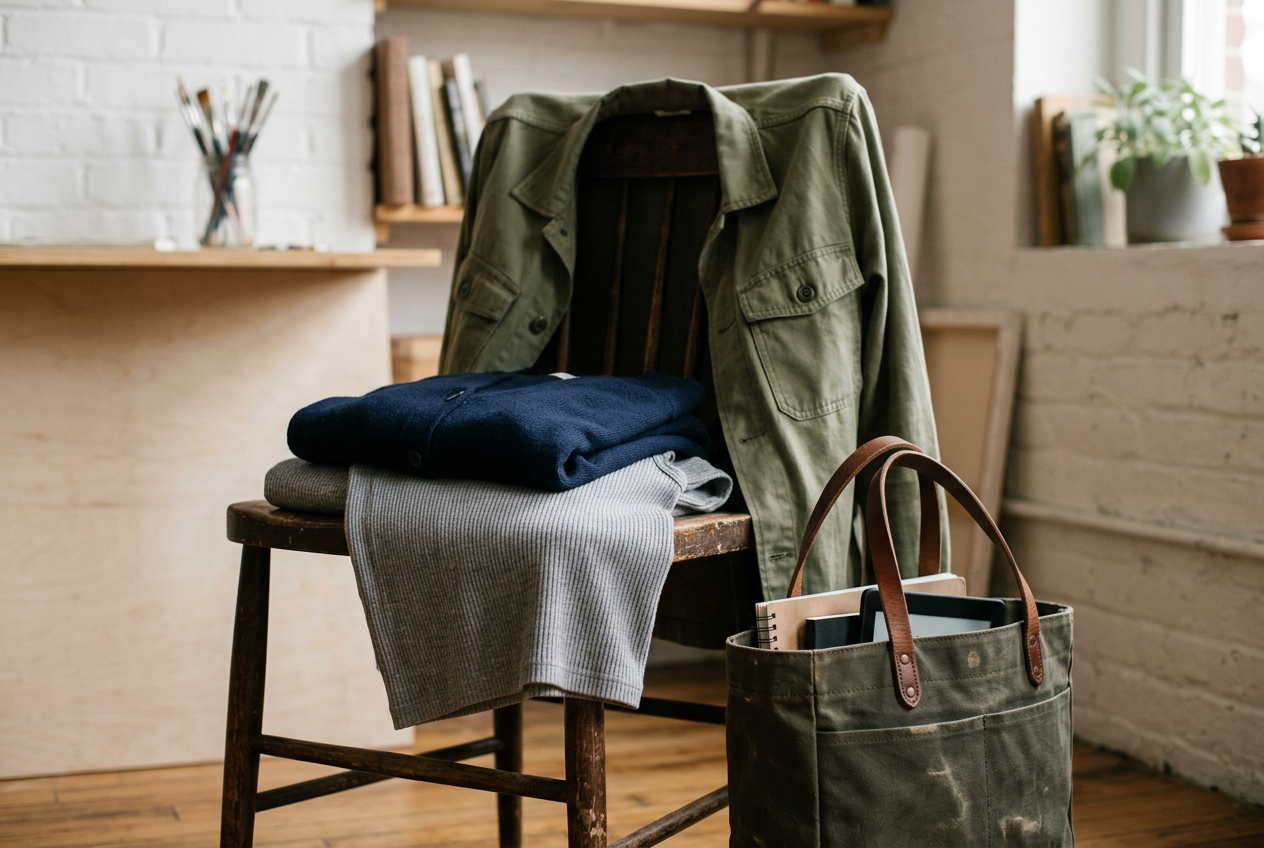
The outfit I kept returning to during a workweek was specific: a pale gray ribbed cotton tank, a hip-length navy merino cardigan, and an olive cotton-nylon overshirt with straight sleeves. Outside, the cardigan went into my tote while the overshirt stayed open over the tank. In a cold office or store, all three went on.
This is unisex advice. The useful measurements are shoulder width, garment length, and upper-arm room, rather than the department printed on a tag. The formula works across wardrobes because each piece has a separate job, and because none of them has to carry decorative volume under another layer.
Start with a base that releases heat
The tank was ribbed cotton with a high enough neckline to read as a top rather than underwear. Ribbing matters here because the knitted channels let the fabric stretch without requiring an oversized cut, while cotton absorbs some moisture and feels less sealed against the body than a dense synthetic jersey.
Choose a fit that follows the torso without pulling across the chest or collapsing into deep horizontal folds at the waist. Too tight, and the tank holds damp fabric against the skin. Too loose, and its extra cloth gathers beneath the cardigan, precisely where the outfit is meant to stay clean.
A sleeveless base also removes one set of sleeves from the equation. That sounds obvious, but it made the largest difference in the test outfit: the cardigan could fit close through the arm, and the overshirt could move over it without four layers of fabric meeting at the underarm. A short-sleeve T-shirt can work when both pieces above it are roomy, though the T-shirt sleeve often leaves a visible ridge.
Cotton is the easy choice. A cotton-linen knit dries with more texture and wrinkles sooner, while a lightweight merino tank manages odor well but usually costs more and asks for gentler washing. I would skip a heavy cotton-spandex tank for this job. It may look smooth in the morning, yet the dense stretch fabric can feel hot before the commute is over.
Make the cardigan compact, not flimsy
The navy cardigan was fine-gauge, meaning thin yarn was knitted into a smooth, low-bulk fabric. That distinction matters more than whether the label calls the piece lightweight. An airy cardigan made from thick yarn can still produce a substantial cuff and shoulder seam, while a fine knit slides under an outer layer with less friction.
Mine ended around the hip and sat close at the shoulder, with sleeves that touched the arm but did not grip it. The hem length was crucial. Longer cardigans folded beneath the overshirt or protruded several inches below it, which made the middle of the outfit look accidental and encouraged me to tie the knit around my waist outdoors.
That failed after a few days. The cardigan developed a crushed band through the lower front where the sleeves had been knotted, and the ribbed hem curled when I put it back on in the office. Folding it in thirds and carrying it flat took little space and preserved the line of the garment. If carrying a layer is impractical, wear the cardigan over the tank outside and keep the overshirt in hand; tying either piece at the waist creates more rumpling than it saves.
Merino worked well because the fabric stayed light while taking the edge off strong air-conditioning. A fine cotton cardigan is easier to wash and may cost less, but it needs a slightly firmer knit to avoid stretching at the elbows. Silk-cotton blends can feel cool and polished, though smooth versions may slip against the overshirt and pull backward at the neck.
Check the cuffs before buying. Deep, doubled cuffs add bulk exactly where an overshirt sleeve narrows, and balloon sleeves defeat the formula even when the body of the cardigan looks slim. A plain cuff and a sleeve ending near the wrist were easier to cover and easier to push up once the room warmed.
Give the outer layer room in the right place
The olive overshirt was unlined cotton-nylon in a plain weave, the basic over-under fabric structure that produces a relatively flat surface. Cotton kept it from feeling like a rain shell, while nylon helped the fabric resist the collapsed, damp look that lightweight linen can develop in humid weather.
Its key feature was not an oversized body. It was a generous armhole and a straight sleeve. The armscye, meaning the opening where the sleeve joins the body, sat low enough to clear the cardigan without dragging it upward whenever I reached for something. At the same time, the shoulder was only moderately relaxed, so the piece still looked like an intentional shirt rather than borrowed outerwear.
Try the overshirt with the intended cardigan underneath. A size that looks ample over a tank may bind once a knit sleeve fills the upper arm, and sizing up does not always fix that because some brands add width to the torso while leaving the sleeve nearly unchanged. Pinch the outer sleeve at the bicep. There should be enough fabric to grasp without pulling the cardigan along with it.
Skip a lining for peak summer. Even a thin polyester lining adds another nonbreathable surface and can cling to a damp base layer. A light chore jacket offers more structure, but its patch pockets and heavier seams make the outfit warmer; save that alternative for mild evenings rather than a humid commute.
Change layers without rebuilding the outfit
Outdoors, I wore the overshirt open over the tank, with the cardigan folded flat in a tote. The open front gave some sun coverage across the shoulders while allowing air to reach the base. Once indoors, the cardigan went on first and the overshirt followed only when the room stayed cold.
The order matters. Putting the cardigan over the overshirt traps the stiffer collar and chest pockets beneath a soft knit, which creates lumps and stretches the cardigan front. The tank, knit, and woven outer piece should progress from closest and most flexible to roomiest and most structured.
Button placement also changes the result. Fastening only the cardigan’s middle buttons kept the waist visible without pulling its hem upward, while leaving the overshirt open preserved room through the chest. If the overshirt must close, fasten it from mid-chest down and check that the cardigan placket remains flat rather than folding into a rope beneath it.
Proportion did more work than color. The tank and cardigan were similar in value, so the open cardigan did not cut the torso into sharp blocks, and the contrasting olive layer framed both. A tonal version works just as well. The practical rule is to keep the shortest hem closest to the body, then let each following layer finish at the same point or slightly lower.
Where to spend and where to save
Spend first on the cardigan. Fine knits expose weak construction quickly: button bands ripple, cuffs stretch, and loosely knitted elbows lose shape. A good version may cost around what many people expect to pay for decent sneakers, but it earns that price only if the seams lie flat and the knit recovers, meaning it returns toward its original shape after being stretched.
The tank can sit in the ordinary T-shirt price band. Look for opaque fabric, bound armholes that do not gape, and enough length to remain tucked if that is how you wear it. Buying an expensive base does not solve poor proportions farther out.
The overshirt belongs between those purchases. Clean interior seams and a fabric that resists hard creasing are worth paying for; elaborate pockets and hardware are not necessary here. Secondhand men’s shirting can be a useful source for broader sleeves, though very long tails may bunch beneath a shorter cardigan or dominate a petite frame.
Wash with the layers separated
These pieces share an outfit, not necessarily a laundry cycle. Follow each care label, wash the tank often enough that body oils do not set into the neckline, and air the merino cardigan between wears. The cotton-nylon overshirt needed less frequent washing because it rarely touched skin directly.
Avoid storing the cardigan tied or rolled tightly. After the waist-knot failure, laying it flat restored most of the hem, but the front remained visibly creased until its next label-directed wash. The overshirt could hang. The knit could not, since a narrow hanger risked pulling points into the shoulders.
Questions people ask
Can I use a T-shirt instead of a tank?
Yes, if the T-shirt has close, short sleeves and the cardigan leaves room at the upper arm. Test all three pieces together before committing. If the T-shirt sleeve rolls, shows as a ridge, or catches when the cardigan goes on, a sleeveless base will produce the cleaner result.
Is linen a good fabric for the outer layer?
Linen breathes well, but a very light linen shirt can look crushed after being folded or worn beneath a bag strap. A linen-cotton blend offers more stability. Choose a loose weave for airflow, then accept that its wrinkles will remain visible when you move into a polished office setting.
How long should the cardigan be under an overshirt?
Aim for a cardigan that ends at the hip or no more than slightly below the overshirt. A much longer knit folds at the waist and protrudes beneath the outer hem. If your best cardigan is long, pair it with a longer, straighter outer layer rather than trying to hide the extra fabric.
What should I check in the fitting room?
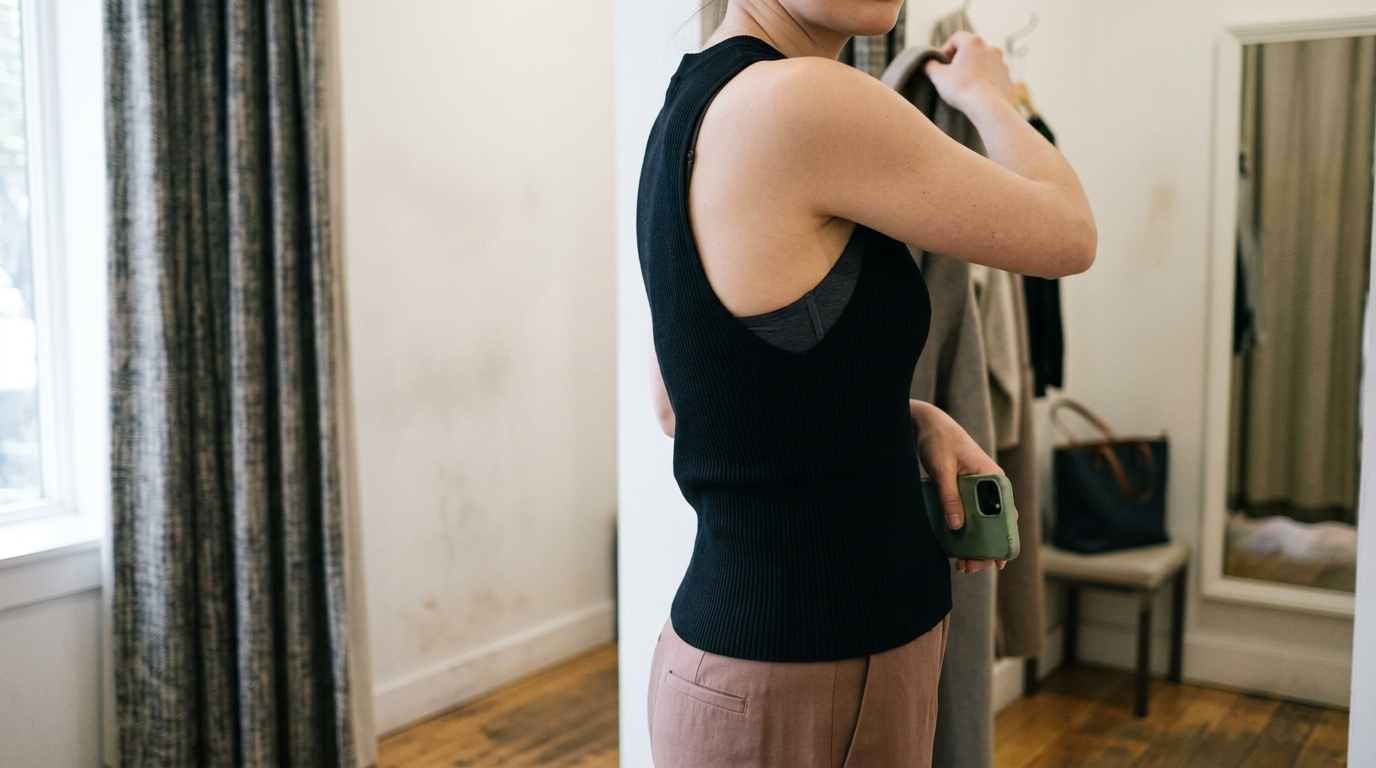
Wear or bring the intended mid-layer, then reach forward, lift both arms, and bend at the elbow. The overshirt should move without pulling the cardigan cuff or lifting its hem. Finish by sitting down; if the three hems stack into a thick roll at the waist, shorten the base or middle layer.
One update a day
Today's fashion update, in your inbox
One fashion update each morning — no hype, no filler, just pieces worth wearing.