A Linen Overshirt Can Replace the One-Wedding Outfit
Start with an unlined linen-blend layer, then add fluid bottoms and a washable base. The formula works beyond the invitation, provided the venue is not truly formal.
November 10, 2026 · 8 min read
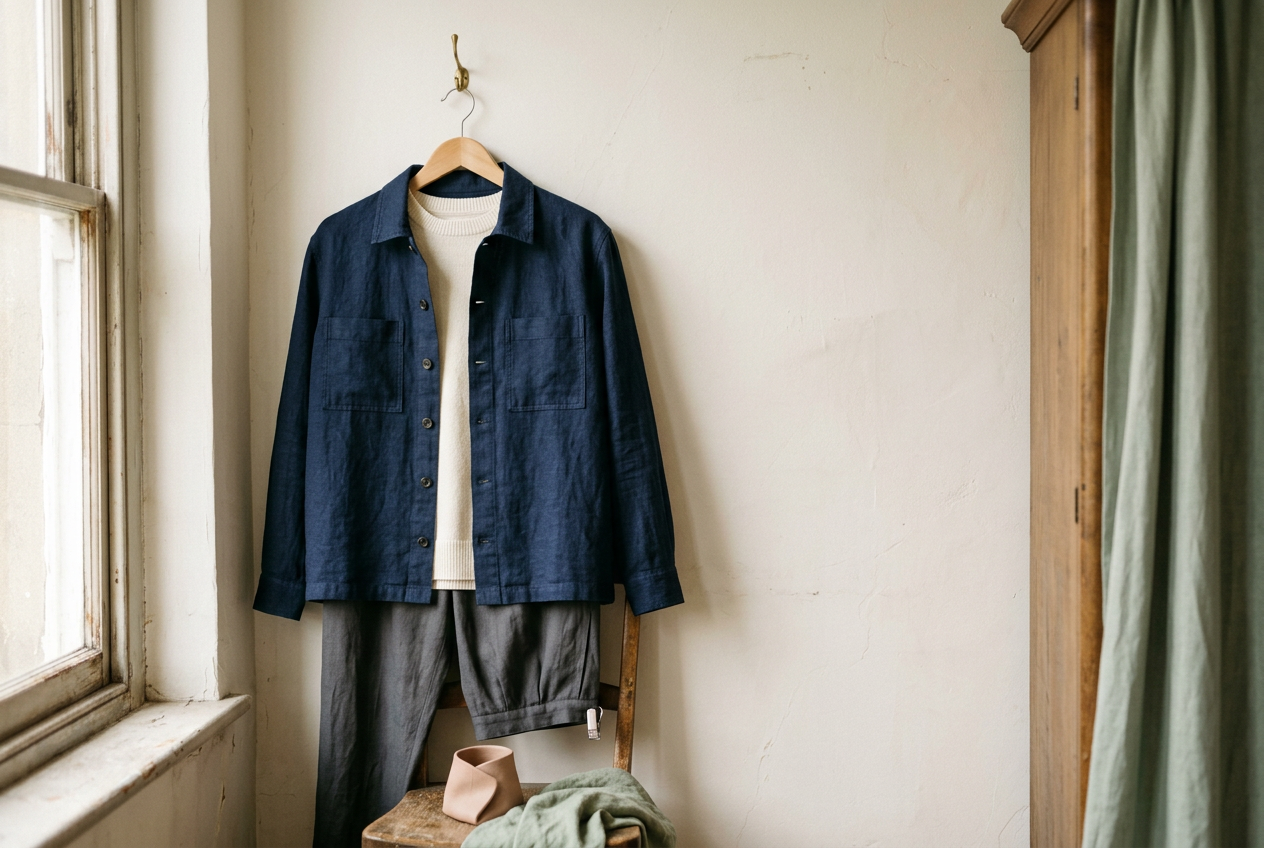
The useful anchor here is an unlined navy linen-cotton overshirt that finishes just below the waistband, with a clean collar, tonal buttons, and patch pockets. It is specific enough to expose the limits of this formula: the fabric handles heat, the navy carries into other settings, and the pockets keep it on the relaxed side of tailoring.
This is unisex advice, though the exact cuts can come from any department. The overshirt can sit over a fine knit, camisole, shell, or collarless shirt; the lower half can be a fluid trouser or skirt. What matters is the relationship between the pieces, not the label attached to them.
Start with the outer layer’s limits
A summer wedding jacket should be breathable before it is decorative. Look for linen, linen-cotton, tropical wool, or a lightweight wool-silk blend; tropical wool means a light, open-weave suiting cloth that allows more air through than standard wool. An unlined or partially lined construction also helps, provided the inside seams are tidy enough to be seen when the jacket comes off.
The navy overshirt meets that test because its linen-cotton cloth releases heat better than a dense synthetic fabric, while the cotton reduces some of linen’s collapse. It will still crease across the elbows and lap. That is acceptable at an outdoor or daytime wedding, where a softly rumpled surface reads as part of the cloth, but it becomes less convincing beside satin dresses and sharply pressed dinner jackets.
Pockets set the ceiling. Large patch pockets, meaning pockets sewn visibly onto the outside of a garment, make an overshirt useful during the rest of the summer, yet they also mark it as workwear-adjacent. Choose this version for dressy-casual invitations, restaurant receptions, courthouse ceremonies, and garden settings where suits are optional. For cocktail attire, replace it with an unlined single-breasted jacket with welt pockets, which are narrow openings finished without an external pocket shape.
The fit should leave enough room for the washable base without hanging like a beach cover-up. Button the overshirt and check the side view: pulling at the stomach or chest means it is too small, while a shoulder seam falling well past the shoulder makes the piece look borrowed rather than intentionally relaxed. The hem should cover the waistband when standing and stay near it when seated. Much longer, and the outer layer fights with a full skirt or wide trouser.
Color matters less than surface. Navy, tobacco, deep olive, chocolate, and muted gray all repeat well, but a visible slub, the small irregular thickening found in many linen yarns, lowers the formality slightly. A smooth linen-wool jacket can go further than the navy overshirt even if their colors are identical.
Let the lower half carry the polish
The easiest way to stop an overshirt from looking like weekend clothing is to pair it with a bottom that moves cleanly and holds its waistband. For trousers, that means a mid- or high-rise cut with a full leg, enough room through the seat, and either a soft front crease or a pressed one. A cropped ankle can work, but it makes the outfit more casual and exposes more of the shoe, so the shoe must look deliberate.
Charcoal fluid trousers sharpen the navy overshirt without pretending the two pieces are a suit. Tropical wool is the strongest investment if the garment will also serve office days and dinners, because it resists bagging better than many viscose blends and usually recovers from sitting. A linen-viscose trouser costs less in many stores and hangs well at first, but the knees may soften during a long reception, while water spotting and care instructions vary enough that the label needs checking before purchase.
For skirts, choose movement without excessive volume at the waist. A softly flared midi skirt works with the hip-length overshirt because the jacket ends before the skirt reaches its widest point. A bias-cut skirt, meaning the fabric is cut diagonally across the grain for more drape, can also work, though thin versions often cling after hours of heat and may grow slightly longer during wear.
Check opacity outdoors. Stand in front of a bright window with the base layer tucked in, then photograph the outfit from behind. Pale linen and lightweight viscose can reveal pocket bags or underwear even when they look solid in a fitting room. A breathable lining to mid-thigh is useful; a full polyester lining defeats much of the reason for choosing a summer skirt.
Avoid trying to match navy separates that were not sold together. Two near-identical dark blues often look accidental under daylight, especially when one is matte linen and the other has a smooth suiting finish. Charcoal, cream, or a restrained pattern makes the separation clear.
Keep the base layer washable and quiet
The base layer takes the direct hit from sunscreen, perspiration, makeup, and food, so this is the piece that should go into a normal wash rather than demand dry cleaning after every event. A fine-gauge cotton knit, mercerized cotton shell, or washable silk alternative works; mercerized cotton is treated to create a smoother, stronger surface with a slight sheen.
For the navy overshirt and charcoal trouser combination, an ivory sleeveless knit gives enough contrast to read in photographs without becoming the focus. It should fit close at the armholes and skim the torso. Deep armholes expose undergarments when the outer layer comes off, while a very tight ribbed tank can pull the outfit toward casual basics no matter how good the trousers are.
Test the neckline with the overshirt buttoned and open. A high crew neck may crowd a short collar, particularly on a smaller frame; a modest scoop or square neck leaves visible space without turning the base into eveningwear. If a bra or binder sits underneath, check the edges in daylight and while seated rather than relying on the changing-room mirror.
White cotton jersey is the budget default, but it can twist at the side seams and lose its neckline after repeated washing. Spending somewhat more makes sense for dense, smooth fabric and reinforced binding, not for a logo or a care label that still says dry clean only. Buy the base with ordinary laundering in mind, then wash it once before the wedding to catch shrinkage and dye transfer.
Match the formula to the invitation
Dressy casual is the navy overshirt’s best territory. Wear it pressed but not flattened, with charcoal trousers or a fluid midi skirt, the washable ivory base, and a polished leather shoe or restrained sandal. Steam the pieces the night before, then let them cool on hangers so new creases do not set while packing.
Cocktail attire requires a firmer outer layer. Keep the same base and lower half, but use a lapelled jacket in tropical wool, linen-wool, or silk-linen, ideally with clean pocket openings and enough structure at the shoulder to hold its shape after the jacket comes off a chair. A dark, sharply cut overshirt may pass in a creative city venue, but the patch-pocket version is a risk when the wedding party is likely to wear conventional suiting.
Black tie is outside this formula’s reliable range. Fluid black trousers or a long skirt might remain useful, yet the overshirt does not supply the ceremonial finish expected from a dinner jacket, formal suit, or evening dress. Forcing a casual layer into that setting saves one purchase at the cost of looking underdressed in every photograph.
Outdoor does not automatically mean casual. A country club lawn, hotel terrace, and backyard ceremony can have very different expectations, so use the invitation wording and venue together. Heat changes the fabric choice, not the dress code.
Spend on shape before novelty
The best investment is usually the outer layer or trousers, whichever is hardest to fit. A jacket with a clean shoulder and enough seam allowance for alteration can work across weddings, work dinners, and warm-weather travel; trousers that hang properly through the seat are equally valuable. Alteration costs can approach the price of a budget separate, but correcting a waistband or hem often produces more wear than buying another inexpensive garment with the same problem.
Save on the base layer if its fabric is opaque, washable, and stable at the neckline. Occasion-only details such as oversized bows, dense beading, or sheer panels tend to raise the price while reducing repeat wear. They also make cleaning harder.
The navy linen-cotton overshirt earns its place because it can return with jeans, shorts, or matching-toned trousers after the wedding. Its weakness remains visible: patch pockets prevent it from covering every dress code. Buying a more tailored jacket is worth the money only if cocktail invitations, office dressing, or dinners already exist in the calendar; otherwise, renting or borrowing for the rare formal event is the cleaner decision.
Fit the outfit in the order it will be worn
Begin with the base and preferred undergarments, then fit the trousers or skirt before adding the outer layer. Sit for several minutes, raise both arms, and put a phone or cardholder into any pocket you expect to use. Fluid fabric can look generous while standing yet pull sharply across the lap once seated, and an overshirt that fits empty may tilt when a phone weighs down one patch pocket.
Wear the complete outfit for an hour at home before removing tags. Heat can reveal a clingy skirt lining, a rolling trouser waistband, or a base layer that holds moisture under the arms. The navy overshirt should still button without strain after that hour, even if the plan is to wear it open.
Finally, read every care label as a set. A machine-washable base does little good if it transfers dark dye onto an ivory layer, while a washable trouser that requires air-drying flat may be impractical in a small home. Repeatability depends as much on the recovery between events as it does on the first outfit.
Questions people ask
Can an overshirt look formal enough for a wedding?
Yes, for dressy-casual and some relaxed daytime weddings, provided it is pressed, opaque, and cut cleanly through the shoulder. Patch pockets and heavily textured linen cap its formality. For cocktail attire, a breathable lapelled jacket with discreet pockets is the safer version of the same formula.
Which trouser fabric works best in summer heat?
Lightweight tropical wool balances airflow, drape, and recovery particularly well, though it may require dry cleaning. Linen blends feel cooler and can often cost less, but they crease and soften at the knees. Check whether the lining is breathable, because a polyester-lined trouser can feel hotter than its shell suggests.
Should the jacket and trousers match?
They do not need to match, and near-matches are often harder to wear than clear contrast. Pair a navy linen-cotton overshirt with charcoal, cream, or a quiet pattern rather than hunting for another navy with a different texture. Matching makes more sense when both pieces were designed as a suit.
What should be washed before the wedding?
Wash the base layer once according to its label to test shrinkage, twisting, and dye transfer. Trousers or skirts should only be prewashed if their instructions allow it. Steam or press the outer layer, then give it enough hanging time to cool before it goes into a garment bag.
One update a day
Today's fashion update, in your inbox
One fashion update each morning — no hype, no filler, just pieces worth wearing.