Polyester Satin Is Easier, but Silk Handles Summer Better
The shine tells you almost nothing useful. For summer dresses and skirts, the real choice is cooler wear and finer care versus easy washing, static, and trapped heat.
Women's · September 23, 2026 · 7 min read
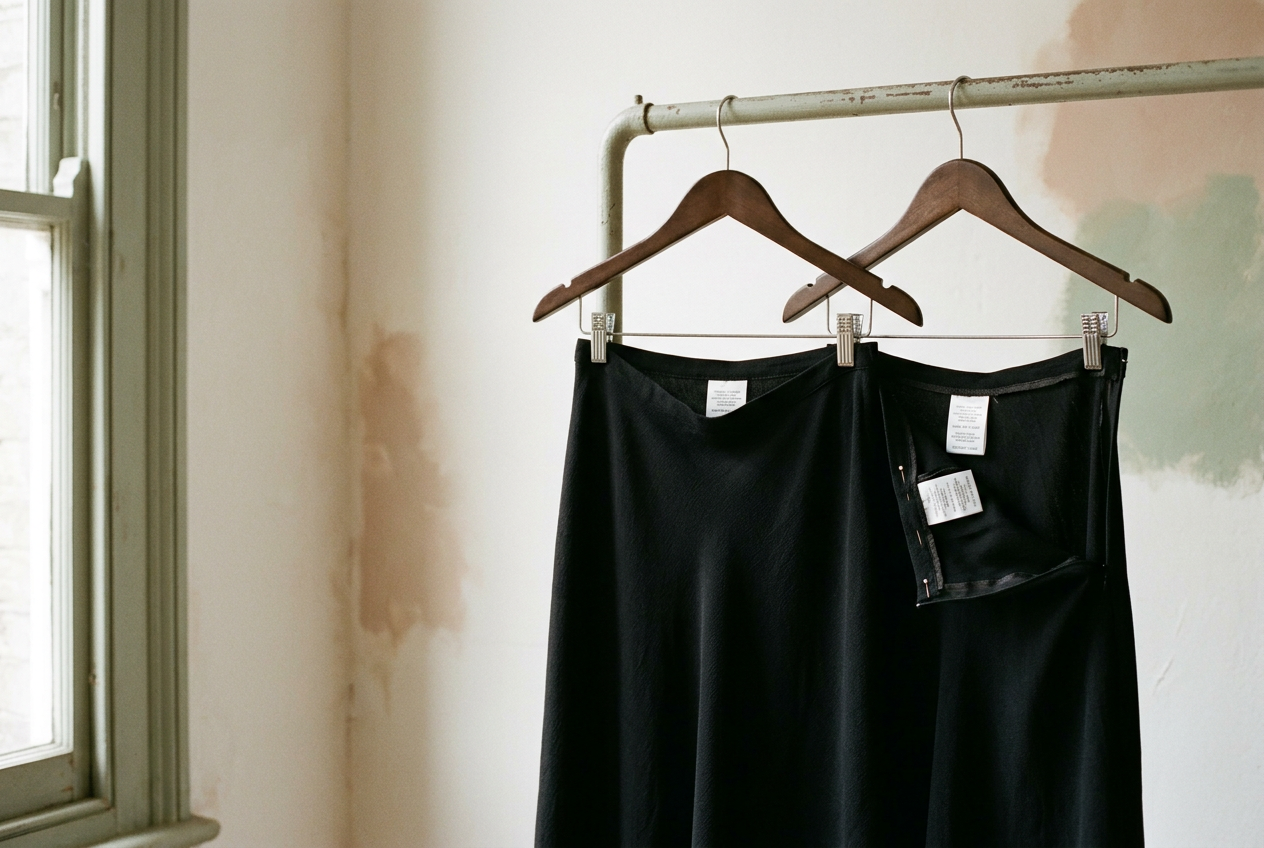
For this women’s summer-event comparison, the useful anchor is an unlined black midi skirt with a narrow elastic waist, one side seam, and a bias cut, meaning the fabric is cut diagonally across its grain so it falls closer to the body. Picture that same skirt made once in polyester satin and once in silk satin.
It is a demanding garment. The black color disguises some marks but exposes lint, the bias cut magnifies weak seams, and the unlined construction makes the fiber’s behavior easier to feel. Add a warm outdoor ceremony followed by an air-conditioned dinner, and the tradeoff becomes clearer than it ever will under fitting-room lights.
Satin describes the structure, not the fiber
Satin is a weave, meaning its yarns pass over several other yarns to create a smooth face with relatively few visible intersections. Silk and polyester tell you what those yarns are made from. That distinction matters more than whether one surface looks glossier.
A heavy polyester satin can feel substantial and hang cleanly, while a thin silk satin can look fragile or cling around the hips. A matte polyester version may be more convincing than a highly reflective silk one. Shine changes with yarn shape, weave density, color, finishing, and light, so it cannot reliably tell you which skirt will breathe, survive dinner, or come home without a pulled thread.
The care label gives the first useful clue. Then hold the skirt up to the light, compress a section in your fist, and rub two layers together. A summer-event satin should recover without deep creasing, move without a loud rustle, and feel light enough that the waistband does not trap a dense band of heat.
Heat starts at the waistband
Silk can absorb some moisture before it feels wet, which helps the black bias-cut skirt remain more comfortable as body temperature rises. It does not turn satin into activewear, but in a loose, unlined garment, silk usually handles the shift from shade to direct sun with less of the sealed-in feeling common to polyester.
Polyester absorbs little moisture into the fiber itself. Sweat can sit between skin and cloth until it evaporates, and evaporation slows when the skirt is close through the waist and upper hip. That is the heat tradeoff. A lightweight polyester satin with room around the body may still work for an indoor wedding, yet the same fabric in a fitted slip dress can feel clammy during a long outdoor cocktail hour.
Construction can reverse an easy fiber verdict. A silk skirt lined in dense polyester may feel hotter than an unlined polyester skirt with a fuller cut and a side vent. The narrow elastic waist on the anchor skirt is another pressure point because it holds fabric against the body; a faced waistband or a looser waist can feel better even when the fiber stays the same.
For a humid outdoor event with limited shade, silk earns its higher cost if comfort is the priority and the garment has enough ease to let air move. Polyester makes more sense when the event is mostly indoors, the dress code requires a richer-looking fabric, or changing clothes is not practical and spills are likely.
Sweat marks are about color and finish too
Silk’s moisture absorption helps with comfort, but it can produce visible darkening, tide marks, or water spots. Pale colors and mid-tone jewel shades often reveal uneven dampness more readily than black, while very glossy surfaces make any change in texture easier to see. Perspiration can also affect silk over time, so a marked garment should not sit untreated for weeks.
Polyester often dries faster after moisture reaches the surface, but that does not make it immune to sweat. A close-fitting polyester dress can show damp patches because moisture has nowhere else to go, and oily residue from body products may remain in the fabric after the water evaporates. Odor can linger as well, especially when the garment receives only a quick rinse.
For the black midi skirt, polyester wins on visible water spotting and silk wins on the immediate feeling against the body. Neither is a safe choice for a pale, body-skimming dress in high heat without testing. Press a damp white cloth against an inside area before the event, let it dry, and check for color transfer, a ring, or a changed sheen.
Static and snags create different kinds of trouble
Polyester satin is more prone to static because the fiber holds little moisture. The skirt may cling to tights, catch around the knees after sitting, or pull toward a synthetic lining. Summer humidity can reduce static outdoors, then strong air conditioning brings it back inside. A light water mist on the garment’s interior can help briefly, as can an anti-static spray approved for the fabric, but soaking the surface risks spots.
Silk can also cling, although it usually has less of the persistent dry static associated with polyester. Its larger concern is abrasion. A rough clutch, a beaded chair back, or a metal bag chain can disturb the satin face, and repeated rubbing may leave a dull patch that cleaning will not remove.
Both versions can snag because satin exposes longer sections of yarn on its face. Polyester’s strength is useful until a snag pulls a hard, permanent line across the skirt; silk may fuzz or break sooner, but an attempted home repair can leave equally visible damage. Do not cut a pulled loop. Ease surrounding fabric toward it with clean fingers, then use a fine needle to draw the loop to the wrong side without enlarging the hole.
The practical event check is unglamorous: run a hand over the bag, jewelry, and chair edge that will touch the garment. The black bias-cut skirt is safer with a smooth leather bag than with sequins or an exposed zipper.
Seams reveal where the money went
Bias-cut satin places unusual strain on stitching because the fabric stretches and shifts diagonally. Poorly handled side seams may ripple before the skirt is worn, then pull into horizontal lines across the hip. Seam slippage, where yarns separate beside the stitch line, can appear as tiny gaps even though the thread itself remains intact.
Silk satin needs a fine needle, balanced tension, and enough seam allowance to resist that movement. Polyester satin also puckers when the needle, thread tension, or feed is wrong, and heat cannot always press the rippling away because high temperatures can flatten or mark the surface. On either skirt, a narrow seam allowance with visible stress at the hip is a reason to leave the garment behind.
Inspect from the inside. The seam should lie flat without ladder-like openings, skipped stitches, or needle holes beyond the stitching line. Then sit down and stand up. If the side seam twists toward the front or develops sharp drag lines, sizing up may not solve it; the cut or sewing is probably at fault.
A bias-cut hem should also be allowed to settle before it is finished because different sections can lengthen unevenly. The familiar result is a skirt that looks level on the hanger but drops at one side after wear. Polyester’s shape retention does not excuse a rushed hem, while silk’s fluidity makes the error more obvious.
Cleaning decides the real price
Polyester satin usually wins on maintenance. Many versions tolerate gentle machine washing or hand washing, although the label still controls, and they dry quickly on a hanger. Keep them away from high dryer and iron temperatures. Heat can glaze the face, set wrinkles, or distort the fabric, so steaming from the wrong side is the safer first move.
Silk satin often asks for hand washing or dry cleaning, depending on its dye, finish, and construction. Even washable silk needs cool water, a suitable detergent, limited agitation, and support while wet. A single event may therefore add both time and cleaning cost, particularly when the skirt has a stain that should be treated promptly rather than stored until the next wear.
That changes the budget calculation. Polyester satin occupies the accessible high-street bracket as well as designer collections, while pure silk generally moves the same simple skirt toward investment territory. The polyester version is the better buy for frequent travel, crowded dinners, and a schedule that leaves little room for specialist care. Silk is worth considering when the skirt will be worn repeatedly in heat and its seams, hem, and waistband are good enough to justify the care.
For the anchor skirt, the verdict splits cleanly. Choose silk for a humid outdoor event when cooler wear matters more than easy cleaning. Choose polyester for an indoor-heavy occasion, provided the fabric is light, the cut is not tight through the upper hip, and the care label permits washing you will realistically do.
Questions people ask
Is polyester satin too hot for a summer wedding?
It can be, especially in a fitted dress, under a dense lining, or during an outdoor ceremony without shade. A lightweight unlined skirt with movement around the legs is easier to tolerate. Check the waistband and upper hip first, since close contact there creates the clammy feeling before the lower skirt becomes uncomfortable.
Does silk satin always show sweat?
No. Visibility depends on color, finish, fabric weight, and where the garment touches the body. Silk can absorb moisture comfortably while still darkening or developing a tide mark. Black and printed satin tend to disguise changes better than pale solid colors, but an inside damp-cloth test is more useful than guessing from the hanger.
Can polyester satin look as polished as silk satin?
Yes, if the fabric has a controlled sheen, enough weight to fall cleanly, and seams that sit flat. Thin polyester with a harsh shine often looks less refined, but fiber content alone does not settle the question. Inspect the side seam, hem, and movement rather than using gloss as a quality test.
Which satin is better for a bias-cut skirt?
Silk usually gives the softer drape and cooler wear associated with a bias-cut skirt, but it demands stronger construction and more attentive care. Polyester is easier to maintain and may recover better from travel. Reject either one if the side seam ripples, twists, or opens beside the stitches when you sit.
One update a day
Today's fashion update, in your inbox
One fashion update each morning — no hype, no filler, just pieces worth wearing.