Sizing Up Makes a Shirt Bigger in All the Wrong Places
A larger standard size adds room, but it also shifts the collar, shoulder, cuff and hem. An oversized cut controls those details while building in volume.
September 26, 2026 · 8 min read
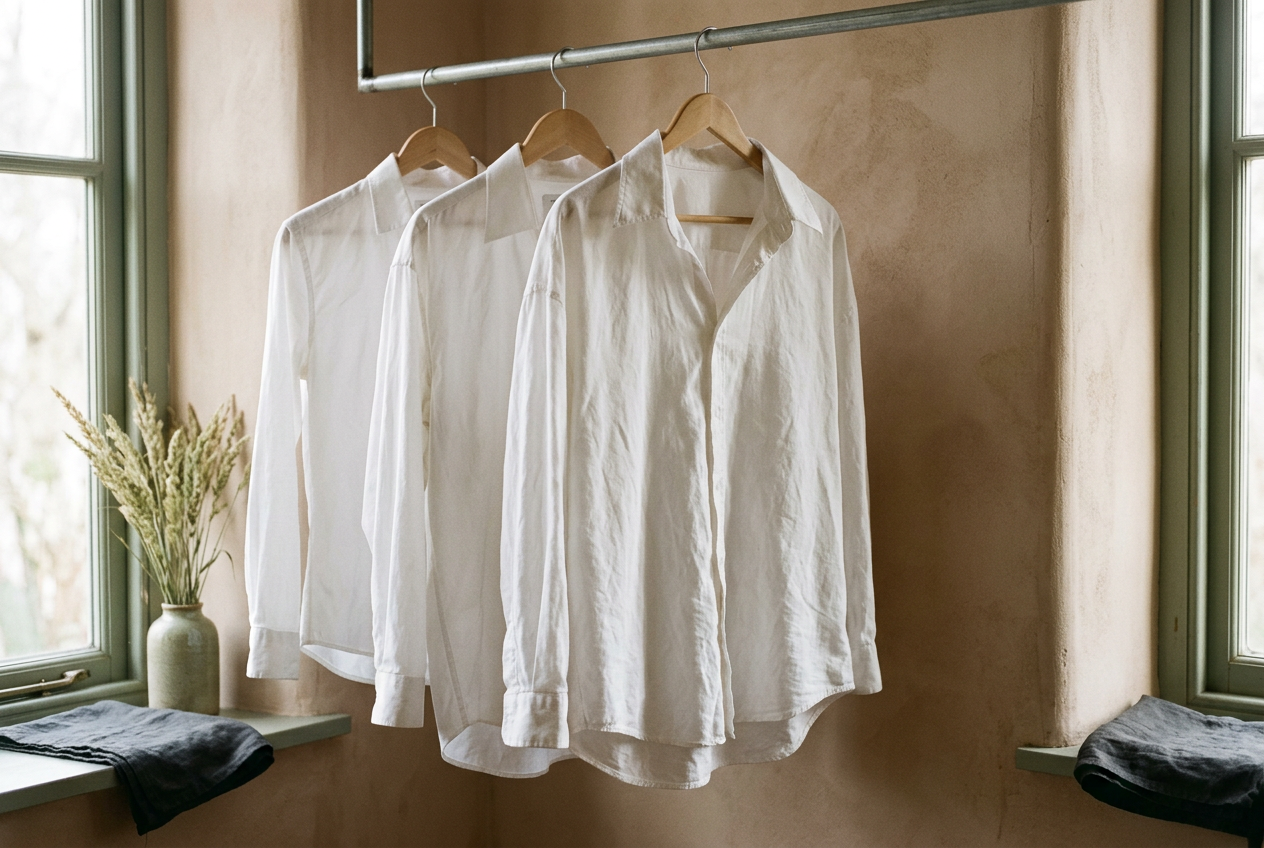
The test case was a white cotton-poplin button-up with a straight, standard fit, tried first in the usual size and then one size larger. Cotton poplin, a tightly woven shirting fabric with a smooth surface, makes fit changes easy to see because it holds a crease and does not collapse around the body like washed linen or soft flannel.
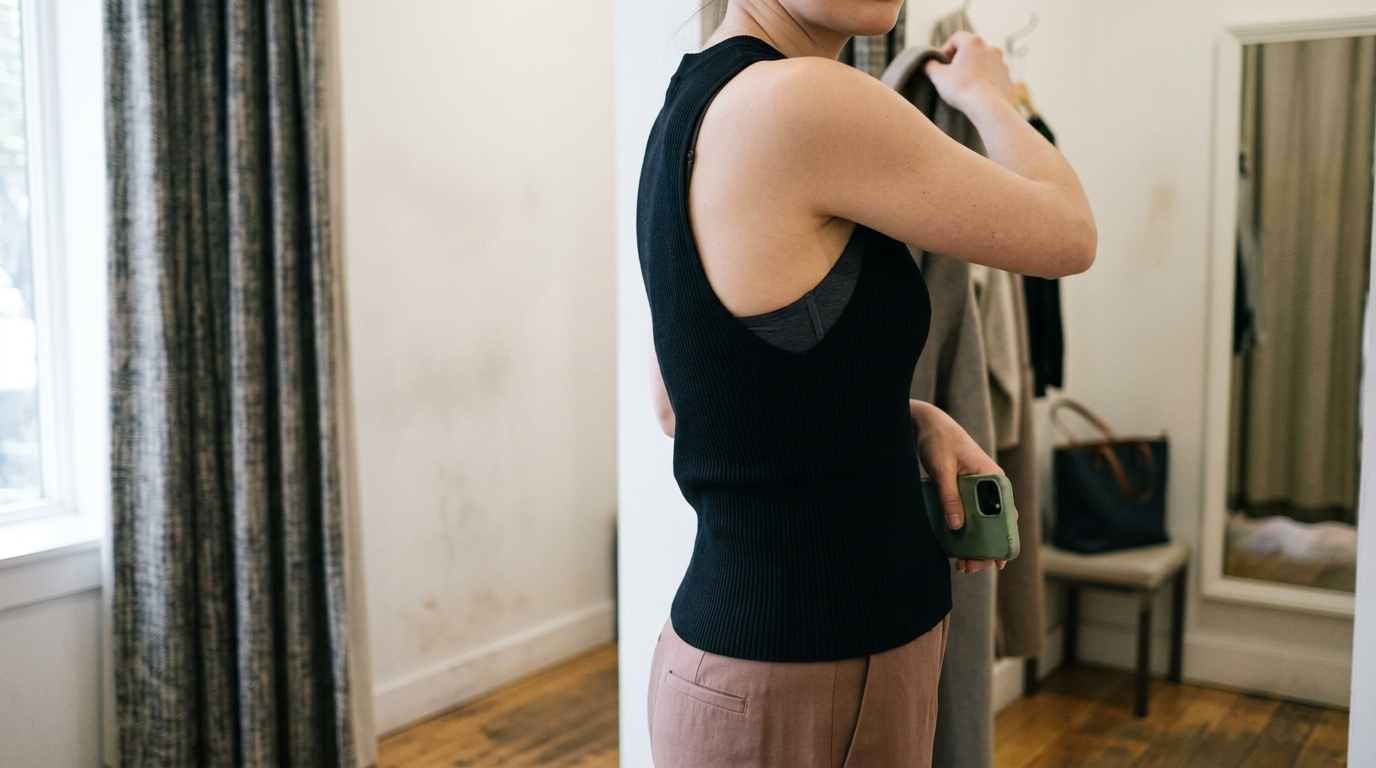
The larger shirt looked promising from the front. Worn open over a ribbed tank, it had the loose body and easy movement associated with an oversized shirt. Once buttoned, cuffed and tucked into trousers, the cost of that extra space appeared: the collar spread away from the neck, the shoulder seam slipped down the arm, the cuffs swallowed part of the hand, and the longer hem produced a thick roll of fabric at the waistband.
A separate shirt intentionally cut oversized created comparable room through the body, but its collar and cuffs remained closer to ordinary scale. Its extra length looked deliberate rather than borrowed. That contrast is the useful one. This is unisex fit advice because the underlying shirt geometry works the same way across wardrobes, although bust shaping and button placement can create additional fit considerations.
A larger size changes the whole pattern
Standard sizes are produced through grading, meaning a base pattern is increased or decreased at set points to create the other sizes. A larger size does not add width only where the wearer wants it. The neck opening grows, the shoulder line expands, the sleeve gains length and width, and the body becomes longer as well as broader.
That system works when someone needs the next size for overall fit. It is less reliable as a styling shortcut. If the usual size already fits at the neck, shoulder and wrist, moving up can make those fixed points look misplaced before the body achieves the desired volume.
An intentionally oversized shirt starts with a different design decision. The body may be widened through the side seams or back pleat, while the collar stand, meaning the narrow band supporting the collar, stays relatively controlled. A designer can drop the shoulder on purpose, reshape the sleeve to work from that lower point and choose a hem length that suits the volume. The garment reads as one silhouette rather than several fit errors occurring together.
The difference is not that an oversized cut always has neat shoulders or short sleeves. Many are designed with both. The difference is coordination: the shoulder drop, sleeve shape and shirt length have been considered together.
The collar gives away the shortcut
On the sized-up white poplin shirt, the collar was the first detail to look out of scale. Buttoned to the top, there was more space around the neck than the styling required. Left open, the collar points sat farther apart and the neckline spread wider across the chest, which changed the shirt from relaxed to vaguely borrowed.
Check the collar even if you never fasten the top button. It should sit around the base of the neck without lifting away at the back, and the open collar should frame the neck rather than collapse toward the shoulders. A little distance is compatible with an oversized look. A collar that slips backward, exposes the shoulder seam of a layer underneath or needs constant repositioning is charging too much for the extra body room.
Collar alterations are rarely the sensible fix. Recutting the neck and collar affects several connected pieces, so the work can cost enough time and money to defeat the point of buying a readily available shirt. If the collar is wrong in the fitting room, leave it there.
Shoulder position changes how the sleeve behaves
A shoulder seam does not need to sit on the shoulder bone for an oversized shirt to work. A dropped shoulder is a valid design feature, but it should create a clean line and give the sleeve somewhere deliberate to begin.
The one-size-up shirt pushed the seam down the upper arm without changing the sleeve into a shape designed for that position. The result was extra fabric bunching near the upper sleeve when the arm moved forward. Under a jacket, that bulk became more obvious because the lowered seam sat inside the jacket sleeve rather than beneath its shoulder.
Look at the back as well as the front. The yoke, the fitted panel across the upper back, should not rise toward the neck when both arms reach forward. If the body feels roomy but the upper back still pulls, sizing up has not solved the useful part of the fit. It has moved the seams while leaving the movement problem in place.
An intentionally oversized shirt may use a broader yoke, a back pleat or both to create reach. That construction matters more than the size printed on the label.
Cuffs expose excess sleeve length
The cuffs on the larger white shirt were wider as well as farther down the hand. Tightening the button helped only partly: the fabric above the cuff then stacked at the wrist, and rolling the sleeves produced a thicker bundle than the usual size.
This is easy to miss during a quick try-on because pushed-up sleeves can make almost any shirt look workable. Wear both sleeves down and button the cuffs. The cuff should stop near the wrist joint unless the design clearly calls for a long, hand-covering sleeve. Raise both arms, reach forward and put on the jacket or coat you would use with the shirt.
If the cuff slides over the hand, check whether a second button position solves it without twisting the sleeve. Moving a button is a quick home alteration. Shortening a sleeve at the cuff is more involved because the placket, the finished opening above the cuff, may also need to move. That is a poor bargain on an everyday shirt unless the fabric and construction are worth tailoring.
Shirt length can remove styling options
Sizing up usually adds length, which may be welcome if the shirt will stay open over leggings or function as a light outer layer. The tradeoff appears when the same shirt needs to tuck cleanly.
The larger poplin test shirt reached farther down the thigh and put more fabric below the waistband. A full tuck created bulk at the hips; a partial tuck pulled the longer back hem forward; worn loose under a shorter jacket, the hem extended well below it. None of those outcomes is automatically wrong, but they narrow the shirt’s job.
Try the hem three ways before buying: loose, fully tucked and beneath the outer layer you expect to wear. Move around after tucking rather than judging the first neat arrangement. If a dense ring of fabric forms at the waistband within a few minutes, the shirt is too long or too full for that styling plan.
Purpose-cut oversized shirts often manage length through a curved hem, side slits or a shorter front. Those details let the shirt remain substantial without placing equal bulk everywhere.
A five-minute oversized-shirt fitting
Start in the size that closes comfortably across the widest part of the torso. Put on the next size only if the first lacks the volume you want, then compare both rather than treating the larger label as the answer.
Button each shirt through the chest and leave the collar open as you would wear it. Watch whether the collar stays centered after reaching forward. Trace the shoulder seam with a finger, then move both arms; a low seam is fine, while a low seam that catches or bunches is not. Button the cuffs and let the arms hang before deciding to roll them.
Finally, test the hem loose, tucked and under a jacket.
Use your phone for front, side and back photos at the same distance. Mirrors encourage constant adjustment, while a still image records where the garment settles on its own. The back view is particularly useful because an oversized shirt can look relaxed from the front while pooling below the yoke or pulling toward one shoulder.
Keep the larger standard size when the collar remains stable, the shoulder drop looks clean, the cuffs can be secured and the hem works with the intended outfit. Otherwise, search for descriptions such as “oversized fit,” “relaxed fit” or “boxy fit,” then check the garment measurements rather than trusting the wording. Compare chest width and length with a shirt you already own. A boxy shirt usually adds horizontal room without adding as much vertical length, which is often the better route for tucking.
Sizing up is still useful for wearing a shirt open as a light layer, accommodating a fuller bust or midsection, or getting enough shoulder mobility from a rigid fabric. It is less successful when the shirt must move between tucked office outfits, open layering and tailored outerwear.
The white poplin shirt one size up passed as intentionally loose only with its sleeves rolled and hem left open. The purpose-cut oversized shirt kept working after the cuffs came down and the front went into trousers. That is the standard worth using: the volume should survive more than one styling trick.
Questions people ask
Is an oversized shirt supposed to have dropped shoulders?
It can, but the lowered seam should work with the sleeve shape and upper-back width. If the seam drops while the sleeve twists, bunches near the upper arm or restricts forward reach, the shirt is merely larger in that area rather than coherently oversized.
Can a tailor make a sized-up shirt look intentionally oversized?
Minor fixes such as moving cuff buttons or shortening a straight hem can help. Reworking the collar, shoulder and sleeve together is more complex and may not be worth the expense on an ordinary shirt. Begin with a garment whose collar and shoulder behavior already suit you.
Should
I size up in a slim-fit shirt for an oversized look?
Usually not. A larger slim-fit shirt may gain length and neck room while retaining shaping through the torso, so it can look long rather than generously cut. Compare the chest measurement, hem width and back construction with a shirt you like before ordering.
One update a day
Today's fashion update, in your inbox
One fashion update each morning — no hype, no filler, just pieces worth wearing.