When Two Sizes Fit, Photograph These Five Stress Points
A mirror can make two adjacent sizes look equally plausible. Five repeatable photos reveal which one moves better and whether the problem is sizing or construction.
Women's · September 15, 2026 · 8 min read
A standing mirror check is often too generous. You straighten your posture, smooth the fabric and look mostly at the front, which can make two adjacent sizes appear equally convincing for the few seconds required to take a decision photo.
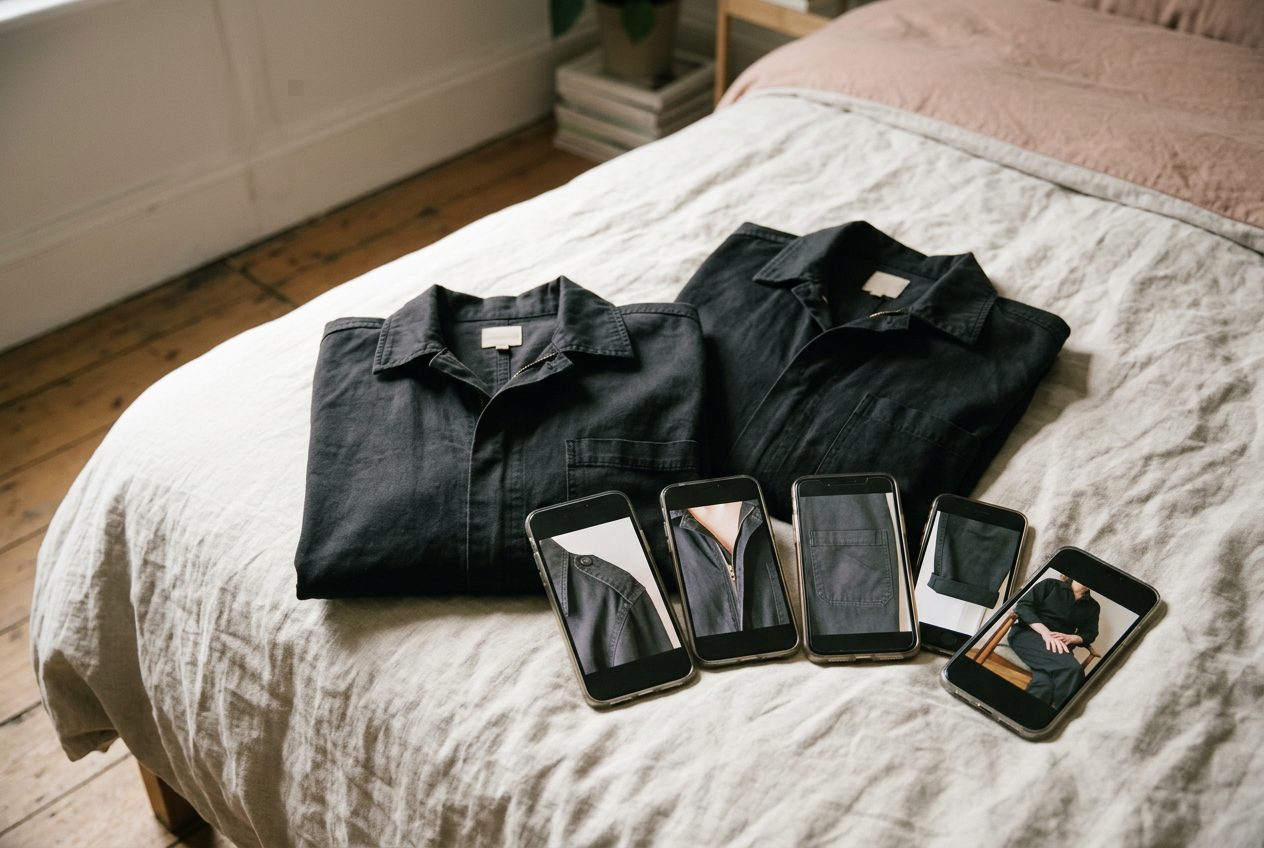
For this walkthrough, the test garment is a black zip-front jumpsuit in medium-weight, nonstretch cotton twill. It has set-in sleeves, meaning each sleeve joins the body at a seam around the top of the arm, along with slanted hip pockets and a straight leg. The smaller size looks cleaner through the waist. The larger one leaves more fabric there.
Both zip, neither falls off the body, and either could pass as “the right size” in a retailer’s mirror.
The useful evidence appears when the jumpsuit moves. This is women’s coverage, and the method accounts for the bra, base layer and hip-to-waist proportions that can change how women’s garments sit, though the five checks can also be adapted to other wardrobes.
Set up one fair comparison
Try both sizes over the same underwear and base layer. If the garment will usually be worn with a bra, use that bra for each round, because a change in strap, cup or band shape can alter the shoulder line and available room through the upper body. Keep the tags attached, stay indoors and follow the retailer’s return conditions.
Place a phone at about waist height rather than pointing it down from shoulder level. Use the same camera position, distance and natural light for both sizes, then turn off portrait effects that blur garment edges. A timer or remote shutter helps because holding the phone lifts one shoulder and twists the torso, creating wrinkles that belong to the pose rather than the clothing.
Do not cinch the waist, roll the sleeves or add a belt yet. Those styling moves may make the larger black jumpsuit look more finished, but they conceal the evidence needed to choose between sizes. Wear each one for roughly ten minutes, walk around the room, sit down, reach forward and repeat the photographs after the fabric has shifted into its natural position.
1. Shoulder drag after reaching forward
Take the first photo from the back or at a rear three-quarter angle. Reach both arms forward as if holding a steering wheel, lower them, relax for a moment and photograph the shoulders without pulling the jumpsuit back into place.
Look for drag lines, the diagonal wrinkles that point toward an area under tension. On a set-in sleeve, lines running from the shoulder blade toward the armhole can mean the upper back is short on room, while a sleeve seam pulled beyond the shoulder point suggests the garment is borrowing width from the sleeve. A single soft fold may disappear when the arm drops. Several sharp lines that remain after movement matter more.
In the smaller black jumpsuit, the waist can look trim while the upper back quietly restricts reach. Sizing up is usually the stronger choice if the larger size clears those lines without dropping the shoulder seam far down the arm. If both sizes show the same pull, the pattern may be too narrow across the back for your proportions; extra fabric at the waist will not correct that shape mismatch.
2. Zipper rippling after sitting and standing
Photograph the closed zipper straight on after you have sat down and stood up once. Zipper rippling means the zipper line forms repeated waves instead of lying close to the body. Check the zipper tape, the fabric strip that holds the teeth, rather than judging only whether the zipper closes.
A zipper can ripple for two different reasons. Body tension may pull horizontally across the garment, making the teeth bow or exposing tight horizontal folds beside them. Construction can also be responsible if the zipper tape was sewn into the fabric with uneven tension. The size comparison separates those possibilities: rippling that eases in the larger jumpsuit points toward fit, while nearly identical waves in both sizes point toward sewing or incompatible materials.
Do not assume the zipper will settle after wear. Cotton twill may relax slightly at pressure points, but a rigid zipper controls the center front, and persistent waves can remain visible even when the surrounding fabric softens. If both jumpsuits ripple badly, return both rather than paying more merely to keep the less distracting version.
3. Pocket opening with hands removed
Put both hands fully into the hip pockets, take them out, let your arms hang and photograph the pocket openings. This small sequence tests whether the garment has enough room across the hips and whether the pocket bags return to the inside after use.
On the smaller black jumpsuit, a slanted pocket may pull open and reveal its lining even though the side seams still look straight. That opening counts as fit strain when it closes in the larger size, particularly if horizontal wrinkles point from the pocket toward the zipper or seat. The garment needs wearing ease, the extra room added beyond body measurements so a person can move, and pockets often show when that allowance has run out.
If both sizes gape by the same amount, inspect the construction. A bulky pocket bag, a weak edge or an opening cut at an unstable angle can stand away from the body regardless of size. Sewing the pocket shut would remove useful storage and may distort the front, so treat that as a design compromise rather than a free fix.
4. Hem lift during a full reach
Stand sideways to the camera, mark where the hem falls and raise both arms overhead. Lower them without tugging the garment down, then take the fourth photo. With a jumpsuit, watch the ankle hem and the position of the waist seam together; on a dress or jacket, compare the front and back hems before and after the reach.
A little movement is normal. The warning is a hem that climbs and stays raised because the whole garment is being pulled upward from the shoulders, or a waist seam that shifts toward the ribs while the crotch becomes tight. Those signs indicate insufficient torso length, which a front-facing mirror can hide.
The larger jumpsuit wins this check if it returns close to its starting point while the smaller one remains caught high. If both sizes ride up, the garment may be proportioned for a shorter torso, and sizing up again could add unwanted width without supplying enough vertical length. A tall-size version, where offered, is the more direct alternative.
5. Seated comfort at the zipper, waist and seat
For the final photograph, sit on a firm chair with both feet on the floor and keep the waistband or waist seam visible. Take a side or three-quarter image, then remain seated long enough to notice pressure that the camera cannot record. Write a short note beside each photo: free, noticeable or restrictive.
The picture should show whether the zipper bows away from the abdomen, the pockets flare, the side seam pulls forward or the back waist drops. Comfort adds the missing evidence. A jumpsuit can look smooth while standing yet press at the crotch, waist or upper back in a chair, and that pressure will matter during a meal or commute even if the garment is intended for occasional wear.
Do not grade the smaller size generously because it photographs well from the front. If you want to unzip it after a few seated minutes, its cleaner waist is costing too much comfort. The larger black jumpsuit can be styled with a belt or adjusted at the waist; extra torso length and seated room are harder to add.
Read the five photos as a sequence
Place the two sets side by side in order: shoulder, zipper, pocket, hem and seated view. Ignore minor differences caused by stance. Look instead for a repeated direction of strain, such as the smaller size pulling upward at the shoulder, bowing at the zipper and lifting at the hem. Several connected signs make a stronger case than one isolated wrinkle.
Construction problems repeat differently. If the zipper waves, one pocket protrudes and the same details fail in both sizes, more room will not repair the garment. Return both. This distinction matters for budget pieces because alteration can approach the effort the garment deserves, and it matters for investment clothing because a higher price does not make a poorly set zipper or unstable pocket acceptable.
Alteration is most sensible when the larger size moves well and the remaining issue is contained, such as excess waist width or a long trouser hem. Shoulder width, torso length and a strained center-front zipper are more involved changes, particularly on a lined garment or one with complex pockets. Before keeping the larger jumpsuit, pinch only the excess you would want removed and confirm that doing so does not pull the pocket opening or zipper off line.
Save the five images until the refund is complete. For a future order from the same label, they are more useful than a note saying “runs small,” because they record where the smaller size failed and whether the larger one solved it.
Questions people ask
Can both sizes technically fit?
Yes. Two sizes can both close and look presentable while offering different amounts of movement room. Treat closure as the first threshold, then compare what happens after reaching, using the pockets and sitting. The better size is the one with fewer persistent stress signs, not automatically the one with the smoothest standing silhouette.
Does zipper rippling always mean I should size up?
No. Size up when horizontal tension around the zipper eases clearly in the larger garment. If both sizes show similar waves in the same places, uneven sewing or a mismatch between rigid zipper tape and softer fabric is more likely. Returning both is reasonable when the ripple remains prominent and the zipper is a central visual feature.
Should
I keep the larger size and have it tailored?
Keep it only when the larger size solves movement problems and the excess is limited to an alterable area, such as waist width or hem length. Major shoulder, zipper and torso changes require more intervention and can disturb pockets or lining. For a lower-priced garment, replacing the cut often makes more sense than rebuilding it.
How long should an at-home size comparison take?
Allow about ten minutes per size plus a few minutes to compare the photographs. That is enough time to walk, reach, sit and let the garment shift without turning the try-on into an afternoon project. Keep the conditions identical, because changing the bra, camera angle or waist styling makes the two photo sets less useful.
One update a day
Today's fashion update, in your inbox
One fashion update each morning — no hype, no filler, just pieces worth wearing.