Pants Can Fit at the Waist and Still Be Too Tight to Walk In
A smooth waistband does not guarantee a mobile fit. A short walking and stair test can expose tight thighs, a mismatched rise, and pockets that flare only once you move.
September 5, 2026 · 7 min read
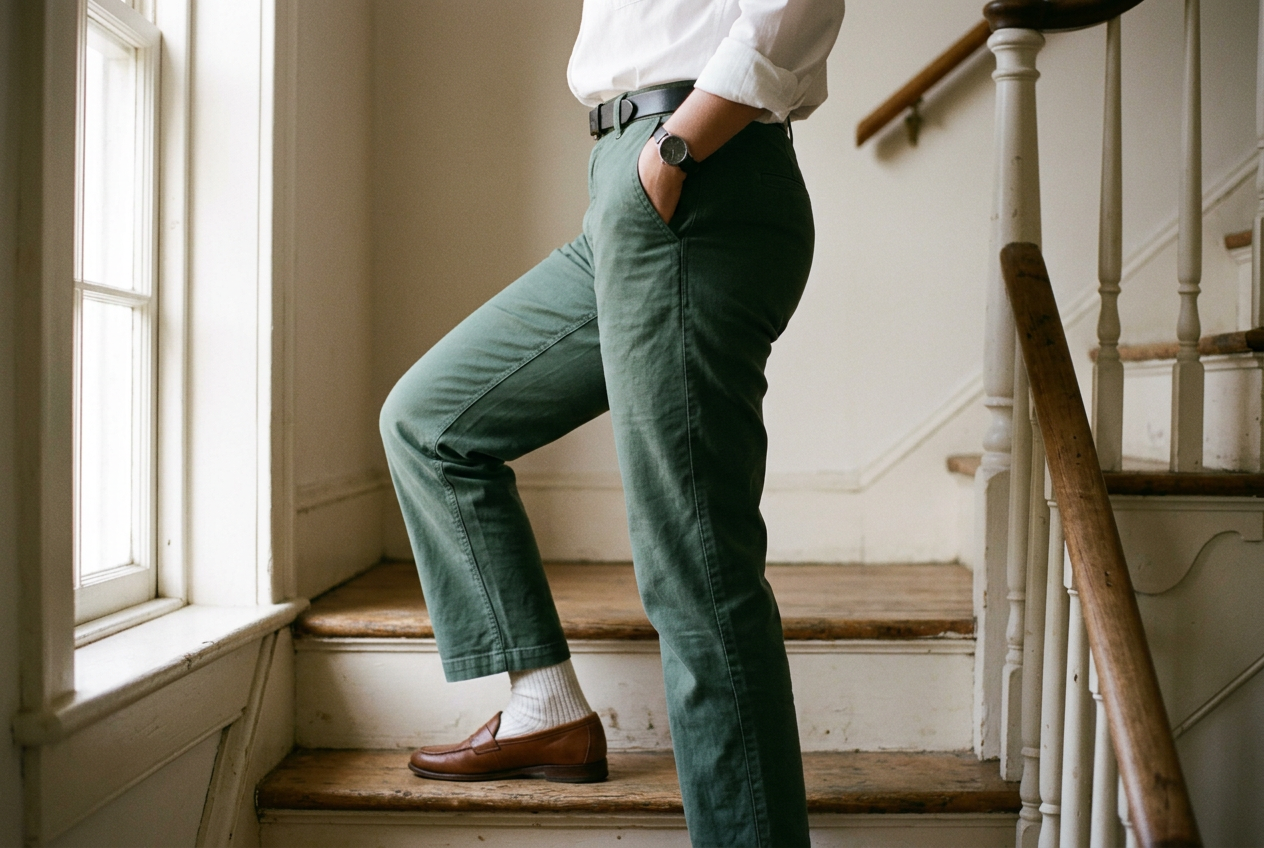
The useful test case is a pair of mid-rise, straight-leg trousers in firm cotton twill, with a fitted waistband, front zip, and angled side pockets. Standing in front of the mirror, the waistband lies flat and the legs appear clean. After several strides, though, horizontal wrinkles form across the upper thighs, the pockets open away from the body, and the crotch seam begins to pull.
That is a mobility problem hiding inside a plausible standing fit. The waistband may be the correct size while the pattern provides too little space lower down, particularly in a woven fabric that cannot stretch around the body as the leg swings forward.
This is unisex fit guidance. Bodies and trouser blocks vary across departments, but the same fabric mechanics apply: the thigh needs room to move, while the rise, meaning the distance and shaping between the crotch seam and waistband, must match where the body bends.
Read the evidence while the pants are moving
Horizontal drag lines are wrinkles that run across the garment because the fabric is being pulled from side to side. On the cotton twill trousers, lines that appear across the upper thigh during a stride point toward insufficient thigh room, especially when the fabric also catches on the front of the leg instead of falling again after each step.
Check whether the lines disappear when you stop. A few folds at the hip crease are normal when a leg lifts, and close-fitting pants will never remain photographically smooth through motion. The warning sign is sustained tension: the cloth grips, the leg opening rises and stays raised, or the trousers need to be tugged back into place after walking.
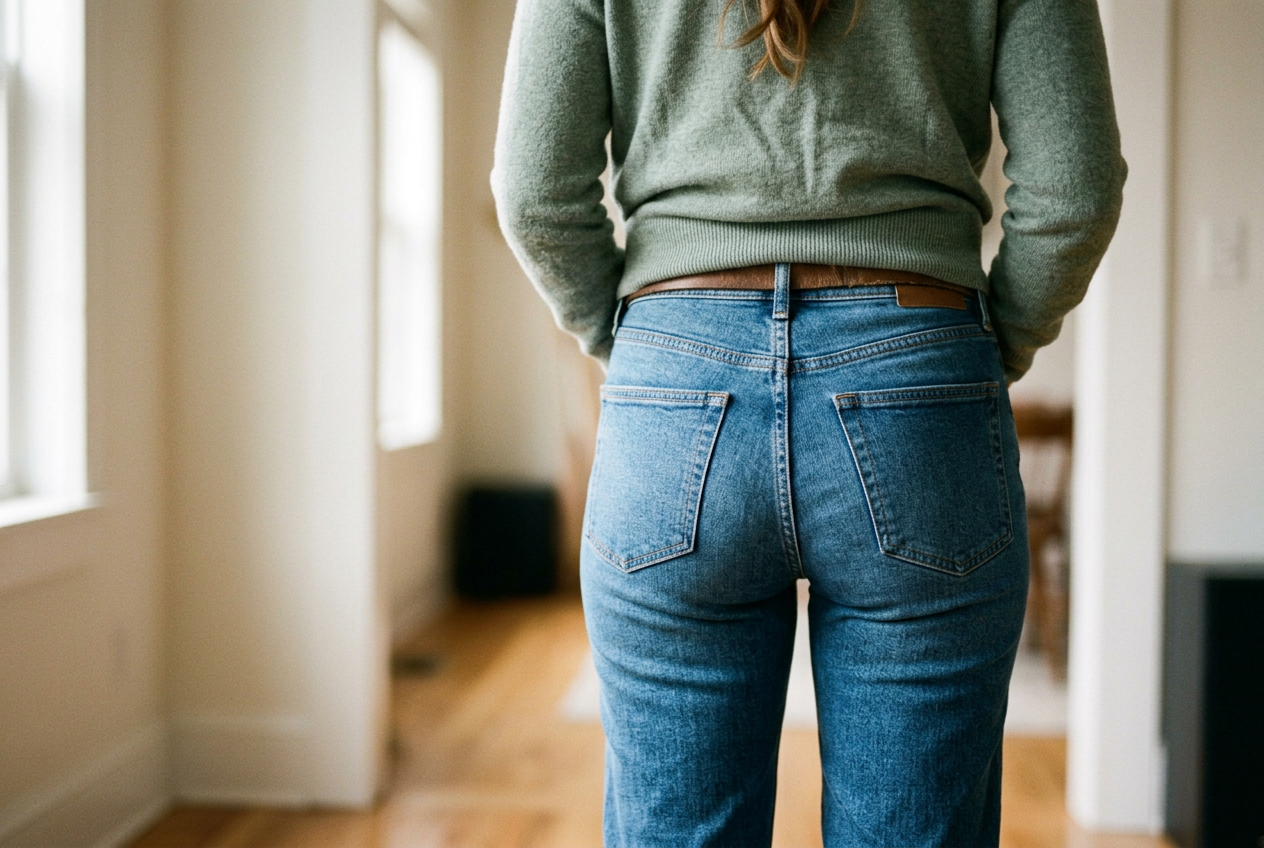
Pocket flare, meaning a pocket opening that lifts or spreads away from the body, adds another clue. Angled pockets sit close only when the front hip and upper thigh have enough room; if that area stretches as the leg moves, the pocket opening becomes one of the easiest places for the tension to escape. A pocket that flares while standing may reflect construction or hip fit, but one that opens in rhythm with each stride deserves a movement check.
The rise can produce similar symptoms from a different starting point. If the crotch seam feels suspended against the body, the waistband shifts downward at the front, or wrinkles pull diagonally from the fly and crotch, the garment may lack the right front or back rise length. A higher waistband does not automatically provide a roomier rise, since two pairs can reach the same point on the torso while distributing their shaping differently through the front, seat, and crotch.
Return to the cotton twill pair. If the pressure stays concentrated around the thighs while the waistband remains stable, thigh room is the stronger suspect. If the tug begins at the crotch and moves the waistband whenever a knee lifts, the rise is probably involved. Both faults can occur together, which is common in a narrow trouser block scaled up or down without enough variation through the upper leg.
Fabric changes how loudly the problem announces itself. Rigid twill, nonstretch denim, and tightly woven suiting reveal restricted movement quickly. A small amount of elastane can soften the first impression, yet stretch does not correct a rise that pulls the waistband out of place, and recovery matters because fabric that repeatedly strains may bag at the knees or pockets after wear.
Use the walking and stair test
Start with the waistband positioned where the pants are designed to sit. Do not pull a mid-rise pair high to clear the crotch or push it low to create more room, since either adjustment can make the mirror view look better while setting up more movement elsewhere. Fasten the trousers normally, empty the pockets, and leave the belt off.
Walk at your usual pace for the length available, turn, and come back. Then take several longer strides. Watch the upper thigh, pocket opening, fly, and waistband rather than focusing only on the hem; if the trousers grip the leading leg, open at the pocket, or pull the waistband forward, they have failed a basic motion that standing still could not show.
Pause without rearranging the garment. The cotton twill trousers should settle on their own. Needing one small adjustment after dressing is ordinary, but repeatedly smoothing the pockets or pulling the legs down predicts the same maintenance during a commute, at work, or through an evening out.
For the stair portion, use actual stairs at home or in a store when they are safely available. Step up at a normal pace and notice whether the front thigh accepts the bend, whether the back waistband stays near the body, and whether the crotch seam presses upward. In a fitting room without steps, hold a stable rail or wall and lift one knee to roughly the height required for a stair; do not climb on a bench or display.
Finish by sitting and standing once. This is not a separate comfort test so much as a check on what the walk revealed: a thigh restriction often becomes a broad band of pressure, while an incompatible rise tends to pull at the crotch or move the waistband. The whole sequence takes only a few minutes and costs less time than building an outfit around pants that cannot handle the walk out the door.
Choose the change that matches the fault
Sizing up is worth trying when the larger pair releases the thigh and keeps the pockets closed in motion. Ignore the number on the label and compare the behavior. If the waist becomes slightly loose, taking in a waistband is often a more realistic alteration than trying to create substantial space through a tight thigh.
The reverse rarely works. A tailor can let out a seam only when the garment contains enough seam allowance, the strip of fabric left inside a sewn seam for construction or alteration. Many ready-to-wear pants leave little usable cloth there, and adding thigh room may disturb the pocket, hip line, or leg shape. Reworking a short or badly shaped rise is more invasive because the needed fabric may never have been cut into the garment.
A different cut is usually the cleaner answer. Look for trousers described as relaxed through the thigh, an athletic cut with more upper-leg room, or a pleated front that supplies wearing ease, the extra garment space needed beyond body measurements. For a rise problem, compare cuts at their intended waistband position rather than assuming that every mid-rise or high-rise label represents the same crotch depth.
Material remains a tradeoff. Stretch trousers can be comfortable for long sitting and frequent stair climbing, but they should still pass the test without the fabric pulling to its limit. A softer wool trouser may drape around the thigh more readily than firm cotton twill, while a full lining can add resistance if the lining itself is cut narrowly.
Do not count on break-in to rewrite the pattern. Cotton twill may soften, denim may ease in high-friction areas, and stretch fibers may relax during wear, but none adds the missing rise length required to keep the waistband stable. If the anchor pair still flares at the pockets after a walk and stair climb, leave it in the fitting room or return it within the retailer’s policy.
Questions people ask
Why do my pants feel tight only when I walk?
Walking sends one thigh forward and changes the distance between the crotch and waistband. Pants with too little thigh room or an incompatible rise cannot redistribute their fabric, so they grip, form drag lines, shift at the waist, or flare at the pockets even though they looked smooth while you stood still.
Does pocket flare always mean the pants are too small?
No. Pocket shape, stiff pocket bags, and construction can make an opening sit away from the body. Flare that increases with each step is more useful evidence because it shows the surrounding fabric is under tension. Compare one size up or a roomier cut and repeat the same walk.
Can a tailor add more room through the thighs?
Sometimes, but only if the side or inseam contains enough seam allowance and the change will not distort the pockets or leg line. A small release may help. A substantial shortage of thigh room usually calls for another size or cut, particularly in unlined cotton twill and denim with narrow internal seams.
Should
I buy stretch pants to solve pulling at the rise?
Stretch may reduce pressure and make bending easier, but it cannot supply missing rise length or correct where the pattern places that length. If the waistband shifts or the crotch seam pulls during the stair test, compare a differently shaped rise before relying on elastane to mask the fit.
One update a day
Today's fashion update, in your inbox
One fashion update each morning — no hype, no filler, just pieces worth wearing.