Gaping Side Pockets Can Mean the Size or the Cut Is Wrong
A larger size fixes some flaring pockets, but not all. Read the tension lines, waistband position, fabric, and pocket shape before exchanging or altering trousers.
Women's · August 22, 2026 · 8 min read
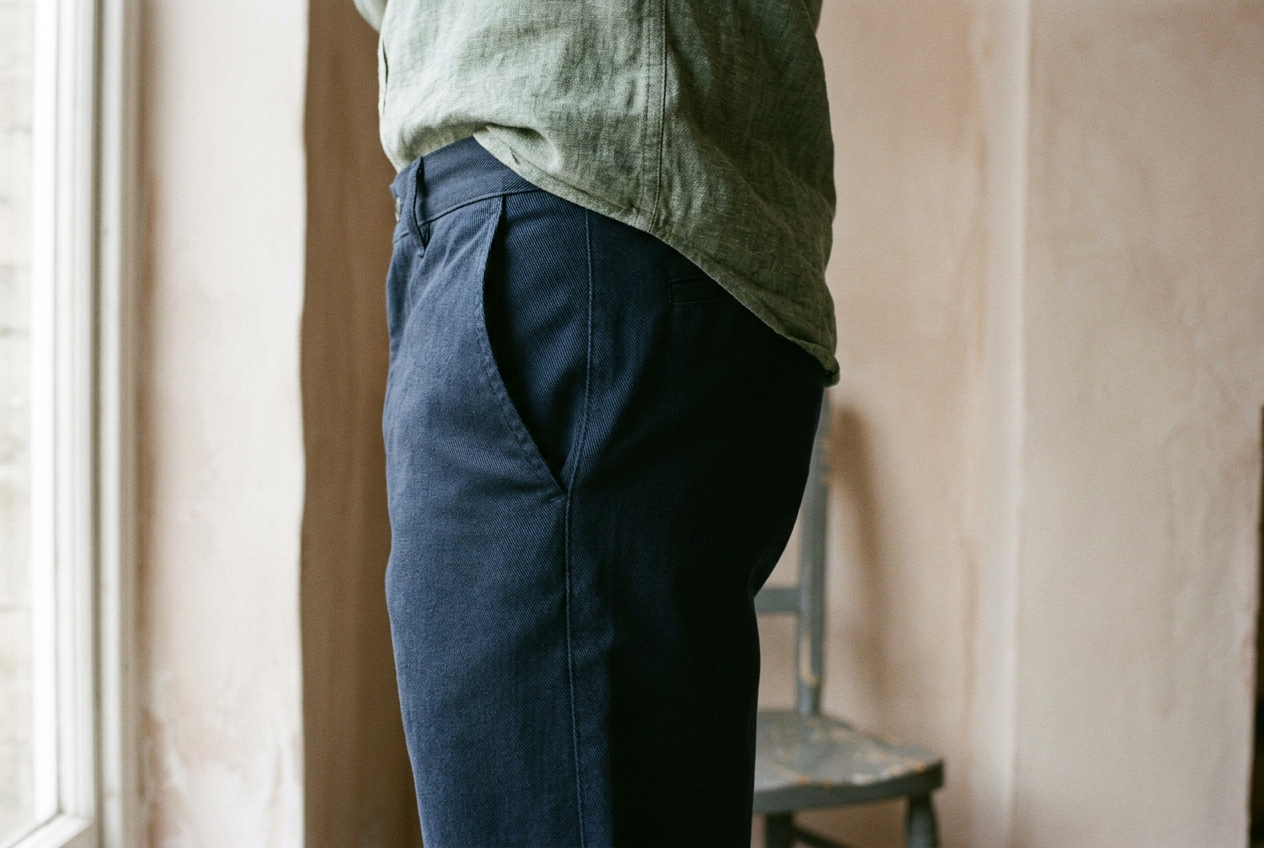
The concrete case here is a pair of women’s mid-rise, straight-leg trousers in firm cotton twill, with diagonal pockets running from near the waistband toward each side seam. They looked smooth on the hanger. Once worn with a tucked-in shirt, both pocket openings lifted away from the hips, and the right pocket stayed slightly open after sitting.
That flare could be read as an automatic instruction to size up. It is not. In this pair, the combination of close high-hip fit, a stiff cloth, and a waistband sitting lower than intended made the pocket problem more visible, while the long diagonal opening gave the tension somewhere to escape.
This is women’s fit coverage, though the same construction principles apply to any trousers with slanted side pockets.
Start with hip ease, not the size label
Hip ease means the difference between the body measurement and the garment measurement at the fullest part of the hips. Trousers need enough of it for standing, sitting, and walking, but the useful amount changes with the cut and fabric: rigid twill needs physical room, while a cloth with stretch can accommodate some movement without looking loose.
On the test trousers, the first clue appeared away from the pockets. Fine diagonal pull lines ran from the lower zipper area toward the hip, and the side seams shifted slightly forward rather than hanging straight. Those signs matter because a pocket opening can be the weakest point in an otherwise continuous front panel; when the fabric is pulled across the hips, the opening spreads instead of carrying tension like an uninterrupted piece of cloth.
Empty the pockets before evaluating them. Stand normally rather than pulling in the stomach, smooth the waistband once, and let the trousers settle. Then sit, walk several steps, and stand again. If both pockets open while the front develops pull lines, the side seams move forward, or the fabric catches beneath the seat, the size or the amount of hip ease is the first suspect.
Try the next size without assuming it is the answer. A useful size-up test should close the pockets and relax the hip area while leaving the rise, the distance from the crotch seam to the top of the waistband, in a workable position. If the larger pair creates a sagging crotch, excess fabric at the back waist, or a waistband that drops during walking, the brand has scaled the garment in a way that does not match your proportions.
That is a cut problem for this body, even if the trousers technically fit someone else.
Pocket angle changes how tension shows
The diagonal opening on the cotton-twill pair was long and fairly shallow, so it crossed a broad part of the high hip rather than dropping almost vertically toward the side seam. This looked clean when flat, but once the waistband moved downward and the hip pushed outward, the upper edge of the pocket acted like a lifted flap.
A more vertical pocket usually exposes less of the pocket bag under sideways tension. The pocket bag is the fabric pouch inside the garment, and its shape and attachment also affect whether the opening lies flat. If that bag is too short, twisted, or pulled tightly into the waist seam, it can tug on the opening even when the trouser body has enough room.
Pattern design matters here. The pattern is the set of shaped templates used to cut the garment, and a pocket can gape across more than one size when its opening is too long for the surrounding structure, its angle cuts across the fullest part of the hip, or its bag has been anchored under tension. Sizing up may make that pocket quieter, but it can also leave the rest of the trousers unnecessarily loose.
Compare the garment on and off the body. If the pocket edge already rolls outward on the hanger or table, press it lightly according to the care label and check again. A persistent curl suggests construction or pressing rather than body tension. If it lies flat off the body, opens only when worn, and closes when you pinch a small amount of extra room at the side seam, fit is contributing.
The test pair passed the flat check. Its pocket edges rested neatly when unworn, which ruled out a permanently distorted opening, but they lifted as soon as the waistband settled onto the fuller high hip.
Firm fabric makes a small mismatch obvious
Cotton twill has diagonal ribs in its weave. In a firm trouser weight, it holds a crease and a tailored outline, but it also resists folding back against the body once a pocket edge has been pushed outward. A softer wool blend or fluid crepe may have the same small fit mismatch and show it as a ripple rather than an open pocket.
Stretch is not a guaranteed cure. A woven fabric with modest stretch may let the front panel move across the hips, yet weak recovery, meaning the fabric does not return closely to its original shape, can leave the pocket mouth relaxed after hours of sitting. The right question is whether the cloth rebounds after movement, not whether the fiber label includes elastane.
With the cotton-twill trousers, sitting made the right opening more stubborn than the left. The fabric did not collapse softly when the wearer stood, so a hand was needed to smooth the edge back into place. That behavior made a minor pocket imbalance look larger, and it also meant pressing alone would not solve the tension that caused it.
Pocket contents add another load. A phone or thick wallet can pull a well-fitted pocket open, especially when the opening is diagonal and the bag hangs from the waistband. Test fit with empty pockets first; after that, load the item you expect to carry. If the pocket works empty but not with a phone, the realistic alternatives are carrying less, choosing a deeper and more vertical pocket, or accepting the flare.
Waistband position can create the problem lower down
Trousers are drafted to sit at a particular level. When a mid-rise waistband slides below that point, it lands on a wider part of the torso, which pulls the upper front panels outward and changes where the pocket opening crosses the hip. A tight belt can produce a related problem by holding the waist in place while the fabric below remains short on room.
The test trousers wanted to sit slightly below their intended position. Pulling the waistband upward closed most of the pocket flare, but it did not stay there during walking. Tightening a belt held the back waist, yet the front pockets opened again because the belt addressed slippage without adding hip ease.
This is a useful distinction. If lifting the waistband closes the pockets and makes the crotch and seat look balanced, a small waist alteration may help the trousers remain at their designed height. If lifting it creates pressure through the rise or causes the waistband to fold, the trousers are not merely slipping; their rise shape or hip distribution is wrong for the wearer.
A contoured waistband, meaning one cut in curved sections to follow the body, often holds a defined waist better than a straight strip. A higher rise can also move pocket openings above the fullest high-hip area, though that changes the silhouette and may not suit the outfit you wanted.
The fitting sequence points to the realistic fix
Choose the larger size when the pockets are part of a broader field of tension and the next size improves the seat, front, and side seams without creating a major waist problem. Taking in a loose waistband is a common alteration, but the value depends on how much reshaping is required and whether the trousers are worth further labor.
Choose a small alteration when the garment fits comfortably through the hips, the seams hang straight, and only the pocket edge lifts. An alterations tailor may secure part of the opening, add stabilization behind it, or adjust how the pocket bag is anchored. Sewing the pocket fully closed is the lowest-complexity option for someone who does not use it, although it removes function and may leave a visible stitch line in cloth that marks easily.
Do not expect a strip of stabilizing tape to create missing hip room. It can stop an opening from stretching further, but forcing a tense pocket flat may redirect the strain into puckering beside the pocket or pulling at the waistband seam.
Choose a different cut when sizing up solves the pockets but spoils the waist, rise, or leg line. Look for a more vertical pocket, a softer fabric, a higher or better-anchored waistband, and enough room at the high hip before the leg narrows. For the firm cotton-twill pair, that was more realistic than rebuilding the existing pockets: the flare improved in a larger size, but the back waist became too loose and the straight leg lost its intended line.
Return or skip the trousers if the pocket bag shows, the opening twists in both sizes, or the waistband must be repeatedly pulled into place. Those are not small styling inconveniences. They are signs that the garment will demand adjustment each time it is worn.
Questions people ask
Do gaping trouser pockets always mean the pants are too small?
No. A small size can pull the openings apart, but a long pocket angle, a tightly anchored pocket bag, stiff fabric, or a waistband sitting below its intended position can produce the same effect. Check for tension lines and displaced side seams before deciding.
Can a tailor fix side pockets that flare open?
A tailor can often secure part of the opening, stabilize its edge, or change the pocket bag’s attachment when the rest of the trousers fits. Recutting the pocket angle or adding substantial hip room is more involved, so a different cut may make better sense.
Will sizing up fix pocket gaping without ruining the fit?
It will if the current pair lacks hip ease and the larger size still fits through the rise and legs. If the bigger pair drops at the waist, sags at the crotch, or changes the intended silhouette, look for another cut rather than planning several compensating alterations.
Why do the pockets gape more after sitting?
Sitting increases the room the hips need and can push a diagonal opening outward. Firm fabrics may not fall back into position when you stand, while a waistband that has slipped lower keeps the pocket stretched across a fuller part of the body.
One update a day
Today's fashion update, in your inbox
One fashion update each morning — no hype, no filler, just pieces worth wearing.