The Sit Test Catches Trouser Fit Failures Before You Buy
A couple of seated minutes can expose the waistband, pocket, thigh, rise, and hem problems that standing in front of a fitting-room mirror misses.
August 10, 2026 · 7 min read
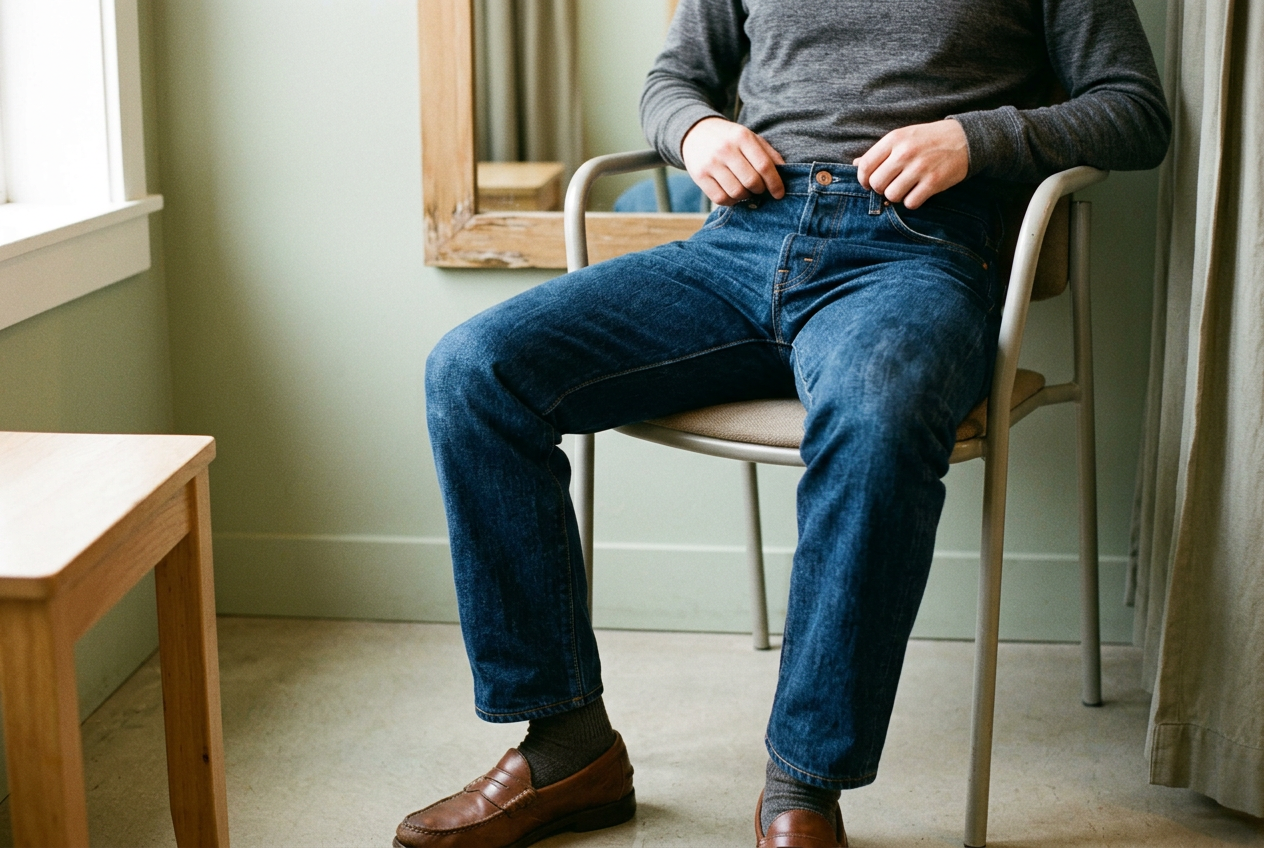
The useful part of a fitting-room sit test is not sitting once and glancing at the mirror. It is repeating the same short routine in every brand, regardless of the size on the tag, then comparing what the garment does under pressure and how well it recovers when you stand.
My reference pair is a mid-rise, straight-leg jean made from non-stretch 100 percent cotton denim, with a zip fly and standard five-pocket construction. Standing, it looked clean through the hip and thigh. Seated, the front waistband pressed inward, the front rise formed a hard horizontal fold, and the pocket openings lifted away from the body. Those failures were related: the denim did not have enough usable room through the seated hip and upper thigh, so it borrowed space from the rise and waistband.
This is unisex fit advice. Body shape, garment cut, and styling preference change what feels acceptable, but jeans, tailored trousers, and skirts all have to accommodate a larger hip angle when the wearer sits. Brand sizing cannot tell you whether they do.
Establish the standing fit first
Start with the shoes and base layers you expect to wear. A tucked sweater adds more bulk than a thin T-shirt, while a belt can disguise a loose waist without fixing tightness through the seat. Shoes matter because a trouser hem that looks deliberate with a loafer may bunch heavily over a sneaker or lift clear of a boot when seated.
Stand naturally rather than pulling the waistband into an ideal position. Check where the garment chooses to settle, then note the rise, meaning the distance from the crotch seam to the top of the waistband. The crotch seam should sit close enough to the body that movement does not drag the garment upward, but it should not press or create a deep V-shaped strain line.
Use this standing view as a baseline, not as the verdict. The reference jeans passed it. Their waistband appeared level, the fly lay flat, and the straight legs fell without obvious twisting, yet none of that predicted the rigid fold that appeared after sitting.
Use an ordinary chair and stop adjusting
Choose a firm chair or bench if the fitting room has one. A deep upholstered seat can conceal trouble by changing your posture, while a very low stool exaggerates knee and hip flexion beyond what many people encounter during a normal day. Sit as you would at a desk or restaurant, with both feet on the floor and your back supported or upright rather than perched at the edge.
Leave the garment alone for 30 seconds. Do not pull down the legs, smooth the pockets, loosen the waistband, or sit with your abdomen held in. Clothes often feel acceptable for the first moment because the fabric has not settled into its tension points; after half a minute, a tight waistband becomes harder to ignore and pocket bags start moving toward any available space.
Then lean forward slightly, cross one leg if that is part of your normal posture, and reach toward a shoe. These are small movements, but they expose whether the cut has enough room for daily use rather than mirror use.
Read the waistband and rise together
A waistband can feel close without being wrong. The failure is sustained pressure, pinching at the side seams, or a top edge that rolls and digs when you breathe normally. On the reference jeans, the button remained easy to fasten while standing, which made the seated pressure look like a minor issue at first. After 30 seconds, the waistband had become the main thing I could feel.
Watch the rise at the same time. Some soft horizontal creasing is expected because fabric has to fold when the torso meets the thighs, particularly in rigid cotton denim and crisp wool trousers. A hard ridge that presses into the lower abdomen, a fly that bows outward, or a crotch seam that pulls sharply upward suggests that the seated body needs more length, width, or both.
Sizing up may help, but it is not an automatic fix. If the larger size creates a loose standing waist while the rise still collapses, the cut is wrong for your proportions. Look instead for a longer front rise, more room through the hip, a contoured waistband that is shaped rather than cut as a straight strip, or a fabric with a small amount of stretch if flexibility matters more than a rigid-denim feel.
Watch what the pockets reveal
Pockets are useful tension gauges. On jeans, a curved front pocket that lifts away from the hip can show that the upper thigh is pushing against the front panel. On side-pocket trousers, a pocket opening that flares outward may mean the garment is too narrow through the hip, although pocket angle and construction can also make a roomy trouser gape.
Put a hand inside each pocket while seated. The pocket bag, meaning the fabric pouch hidden inside the garment, should lie reasonably flat and leave enough room for your hand or the small items you plan to carry. If it twists, pulls toward the fly, or becomes difficult to use, the garment is spending its available ease on your seated shape rather than on the pocket.
The reference jeans showed a finger-width opening at each pocket when seated, then settled almost flat after standing. That recovery made the pocket gape less serious than the waistband pressure, but it still confirmed where the rigid denim was short on room. A pair that keeps its pockets permanently flared after one fitting-room sit is unlikely to look calmer after adding a phone.
Separate thigh pull from normal creasing
Look across the lap and down the outer thighs. Drag lines, which are tension wrinkles pointing toward a tight area, usually tell you more than the number on the label. Strong diagonal lines running from the crotch or pocket toward the outer thigh indicate that the fabric is being pulled sideways; a horizontal band above the knee suggests that the leg is too narrow or that the trouser has caught on the calf.
Try lifting one knee a little higher. In non-stretch denim, the fabric should resist more than a knit or stretch twill, but it should not force the waistband downward or pull the back rise away from your body. If a straight-leg jean behaves like a slim cut only when seated, compare a roomier thigh rather than assuming the denim will stretch everywhere you need it. Cotton denim may relax with wear, yet a waistband seam, pocket edge, or tightly stitched fly will not loosen in the same way as a broad fabric panel.
Check where the hem travels
Trouser hems always rise when the knee bends. The practical question is whether the shift works with your shoes and socks, then reverses without help. If the hem climbs far up the calf, catches there, and stays bunched after standing, the lower leg may be too narrow for the fabric to drop freely.
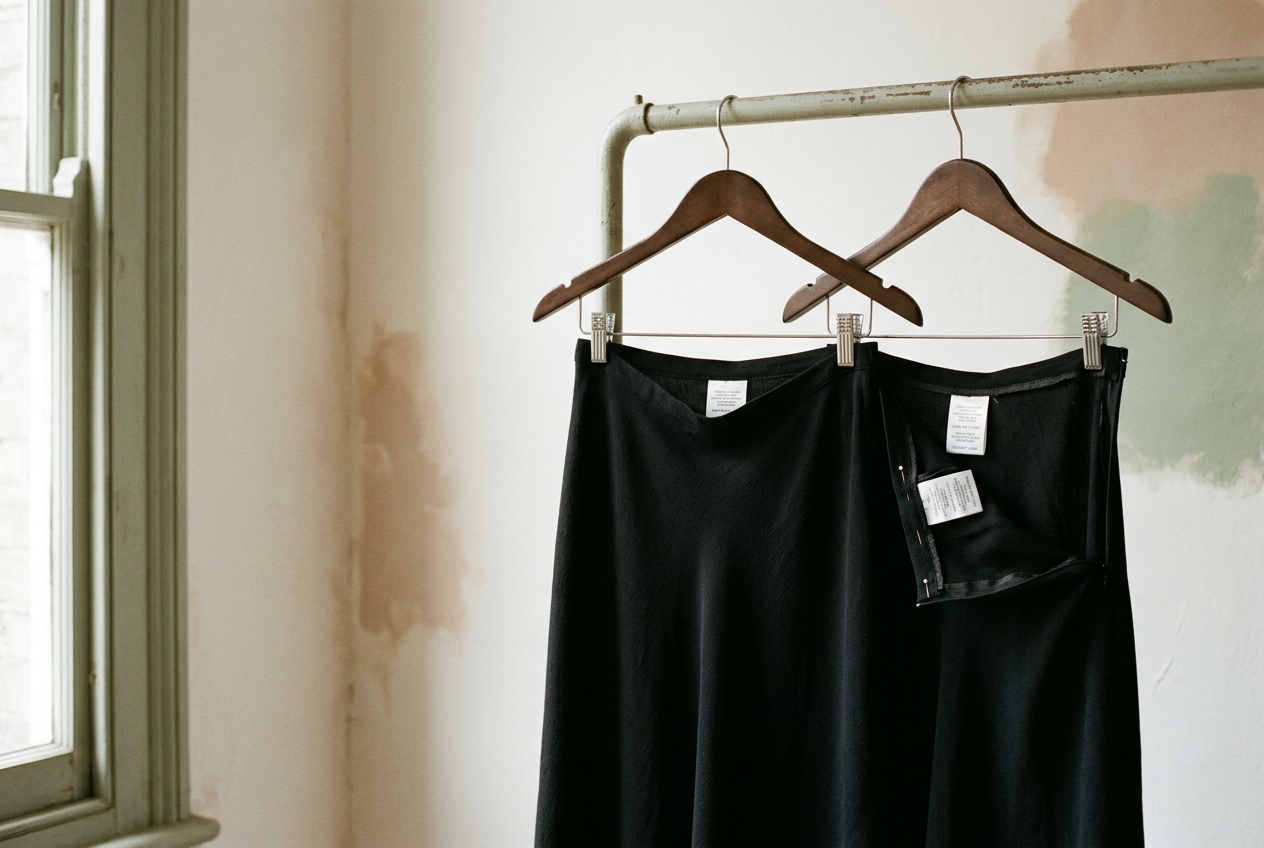
Skirts need a slightly different reading. Sit without holding the hem in place, note how far the front edge travels, and check whether a back vent strains or falls open. A lined skirt can also fail when the outer fabric has enough room but the lining does not; the result is a skirt that creeps upward, twists toward one side, or needs to be pulled down each time you stand.
There is no universal acceptable hem position. A cropped trouser is meant to expose more ankle, and a short skirt will shorten further on a chair. The failure is a dramatic shift you would spend the day correcting, especially when the garment looked modest or full-length only while standing still.
Stand up and test recovery
Rise without smoothing anything. Face the mirror from the front and side, then walk several steps if space allows. A successful garment should return close to its original position on its own. Minor creases are normal; a waistband that stays folded, pockets that remain open, a skirt lining that bunches, or trouser legs that cling above the calves show that the garment does not recover cleanly.
The reference jeans released at the pockets and legs, but the waistband stayed slightly rolled at the front. That was the deciding failure. A garment can be technically wearable and still demand too much attention, and repeated waistband adjustment carries a comfort cost that a clean standing fit does not reveal.
Run the same routine in the next size and, if possible, in a neighboring cut. Change one variable at a time. Comparing a larger size in the same jean tells you whether added circumference helps; comparing the same nominal size in a higher rise or fuller thigh tells you whether the pattern is the issue. Because brands grade and label sizes differently, the tag is only a way to find the next garment to test.
The whole check takes a couple of minutes. Keep the piece that lets you sit, move, stand, and recover without pinching or manual correction, even if its label differs from the size you expected.
Questions people ask
Should jeans feel tight when I sit down?
Rigid jeans can feel firmer when seated because the hip angle asks more of the fabric, but they should not restrict normal breathing, press a hard fold into the abdomen, or pull sharply at the crotch. If the pressure stays noticeable after 30 seconds, compare a roomier cut rather than relying on wear to fix every tension point.
Will a digging waistband stretch out with wear?
A broad cotton-denim panel may relax, especially at the hip and knee, but the waistband contains seams, interfacing, stitching, and closures that limit how much it can change. Do not buy a painful waistband on the promise of stretch. Try the next size, a contoured waistband, or a cut with more rise and hip room.
Does pocket gape always mean trousers are too small?
No. Pocket angle, stiff fabric, and the way the opening is stabilized can cause gape even in roomy trousers. Treat it as a fit clue: if the opening worsens when seated and appears with diagonal thigh lines or a bowing fly, the garment likely needs more space through the hip or upper thigh.
How should
I sit-test a skirt without a fitting-room chair?
Use a firm bench outside the fitting room if store policy and your comfort allow, or mimic the movement with a controlled squat and raised knee inside. A chair gives better information because it holds the hip in a normal seated position, so keep the tags on and repeat the test at home before the return window closes.
One update a day
Today's fashion update, in your inbox
One fashion update each morning — no hype, no filler, just pieces worth wearing.