Pants Fit Standing Up. The Real Test Is Sitting Down.
Lap strain can come from the rise, thigh, or pockets, and each calls for a different fix. A quick seated test can tell you whether to change size, change cut, or consider alterations.
September 1, 2026 · 7 min read
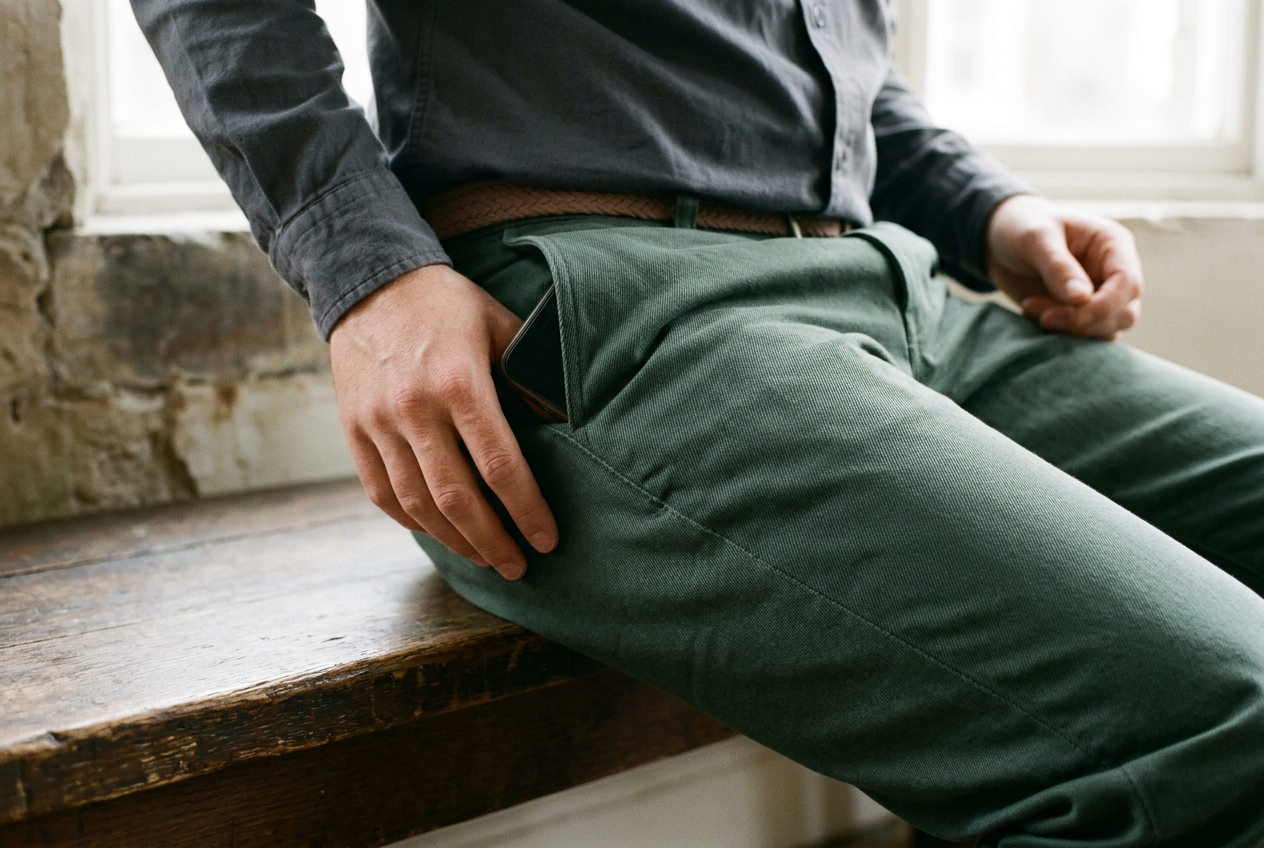
The test pair was a mid-rise, straight-leg trouser in heavyweight 100% cotton twill, with slanted front pockets and no stretch. In the usual tagged size, the waistband sat level and the front looked clean while standing. In a desk chair, diagonal lines appeared from the crotch toward the hips, the pocket mouths opened, and the waistband pressed into the lower stomach. A larger size reduced the strain but left excess room at the waist and made the seat look loose.
That sequence matters. “Too small” describes the feeling, but it does not identify the pattern problem, and choosing a larger size can move the discomfort elsewhere without fixing the proportions that caused it.
This is unisex fit advice. Trouser blocks vary across men’s, women’s, and gender-neutral departments, but seated strain comes from the relationship between the garment pattern, the fabric, and the wearer’s shape rather than the label over the rack.
Start with the seated evidence
Sit in a firm chair with both feet on the floor, wearing the pants as you would normally style them. Do not pull the waistband higher or push it down to make the test work. Check whether the waistband stays in place, whether the pockets lift, and where the strongest line begins.
Next, lean forward as if reaching for a keyboard. A well-matched pair need not remain perfectly smooth, since woven fabric has to fold somewhere, but it should let the hips flex without a hard band across the lap or a crotch seam that feels as though it is being pulled forward. The cotton-twill test trousers failed here even though two fingers still fit inside the waistband while standing.
Fabric changes the severity, not the underlying diagnosis. Rigid denim and dense cotton twill reveal a pattern mismatch quickly because they have little give. Pants with elastane may hide the same issue while standing, then feel warm, compressed, or prone to pocket flare after hours of sitting. Stretch can buy movement.
It cannot add missing pattern length.
Front rise controls room over the lap
The front rise is the pattern distance from the crotch seam to the front waistband. If it is too short for the wearer, sitting asks that limited length to travel farther over the lower abdomen and toward the waist.
Typical signs include a waistband that digs in only when seated, horizontal tension below the fly, or a fly area that pulls downward. The crotch may also feel close while the waist itself seems correctly sized. On the test trousers, gently lifting the front waistband made the pressure worse, while letting it settle slightly lower reduced it. That pointed to a front-rise shape that did not suit where the body wanted the waistband to sit.
Sizing up may add some rise because brands enlarge pattern pieces between sizes, a change called grading. The increase is often modest, however, and it arrives with extra width at the waist, hip, and leg. If the next size stops the lap pressure but creates a waistband gap, compare a higher-rise version or a curvier cut before planning alterations. Those alternatives may place the needed length in front without making the whole trouser wider.
A waistband alteration cannot create much missing front rise. Major crotch and rise changes require enough seam allowance and can disturb the fly, pockets, and balance of the leg, so they are rarely the first sensible expense on new ready-to-wear pants.
Back rise can pull the whole trouser forward
The back rise is the pattern distance from the crotch seam to the rear waistband. When it is too short, the back waistband often drops while sitting, and that movement borrows fabric from the front of the trouser. The result can look like a front-lap problem even though the shortage begins behind the body.
Watch the waistband rather than relying only on the mirror. If it slides down at the back, pulls away from a tucked shirt, or feels as though the trouser is cutting upward through the seat, more back-rise length may be needed. A fuller seat can need both additional length and a different curve through the rear seam; added waist width alone does not supply either.
The useful comparison is another cut in the same general size. Curvy fits often allow a larger difference between waist and hip measurements, while athletic fits may add room through the seat and thigh. Department names are inconsistent, so check the actual result seated. A cut that keeps the rear waistband level while the front remains calm is doing more useful work than a larger straight-cut pair with a loose waist.
Thigh ease determines whether the pants can hinge
Thigh ease means the extra room in the garment beyond the body’s thigh measurement. Sitting changes the shape of the upper leg and rotates fabric around the hip joint, which is why pants can skim the thigh when standing yet grip it against a chair.
Tension from limited thigh ease usually begins lower than a front-rise problem. Look for diagonal lines running upward from the inner thigh, fabric catching above the knee, or front pockets being pulled sideways as the legs bend. Pinch the cloth at the upper thigh while seated. If there is almost nothing to lift away from the body, the trouser needs more width there, even if the waist feels generous.
This was part of the cotton-twill pair’s failure. The next size provided enough thigh room, but the waistband became too large and the seat lost definition. A relaxed straight or pleated cut would be the better fitting-room move because it places volume near the hip and upper leg rather than distributing it around the entire garment.
Pleats are not an automatic cure. A pleat needs enough underlying width to open during movement and close again while standing; on a narrow pattern, it can remain spread and emphasize the same tension it was meant to manage.
Pockets can create or exaggerate the strain
Slanted pockets cross an active part of the front hip. When the trouser pulls across the lap, their openings can act like visible gauges, lifting away from the body even before the wearer feels serious discomfort.
Construction matters too. A pocket bag made from firm woven cotton may resist movement, while a shallow bag can tug at its anchoring points. Some trousers use a pocket stay, a fabric panel that connects the pocket area toward the fly or waistband to keep the front smooth. That support can improve the standing line, but if the underlying trouser is tight, it may make seated pressure feel broader and firmer.
Test the pockets empty. A phone or wallet changes the way the bag hangs and can make a workable fit look strained. If empty pockets gape while the waistband and thigh otherwise feel comfortable, a tailor may be able to secure the opening or close the pocket. If the entire lap is taut, closing the pocket only hides one symptom.
The test trousers had both problems: limited thigh ease pulled the slanted openings outward, while the rigid pocket bags made the flare sharper. A trouser with on-seam pockets, meaning openings hidden within the side seams, would remove that diagonal construction from the lap, though the side seam may still pull if the hip is too tight.
Choose size, cut, or alteration in that order
Try another size when the strain is mild and the larger pair remains controlled at the waist, seat, and upper leg. Keep it if sitting becomes comfortable without needing a belt to hold the trousers in position. A small waist adjustment is a common alteration, but it should not be used to rescue a pair that has become loose through the whole seat.
Change the cut when one area needs room and another does not. More front rise, more back-rise length, or a fuller thigh are pattern differences, and finding them in the original garment is usually cleaner than asking a tailor to reconstruct the crotch and pockets. Compare size charts where available, but remember that a listed rise measurement does not explain the shape of the curve or where the waistband sits on your body.
Consider alterations after the seated test succeeds in the rise and thigh. Hemming, modest waist suppression, and small pocket adjustments refine a basically compatible trouser. Deep changes at the crotch are more invasive, may leave stitch marks in cotton twill or denim, and can cost enough that trying another cut first is worth the extra fitting-room time.
For the original straight-leg pair, the answer was not the larger size. The useful alternative was the same general silhouette with a fuller upper thigh and a rise that stayed level in the chair, even though that meant accepting a little more fabric through the leg while standing.
A fitting-room check that takes one chair
Wear the shoes and base layer you expect to use with the pants, especially if you tuck in shirts. Stand naturally before sitting; posing with the stomach held in or the pelvis tilted changes where the waistband settles.
Once seated, wait long enough for the fabric to find its position. Check the rear waistband with a hand, then lift one knee slightly as you would when entering a car. If the trousers remain comfortable and return to place after standing, the movement wrinkles are ordinary. If the waistband migrates, the crotch pulls, or the pockets stay flared, photograph the tension lines for comparison and try a different cut before defaulting to a larger number.
Questions people ask
Should pants feel tighter when sitting?
A small increase in contact is normal because the hips and thighs change shape when the body bends. The pants should not create a hard band across the lap, force the waistband to roll, or pull the crotch seam sharply. Those signs point to insufficient rise length, thigh room, or both.
Will stretch fabric fix pants that pull across the lap?
Stretch can make a marginal fit more comfortable, especially for long periods at a desk, but it does not correct a rise that is too short or a thigh pattern that is too narrow. It may also let pockets flare while the fabric around them remains compressed. Judge the fit after sitting, not by the fiber label alone.
Is pocket gaping always a sign that pants are too small?
No. Slanted pockets can gape because the thigh or hip is tight, but a stiff pocket bag or poorly supported opening can also be responsible. Empty the pockets and check whether tension continues across the whole lap. Localized gaping may be alterable; broad strain calls for another size or cut.
Can a tailor add more rise to pants?
Only in limited cases. A tailor needs usable seam allowance, and changing the rise can affect the fly, pockets, crotch curve, and leg balance. Minor reshaping may help a nearly successful fit, but a clearly short rise is usually better solved by choosing a different pattern before paying for reconstruction.
One update a day
Today's fashion update, in your inbox
One fashion update each morning — no hype, no filler, just pieces worth wearing.