Stretch Pants Need More Than the Two-Finger Waist Test
Elastane can make a waistband feel forgiving while the pockets flare and the fabric bags after sitting. Four dressing-room movements give a more useful fit verdict.
Women's · August 29, 2026 · 7 min read
Why two fingers tell you so little
The familiar test says a waistband fits if two fingers slide comfortably between your body and the garment. That can be a useful warning on rigid trousers, but it becomes unreliable as soon as the fabric contains elastane, the stretchy fiber often labeled spandex in US clothing.
A stretch waistband yields to your hand. It may accept two fingers even when the trousers are pulling across the hips, and a larger size may pass the same test while being loose enough to creep downward during a walk. Finger width varies, too. The test measures one small section of the waistband while you are standing still, which is not how trousers spend the day.
This guide is for women's trousers, where differences between waist and hip measurements, short pocket bags and shaped waistbands can make a static fit look better than it performs. The checks also work for jeans and tailored pants, provided the fabric contains some stretch.
My reference pair was a black, mid-rise, straight-leg trouser in cotton twill blended with elastane. It had front slant pockets, a hook-and-bar closure and a faced waistband, meaning the inside was finished with a separate layer of fabric rather than a visible belt band. Two fingers fitted neatly at the waist. That apparent success did not survive a chair.
After several minutes of sitting, the top edge folded near the side seam, the pockets stood away from the body and the front developed shallow horizontal lines below the zipper. Once I stood, the fabric smoothed somewhat but did not return to its starting shape before I walked away. Those are distinct fit clues, and the two-finger test caught none of them.
Set the trousers before judging them
Pull the trousers into the position where you would wear them, fasten them fully and leave the waistband alone for a minute. Do not tug the legs downward or keep smoothing the pockets. Stretch cloth can be arranged into a flattering still pose, but that pose says little about whether the cut will hold itself there.
Check the rise first. The rise is the distance from the crotch seam to the top of the waistband, and it determines where the trousers sit on the torso. If the crotch feels suspended below the body, the rise may be too long or the waistband may be sliding down. If the center seam presses upward before you move, a larger size might add room, but a longer or differently shaped rise is often the better answer.
Look at the side seams. They should hang without being pulled sharply toward the front or back. A slight curve is normal on a shaped body; a seam that swings forward below the pocket suggests the back hip needs more room than the cut provides. Sizing up may help, although it can also leave the waist unstable.
On the black straight-leg pair, the standing fit looked clean because the elastane let the hip area stretch just enough. The displaced side seam was the earlier warning. It became more pronounced after sitting.
Use a chair to test recovery
Sit in a firm chair for two full minutes with both feet on the floor. A hard dressing-room bench works if there is no chair, though it compresses the back of the trousers less evenly. Keep your phone in your hand rather than a pocket, since a bulky object can create pocket flare that belongs to the object rather than the fit.
Notice where the waistband goes. It may stay flat, fold outward or roll inward under the abdomen. Waistband roll means the top edge turns over instead of remaining upright. A soft waistband can roll even in the correct size, but strong pressure, a sharp crease and immediate folding usually point to a mismatch between the waistband shape and your torso.
Now stand without pulling the fabric into place. Recovery is the cloth's ability to return toward its original shape after stretching. Wait about 30 seconds, then inspect the seat, upper thighs and knees. Some wrinkling is expected in cotton-rich twill.
A seat that remains visibly dropped, knees that keep rounded bulges or a waistband that stays enlarged is showing weak recovery.
The reference trousers released their knee creases after standing, but the front hip area stayed slightly rippled and the waistband retained its fold. Over a week of ordinary wear with rest between outings, the knee shape relaxed between wears while the waistband crease returned in the same place. That made the failure structural rather than a one-off result of sitting badly.
A size change cannot fix every recovery problem. If the larger size bags at the seat before the sitting test begins, the fabric or cut is the issue. I passed on the reference pair and found a similar straight leg with a contoured waistband, which is cut in a curve to follow the body, plus a little more room through the front hip. It stayed flatter without requiring a loose waist.
Read the pockets while moving
Pocket flare is the opening of a pocket lifting or gaping away from the garment. On slant pockets, it can come from tightness across the front hip, a pocket opening cut at an unstable angle or a pocket bag that is too short to lie flat. Elastane disguises the tension while you stand because the surrounding cloth stretches around it.
Face the mirror and take a normal stride forward, then return your feet together. If one pocket opens only while that leg is forward, compare both sides and check whether the waistband has twisted. If both pockets remain open when your feet come back together, the trousers are under sustained tension or the pocket construction is not settling against the body.
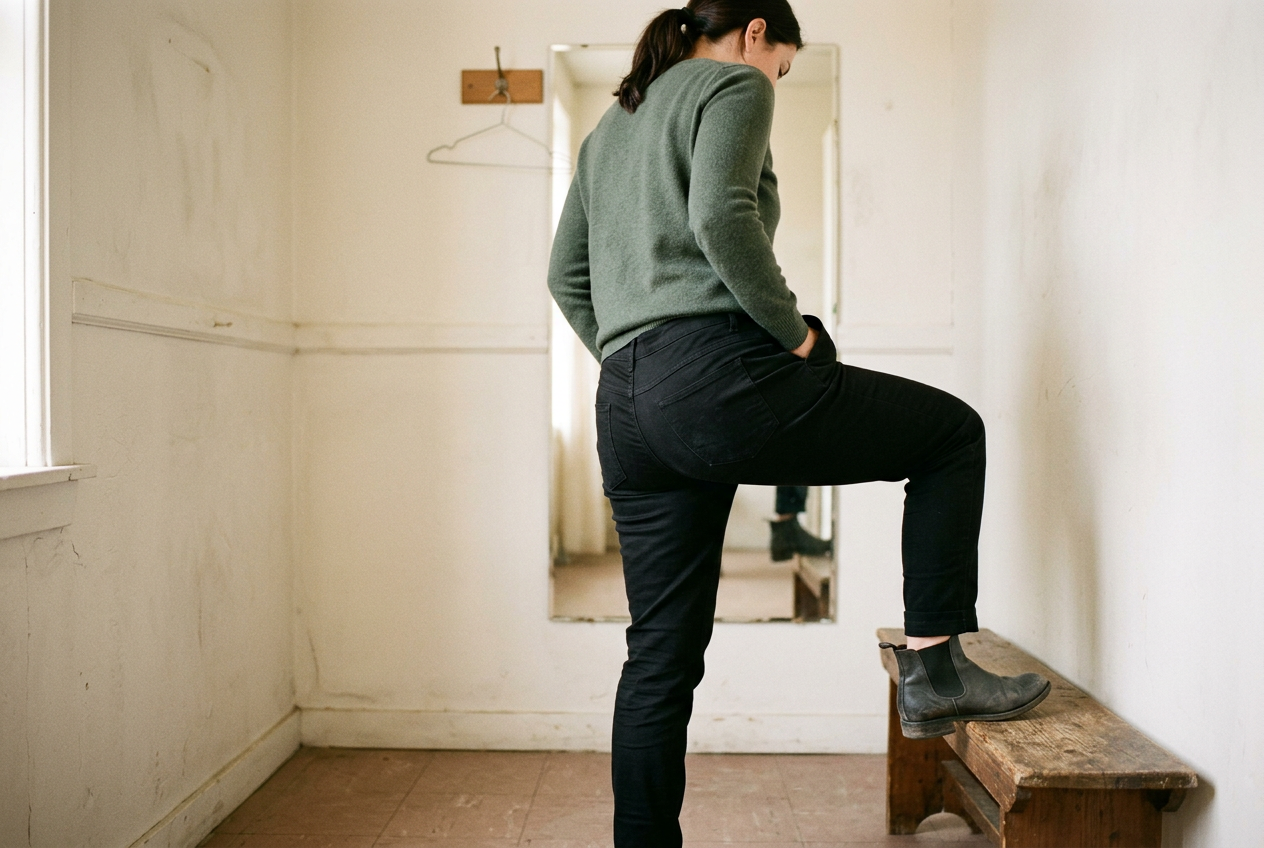
Next, raise one foot onto a low fitting-room bench and lean forward enough to mimic a stair. The waistband should stay near its original position, while the pocket edge should return when the foot comes down. A pocket that snaps open and remains there is giving more useful information than whether your fingers fit at center back.
Do not assume that sewing the pockets closed will solve it. That can clean up the line on trousers you already own, but the strain may move to the zipper area or create diagonal wrinkles from the pocket corner. On the black pair, pressing the pockets flat made the front look smoother only until the next step.
Add one bend and a short walk
Make one controlled squat or bend far enough to pick up a dropped bag. You are not testing athletic range. You are checking whether the waistband cuts in, slides down or folds, and whether the thighs have enough room to let the knees bend without dragging the entire trouser downward.
Walk at least ten normal paces if the fitting area allows it. A waistband that felt comfortably snug may begin to descend because stretch has reduced its grip, while a tight hip can pull the back waist downward with every step. Watch the hems as well. If one leg rotates, the inseam or side seam may be responding to uneven tension higher up.
Return to the mirror and wait again. Good recovery does not mean every crease disappears. It means the trousers return close enough to their starting position that you would not need to hitch up the waist, flatten the pockets or smooth the thighs each time you stand.
Comfort has a tradeoff here. More give can make sitting pleasant and accommodate measurement changes through the day, but very soft stretch cloth may lose the crisp line that made the trousers appealing on the hanger. A firm cotton twill with modest stretch often keeps its shape better than a thin, highly elastic fabric, though the fiber-content label alone cannot predict that result. The weave, waistband reinforcement and cut carry as much weight as the elastane percentage.
Choose the size only after identifying the failure
Size up when the waistband presses throughout the movement test, the pockets pull open and the seams return to a straighter position in the larger pair. Keep the smaller size only if it recovers well, the waistband remains flat and the fabric does not draw into horizontal lines across the front.
Change cuts when sizing up fixes the hips but leaves a large gap at the back waist, or when both sizes roll at the same point. A curvier cut, a longer rise or a contoured waistband can address the shape mismatch without asking stretch fibers to hold the trousers in place all day.
Skip the style when the fabric stays bagged after the short sitting test in more than one size. Paying more does not guarantee better recovery, and tailoring cannot easily change a weak stretch fabric across the seat and knees. Altering the waist may be worthwhile on a well-made trouser that fits through the hips, but it will not correct pocket openings distorted by the whole front pattern.
Allow five minutes for these checks. That is longer than slipping two fingers into a waistband, but shorter than spending a workday adjusting trousers that looked right only while motionless.
Questions people ask
Should stretch pants feel tight when I first try them on?
They can feel close, but they should not require the elastane to remain under obvious strain while you stand. Strong horizontal lines, open pockets or a waistband that presses before you sit suggest the cut is too small or too straight for your shape. Do not buy painful trousers on the assumption that they will relax perfectly.
How long should I sit when testing trousers?
Two minutes in a firm chair is enough to reveal many early problems with waistband roll, pocket flare and recovery. Stand without smoothing the garment, wait about 30 seconds and compare it with the original fit. A longer wear may expose more bagging, but the dressing-room test gives a repeatable basis for comparing sizes.
Does more elastane mean better recovery?
No. Elastane adds stretch, but recovery also depends on fabric weight, weave, fiber blend and how the cloth was made. A thin trouser with more elastane may bag sooner than a firmer cotton twill with less. Judge the garment after movement rather than treating the care-label percentage as a quality score.
Can a tailor fix pocket flare or waistband roll?
A tailor may reduce a loose waist or close unused pockets, but persistent flare caused by tight hips or an unstable front pattern is harder to correct. Waistband roll can also reflect the wrong rise or waistband shape. Compare another cut before paying for alterations, especially when the fabric itself does not recover after sitting.
One update a day
Today's fashion update, in your inbox
One fashion update each morning — no hype, no filler, just pieces worth wearing.