Your Shirt Fits the Chest. Here’s Why the Placket Still Gapes
A chest measurement cannot show where a shirt needs room or how its fabric handles tension. The location and timing of the gap reveal whether to add a snap, alter the shirt, or change cuts.
Women's · September 13, 2026 · 8 min read
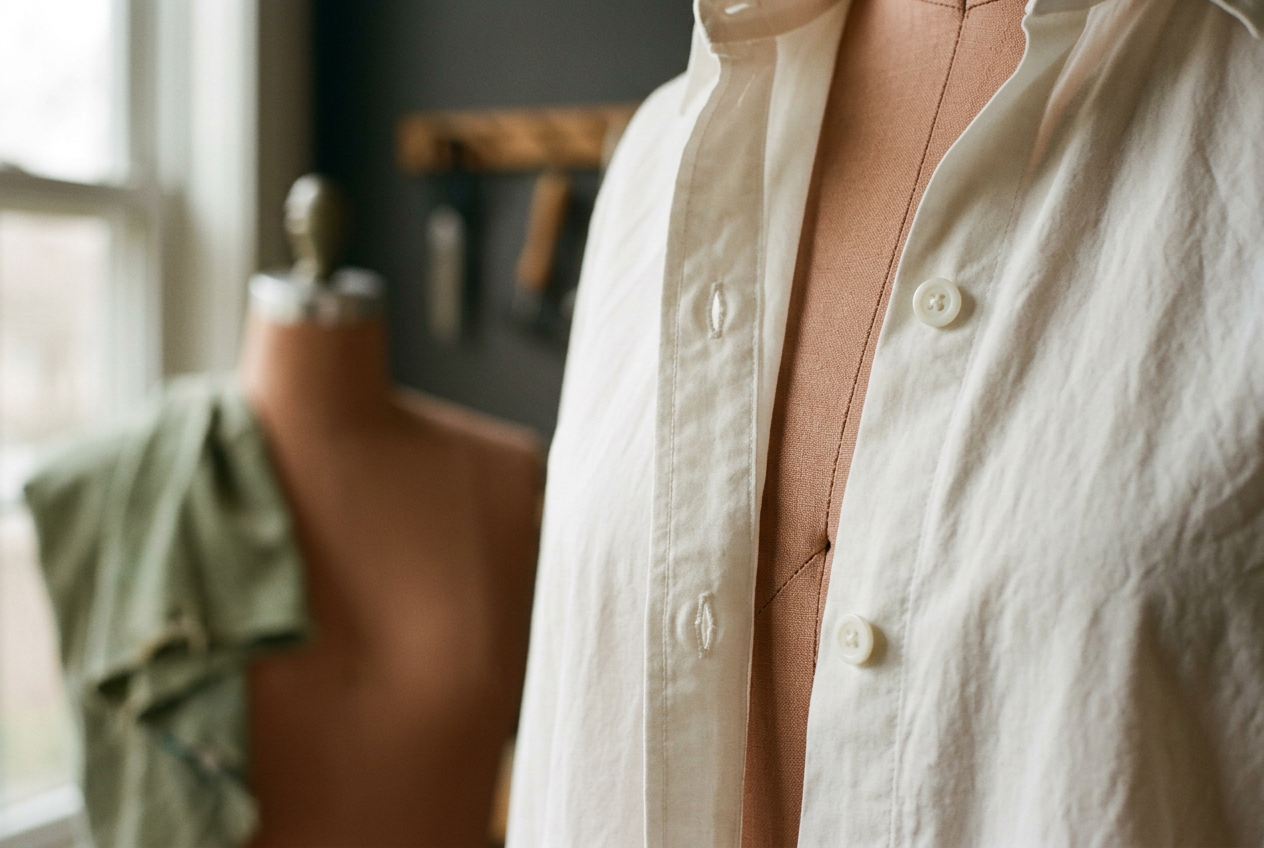
The useful test case is a white cotton-poplin shirt that closes without effort, sits smoothly at the waist and still opens between the third and fourth buttons. Its chest measurement is right on paper. Standing still with arms relaxed, however, the reinforced front strip separates just enough to show skin or a bra.
That strip is the placket, meaning the layered section that holds the buttons and buttonholes. A gap there does not automatically mean the whole shirt is too small. The pull may come from one missing fastening point, volume placed below the fullest part of the bust, rigid fabric or shoulders that become restrictive as soon as the arms move.
This guide covers women’s shirts because bust shaping changes the diagnosis, although the button-spacing and shoulder checks apply to other button-fronts. The aim is to identify the source before paying for alterations or accepting the loose collar, dropped shoulder and excess waist fabric that often arrive with the next size up.
Read the gap before changing size
Put on the shirt over the bra or base layer you normally wear with it, button it fully and stand without pulling the hem down. Look at the opening, then at the wrinkles leading toward it. Fabric records the direction of strain.
A clean, narrow opening centered between two buttons, with no deep folds traveling toward the side seams, points first to button spacing. Horizontal lines running from the bust toward the placket suggest misplaced or insufficient bust volume. If the gap appears only after reaching forward, driving or crossing your arms, examine the shoulder and upper back instead.
Then sit down. Cotton poplin yields very little across the body, so a shirt that looks calm in front of a mirror may open once the rib cage shifts and the abdomen compresses. The white test shirt gapes at the same point while standing and sitting, while its shoulder seams remain in place; that consistency makes the missing fastening point more important than overall size.
Button spacing can be the whole fault
Buttons are not always positioned around the wearer’s fullest point. If that point lands halfway between two buttons, the fabric can bow outward even when there is enough total room across the chest. The buttoned areas stay together while the unsupported span between them lifts.
Check by pinching the two placket layers together at the center of the gap. If the shirt becomes smooth without creating new wrinkles at the armhole or side seam, the diagnosis is straightforward. A concealed snap is the lowest-commitment repair. Sew one to the inside layers so the stitching does not show on the face of the placket; it takes a few minutes, adds almost no bulk and can be removed later.
A small hook and eye also works, though it is slower to fasten and can catch fine knitwear in the laundry basket. Double-sided fashion tape is useful for one wear, particularly with silk or a shirt that must be returned, but it needs clean, dry fabric and must be replaced each time. On the white poplin shirt, a snap is the sensible fix because the cloth already lies flat when the gap is held closed.
Adding a visible button and buttonhole can look more integrated, but matching the existing buttonhole shape and thread is harder than it sounds. Moving one existing button may close the original gap while creating another above it. That alteration is worth considering only when several buttons are plainly out of rhythm with the wearer’s bust.
Bust shaping controls where volume sits
A shirt can have the correct chest circumference yet distribute too much of it across the back or below the bust. Darts, which are stitched folds that remove excess fabric and shape it around the body, should point toward the fullest area without ending directly on it. If they sit too low, the fabric above them has nowhere to travel except toward the placket.
Look for horizontal drag lines, a front hem that rides higher than the back, or side seams that swing toward the front. Those signs distinguish a shaping problem from the neat, isolated opening on the white test shirt. Holding the placket shut may hide the skin, but it will not remove the strain lines, and a snap under constant load can distort the fabric or pull free.
A tailor may be able to release a generous dart or reshape a side seam if the shirt contains enough seam allowance, meaning extra fabric left inside a seam for adjustment. Many ready-to-wear shirts leave very little. Adding bust room to a finished garment is usually harder than taking in a waist, so inspect the inside before assuming an alteration will be economical.
For a replacement, look for a fuller-bust cut, deeper darts or shaped vertical seams running over the torso. The size chart still matters, but product photos and garment measurements should show whether the extra circumference sits at the front rather than being spread evenly around the body.
Fabric changes how strain travels
Cotton poplin is tightly woven and crisp. It holds a clean collar, yet it does not disguise a small fit mismatch; tension travels visibly across the surface and concentrates at the nearest button. Linen may relax during wear, while a fluid viscose shirt can drape around the bust but shift enough to reveal the opening as the wearer moves.
Stretch cotton can buy a little movement if it contains an elastic fiber and recovers after being pulled. It cannot correct a dart placed too low or a shoulder that is too narrow. Thin stretch fabric may also curl at the placket when the body pulls against it, leaving the shirt technically closed but visually strained.
Compare the shirt before and after laundering if the gap appeared over time. Heat or an unsuitable drying method can reduce a cotton shirt across the chest even when the collar still feels normal. A change after washing points to shrinkage; a gap present from the first fitting belongs to the cut or fastening layout. Follow the care label rather than trying to stretch a damp placket, which can leave its interfacing, the stabilizing layer inside the fabric, rippled or misshapen.
Shoulder fit can pull from above
The shoulder seam should finish near the edge of the shoulder, and the upper back should allow the arms to move without dragging the front panels outward. A shirt may pass a motionless chest check while failing this one because a circumference measurement does not describe back width, shoulder slope or armhole placement.
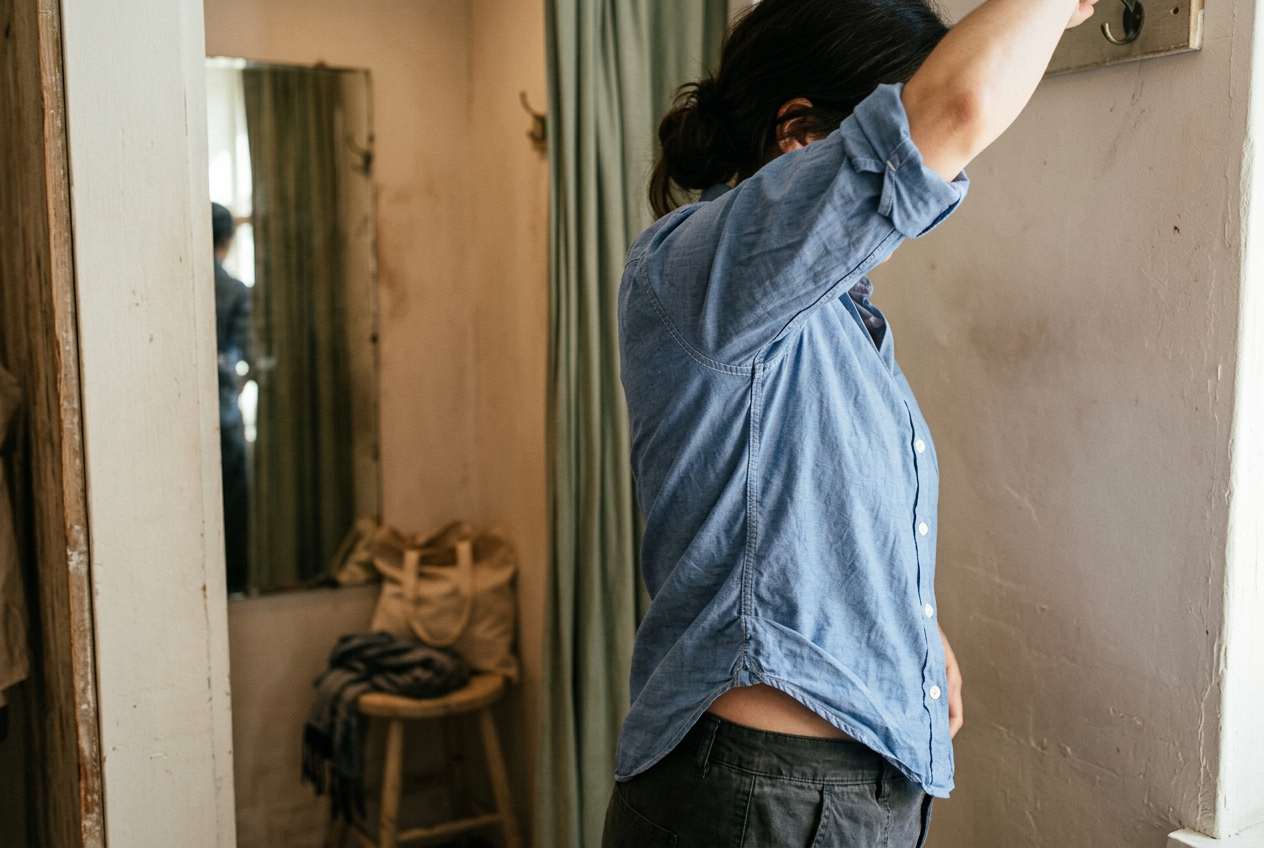
Reach forward as though holding a steering wheel. If the placket opens while the fabric tightens across the shoulder blades, then closes when the arms drop, adding a snap treats the visible result while leaving the restriction intact. The same warning applies when the collar pulls backward against the throat or the sleeve head climbs toward the neck.
On the white poplin test shirt, reaching forward does not deepen the gap, which clears the shoulders as the primary cause. If movement does trigger yours, try another cut with more upper-back room or a higher armhole that lets the arm move without lifting as much of the shirt body. A stretch panel can help, but it changes the crisp character that makes poplin appealing.
Pick the smallest fix that matches the cause
Use a concealed snap when the opening is isolated, the surrounding fabric is smooth and movement does not make the shirt tight elsewhere. Fashion tape is cheaper upfront and needs no sewing, though the repeated application costs time and leaves more room for failure during a long day. A tailor-added fastening is modest work; rebuilding the bust or shoulder is a larger alteration that may exceed the value of an ordinary ready-to-wear shirt.
Sizing up makes sense when strain spreads across the bust, the buttons look pulled even at rest and the larger size still keeps its structure. It creates new problems when the shoulder seam drops down the arm, the collar stands away from the neck, the cuffs cover part of the hand or the waist collapses into folds. A lower, wider armhole can even reduce easy movement because lifting the arm raises more of the shirt.
Try the next size with the same bra and repeat the sitting and reaching tests. If it fixes the placket while adding only removable fullness at the waist, taking in the side seams may be reasonable. If the collar, shoulder and sleeve all deteriorate, return to the original size and choose a fuller-bust or roomier-back cut according to the strain pattern.
For the white poplin shirt, sizing up would solve less than it spoils: the body already has room, the shoulders move and the opening sits precisely between fastenings. One hidden snap preserves the intended cut. A different shirt is the better purchase when closing the gap requires the fabric to remain under tension.
Questions people ask
Can fashion tape stop a shirt from gaping all day?
It can hold a small, low-tension opening for a single wear, provided both the skin and fabric are clean and dry. It is less dependable in heat, on textured cloth or where the bust continually pulls the placket apart. A sewn snap is more reliable for a shirt worn often.
Should
I size up if only one space between buttons gapes?
Usually not before checking button placement. If the fabric is smooth, the shoulders move freely and pinching that one space shut solves the problem, a concealed fastening is more precise. Size up when strain extends beyond the gap and the larger shirt still fits at the collar, shoulder and sleeve.
Can a tailor add more room at the bust?
Sometimes. A tailor can release existing seams or darts only when enough fabric remains inside them, and many ready-to-wear shirts have narrow allowances. Taking in a larger shirt at the waist is often more workable, but it succeeds only if that larger size fits cleanly through the shoulders and collar.
Why does my shirt gape only when I sit down?
Sitting changes the torso and can push a rigid shirt forward even when it looks smooth while standing. Test whether the strain begins at the bust, abdomen or upper back. If the whole front becomes tight, extra room or a different cut will work better than taping one point closed.
One update a day
Today's fashion update, in your inbox
One fashion update each morning — no hype, no filler, just pieces worth wearing.