Try Curvy-Cut Jeans Before Tailoring a Gaping Waistband
A back-waist gap often comes from the jean’s pattern, not the wrong size. Compare curvy cuts and rise shapes before paying a tailor to take in the waistband.
Women's · September 2, 2026 · 7 min read
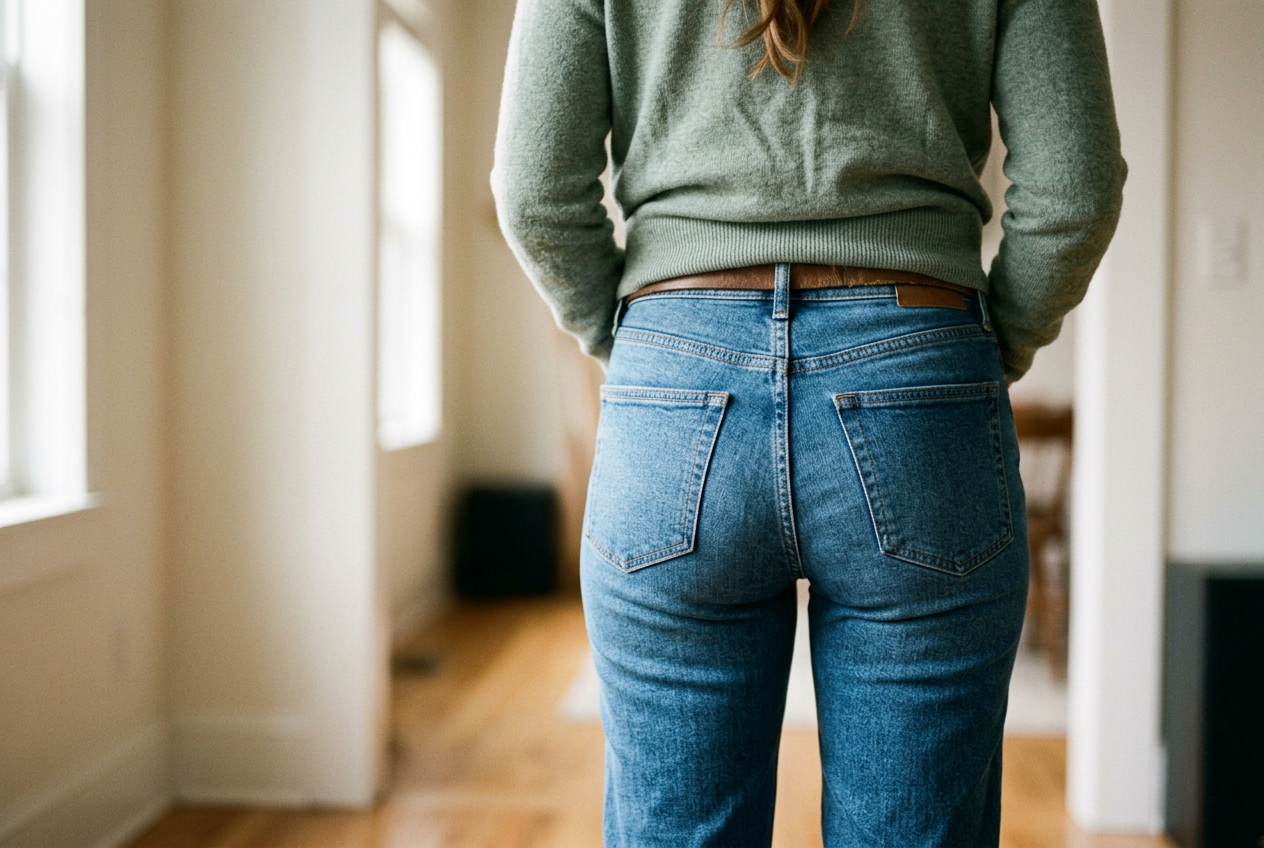
This is women’s denim coverage, centered on a common fitting-room failure: a straight-leg, five-pocket jean in 99 percent cotton and 1 percent elastane that fits through the fullest part of the hips but stands away from the lower back. That anchor jean will help separate a tolerable gap from a pattern mismatch.
The small amount of elastane gives the fabric some recovery, but it cannot correct the underlying shape. A belt may pull the waistband inward for one outfit; after sitting, the denim still folds beneath it, and the extra fabric often bunches above the back pockets.
Read the gap before blaming the size
Start with the waist-to-hip ratio, meaning the relationship between the waist and hip circumferences. A person with a larger difference between those measurements may need more shaping than a standard jean pattern contains, even when the size chart technically covers both measurements.
Brands build jeans from a fit block, the base pattern used to establish the garment’s proportions. A standard block may add only moderate shaping between hip and waist. A curvy block usually removes more circumference at the waist while preserving room through the seat and upper thigh. “Curvy” describes proportion here, not body size, and the label is not standardized across brands.
The location of the gap matters. On the anchor jean, a clean crescent of space at the center back, with smooth side seams and a comfortable seat, points toward insufficient waist shaping. If the waistband gaps all the way around while the hips feel loose, the jean is probably too large. If the back gaps while the front waistband digs in, the rise or pelvic angle may be wrong rather than the waist merely being too wide.
Do not size down until the hips pass inspection. Horizontal drag lines across the front, flattened back pockets, a fly that pulls open or a crotch seam that presses while seated all indicate that the smaller size has traded one visible problem for several less comfortable ones. Denim can soften with wear, but a close-fitting hip rarely creates the extra pattern length needed through the seat.
Rise and yoke shape change the result
Rise is the distance from the crotch seam to the waistband. A higher rise places the waistband on a narrower part of many bodies, while a mid-rise pair may land closer to the upper hip, where more circumference is needed. That is why changing rise can fix a gap even when the labeled waist size stays the same.
Back rise, the portion running from the crotch seam up to the center-back waistband, also controls how the jean follows the seat. Too little back-rise length can pull the waistband downward and away from the body. Excess length may collapse into folds below the waistband. Both can look like a waist problem from behind, but taking in the waist alone will not necessarily fix either one.
Then look at the yoke, the V-shaped or curved denim panel between the waistband and back pockets. A more angled yoke builds shape over the seat; a shallow, nearly horizontal yoke behaves more like a straight strip. On the anchor jean, a flat yoke paired with a relatively straight waistband asks the fabric to make a sharper turn than its pattern allows, so the waistband becomes the release point and stands away.
A curved waistband can help because its upper edge is shorter than its lower edge. Laid flat, it will not look perfectly straight. That built-in curve often follows the lower back better than a rectangular waistband, although the rest of the jean still needs enough back-rise length and seat room.
Use one fitting-room sequence
Put on the anchor jean in the size that fits the fullest part of the hips without strain. Close the waistband without sucking in, smooth the pockets, then check the side seams. They should hang without swinging sharply toward the front or back. Sit on a bench, stand again and walk for several minutes; stretch denim can feel acceptable for thirty seconds and then creep downward once the waistband warms and relaxes.
Next, try the same wash and leg shape in a curvy cut if the retailer offers one. Keeping those variables steady makes the comparison useful. Choose the curvy size from the hip measurement rather than automatically repeating the standard size, since brands may grade their two blocks differently.
The curvy pair wins when the waistband follows the body, the front remains comfortable and the back pockets lie in roughly the same position instead of being pulled outward. It loses when extra seat room creates fabric shelves below the pockets, the upper thighs become loose or the waistband curves so aggressively that its top edge presses in.
Return to the standard block and change only the rise. Try one pair whose waistband lands higher or lower than the anchor jean, then repeat the seated test. A higher rise is useful when it reaches a distinctly narrower point and has enough back length to stay there. It is not useful when the front rise feels too long, the zipper area buckles or the waistband rolls as soon as the torso bends.
Keep the best pair on for about ten minutes if store policy and fitting-room traffic allow. Put a phone or cardholder in a back pocket, sit naturally and check whether the waistband travels down. The aim is not a vacuum-sealed waist. Enough room to breathe and sit is necessary, but the gap should not admit a broad fold of fabric or require a tightly cinched belt to keep the crotch in place.
This sequence produces a decision. Choose the curvy cut when it fixes the back without adding loose fabric elsewhere. Choose another rise when the waistband’s landing point was the main problem. Consider alteration only when the anchor jean remains clearly superior in the hips, seat, leg and fabric, and its waistband is the isolated failure.
Know what a tailor can change
Waist suppression means removing circumference and shaping the upper jean closer to the body. For a modest adjustment, a tailor may open the center-back waistband and seam, remove a narrow wedge, then rebuild the top edge. Depending on the construction and the amount removed, the work may also touch a belt loop, yoke seam or topstitching.
Larger changes are more complicated. Taking substantial fabric from the center back can pull the back pockets closer together and sharpen the yoke angle. Dividing the adjustment between the center back and side seams may preserve balance, but it requires more labor and can disturb rivets, pocket openings or distinctive wash effects. Ask the tailor where fabric will be removed and what visible details will move before approving the work.
A basic waist take-in usually belongs to the lower tier of professional denim alterations. Work that requires moving pockets, reconstructing multiple seams or matching specialized chain stitching belongs to a higher tier and can erase the value of buying a discounted pair. Get a local quote while the return window is open; labor rates and jean construction vary too much for one useful national price.
Do not alter jeans until you have decided to keep them. If the care label permits home washing, launder them as directed before the fitting appointment, particularly when the denim is mostly cotton. The waistband, inseam and rise can change after the first wash, while alterations usually make the garment nonreturnable.
Spend on the pair, not the rescue
The anchor jean is worth tailoring when its denim weight, pocket placement and leg line are difficult to replace, and the gap remains concentrated at the center back. Alteration is also reasonable for a favorite pair whose fabric has already settled through washing and wear.
It is not worth the money when the waistband gap arrives with a tight seat, twisting side seams or an uncomfortable rise. Those faults come from the broader pattern. A curvy cut in a less fashionable wash is often the better purchase because it starts with the required shape, while tailoring a poorly matched block can cost time without producing a balanced jean.
Belts remain styling tools rather than structural repairs. A medium-width leather belt can close a slight gap under a tucked shirt, but if it creates deep waistband pleats or makes the back rise slide down, return to the fitting-room sequence instead of buying a second accessory to manage the first garment.
Questions people ask
Why do my jeans fit my hips but gap at the waist?
The jean may not contain enough shaping between its hip and waist measurements. A straight waistband, shallow yoke or insufficient back-rise length can all leave space at the lower back even when the hip size is correct. Compare a curvy block before assuming the labeled size is wrong.
Should I size down to stop a waistband gap?
Only if the smaller size still lets you sit comfortably and keeps the fly, pockets and side seams smooth. If sizing down creates pulling across the hips or pressure through the crotch, keep the hip-fitting size and change the cut, rise or waistband instead.
Can every gaping waistband be altered?
Many can, but the cleanest alteration is a contained center-back gap on jeans that fit everywhere else. A large reduction may shift pockets, yoke seams and wash patterns, raising the labor cost. A tailor should inspect the construction and explain which details will move before taking the waistband apart.
Are curvy jeans only for plus-size shoppers?
No. Curvy describes the pattern’s proportions, particularly the difference between its waist and hip measurements, rather than one size range. A shopper at any labeled size may prefer a curvy block, although each brand decides how much extra shaping and seat room that label includes.
One update a day
Today's fashion update, in your inbox
One fashion update each morning — no hype, no filler, just pieces worth wearing.