The Summer Office Formula That Makes Full-Length Pants Work
A light trouser is only the start. The weave, knit density, hem width and shoe shape determine whether a covered-up office outfit feels composed or needlessly heavy.
Women's · October 6, 2026 · 7 min read
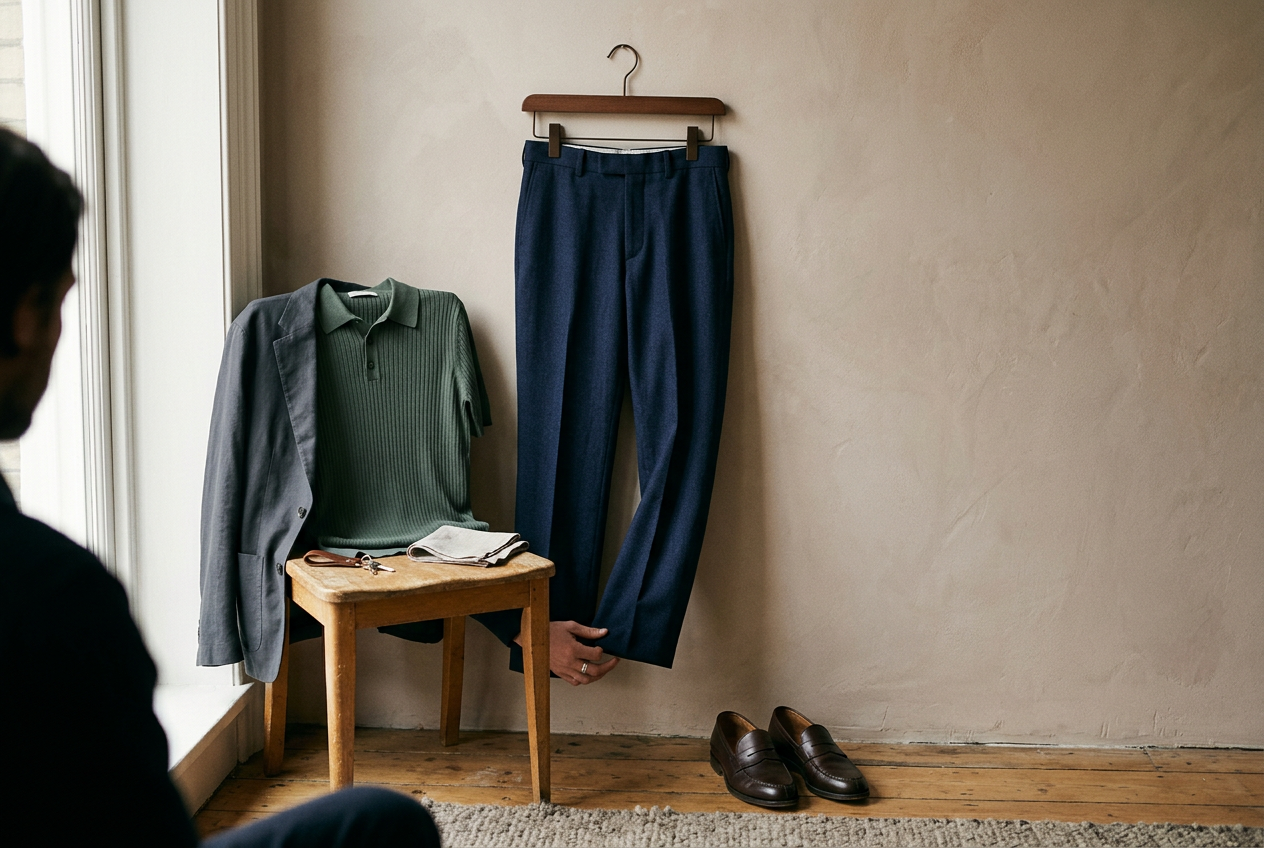
The reference garment for this guide is a navy, full-length trouser in tropical wool, meaning a lightweight wool woven with enough space between the yarns for air to pass. It has a flat front, a medium rise, a straight leg and no lining below the pocket bags. That combination matters more than the color: the fabric releases warmth, the waistband sits away from the hottest part of the torso, and the leg covers skin without clinging to it.
In hands-on outfit evaluation, this trouser worked with fewer adjustments than drapey synthetic pants or a close-cut cotton ankle style. The synthetic pair felt cooler at first touch but held warmth once seated, while the cropped cotton pair exposed the narrowest part of the leg and made every closed shoe look heavier. The navy wool trouser remained the useful control because its full length created one clean vertical line without requiring extra fabric around the hips.
This is women’s coverage, with attention to rises, bra coverage and shoe proportions commonly found in women’s departments. The underlying fabric tests also apply beyond that sizing system.
Start with a trouser that moves air
“Lightweight” on a product page can describe the number on a scale rather than how a garment behaves in heat. A thin polyester crepe may weigh very little and still trap moisture. A slightly heavier tropical wool can feel cooler because its open weave allows ventilation and the cloth does not paste itself to damp skin.
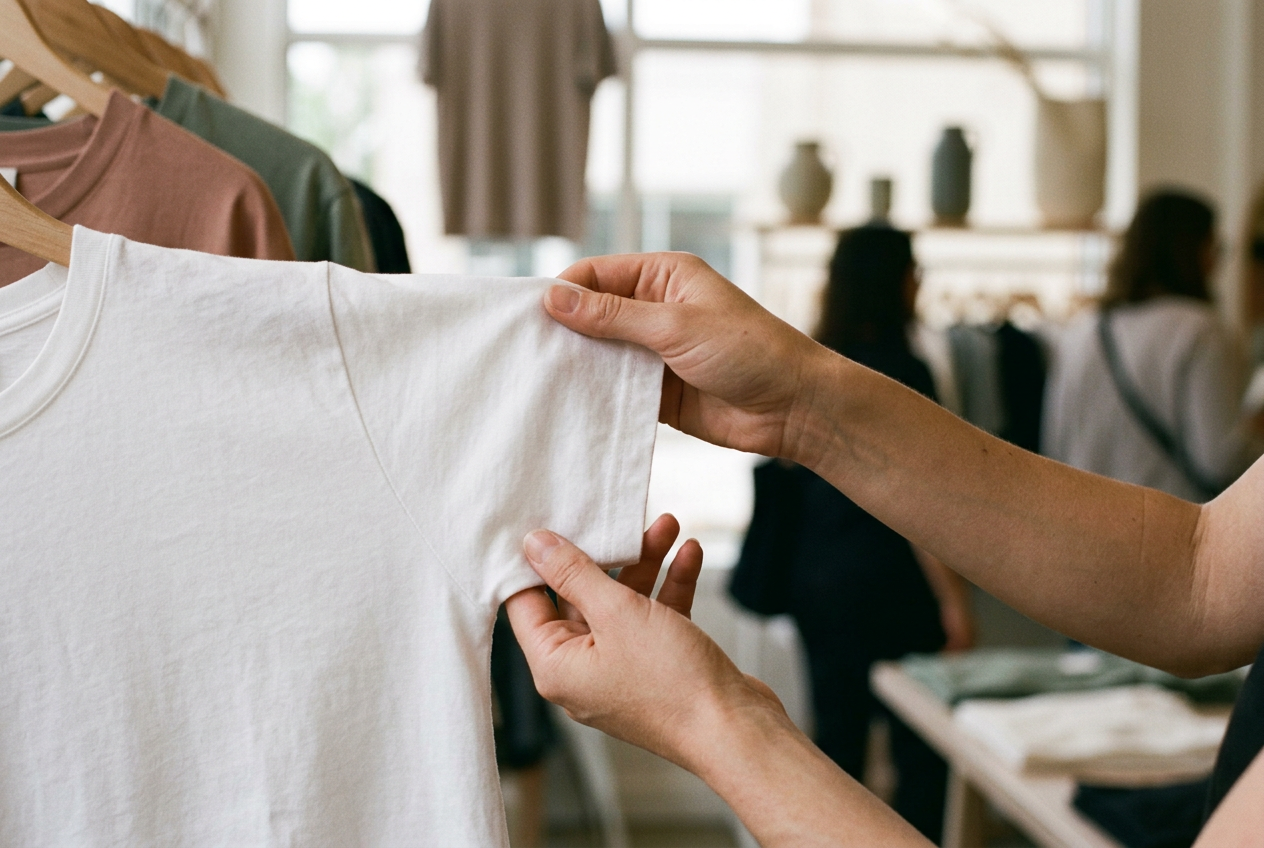
Hold a trouser up to a bright window. A faint, even glow through the fabric suggests some airflow; isolated pinholes or highly transparent areas suggest a loose weave that may distort at the seat. Scrunch a section of the leg in your hand for several seconds, then release it. Linen will crease, which is part of its character, but a linen-viscose blend should relax more readily.
Wool should rebound without looking springy or thick.
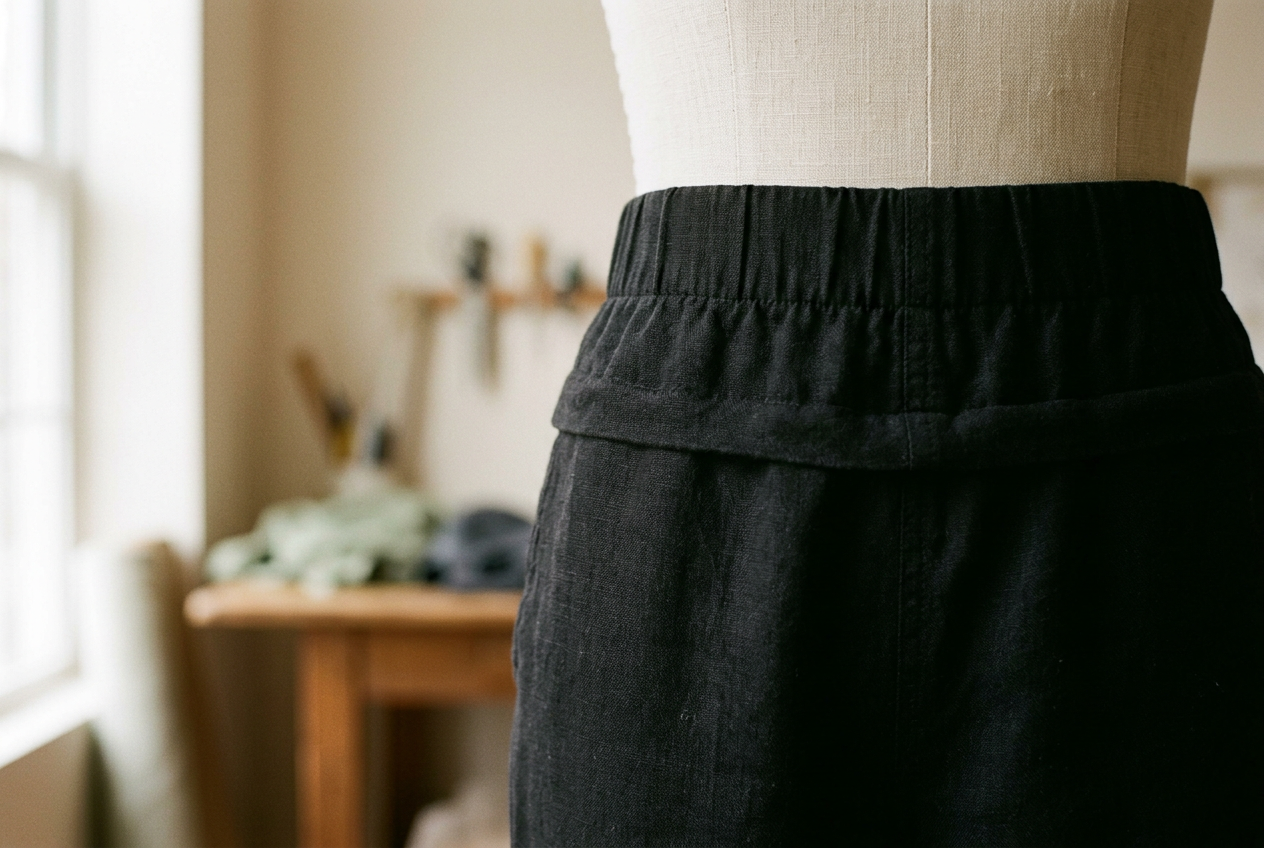
The navy reference pair also shows why lining deserves scrutiny. A full polyester lining cancels much of the benefit of an airy shell, particularly when it runs to the ankle. Pocket bags and a short front panel are reasonable; lining to the knee can improve opacity and reduce friction, although it adds warmth. If the trouser is transparent enough to demand a complete lining, it is not the best foundation for this formula.
Fit requires room, not volume. Look for a waistband that admits a finger when seated, a front rise that stays flat rather than pulling into horizontal lines, and fabric that falls from the fullest part of the hip without catching behind the thigh. An oversized pleated trouser can move air well, but excess cloth gathered at the waist creates warmth exactly where a summer outfit least needs it.
Length changes the shoe calculation. The reference trouser has a slight break, the small fold formed where the hem meets the shoe, and nearly covers the top of a low-profile loafer. That is enough length to look intentional without dragging. A wider leg should sit closer to the floor, while a straight leg can finish around the top of the shoe and still preserve the line.
Formula one: straight wool trousers and a rib-knit polo
Pair the straight tropical-wool trouser with a short-sleeve polo in a fine cotton rib or a cotton-silk knit. Ribbing gives a lightweight top enough structure to resist collapsing around the bra line, and a neat collar carries some of the visual work of a jacket. The knit should skim the torso. If it stretches visibly across the chest or turns sheer over the shoulder blades, sizing up will usually look cleaner than adding a camisole that creates another warm layer.
Keep the shoe narrow enough to follow the straight hem. A low-vamp shoe, meaning one that exposes more of the top of the foot, prevents the covered leg from ending in a dark visual block. A refined loafer can work when its sole is slim and the trouser nearly touches it; a pointed flat or a slingback with a closed toe gives the same outfit a lighter finish. Thick sneakers make sense only if the trouser opening is wide enough to clear them without stacking at the ankle.
This was the strongest combination around the navy reference pair because each piece supplied structure in a different place. The trousers held the lower line, the rib-knit polo defined the shoulder and the exposed instep gave the coverage an endpoint. Nothing needed to be tucked and retucked during the day.
Formula two: fluid trousers and a compact sleeveless knit
For offices that permit sleeveless tops, use a wide or gently tapered trouser in a linen-viscose weave with a compact knit shell. Compact describes a knit with closely spaced stitches, so it keeps a defined edge even when the yarn itself is light. Check the armhole from the side: it should cover the bra and sit close enough that the opening does not gape when you reach forward.
The tradeoff is maintenance. Linen-viscose trousers usually crease less sharply than pure linen, yet they may grow at the knees and seat after several hours. A center crease, stitched or pressed, helps the leg recover visually even when the fabric softens. Very fluid versions can also reveal pocket outlines, which no amount of careful styling fixes; return those rather than planning around special underwear.
A broader trouser opening needs a shoe with visible presence beneath it. That does not require a platform. A square-toe flat, a sandal with a substantial sole where dress codes allow open toes, or a low block heel keeps the hem from appearing to swallow the foot. Tiny ballet flats can disappear under a long wide leg, leaving the trouser looking too long rather than deliberately full.
If shoulder coverage is required, add a single-layer shirt jacket or an unlined blazer in linen-wool. Unlined means the interior has no separate fabric layer covering the seams. It will feel cooler, although the inside construction is more visible and may cost more when the seams are neatly bound. Skip padded shoulders and long double-breasted fronts here.
The compact shell already supplies a clean upper shape.
Formula three: plain-weave trousers and a knit T-shirt
The most casual version begins with a full-length trouser in a plain weave, the basic over-under construction that produces a stable, relatively flat cloth. Cotton-linen, lightweight wool and blends with a modest amount of recycled polyester can all work, but the hand should feel dry rather than slippery. A dry surface is less likely to cling once the day becomes humid.
Add a knit T-shirt with a firm neckline and sleeves that stand slightly away from the upper arm. Fine-gauge merino is useful in aggressive air conditioning, provided the knit is opaque and washable according to a care routine you will follow. Cotton-linen jersey feels cooler but can twist after washing, so inspect the side seams before removing the tags and again while the shirt is still returnable.
The shoe can be a streamlined sneaker if the office permits one, though proportion remains nonnegotiable. Choose a sole that projects only slightly beyond the upper and let the trouser hem reach low enough to meet it. A cropped hem with a bulky sneaker splits the leg into blocks; the full-length navy reference trouser avoided that problem because it covered the laces and left only the cleanest part of the shoe visible.
This formula benefits most from an optional layer. A collarless cardigan in a firm, fine knit fits under crowded transit conditions more easily than a blazer, while an unlined jacket gives greater authority in a formal room. Neither should be longer than the point where the trouser begins to widen, or the overlapping volume will erase the waist and make lightweight fabric look cumbersome.
Shop the weave before the fiber label
Natural fiber content alone does not guarantee comfort. Dense cotton sateen can be hotter than an open wool weave, and pure linen may demand more pressing than a busy week allows. Put a hand inside the trouser leg and rub the layers together. A loud, slick sound often signals a finish or synthetic content that may feel less breathable; a soft cloth is pleasant, but it still needs enough body to fall away from the skin.
At the lower price end, prioritize an unlined leg, adequate seam allowance and a waistband that does not roll. The knit top can be the budget piece if its neckline recovers after stretching. In the middle price band, better fabric recovery and cleaner interior finishing are worth paying for. An investment trouser earns its place only when the cloth suits the climate and the care label suits your week; expensive dry-clean-only pants that remain on a hanger are not an upgrade.
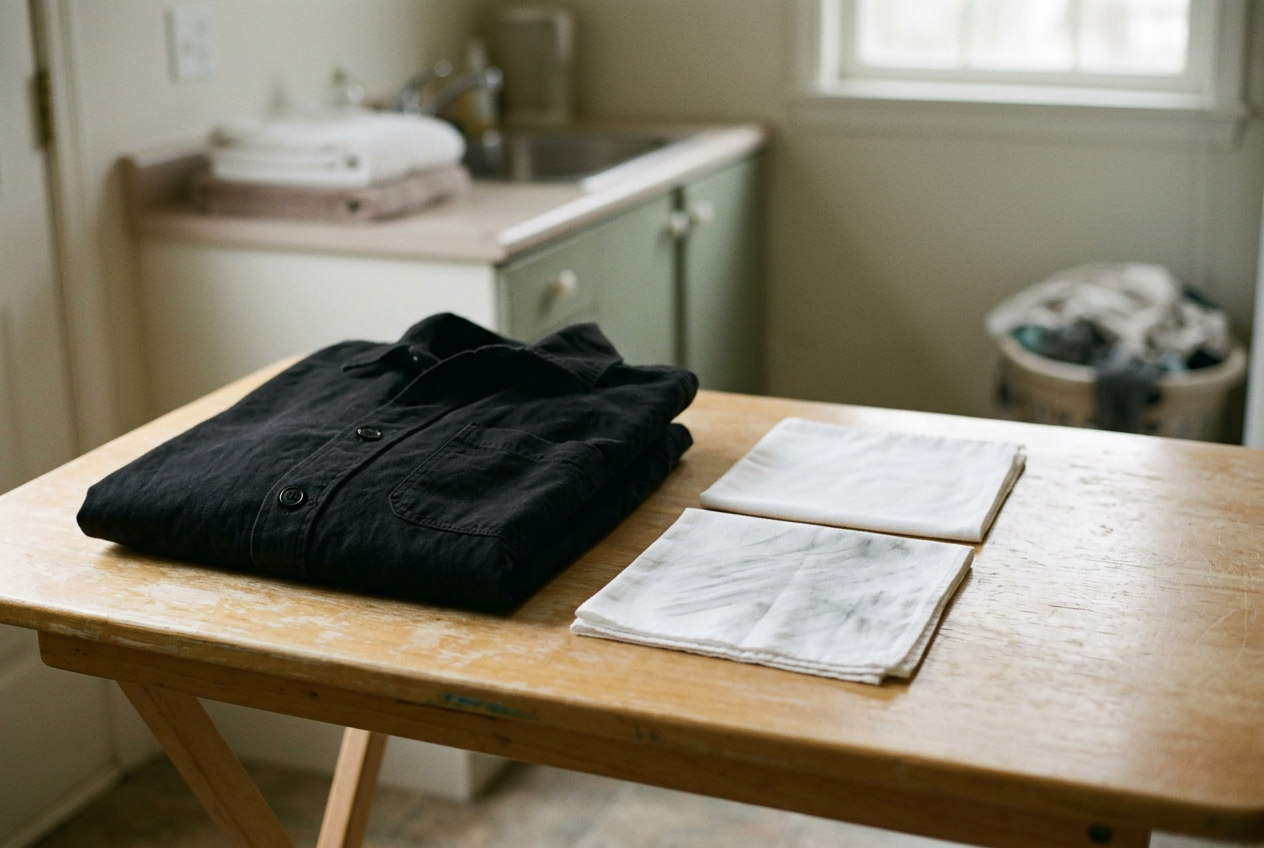
The navy tropical-wool pair requires brushing after wear, airing before it returns to the closet and occasional steaming at the knees. That is less daily work than pressing pure linen, though cleaning costs are higher if the label prohibits washing. Buying two interchangeable tops does more for repeat wear than buying a second summer blazer.
Questions people ask
What are the coolest full-length trousers for an office?
Tropical wool and open-weave linen blends usually handle heat better than thin, tightly woven polyester. Check that the legs are unlined or only partly lined, then confirm the fit falls away from the thigh. Fabric that allows airflow will generally outperform a lighter cloth that clings.
Can wide-leg trousers work with flat shoes?
Yes, if the hem nearly reaches the floor without dragging and the shoe has enough visible width to support it. A square toe, defined sole or broad vamp works better than a tiny flat that vanishes under the fabric. Have the trousers hemmed while wearing the intended shoe.
Do
I need a blazer for a summer office outfit?
Often, no. A structured rib-knit polo or compact shell can provide enough definition for business-casual offices. When a layer is required, choose an unlined jacket or firm cardigan and carry it during the commute rather than building the outfit around several thin layers.
How do
I stop lightweight trousers from looking wrinkled?
Choose wool for the strongest recovery, or a linen-viscose blend when some creasing is acceptable. Hang trousers promptly, let moisture evaporate before storing them and steam only the areas that need it. A pressed center crease also keeps a softened leg looking deliberate after hours of sitting.
One update a day
Today's fashion update, in your inbox
One fashion update each morning — no hype, no filler, just pieces worth wearing.