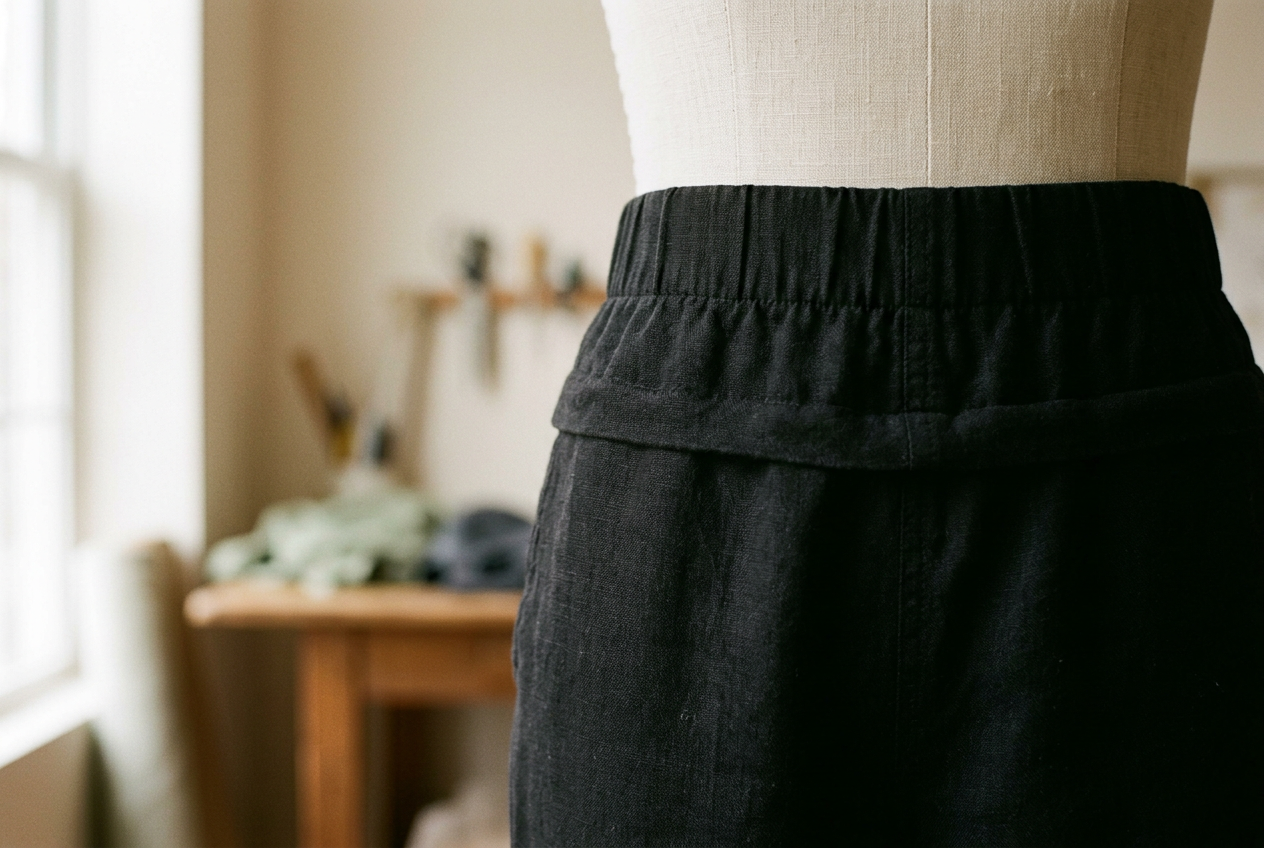
If Final-Sale Trousers Skip the Hip Measurement, Skip Them
A no-return discount only works when the fit evidence is unusually good. Compare the garment, stretch, alteration path, and realistic resale value before buying.
Women's · August 20, 2026 · 8 min read
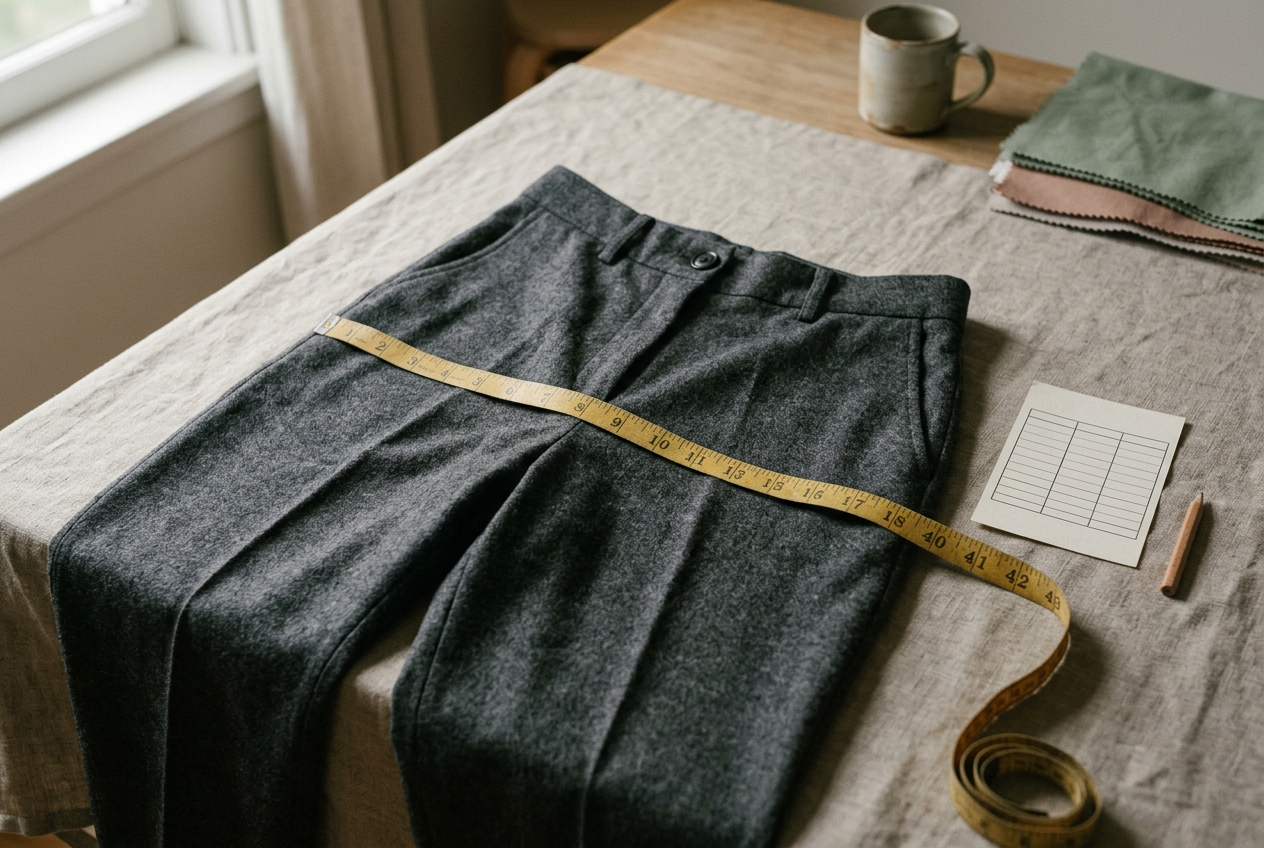
Take a common final-sale problem: high-waisted, straight-leg wool-blend trousers shown with a waist measurement and inseam, but no garment-level hip measurement. The silhouette looks useful. The reduced price moves the trousers into budget territory, yet the no-return condition makes them an investment decision because a poor fit must be altered, resold, donated, or left unworn.
This is women's coverage, and the working case is a trouser cut where the waist, hip, front rise, and thigh shape determine whether the garment can be worn comfortably. The same method works for other clothing, but the critical measurement changes with the piece.
A standard size chart does not solve the problem. Most charts connect body measurements to a labeled size, while garment measurements describe the clothing itself. The distinction matters because two pairs of trousers intended for the same body measurement can have different rises, hip curves, and amounts of ease, meaning room added beyond the body.
For final sale, “probably my size” is too loose a standard. The useful comparison is the no-return garment against a similar piece you already wear, measured in the same way.
Start with a garment you know fits
Choose the closest successful item in your closet, not the pair you tolerate with a belt or avoid after lunch. For the wool-blend trousers, the comparator should also sit high on the waist and have a similar leg shape. A low-rise jean or elastic-waist pull-on pant will produce numbers, but those numbers answer a different fit problem.
Lay the comparator flat without stretching it. Measure the waistband across, then double that number for its circumference. Measure the hip at the widest part of the trouser body, the front rise from the crotch seam to the top of the waistband, and the thigh across just below the crotch. Follow the retailer's measuring diagram when it provides one, since brands do not always take hip or rise measurements at the same point.
Record how the trousers feel as well as what the tape says. A waistband can match exactly while the hip pulls across the front, or the rise can be long enough on paper but shaped poorly for the wearer. Note where the fabric remains smooth, where it creases, and whether sitting changes the fit. Those observations tell you which measurement is critical.
For the working trousers, the hip is critical. A missing inseam would be less alarming because length can often be shortened, while an omitted hip leaves no reliable way to judge whether the pockets will gape, the zipper will strain, or the front will form diagonal pull lines.
Use a stricter comparison threshold
For a fitted, nonelastic area, my practical final-sale threshold is close agreement with the known-good garment: within about half an inch in circumference, provided the two pieces have comparable construction and the brand explains how it measured. This is a shopping rule rather than a universal sizing law. It creates a narrow margin because home measuring, production tolerances, and fabric behavior already introduce uncertainty.
More room is not automatically safer. An extra inch at the hip may be acceptable in a pleated or relaxed trouser, yet it can change the line of a clean straight-leg cut and leave fabric collapsing beneath the waistband. Less room requires stronger evidence, such as documented stretch and a comparator that also stretches.
Body measurements remain useful as a check, particularly when a garment measurement is larger by an amount that makes sense for the intended silhouette. Do not subtract a body hip measurement from an unexplained trouser hip and assume the remainder is adequate ease. The garment may have been measured at another point, and its rise may place the widest section above or below your own.
This is where the wool-blend trousers fail. Waist plus inseam cannot stand in for hip plus rise. If the product page, size guide, customer service documentation, or another authorized listing does not supply the hip measurement, the evidence is incomplete.
Do not assign stretch that the brand has not documented
A fiber list can refine the decision, but it cannot rescue missing dimensions. Wool may relax with wear and recover after resting, while a woven wool blend usually behaves differently from a knit. Even the presence of elastane does not reveal how far the finished trousers will stretch, because yarn, weave, lining, interfacing, and seam construction all affect movement.
Look for brand language that describes the finished garment as rigid, slightly stretchy, or highly stretchy. Check whether the waistband is stabilized, whether the trousers are lined, and whether the fit notes tell shoppers to size up or down. A lining can restrict a shell fabric that has some give, while fusible interfacing, meaning a support layer bonded inside the waistband, can keep the waist firm.
If the documentation only says “wool blend,” count the trousers as nonstretch for the purchase decision. That does not claim the fabric has no movement. It means the available evidence does not justify buying a smaller hip measurement or overlooking its absence.
Stretch should absorb normal movement, not correct a cut that is too small. Tension around a zipper, pockets standing away from the body, or seams shifting toward the front are fit failures even when the wearer can fasten the waistband.
Price the alteration before calling it a bargain
Alterations divide into predictable changes and structural gambles. Shortening a plain hem is generally straightforward. Taking in a waistband may also be workable, although the tailor may need to adjust the center-back seam, belt loop placement, or waistband construction so the trouser still hangs cleanly.
Making the hip larger is a different proposition. It depends on seam allowance, the fabric left inside a seam for construction and possible adjustment. A product page rarely shows how much is available, and letting out the hip can expose old stitch marks or leave too little allowance for a secure seam. Changing the rise or reshaping the crotch is more invasive and may not be worthwhile on a discounted ready-to-wear trouser.
Before buying, identify one specific alteration that would solve the most likely problem. Then confirm that the garment's construction permits it and that you are willing to add the local tailoring quote to the purchase price. “A tailor can fix it” is not a plan when the critical area is missing from the chart.
The wool-blend trousers pass only if they fit at the hip and need a predictable reduction elsewhere, such as a slightly loose waist or excess hem length. They do not pass if the buyer is counting on hidden fabric to enlarge the seat.
Treat resale as a partial exit, not a return policy
Resale likelihood can lower the risk, but only after a realistic check. Search completed or sold listings for the exact brand, style name or product code, size, color, and fabric when the platform allows it. Current asking prices show seller hopes. Sold listings show whether comparable pieces moved and roughly how much value survived.
A recognizable label, original tags, a wearable neutral, and a current cut may help. None guarantees a quick sale, and the money recovered can shrink after platform charges, shipping supplies, cleaning, or the discount needed to attract a buyer. A trouser that technically has resale demand may still sit through the season when its size or fabric is poorly timed.
Set a personal recovery floor before checkout. If the likely net resale amount would make the failed experiment feel tolerable, resale can remain part of the calculation. If you need to recover nearly the full purchase price, the no-return trousers are carrying more risk than the discount suggests.
Apply four gates at checkout
The first gate is measurement completeness. The listing must include the dimension that controls the fit, or you must already own the exact style in that size. A general brand size chart is not a substitute.
The second gate is comparison. The critical garment measurement should sit within your narrow accepted range against a genuinely similar piece, with any difference supported by the intended cut rather than optimism.
The third gate covers correction. The most likely alteration must remove or shorten fabric in a structurally ordinary place, unless a tailor has seen the garment and confirmed another option. Build that cost and the extra appointment into the price.
The fourth gate is the exit. Resale should have evidence from sold comparables, and the likely recovery should be acceptable after friction. Passing this gate does not repair a failure at the first one.
The high-waisted wool-blend trousers stop at gate one. A missing hip measurement is not a small documentation gap for this cut. The better alternative is a returnable pair, a secondhand listing whose seller can measure the hip and rise, or the same final-sale style only after customer service supplies the missing number in writing.
Questions people ask
Can
I use my body measurements instead of measuring trousers I own?
Use both, but give the known-good garment more weight. Body measurements do not show how much ease, rise length, or shaping makes a particular trouser comfortable, while a successful comparator captures those choices in the finished piece. Match the measuring method as closely as possible.
Is a small amount of elastane enough to make final-sale pants safer?
Not by itself. Fiber percentage does not show how the finished waistband, lining, weave, and seams behave, so rely on the brand's garment-level stretch description and a comparable item. If stretch is undocumented, do not use it to excuse a smaller or missing critical measurement.
Which trouser alterations are least risky?
A plain hem is usually the clearest candidate, and a modest waist reduction may be possible depending on waistband and pocket construction. Enlarging the hip or changing the rise relies on hidden seam allowance and more extensive work, so neither should be assumed before a no-return purchase.
When is a missing measurement acceptable on final sale?
The strongest exception is an exact repeat purchase in the same style, size, and fabric, provided your existing pair still fits as intended. Otherwise, ask the retailer for the number or walk away. For fitted trousers, a waist and inseam cannot replace the missing hip or rise.
One update a day
Today's fashion update, in your inbox
One fashion update each morning — no hype, no filler, just pieces worth wearing.