Four Pants Measurements Beat an Inconsistent Size Chart
A familiar size label cannot tell you where pants will sit or pull. Four measurements from a pair you own make online product dimensions far easier to read.
August 12, 2026 · 7 min read
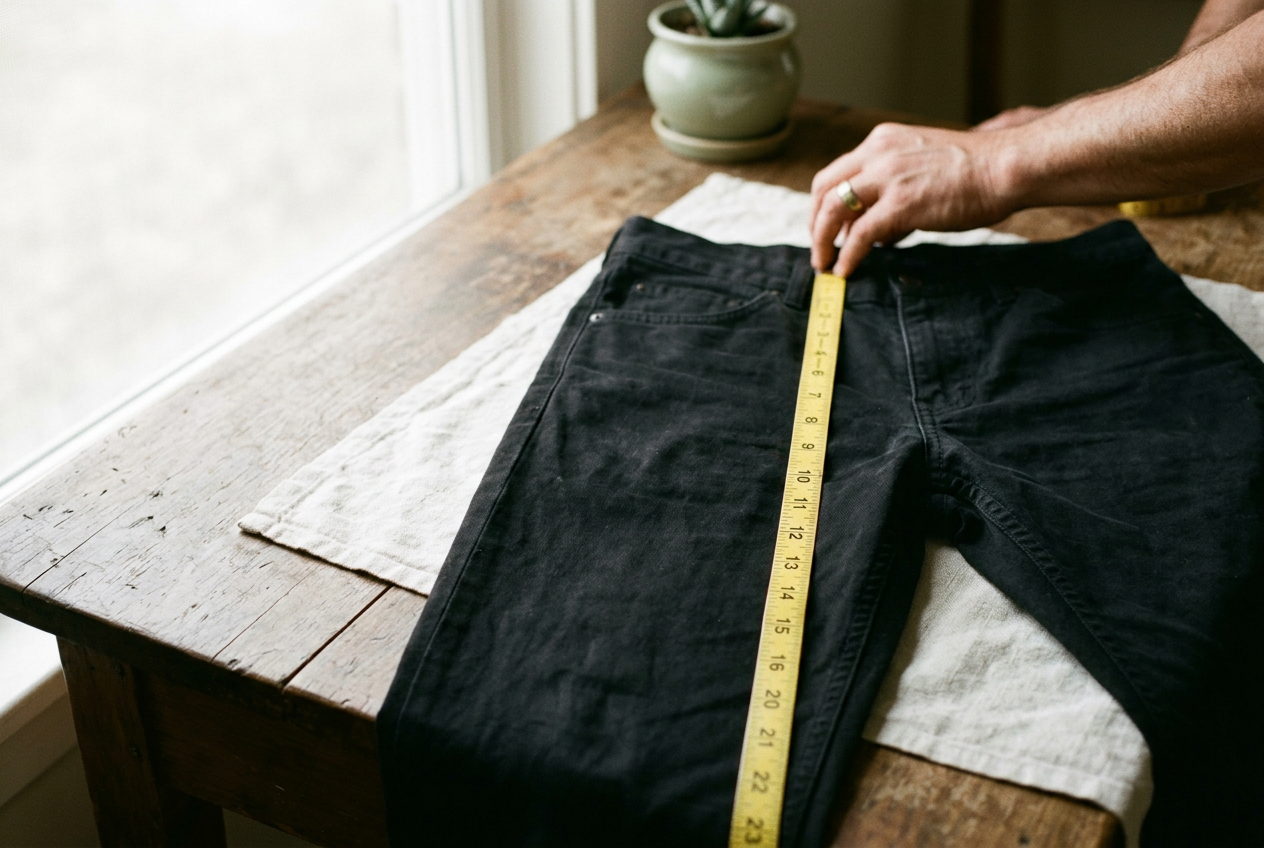
Pull out one reliable reference pair: black cotton-twill straight-leg pants that stay at the intended waist, lie cleanly through the hip, and remain comfortable when you sit. This pair is more useful than the size printed inside it, because the label reflects one brand’s system while the garment records the dimensions that work on your body.
The method applies across women’s and men’s wardrobes, so this is unisex sizing advice. Cuts differ, but fabric still has to clear the waist, travel from waistband to crotch without pulling, and leave enough room through the seat and upper leg.
Set aside about ten minutes, use a flexible tape measure, and button or zip the reference pants before laying them on a hard, flat surface. Do not measure them while wearing them. Fabric follows the body under tension, which makes it difficult to tell whether you are recording the garment or the stretch created by your stance.
First, identify what the chart measures
A body size chart lists the wearer’s dimensions. A garment size chart lists the finished dimensions of the clothing itself. Retailers sometimes place both on one product page, sometimes provide only one, and occasionally label a table so loosely that the distinction is hard to spot.
The difference matters because finished pants generally need ease, meaning the space between the body and garment that permits movement or creates the intended silhouette. A rigid trouser hip will usually measure larger than the corresponding body hip. A stretch legging may measure smaller and rely on elastic recovery. Two identical-looking chart numbers can therefore describe very different fits.
Look for language such as body measurements, fits waist, garment measurements, product dimensions, or measured flat. If a listed waist changes only slightly between relaxed trousers and fitted jeans, it may be a body recommendation rather than the physical waistband. Product photos cannot settle the issue, since styling, model posture, and sample pinning can alter how a waistband appears.
When the retailer gives only body measurements, use them to choose a starting size, then check the product description and reviews for evidence about rise, thigh room, stretch, and intended fit. The four-measurement method is strongest when finished garment dimensions are available, but it also shows exactly what information is missing when they are not.
Measure the waist without stretching it
Lay the reference pants flat with the waistband naturally aligned. Measure straight across the inside top edge from one side to the other, keeping the tape level, then double that flat measurement to get the waistband circumference.
Do not tug an elasticized or stretch waistband to its limit. Record the relaxed measurement first. If stretch is central to the design, you may also note a gently extended measurement, but maximum hand-stretched width is not a dependable fit target because it says little about how firmly the waistband will press during hours of wear.
Waist construction changes the result. A curved waistband may not lie perfectly straight, while a contoured high-rise band can be narrower at its top edge than at the seam where it joins the pants. Follow the retailer’s measurement instructions when supplied. Otherwise, use the top edge consistently on both the black cotton-twill reference pair and the prospective purchase.
This number tells you whether the pants can close at their intended position. It does not tell you where that position will be. That is the front rise’s job.
Use front rise to locate the waistband
Front rise is the distance from the crotch seam, where the legs meet, to the top of the front waistband. Smooth the front of the reference pants without pulling it taut, place the tape at the crotch seam, and follow the center-front seam to the waistband edge.
A rise difference can explain why two pants with the same listed waist do not feel remotely alike. The lower waistband sits on a wider or narrower part of the torso depending on the wearer, and the shorter vertical distance can also reduce room through the lower abdomen. A higher rise may reach a smaller point at the waist, yet create excess fabric or pressure if the front and back shaping does not suit the body.
Return to the reference pair here. Its rise records the level at which its waist measurement works. If an online pair has a noticeably shorter rise but a matching waistband, expect that band to sit lower rather than reproduce the reference fit. A longer rise may move it upward, alter pocket placement, and change where a tucked shirt meets the trouser.
Compare front rise within the same general construction. Drop-crotch pants, overalls, and styles designed to sit away from the body need a different reference garment. Pleated trousers also carry volume differently from flat-front cotton twill, even when their rise measurements match.
Measure the hip where the garment is fullest
The hip measurement captures room through the seat and the widest part of the upper garment. With the pants flat, measure straight across at the fullest area below the waistband, then double the result.
This is the least standardized of the four measurements. Some brands measure a fixed distance below the top of the waistband, while others use the visibly widest point. Read the retailer’s guide before comparing numbers. If its hip location is specified, reproduce that position on the reference pants rather than relying on your usual spot.
A flat hip measurement can still hide shape. Darts, which are stitched folds that remove fabric to contour a garment, can produce more waist-to-hip definition than a straight side seam. Pleats add fabric at the front but may stay closed until the wearer moves. Curved back seams and yokes can create seat room that a simple width does not fully describe.
Even so, hip width catches a common online sizing failure: choosing by waistband alone, then finding diagonal pull lines across the front or pockets that flare outward. If the black cotton-twill pair has a clean hip and the candidate pants are narrower in a nonstretch fabric, sizing up is usually more promising than hoping the cloth will relax. Tailoring a loose waistband is possible; adding missing seat fabric usually is not.
Check the thigh before trusting the silhouette
For the thigh, measure across one leg just below the crotch, from the inseam to the outer edge, then double it if the retailer lists circumference. The inseam is the sewn line running along the inside of the leg. Brand methods vary here too, with some measuring at the crotch and others a short distance below it, so match the stated location.
Thigh width decides whether straight-leg pants hang straight or cling before dropping from the knee. It also affects sitting comfort, pocket behavior, and how quickly fabric abrades where the legs meet. A product can have adequate hip room and still bind at the upper leg because its pattern narrows sharply beneath the seat.
Compare material alongside the number. Rigid cotton twill with little or no elastane needs physical room, while denim or ponte with stretch may tolerate a smaller garment measurement. Fiber content alone cannot predict comfort, though, because fabric weight, knit or weave, and stretch direction matter. A product description that says stretch without giving garment dimensions leaves more uncertainty than a chart with a measured thigh.
For the reference trousers, note what you like rather than chasing an exact duplicate. If their thigh feels comfortable but visually fuller than you want, a slightly narrower candidate with some stretch may be reasonable. If the reference pair already grips when seated, matching its measurement repeats the problem.
Build a comparison, not a verdict
Write the four reference numbers in one column and the candidate garment numbers beside them, keeping inches with inches and doubling every flat width when the retailer reports circumference. Conversion errors are common enough that checking the math once costs less time than repacking a return.
Rank the measurements by what is hardest to compromise. For rigid pants, insufficient hip or thigh room is usually a stronger reason to move up than a slightly generous waist, since a belt or alteration can reduce the waistband. If rise is central to why the black cotton-twill pair works with tucked knits and cropped jackets, treat a major rise change as a different silhouette rather than a near match.
Do not average the four numbers into one answer. Pants patterns distribute fabric, and a size that matches two points but misses badly at the thigh can still fail. Choose the size that clears the body’s least negotiable area, then decide whether the remaining looseness suits the cut or could be altered without distorting pockets and seams.
The method also tells you when not to buy. A retailer that supplies only a body waist range, offers no rise or thigh information, and charges for returns is asking you to absorb most of the fit risk. Customer reviews may help, but comments such as true to size refer to personal expectations and rarely identify the dimensions behind the result.
Questions people ask
Can
I use body measurements instead of measuring pants?
Body measurements help identify a starting size, but they do not reveal the ease, rise, or distribution of fabric in a specific cut. A well-fitting reference pair shows the finished dimensions you already tolerate, which makes it more useful when a retailer publishes garment measurements.
Should
I measure jeans and trousers the same way?
Use the same four points, but compare similar materials and silhouettes whenever possible. Stretch jeans can measure smaller than rigid cotton trousers and still fit, while pleats, darts, and curved waistbands may change how equal flat measurements behave on the body.
What should I do if only the waist is listed?
Check the description for rise, fabric stretch, and fit language, then look for a retailer measurement guide. If hip and thigh room are frequent trouble spots for you, a waist-only listing cannot support a confident comparison, particularly when returns are expensive or restricted.
Which measurement matters most when I am between sizes?
Prioritize the area that cannot lose room without pulling, often the hip or thigh in rigid pants. A slightly loose waist can sometimes be belted or altered, but a larger size will not reproduce the reference pair if its rise places the waistband at a different level.
One update a day
Today's fashion update, in your inbox
One fashion update each morning — no hype, no filler, just pieces worth wearing.