Pants That Fit Standing Up Can Still Bind on Stairs
A waistband can look right in the mirror while the rise or upper thigh has too little room for movement. This five-minute fitting sequence shows where the strain starts and whether a larger size will help.
August 10, 2026 · 8 min read
Start with the pair that fails
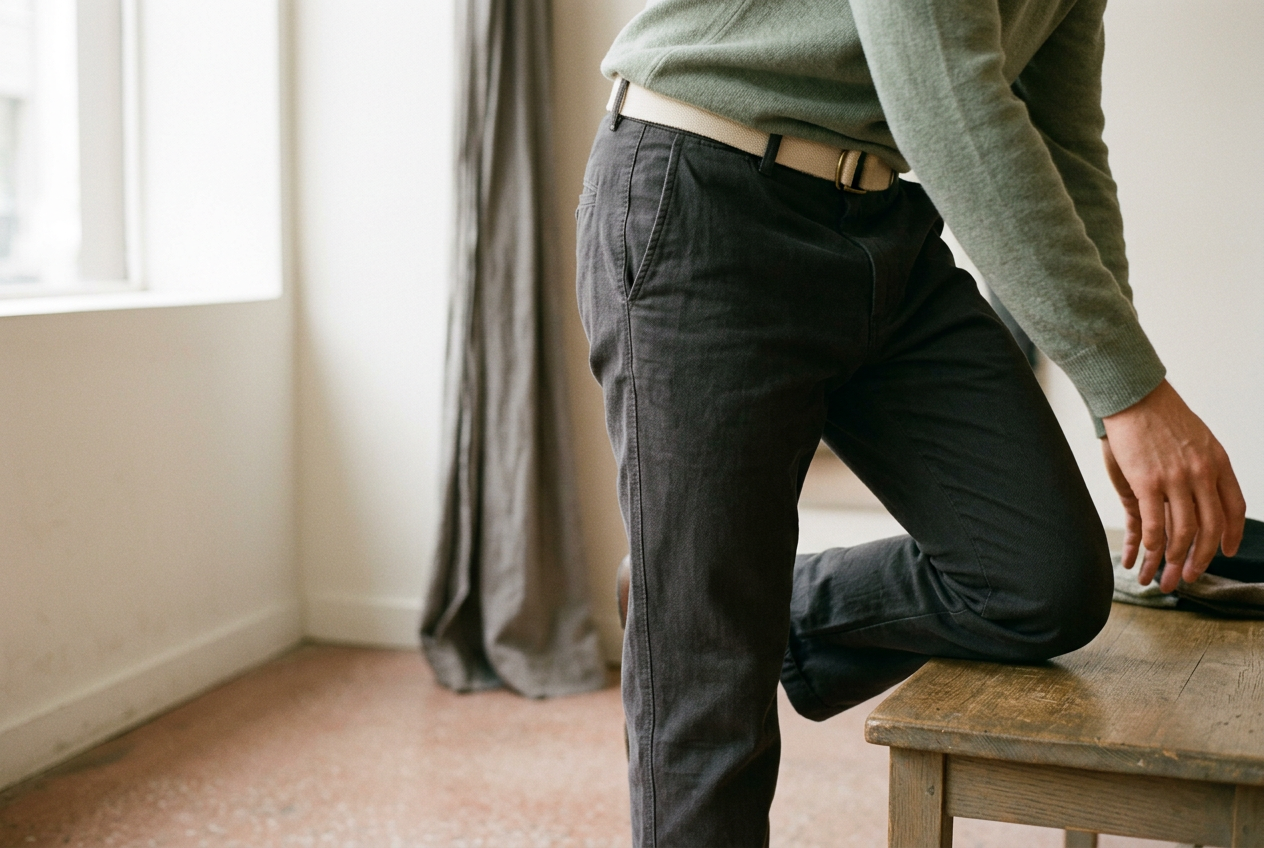
The test case was a pair of charcoal mid-rise trousers in nonstretch cotton twill, a firm fabric woven with subtle diagonal ribs. Standing in front of a mirror, the waistband sat flat, the side seams looked straight, and the legs fell cleanly. On station stairs, the trousers caught across the top of the raised thigh. After an hour at a desk, the front hip crease felt compressed even though the waist still fit.
That combination matters. Pants are often judged while the body is in its least demanding position, with both feet on the floor and the hips extended, yet ordinary wear asks the fabric to cover a longer path as the hip bends and the knee rises. A pair can therefore match the waist measurement and still lack room where movement needs it.
This is unisex fit guidance. The labels attached to a department or size range matter less than the relationship among waistband, pelvis, seat, and upper leg, though different brands build those proportions into their patterns in different ways.
The rise is the section from the crotch seam to the waistband, which shapes how the pants travel over the front and back of the pelvis. Thigh ease means the extra room in the garment beyond the body at the upper leg. Either can cause binding, but they do not produce quite the same evidence.
Set up a useful fitting check
Wear the underwear and shirt layer you would normally put under the pants. Fasten the waistband where the design intends it to sit rather than pulling a mid-rise pair upward to imitate a high rise, then empty the pockets, because a phone or wallet can create a false point of tension.
Use a low, stable step or fitting-room bench and keep a mirror nearby if possible. The sequence takes about five minutes. Do each movement slowly enough to notice where the first resistance appears; pushing into a deep pose only tells you that fabric has a limit, while the useful clue is the place that reaches its limit first.
Before moving, pinch the waistband lightly at the side. If there is already ample room there, remember it. That spare waist becomes important when comparing the next size.
Use the step to separate thigh strain from rise strain
Place one foot on the step at roughly ordinary stair height. Keep the standing leg straight and bring your weight forward as if climbing, without hiking the waistband or twisting your torso.
On the charcoal trousers, the first clear change appeared over the raised upper thigh: the fabric became taut from the front pocket area toward the inseam, and the trouser leg resisted the knee lift before the waistband moved. Those diagonal wrinkles, often called drag lines because they point toward an area under strain, indicated too little upper-thigh room rather than a waist problem.
A front-rise problem feels more central. The crotch seam may pull upward, the waistband may tip down at the front, or pressure may collect where the torso meets the leg even when the cloth around the thigh can still be pinched. If opening the waistband button reduces that central pull but leaves the thigh tight, there may be too little room at both the waist-to-crotch section and the upper leg.
Repeat with the other foot. Bodies are not perfectly symmetrical, but a large difference can also come from a phone pocket, a twisted waistband, or the way the pants were pressed. Reset the garment before treating one side as a pattern failure.
Let the squat check the back rise
Return both feet to the floor and make a shallow squat, closer to sitting into a chair than exercising. Stop once the hips move back and the knees bend enough to challenge the seat.
Watch the center back. If the waistband is pulled sharply downward, the back crotch seam presses in, or the seat fabric becomes taut before the thighs do, the back rise may be too short or too straight for your shape. More seat circumference can help when the cloth is tight across the fullest part, but circumference alone does not guarantee enough rise length.
The charcoal pair stayed reasonably stable at the back during this check. Its waistband did not descend, and there was still a small amount of cloth available across the seat. That made a short back rise less likely, even though the same pants had felt restrictive on stairs.
Do not use waistband gaping as proof that the back rise is too long. A gap can come from the angle of the waistband or from a larger difference between waist and seat measurements. Meanwhile, a short back rise can pull downward and still leave a gap at the top if the waistband shape does not follow the body.
Finish with a seated knee lift
Sit fully in a firm chair with both feet flat. Notice whether the waistband remains tolerable and whether the front pockets flare. Then raise one knee a few inches without leaning backward.
This movement concentrates the demand at one front hip. On the test trousers, the pocket edge opened and the fabric tightened immediately over the upper thigh, while the center front waistband stayed in place. That repeated the clue from the step: the dominant problem was thigh ease, with possible extra restriction from the shallow front crotch shape, rather than an overall shortage of size.
If the seated position feels fine until the knee rises, look closely at the thigh and front hip. If sitting alone makes the waistband cut in and draws the crotch seam upward, the front rise deserves more attention. Pressure isolated at the center-back seam points back toward the rear rise or seat shape.
Pocket flare supports a diagnosis but does not settle it. Some slanted pockets open because of their angle or light construction, even in roomy pants; count the flare only when it appears with pressure, drag lines, or restricted movement.
Decide whether to size up
Try the next size when tension spreads across the seat or both upper thighs and the current waistband has little spare room. Repeat the same movements rather than trusting the larger size while standing. If the step becomes easy, the squat stops pulling the back waist, and the waistband remains secure without a belt, sizing up has done useful work.
It is a poor trade when the larger pair adds most of its noticeable room at the waist while the stair test still catches at the same front-hip point. Brands grade patterns, meaning they increase dimensions between sizes, according to their own proportions; a larger size may add circumference without changing the rise shape or thigh-to-waist relationship enough for your body.
That was the issue with the charcoal trousers. The size increase eased the upper leg somewhat, but the waistband became loose enough to shift, and the front hip still met resistance during the seated knee lift. Keeping the larger pair would have traded one visible problem for another, plus the inconvenience of a belt or waistband alteration.
A different cut was the better alternative: trousers with more upper-thigh room and a slightly fuller front rise in the correct waist size. An athletic cut often adds room through the seat and thigh relative to the waist, while a curvy cut usually allows a greater difference between waist and hip. Pleated trousers can also release extra cloth as the hip bends, though the underlying rise still has to suit the body.
Account for fabric before keeping the pants
Nonstretch twill and rigid denim expose a close cut quickly. A small amount of elastane can soften the sensation, but stretch does not correct a crotch seam that sits in the wrong place, and repeated strain may leave pocket openings distorted or create persistent horizontal creases.
Do not count on a firm woven fabric relaxing enough to solve clear stair restriction. It may soften with wear, especially at the knees and seat, yet the basic pattern dimensions remain. If the fitting sequence already requires you to shorten your stride or pull the legs upward before sitting, the comfort cost is present before the care label enters the discussion.
For an online order, compare more than waist and hip measurements when the retailer supplies them. Front rise, back rise, and thigh measurements are more useful than a generic slim or relaxed label. If those details are missing, the home movement test should happen before tags are removed and while the return window is open.
Questions people ask
Can stretch fabric fix pants that bind on stairs?
Stretch can make a close thigh feel more forgiving, particularly during a brief step or seated bend, but it cannot relocate a short front or back rise. If the waistband tips, the crotch seam pulls upward, or the pockets distort during the test, look for a different cut rather than relying on elastane.
How can
I tell if the thigh is too tight rather than the rise?
Raise one foot onto a low step and watch where resistance starts. Taut fabric and diagonal drag lines across the upper leg, especially while the waistband stays level, point toward insufficient thigh ease. Central pressure at the crotch or a waistband that tips down suggests a rise problem.
Should
I buy the larger size and have the waist altered?
That can work when the larger size passes every movement check and only the waistband is loose. It is less useful when the pants still bind at the front hip, because reducing the waist will not add missing rise length or reshape the upper thigh, and a substantial alteration can disturb pockets and side seams.
Why do trouser pockets flare when I sit?
The front hip expands and bends in a seated position, so a close pattern can pull open a slanted pocket. Pocket angle and construction also affect flare. Treat it as a fit clue when it appears alongside pressure or drag lines, not as automatic proof that the whole pair is too small.
One update a day
Today's fashion update, in your inbox
One fashion update each morning — no hype, no filler, just pieces worth wearing.