Tropical-Wool Trousers Make a Humid Commute Easier
Three men’s outfit combinations built around one breathable trouser shape, with practical fixes for sticky linings, soaked cotton and shoes that rub on the walk home.
Men's · August 10, 2026 · 7 min read
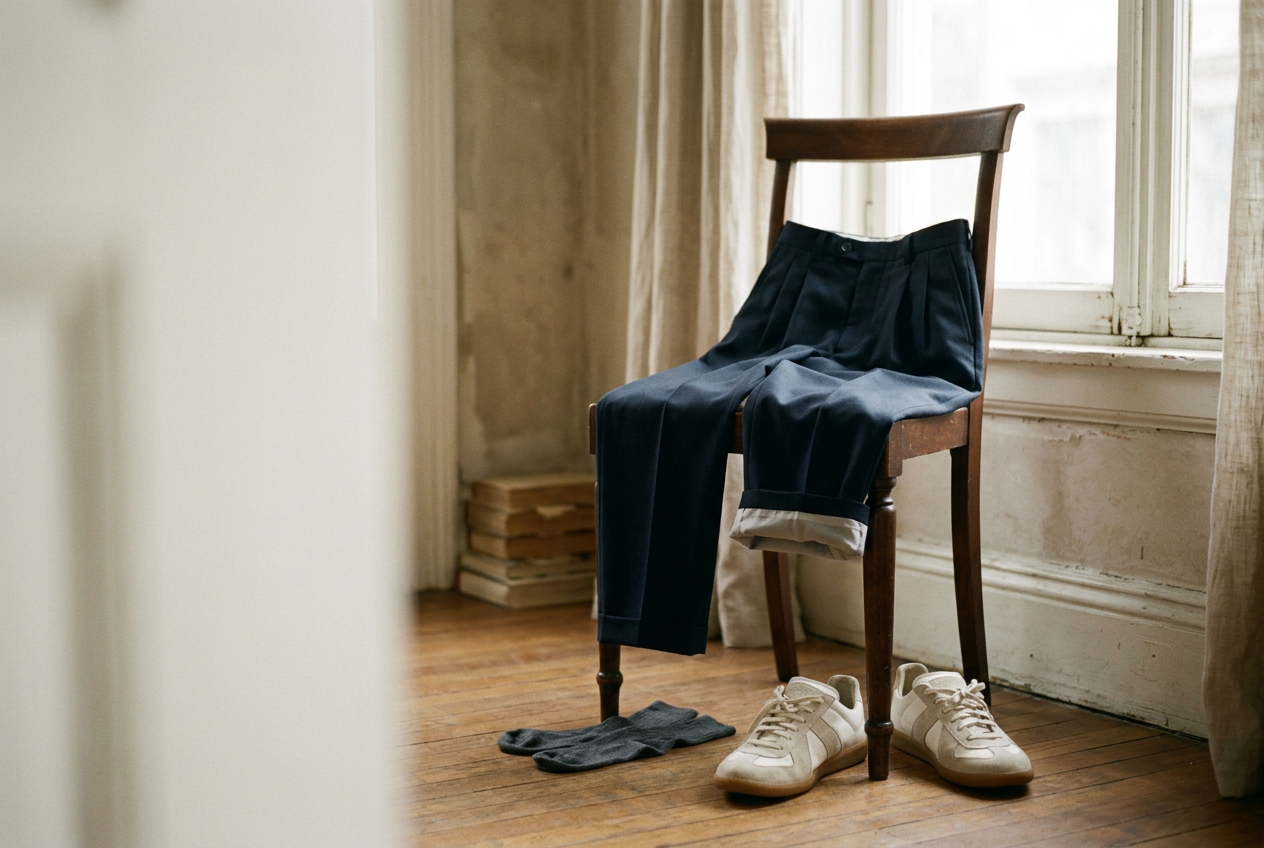
A useful men’s summer capsule starts with the garment that deals with the most heat and friction: the trousers. For a week of commuting, I wore a navy pleated pair cut from 100 percent high-twist tropical wool, a lightweight suiting cloth with an open weave that lets air pass through. The shape worked. The polyester lining did not.
That distinction matters. Tropical wool can feel drier than cotton chinos after a humid platform wait because it does not hold dampness in the same heavy way, while high-twist yarns, meaning wool fibers spun tightly for a springy surface, help the cloth resist wrinkles. Yet a breathable shell cannot compensate for a dense synthetic lining pressed against the front of the thigh. By the end of the warmest commute, that lining was the first part of the trouser to feel sticky.
The pair still became the anchor for three combinations, partly because its medium rise and single forward pleat left enough space through the seat and thigh for walking. The failure clarified the buying rule: look past the fiber label, turn the trousers inside out and inspect how much lining has been added.
Start with the trouser shape, not the tagged waist
This is men’s coverage, and the sizing problem is familiar across men’s departments: a tagged waist measurement may not match the garment laid flat, while two trousers carrying the same size can differ sharply through the rise, seat and upper thigh. Measure a pair you already like from the top of the waistband to the crotch seam, then compare that rise with the size chart or garment measurements rather than buying from the waist number alone.
For a humid commute, the waistband should stay in place without needing a tightly cinched belt. You should be able to sit on the train without the pleat pulling open or the pocket edges flaring. A little excess cloth below the seat is preferable to a clean but restrictive line, because a close cut traps warm fabric against the body and makes the knees work harder with every stair.
The tested navy pair looked trim while standing, but the fuller upper leg was the reason it survived the commute. After several wears, the crease had softened slightly at the knee and the polyester lining had become the obvious weak point, yet the wool shell released most seat wrinkles after hanging overnight. Slim cotton chinos tested as the alternative felt crisp in the morning, then stayed visibly damp longer around the waistband and backs of the knees.
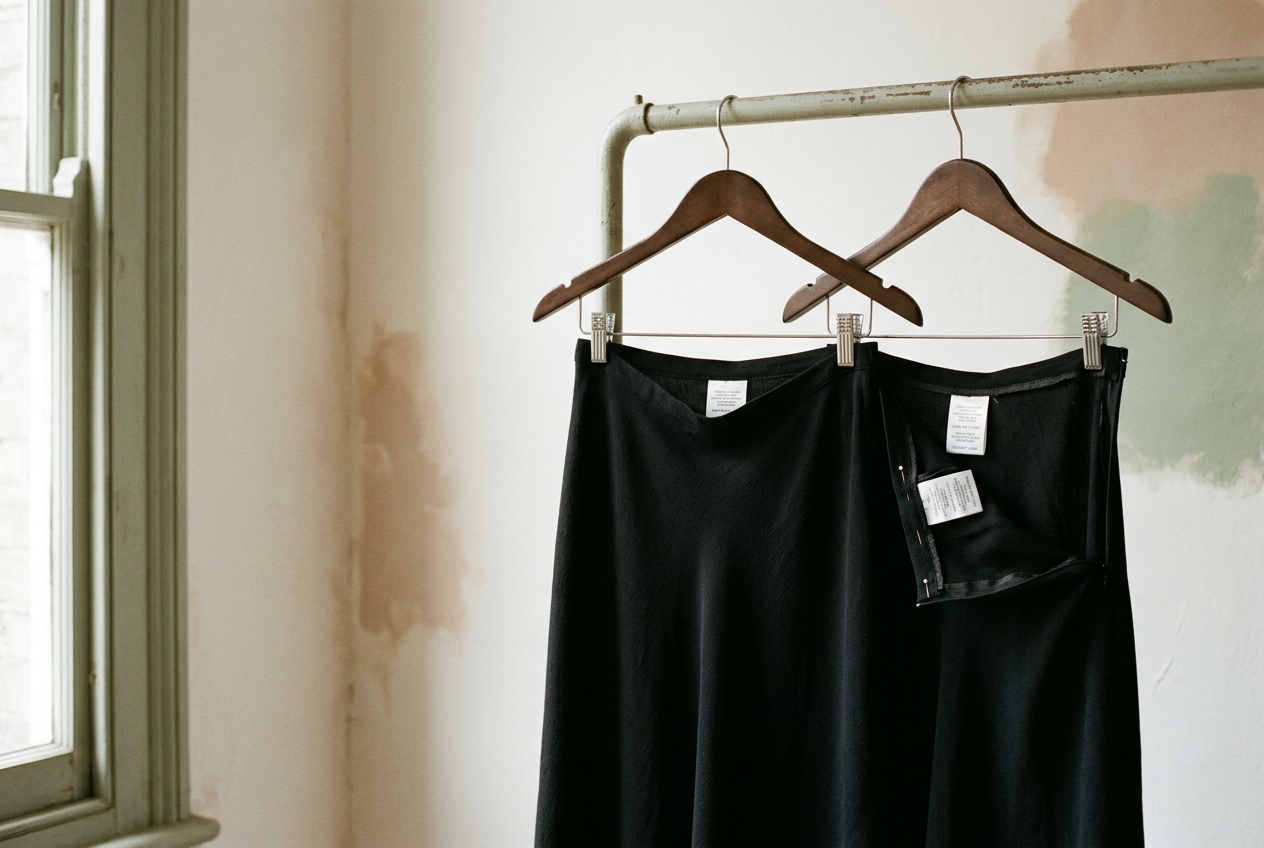
If the office requires tailoring, look for unlined tropical-wool trousers or a pair lined only where opacity demands it. A breathable cupro or viscose lining can feel better than standard polyester, though unlined construction remains the cooler option when the cloth is not sheer. The useful price band begins around what you might spend on decent everyday sneakers; above that, pay for better cloth, seam allowance and alteration potential rather than a fashionable label.
For the most formal office
Wear the navy tropical-wool trousers with a cotton-linen knit polo and unlined suede loafers. The polo should skim the torso rather than grip it, with an open collar that sits under a jacket if one is required. Cotton gives the knit structure, while linen helps it dry faster and keeps the surface from looking as flat as a basic jersey polo.
Check the hem before buying. A tight ribbed band catches above the waistband, bunches during the walk and leaves a bulky ridge when tucked; a straight hem or relaxed rib is easier to wear both ways. Dark brown suede is more forgiving than polished calf when dust, scuffs and a small amount of moisture are likely, although suede is not the right choice for a forecast that includes sustained rain.
The loafers need socks. A thin no-show sock may preserve the bare-ankle look, but it must cover the heel and the point where the vamp bends across the foot. During humid wear, an unlined loafer that feels pleasantly close in an air-conditioned store can rub once the foot swells. Try shoes late in the day, walk down an incline if the store allows it, and reject any pair that holds the heel by pinching rather than by matching its shape.
This was the sharpest combination with the navy trousers, but it was not the best for a long walk. The loafer earned its place only for a commute with limited pavement time and a change of shoes available at the office.
For the longest walk
Keep the same trousers and switch to a cotton-nylon seersucker shirt with a low-profile leather-and-mesh sneaker. Seersucker is cloth woven with a puckered surface, which keeps sections of the shirt from lying flat against the skin. A small amount of nylon helps the shirt recover from a backpack strap and dry faster than a dense all-cotton poplin, though too much synthetic fiber can hold odor.
Choose a shirt with room across the upper back. The test is movement rather than appearance: reach forward as if holding a train pole, then check whether the placket pulls open or the back hem climbs out of the waistband. A slightly dropped shoulder can help, but an oversized body is not necessary and may collapse into wet folds under a bag.
For the sneaker, prioritize a removable insole, a heel counter that does not fold inward and enough width at the forefoot for end-of-day swelling. Mesh improves airflow, but a fully knit upper can look too soft beside tailored trousers and may allow the foot to slide on quick turns. Leather panels around the laces and heel give the shoe more structure without sealing the whole foot.
Wear the socks intended for the commute during the fitting. A cushioned sock changes volume inside the shoe, and a sneaker bought close with a thin dress sock can become uncomfortable once that extra fabric is added. The navy trouser hem should finish without a deep break over the sneaker; extra cloth resting on the upper reduces airflow and makes an otherwise deliberate pairing look accidental.
For a relaxed dress code
Pair the trousers with a fine-gauge merino T-shirt and a lightweight cotton-linen overshirt carried rather than worn on the platform. Fine gauge describes a knit made with thin yarn, producing a smooth surface that can read more polished than standard cotton jersey. Merino manages odor well across repeated wears, but it is not invulnerable to sweat and needs to air fully before returning to the capsule.
The T-shirt should have a firm collar and enough sleeve length to sit near the middle of the upper arm. Very thin merino can show every waistband edge and develop holes where a belt buckle rubs, so hold the cloth up to the light and inspect the density before paying a premium. A merino blend can be sturdier, although added nylon changes the hand and may feel warmer.
The overshirt handles the office air conditioning without turning the commute into a layered endurance test. Pick one with an unlined body, plain patch pockets and enough room to close over the T-shirt without pulling at the buttons. Carrying it over an arm costs less comfort than sweating through it, and wrinkles in a textured cotton-linen cloth look less severe than the hard creases that form in smooth poplin.
This combination works with the same structured sneaker used for the longer walk. The suede loafers can make a fine T-shirt look unfinished unless the office is casual and the trouser hem is precise.
Build the rotation around recovery time
One pair of wool trousers should not cover every workday in humid weather. Wool benefits from resting, which lets moisture leave the fibers and gives wrinkles time to release, so the practical capsule uses two trousers in the same successful shape. Navy and charcoal are the easiest office pair; olive can replace charcoal where the dress code is softer.
Hang each pair from the waistband after commuting and empty the pockets so they do not distort the cloth. Brush away dry surface dirt once the trousers have aired. A dry-clean-only label does not mean cleaning after every wear, but salt marks and food stains should not be left indefinitely; frequent cleaning also has a cost, both in money and in wear on the cloth.
The tested navy pair needed steaming at the knee after the week, not a full press. Its polyester front lining remained the reason I would not buy the same construction again. An unlined version in the same rise and thigh shape would keep the useful part of the experiment while removing the layer that failed first.
Questions people ask
Are tropical-wool trousers cooler than cotton chinos?
They often feel drier because the open weave allows more air movement and the wool does not cling like damp cotton. Construction can reverse that advantage. A tropical-wool trouser with dense polyester lining may feel warmer at the thigh than an unlined chino with a relaxed cut.
Should commuter shoes fit loose to allow for swelling?
No. They should hold the heel securely while leaving enough forefoot width for the toes to spread late in the day. Fit them with your commuting socks, and avoid buying a longer size merely to gain width because excess length can create heel movement and friction.
How many trousers belong in a humid-weather work capsule?
Two is the practical minimum for a regular office week because each pair gets time to air and recover between wears. Keep the rise and thigh fit consistent, then vary the color or cloth; a second trouser that binds when seated will not function as a real substitute.
Can the same tropical-wool trousers be worn several days in a row?
They can look presentable, but repeated humid wear gives moisture less time to leave the waistband, pockets and lining. Alternate pairs, hang the worn trousers in moving air and return them to the closet only after they feel dry at the waistband and behind the knees.
One update a day
Today's fashion update, in your inbox
One fashion update each morning — no hype, no filler, just pieces worth wearing.