The Wrong Crease Fix Can Shine Wool and Glaze Polyester
A stubborn crease does not always need more heat. Match steam, pressure, moisture, and washing to the fabric before a fix becomes permanent damage.
August 10, 2026 · 8 min read
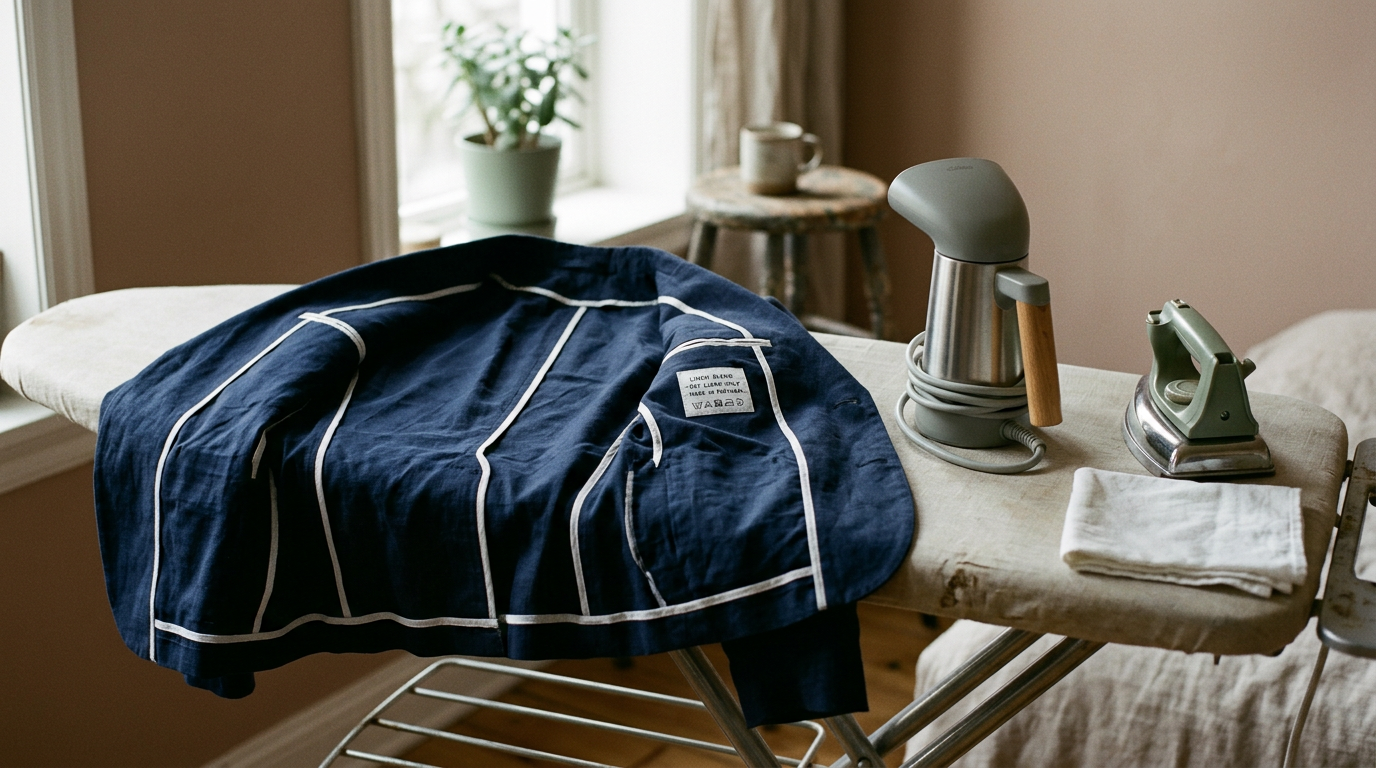
This guide uses one awkward garment as its running case: a navy linen-viscose blazer with a hard horizontal crease below the shoulder blades, left by sitting against a chair. Its care label permits a cool iron, but the tailored back and dark surface make aggressive pressing a poor first move.
That blazer captures the real problem. The crease is visible enough to spoil the line, yet the wrong treatment could leave shine, a pale water ring, or bubbling inside the jacket. This is unisex care advice because fiber behavior does not change between wardrobes, although tailored jackets, pleated clothing, and structured dresses bring construction risks that a plain shirt does not.
Read the label before choosing the tool
The fiber name tells you how the cloth may behave. The care label tells you what the finished garment can tolerate after dyes, coatings, pleats, linings, and internal structure have been added. If the two appear to disagree, follow the label.
Begin with the least damaging sequence. Hang the garment and let gravity work for several hours. Test cool steam on an inside seam or hidden hem, checking for color change and water marks after the area dries. Increase heat only within the label limit, then move to direct ironing if steam cannot shift the crease.
An iron uses heat, moisture, pressure, or some combination of them to flatten fibers. A garment steamer mainly supplies moist heat without compressing the surface, which makes it useful for many jackets and dresses but less decisive on a deep fold. Rewashing saturates the whole garment and resets its shape during drying, so it costs more time and introduces risks such as shrinkage, dye movement, and distortion.
For the navy blazer, the first pass belongs on the inside. Hang it, pull the back panel into its natural shape without stretching it, and apply a light flow of steam from the distance specified by the appliance maker. Rowenta and Philips guidance varies by model, particularly around contact and water type, so the machine manual matters more than a generic steaming trick.
If the steamer spits droplets, stop. Let the marks dry before deciding whether they are temporary damp patches or visible rings.
Cotton and linen respond to moisture and pressure
A washable cotton shirt with a stubborn crease usually needs an iron rather than another wash. Cotton tolerates more heat than the other fibers here when its label allows it, and slightly damp cloth releases creases faster than bone-dry cloth. Mist the area evenly, wait for the moisture to spread, then iron on the reverse with steady passes rather than holding the soleplate in one place.
Printed cotton, coated cotton, stretch cotton, and dark garment-dyed pieces need a lower setting and an inside-out approach. Heat can affect a surface treatment even when the cotton beneath it would survive. A pressing cloth, meaning a clean piece of plain fabric placed between the iron and garment, also reduces direct contact.
Pure linen creases readily because its fibers have little elastic recovery. Steam can soften light rumpling, but a sharp fold normally responds best to an iron while the cloth is evenly damp. Use the label-approved setting and press from the reverse, especially on navy or black linen, where hard pressure can flatten the surface and create shine.
The linen-viscose blazer is different from a plain linen shirt. Viscose is weaker and more prone to distortion when wet, while the jacket may contain internal adhesives that dislike prolonged steam. Its cool-iron instruction rules out the high heat that pure linen might take, so the blend and construction narrow the method.
Wool needs steam without hard pressure
Wool fibers tend to recover when given controlled moisture and rest, which is why a wrinkled wool trouser or jacket often improves after hanging in a steamy room or receiving a light pass from a garment steamer. Let the item cool and dry on a shaped hanger before judging the result. Moving it while warm can pull the garment out of line.
For a persistent crease, place the wool wrong side up, cover it with a damp pressing cloth, and press with the label-approved setting. Lift the iron instead of scrubbing it back and forth. Excess pressure can flatten the textured surface, particularly on dark suiting, leaving a shiny patch that looks worse under direct light than the original fold.
Do not keep reheating shine in the hope of removing it. Light surface compression may respond to gentle steam and brushing after the fabric cools, but severe glazing can be permanent. A tailored wool jacket with shoulder structure or a crisp lapel is a reasonable professional-care job because careless steam can soften the shape that makes it fit.
Polyester can preserve the damage
Polyester is thermoplastic, meaning heat can soften and reshape the fiber. That makes low heat useful, but excessive heat may flatten the surface, produce shine, or lock an unwanted shape into the cloth. A hot iron can damage polyester before the user sees an obvious scorch mark.
Start with cool steam from the reverse and keep the garment relaxed rather than pulling it taut. If direct ironing is allowed, turn the piece inside out, add a pressing cloth, and use the lowest effective setting. Stop as soon as the crease releases. Sportswear prints, heat-bonded hems, and pleated polyester deserve extra caution because heat may alter the feature that gives the garment its finish.
Rewashing polyester makes sense when the entire washable item has dried into a mass of folds, perhaps after sitting compressed in the machine. Use the label-approved cycle, remove it promptly, shake it out, and dry it on low heat or hang it in shape. A hotter dryer is not a stronger cure; it raises the chance of fixing the creases or affecting elastic components.
Delicate blends follow the most vulnerable part
A blend does not average out its fibers. A silk-viscose blouse, wool-polyester trouser, or linen-viscose jacket should be treated according to its most heat-sensitive fiber and its construction, then kept within the care label. Dark color adds another concern because shine and water marks tend to show more clearly.
Water spotting happens when moisture shifts dye, finish, or residue and leaves a visible edge after drying. Silk, acetate, viscose, and unfamiliar blends can show it, particularly when a steamer spits rather than producing a fine, even flow. Test with a small amount of steam in a hidden place and wait until it dries. Testing only while the cloth is damp proves very little.
On the navy blazer, a cool inside-out press is the second step only if light steam fails. Support the back panel on a padded surface, place a dry pressing cloth over it, press briefly, and lift. Do not bear down on the crease. The aim is to relax the fold without embossing seam allowances or internal edges onto the outer fabric.
Tailoring raises the stakes because fusible interfacing, an adhesive-backed internal layer that gives collars and jacket fronts shape, can bubble after too much heat or moisture. The crease on the blazer sits away from the lapel, which makes a cautious home attempt reasonable. A crease crossing the chest, shoulder, lapel, or a bonded hem would push the decision toward professional pressing.
Rewashing is for widespread creasing, not one line
Wash again when the label permits it, most of the garment is crumpled, and the wrinkles came from drying in a compressed heap. Give the item room in the drum, use its normal gentle or standard cycle as directed, then remove it promptly and smooth collars, plackets, and hems before drying.
Skip the second wash for one stubborn crease. It uses more water, exposes the whole garment to friction, and may still leave the original fold if the item dries crowded again. Spot steaming or pressing takes minutes; a wash-and-dry cycle occupies much longer and asks every seam, dye, and trim to tolerate another round.
Stop before the attempted cure becomes visible
Professional care is safer when the label says dry clean only, the fabric content is unknown, color transfers during a hidden test, or the garment has velvet, permanent pleats, embellishment, glued construction, or structured tailoring. Point out the crease and mention any home treatment already attempted so the cleaner can assess water and heat exposure.
Stop at home if the cloth develops shine, puckering, odor, color change, or a hard edge around a damp patch. The navy blazer earns one light steaming attempt and, if its hidden test stays clean, one cool press from the reverse. Repeated passes are not persistence. They are cumulative heat.
Questions people ask
Can I steam a dry-clean-only garment?
Sometimes, but the label warns against full washing rather than guaranteeing that steam is safe. Test a hidden area, keep the steamer from spitting, and avoid saturating structured sections. Take tailored jackets, acetate blends, velvet, embellished pieces, and garments that show any color movement to a cleaner.
Why did my iron leave a shiny patch?
Heat and pressure can flatten the fabric surface, making dark wool, linen, or polyester reflect light differently. Let the area cool, then try light steam from the reverse without pressing. If the fibers have glazed or melted, particularly on polyester, further ironing will not restore them.
Is rewashing safer than ironing?
Only when the garment is washable and creased all over. Rewashing avoids direct soleplate heat, but it exposes the full piece to water, friction, and another drying cycle. For one fold, label-approved steam or a brief reverse-side press usually limits the treatment to the problem area.
Can I use tap water in a garment steamer?
Follow the steamer manual. Water recommendations differ by model and local mineral content, and using the wrong type can cause buildup or spitting. Empty and clean the machine as directed; droplets carrying mineral residue can leave marks on dark clothing and delicate blends.
One update a day
Today's fashion update, in your inbox
One fashion update each morning — no hype, no filler, just pieces worth wearing.