Cotton Poplin Stays Crisp Until Sweat Hits It
Lightweight poplin keeps its shape in summer, but color and fit decide whether it shows damp patches, turns translucent or clings. Here is when to switch to seersucker or linen.
September 22, 2026 · 8 min read
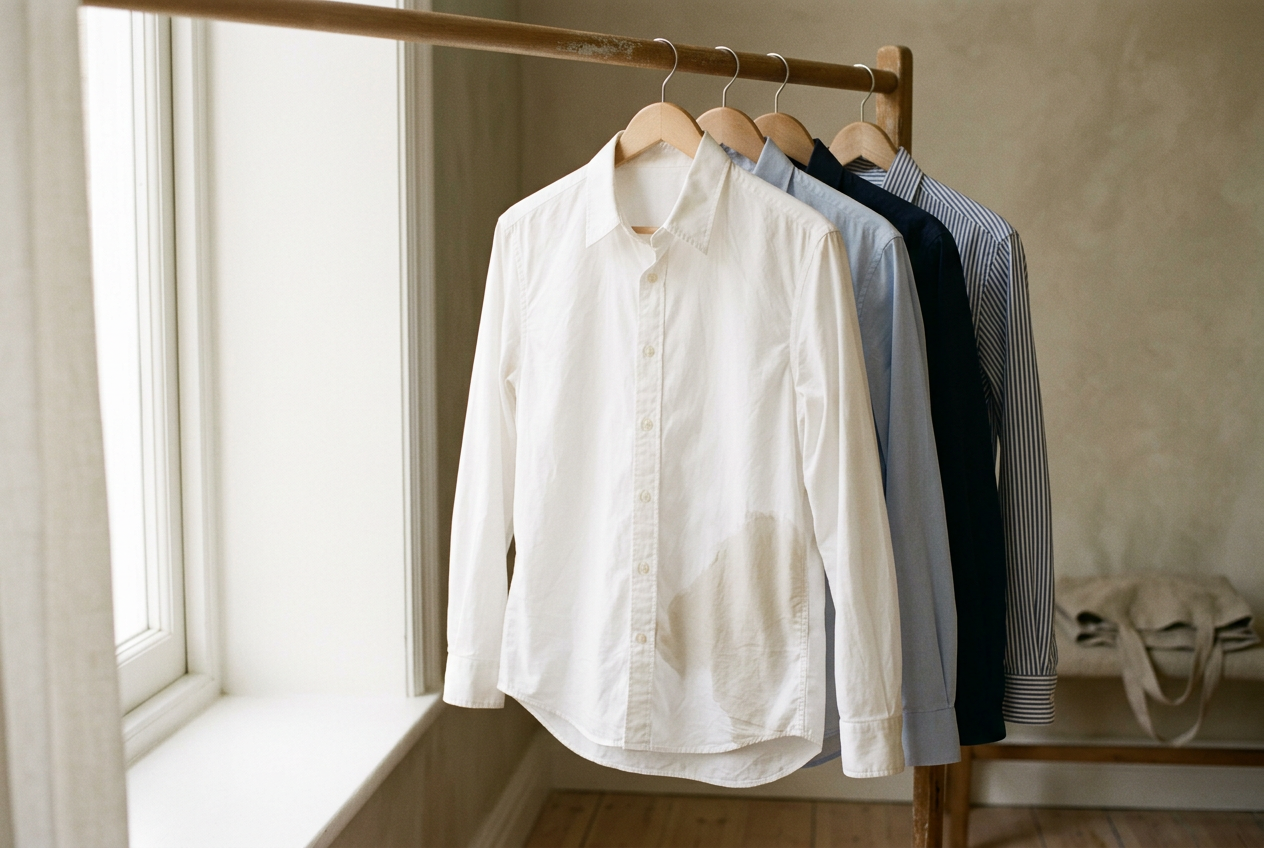
My test case was a white, lightweight 100 percent cotton poplin button-front worn on four warm commutes over one week. It had a straight cut, enough length to wear untucked and a care label calling for a cold machine wash. I wore it over a skin-toned cotton tank, rather than judging it on a hanger, because poplin’s most important summer behavior begins after perspiration reaches the cloth.
The shirt looked sharp at the start of each wear. Its collar stayed upright, the front did not collapse around the buttons and the hem made loose trousers look intentional. By the middle of a humid commute, however, the back had started to adhere between the shoulder blades, while the cloth beneath the backpack straps became darker and slightly translucent. Once dry, the white recovered better than a pale solid would have, though faint creasing remained where the damp fabric had stuck.
That cycle is the case for and against poplin. The advice here is unisex because the material behaves the same across wardrobes, although bust, chest, shoulder and upper-back fit determine how quickly a particular shirt begins to cling.
Crispness comes from a close weave
Poplin is a plain-weave fabric, meaning each crosswise yarn passes over and under alternating lengthwise yarns, producing a smooth surface with little texture. In lightweight cotton, that construction can feel cool when first put on because the cloth is thin and does not hold much bulky fiber against the body. Thin is not the same as airy.
The closely set yarns restrict airflow compared with an open linen weave, especially when the shirt sits near the skin. A loose poplin shirt can pump warm air through the neck, hem and sleeves as the wearer moves, but a fitted one depends more heavily on air passing through the fabric itself. Once damp, cotton absorbs moisture and the flat surface settles against the body, closing much of the small space that had allowed air to circulate.
This is why my white shirt felt comfortable while walking in shade yet clammy under the backpack. The bag blocked evaporation, the smooth wet cloth had nowhere to lift and the fitted shoulder line prevented the back panel from moving freely. Poplin was not failing to absorb sweat. It was holding that moisture close enough for the shirt to announce where it had landed.
Color changes the evidence
White poplin is often treated as the safest hot-weather option, and it does absorb less solar heat than a dark equivalent. Its problem is opacity. Dry white poplin can look solid in indoor light, then reveal a tank, bra, waistband or pocket facing once direct sun or moisture reaches it. On my test shirt, sweat did not create a dramatic dark map, but it made the fabric temporarily more transparent around the back and underarms.
A skin-toned underlayer reduced the contrast without removing the extra warmth of a second garment. A white tank was much more visible because the boundaries showed through, particularly where two layers ended at different points. Anyone who wants to wear white poplin directly against the skin should inspect the shirt in daylight and look at areas with only one fabric layer, rather than relying on the doubled front near the buttons.
Pale blue, pink, stone and gray tend to show the clearest damp patches. Water darkens these colors enough to produce obvious edges, and those edges may remain visible during drying even after the center has started returning to its original shade. A fine solid makes the change easy to read from several feet away. If underarm or back perspiration is the main concern, a pale solid is usually the least forgiving poplin choice.
Dark navy, brown and black conceal the initial darkening better, but they have their own record of wear. Salt from dried perspiration can leave a pale outline, deodorant can transfer at the armhole and a smooth dark surface shows the slight shine created when damp cloth presses against skin. Dark colors can also feel hotter in direct sun. They make more sense for shaded evenings or air-conditioned settings than for a long exposed walk.
Prints give the most useful camouflage, provided the pattern has uneven tonal contrast. A narrow blue-and-white stripe breaks up a damp boundary better than pale blue alone, though the white sections may still become translucent. Small checks, scattered motifs and mottled patterns interrupt drying marks from more angles. Large areas of uninterrupted pale ground behave like a solid, so the presence of a print is less important than how densely it covers the cloth.
Fit decides whether the shirt ventilates
A summer poplin shirt needs ease, the extra room between the body and garment, across the upper back and chest. Enough room to pinch fabric while standing is not a complete test. Reach forward, raise both arms and sit down. If the back becomes taut or the buttons pull during those movements, perspiration will meet fabric quickly and the wet area will have little chance to lift away.
My white shirt passed the standing test but tightened when I reached for a train strap. That was the fit quirk that mattered. The straight body looked loose near the waist, yet the shoulder and upper-back cut still held the fabric close at the sweatiest point. Sizing up would have added some room, although the dropped shoulder and longer sleeve would then need to look deliberate rather than accidental.
Sleeves also change the result. A rolled long sleeve creates a thick band around the forearm and can trap heat, while an elbow-length loose sleeve preserves structure without compressing the arm. At the torso, wearing the shirt open over a tank improves movement and makes localized transparency less consequential, but it also turns one lightweight layer into two. On a dry hot day, that trade can work.
In high humidity, it often feels heavier than a single linen shirt.
Seersucker and linen solve different problems
Seersucker is a puckered woven fabric whose raised and flat sections keep much of the cloth from resting evenly on the skin. That texture gives perspiration fewer broad surfaces to glue down, permits small channels of air and disguises wrinkles or drying marks better than smooth poplin. It is the practical switch for a reader who still wants cotton, a collar and visible structure.
The cost is formality. Seersucker reads more relaxed, its puckering adds visual volume and inexpensive versions can feel stiff or exaggerated. A fine stripe or small check usually integrates the texture more quietly than a high-contrast stripe. For a humid outdoor lunch, commute or travel day, I would take that compromise over the immaculate first fifteen minutes of my white poplin shirt.
Linen offers the clearer airflow advantage. Its yarns are commonly less uniform, and many summer linen fabrics leave more space for air to move than tightly woven poplin. Linen wrinkles quickly and can become translucent when very lightweight, while pale solid linen is not immune to sweat marks. It usually releases dampness more readily because a roomy linen shirt does not maintain poplin’s flat, close contact with the body.
Choose linen when cooling and drying matter more than a crisp collar. Choose seersucker when cling is the main problem but a cotton shirt shape still suits the occasion. Keep poplin for dry heat, short outdoor intervals or settings where its smooth finish earns its comfort cost.
Spend on cut and opacity, not thinness alone
At the budget end, lightweight poplin can be perfectly useful if the weave is even, the seams lie flat and the cut leaves room to move. A higher price does not guarantee better hot-weather performance. Extra-fine fabric may feel luxurious yet become more transparent, while a beautifully close weave can retain the same damp cling as my ordinary white test shirt.
Investment makes sense when it buys a more considered pattern: shoulder room without a tent-like waist, a collar that recovers after washing, securely finished seams and enough fabric density to reduce show-through. It is less persuasive when the selling point is only an exceptionally crisp hand, meaning how the fabric feels when touched. Crispness in a fitting room says little about ventilation after twenty minutes outside.
Before buying, hold a single layer toward daylight, then place it over a contrasting garment to expose transparency. Move your arms as you would during a commute. Read the fiber label too. Cotton blended with a substantial amount of polyester may resist wrinkles, but it can feel less absorbent and hold odor differently from all-cotton poplin.
For care, wash soon after a sweaty wear so salt and deodorant do not settle into the underarms. Follow the label, use stain treatment only where needed and skip heavy applications of fabric softener, which can coat fibers and reduce absorbency. Reshape the collar and button area before air-drying. My white shirt needed a quick press after washing, but ironing it while slightly damp restored the smooth surface faster than trying to flatten it once fully dry.
Questions people ask
Is cotton poplin breathable enough for hot weather?
It can be comfortable in dry heat when the fabric is lightweight and the garment hangs away from the body. In humidity, its close weave and smooth surface become less forgiving because damp cotton settles against the skin. Fit, exposure time and whether a bag presses on the shirt matter as much as fabric weight.
What color poplin hides sweat best?
A densely distributed print usually hides changing moisture boundaries better than a solid. White minimizes obvious dark patches but can turn translucent, pale solids show the strongest wet-to-dry contrast and dark colors may reveal salt or deodorant after drying. Look for small checks, irregular motifs or stripes with more than one midtone.
Is seersucker cooler than poplin?
Seersucker often feels less clingy because its puckered surface holds sections of fabric away from the skin and leaves small paths for air. It is a better choice for humid wear when you want cotton structure, although the visible texture reads more casual and may add volume compared with flat poplin.
How loose should a summer poplin shirt fit?
It should stay untensioned across the upper back and chest when you reach forward, sit and raise your arms. Loose fabric at the waist does not compensate for tight shoulders. If sizing up creates sleeves or a collar that look oversized, choose a different cut rather than accepting pressure at the shirt’s dampest points.
One update a day
Today's fashion update, in your inbox
One fashion update each morning — no hype, no filler, just pieces worth wearing.