A Heavy White T-Shirt Can Still Show Your Bra
Fabric weight is a weak shortcut for opacity. This fitting-room test shows how knit density, stretch and two kinds of light reveal the white T-shirts worth keeping.
Women's · September 18, 2026 · 7 min read
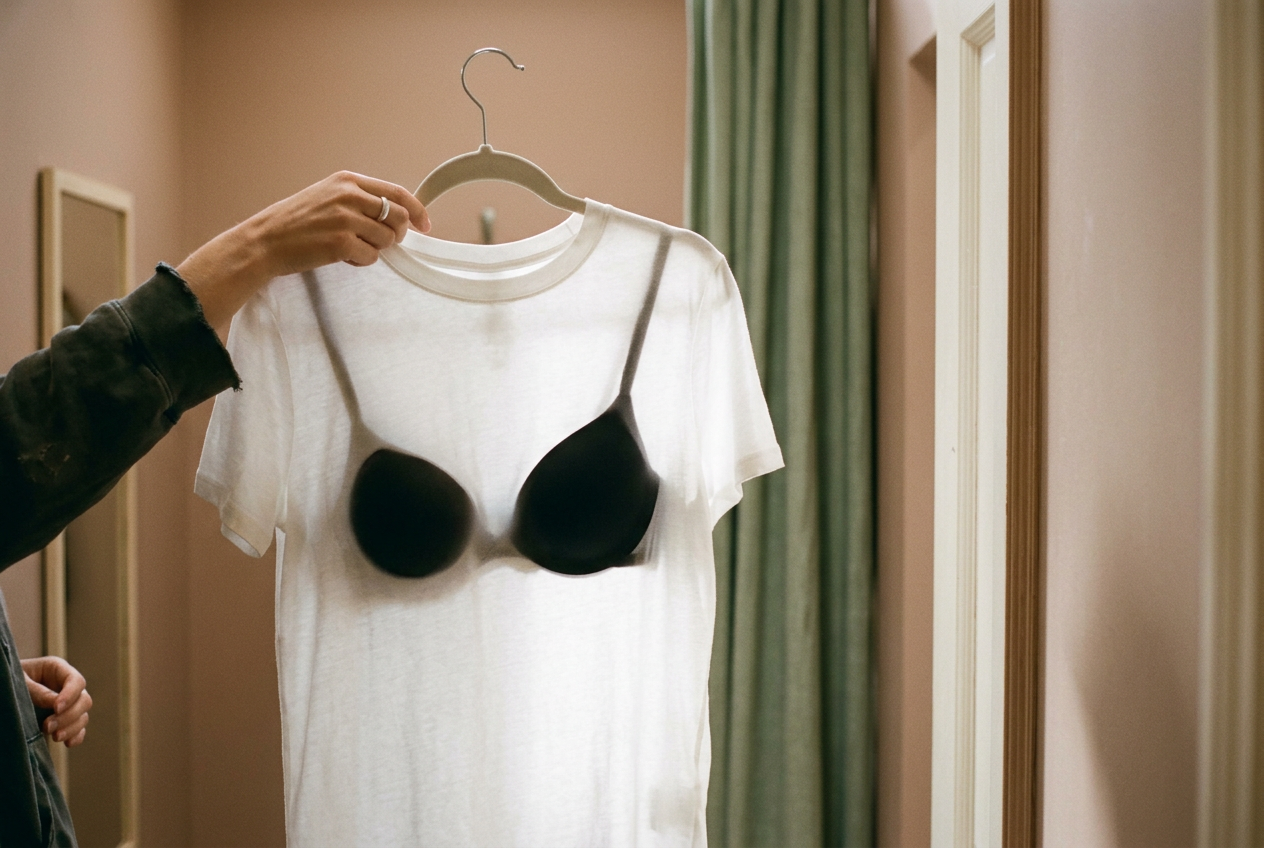
The fitting-room case that clarified this was a regular-fit white cotton jersey crewneck, worn in the size that aligned cleanly at the shoulders over a black balconette bra. Jersey, a knit made from interlocking loops rather than woven threads, usually gives a T-shirt its softness and stretch.
On the hanger, this shirt looked substantial. Facing the fitting-room mirror under warm overhead LEDs, it seemed passable. Near the store entrance, with daylight hitting from the side, the black bra cups became clear across the fullest part of the bust while the loose fabric below stayed opaque.
That split result is the point. Fabric weight describes how much material is present, but coverage also depends on how tightly the loops sit, how much the shirt stretches on the body and how light travels through the resulting gaps. A heavy tee with a loose knit can reveal more than a lighter tee with compact, even construction.
This is women’s coverage, focused on bra show-through and stretch across the bust, although the same lighting test works for undershirts, chest hair, tattoos and waistbands in other wardrobes.
Start with deliberately difficult underwear
Wear a bra that creates contrast under white. For light skin, black or another deep color makes a useful test layer; for deeper skin, a pale beige or bright white bra may create the sharper contrast. The goal is not to style the shirt for purchase. It is to expose weak coverage before the return window closes.
A smooth cup gives the cleanest reading because lace, seams and embroidery add texture that can show even when the fabric itself is reasonably opaque. If a T-shirt passes over a high-contrast smooth bra, it should be easier to wear over a bra close to your skin tone. If it fails, switching to a lower-contrast bra may still make the shirt usable, but that is a styling workaround rather than evidence of dense fabric.
Use your usual bra shape when fit is part of the decision. The anchored black balconette mattered because its upper edge sat across an area where the crewneck pulled slightly; a full-coverage bra would have shifted that line, changing where the test shirt looked most transparent.
Read the knit before trying the shirt on
Hold one layer of the shirt between yourself and a ceiling light. Do not stretch it yet. You are looking for the spacing and regularity of the knit, rather than trying to assign the shirt a simple sheer-or-opaque verdict.
Knit density means how closely the loops sit together. Dense jersey tends to show a small, even field of openings when backlit. A looser knit shows larger points of light, and irregular areas can indicate that the fabric will reveal more when pulled across the body. Slub cotton, which has intentional thick and thin sections in the yarn, may look textured and appealing while allowing light through its thinner streaks.
Then pull the fabric gently sideways between two fingers. This small test cannot reproduce a bust or upper back, but it shows whether the openings expand quickly. The white crewneck looked compact while relaxed, yet its loops separated noticeably with modest sideways tension. That was the warning the hanger view missed.
Thickness still matters. It just does not work alone. A plush surface can scatter light and feel substantial while hiding an open structure beneath it, whereas a smooth, tightly knitted tee may feel thinner in hand and provide steadier coverage once worn.
Run the fitting-room test in four passes
Put the shirt on without adjusting your posture to flatter it. Settle the shoulder seams where they naturally fall, smooth the hem once and leave the fabric alone. Repeatedly tugging the shirt forward creates temporary space over the bust, which can make an undersized or close-cut tee appear more opaque than it will during wear.
First, face the fitting-room mirror under the store’s normal LEDs. Look at the bra cups, the center front and the side of the bust. Indoor LEDs can create bright highlights on white fabric while leaving other areas comparatively flat, so move half a step to either side rather than trusting a single position.
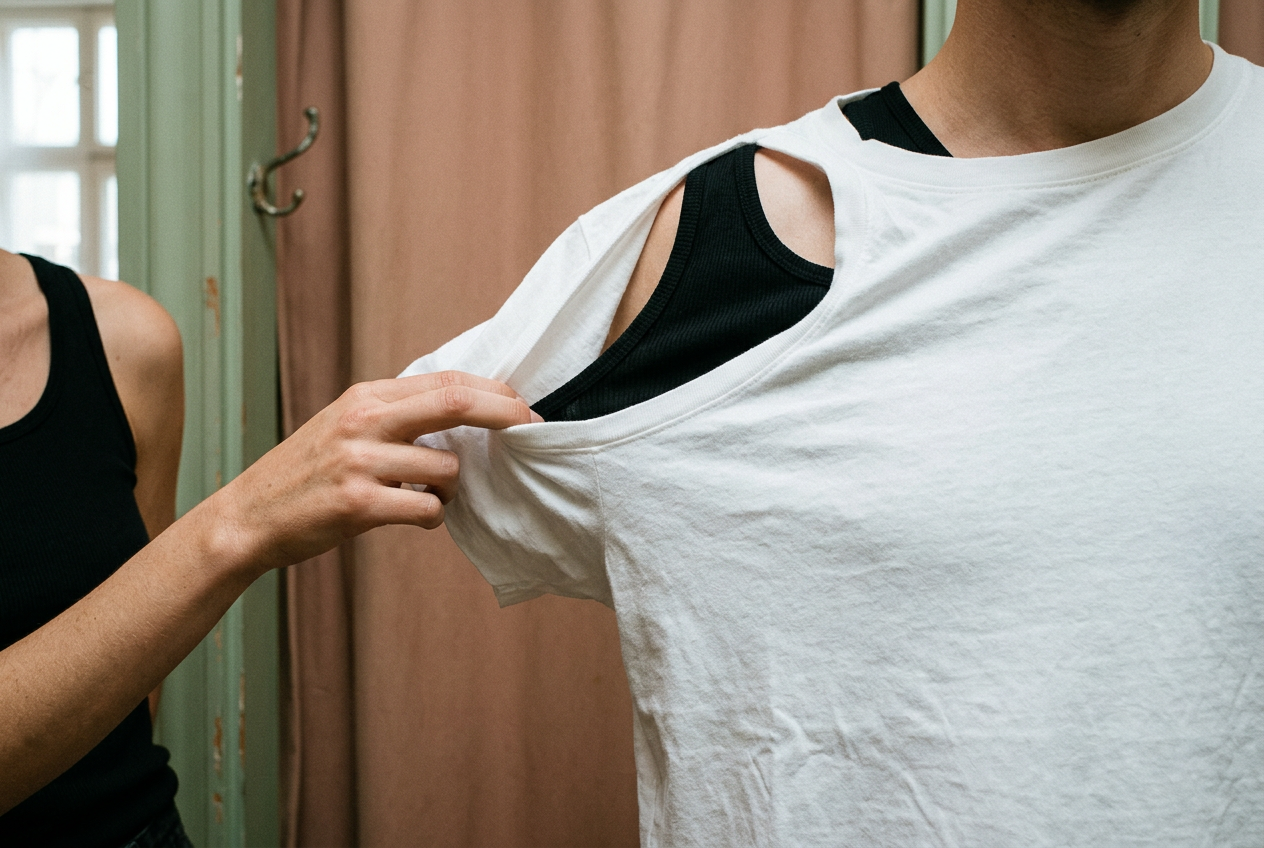
Next, turn sideways. The profile view reveals tension that the front view disguises, especially when a shirt fits at the shoulders but borrows width from the fabric across the chest. On the test crewneck, the black bra was only faintly visible from the front under warm LEDs; at the side, its upper edge and cup contrast were much clearer.
Raise both arms to about shoulder height, then lower them. Reach forward as if taking something from a shelf. These movements spread jersey across the upper back and bust, and they also show whether the fabric returns to its resting shape. Recovery, meaning the fabric’s ability to contract after stretching, matters because a shirt that stays slightly widened can look thinner after an hour than it did when first pulled on.
Now find daylight. A fitting room near a window is ideal, though the open shop floor or an entrance area can work if store policy allows you to step out. Stand with daylight facing you, then turn so it comes from the side. Direct sun is less useful because glare can overwhelm detail; broad window light gives a clearer view of contrast beneath the jersey.
Finally, use a phone camera as a secondary check, never the only one. Take an ordinary rear-camera photo without flash under each light source, keeping the exposure unchanged if your phone allows it. Automatic image processing may brighten white fabric or deepen dark underwear, so compare the photographs with what you see in the mirror instead of treating the camera as an objective judge.
The full sequence takes a few minutes. It costs no more than the extra effort of wearing test underwear to the store, and it is more dependable than squeezing a sleeve or trusting a product description that calls the fabric heavyweight.
Check the size by watching where opacity changes
A useful opacity test doubles as a sizing test. If the shirt stays opaque at the waist but becomes transparent across the bust, upper arms or shoulder blades, the fabric is opening under local tension. Going up one size may solve that, provided the neckline and shoulders do not become too loose.
Do not assume every larger size uses a correspondingly denser or heavier fabric. Brands usually grade a pattern, meaning they adjust its dimensions across sizes, while using the same cloth throughout the run. The same jersey can therefore look opaque on one body or in one size and more revealing where another fit places greater stretch across the fabric.
Compare two adjacent sizes under the same light, with the same bra, and pay attention to the shoulder seam before choosing the larger one. If the bigger shirt gives better coverage but drops far beyond the shoulder or bunches under the arm, the cut is the mismatch. A different style with more room through the chest and a stable shoulder line will serve better than sizing up until the body disappears inside it.
The regular-fit crewneck demonstrated that distinction. Its shoulder seam was correct in the first size, while the chest needed more ease, which is the amount of room between the body and garment. The next size reduced bra contrast but weakened the shoulder fit. A roomier cut in the original shoulder size was the better alternative.
Decide what level of show-through you can use
Perfect opacity is not always the goal. A fine white tee can work as a layering piece under a blazer, sweater or open shirt, where softness and drape may matter more than solo coverage. The purchase becomes poor value when the label, weight or price leads you to expect a stand-alone shirt and the jersey only works with a skin-tone bra plus a camisole.
Set the standard according to the outfit you need. For a white tee worn alone with tailored pants or a skirt, look for stable coverage while standing, reaching and sitting. For an underlayer, slight contrast at the bra may be acceptable if the neckline lies flat and the added layer does not make the outfit too warm.
Color choice helps, but a bra close to your skin tone cannot repair every failure. Raised seams can still print through, and stretched jersey may reveal the outline of cups even when the color disappears. A smooth, well-fitted bra reduces both issues more effectively than a white bra, which often remains visible because white underwear contrasts with skin beneath white fabric.
Recheck after washing
Cotton jersey can change after laundering, particularly when heat alters its dimensions. Follow the care label and recheck the shirt over the same contrast bra before removing it from regular rotation. Shrinkage through the width can increase tension and show-through, even if the fabric feels thicker after its surface fluffs slightly.
Wash white tees away from dark items that shed lint or loose dye. Skip excessive high heat if the label permits lower-temperature drying, since preserving the intended dimensions protects fit as well as appearance. If the shirt already strains across the chest in the fitting room, laundering is unlikely to turn that borderline fit into a dependable one.
Questions people ask
Is fabric weight a reliable measure of white T-shirt opacity?
No. Weight tells you how much fabric exists over a given area, but a heavy jersey can still have loosely spaced loops that open under tension. Compare knit density and stretch on the body, then inspect the shirt under both LEDs and daylight before treating weight as evidence of coverage.
What color bra is least visible under a white T-shirt?
A smooth bra close to your skin tone is usually less visible than a white one because it reduces contrast between the underwear and the body. For testing opacity, reverse that logic and wear the bra color that contrasts most strongly with your skin, since it exposes weak coverage before purchase.
Will sizing up make a white T-shirt less sheer?
It can, if the current size stretches across the bust or upper back and the larger size releases that tension. Check the shoulder seam and armhole as well. When better opacity comes with dropped shoulders, gaping sleeves or excess fabric under the arms, choose a roomier cut rather than continuing to size up.
Can a white
T-shirt become more transparent after washing?
Yes. If washing or drying reduces the shirt’s width, the jersey may stretch farther across the body and reveal more underneath. Follow the care label, limit unnecessary heat and repeat the contrast-bra test after laundering; the decisive spot is the area under tension, not the loose fabric at the hem.
One update a day
Today's fashion update, in your inbox
One fashion update each morning — no hype, no filler, just pieces worth wearing.